



Aryl Hydrocarbon Receptor
AhR
Aryl Hydrocarbon Receptor (AhR or AHR) is a cytoplasmic receptor and transcription factor that belongs to the family of basic helix-loop-helix transcription factors. The AhR is activated or inhibited by various types of exogenous and endogenous ligands. AhR is an important factor in immunity and tissue homeostasis, and structurally diverse compounds from the environment, diet, microbiome, and host metabolism can induce AhR activity, such as 2,3,7,8-tetrachlorodibenzo-p-dioxin (TCDD).
Endogenous ligands include indigoids, heme metabolites, eicosanoids, tryptophan derivatives, and equilenin. Exogenous ligands include polycyclic aromatic hydrocarbons, polychlorinated biphenyls, natural compounds, and small molecule compounds. The different structures and properties of AhR ligands mean that when they combine with AhR they have distinct biological effects.
Unliganded AHR is sequestered in the cytoplasm by chaperone proteins including Hsp90, AHR-interacting protein (AIP), and p23. Upon ligand binding, AHR translocates to the nucleus and heterodimerizes with ARNT. The AHR-ARNT complex regulates transcription by binding with high affinity to specific DNA sequences termed aryl hydrocarbon response elements located in the regulatory regions of target genes including CYP1A1, CYP1B1, and TIPARP.
All Product Categories
-
Aryl Hydrocarbon Receptor Inhibitors
(18)
View all products
-
Aryl Hydrocarbon Receptor Agonists
(59)
View all products
-
Aryl Hydrocarbon Receptor Antagonists
(35)
View all products
-
Aryl Hydrocarbon Receptor Activators
(40)
View all products
-
Aryl Hydrocarbon Receptor Modulators
(12)
View all products
-
Aryl Hydrocarbon Receptor Inducers
(2)
View all products
-
Aryl Hydrocarbon Receptor Controls
(5)
View all products
-
Aryl Hydrocarbon Receptor Ligands
(9)
View all products
-
Aryl Hydrocarbon Receptor Related Products (200)
Related Products (200)

-
Antibodies (1)
-
20-Hydroxyvitamin D3
 0 ImagesCat. No.: HY-154825CAS No.: 651734-12-2Synonyms: 20(OH)D3; 20S-Hydroxyvitamin D320-Hydroxyvitamin D3 (20(OH)D3), a product of vitamin D3 hydroxylation, is a noncalcemic immunomodulator. 20-Hydroxyvitamin D3 binds to vitamin D receptor (VDR), activates VDR and aryl hydrocarbon receptor (AhR) signaling, stimulates CYP24A1 expression, and drives VDR nuclear translocation. 20-Hydroxyvitamin D3 inhibits NF-κB activity via IκBα upregulation. 20-Hydroxyvitamin D3 acts as a substrate for CYP27B1 and rat CYP24A1, undergoing hydroxylation to form dihydroxy-derivatives. 20-Hydroxyvitamin D3 inhibits cell proliferation, colony formation, migration, and tumor growth, and induces cell differentiation in cancer cells. 20-Hydroxyvitamin D3 can be used for the research of inflammatory and autoimmune diseases, melanoma, breast carcinomas, and hepatocarcinoma.
-
Glucoerucin potassium
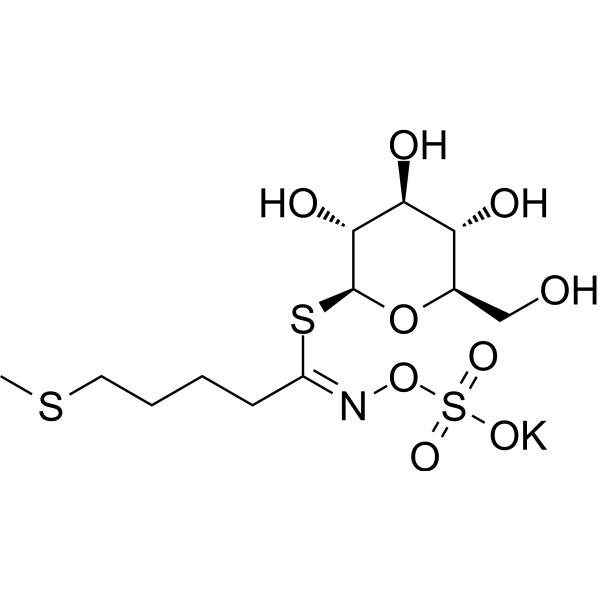 0 ImagesGlucoerucin potassium is an aryl hydrocarbon receptor antagonist and is the 4-methylthio-butyl glucosinolate found in the seeds of Eruca sativa Mill.
-
Mono(2-ethyl-5-hydroxyhexyl) phthalate-d4
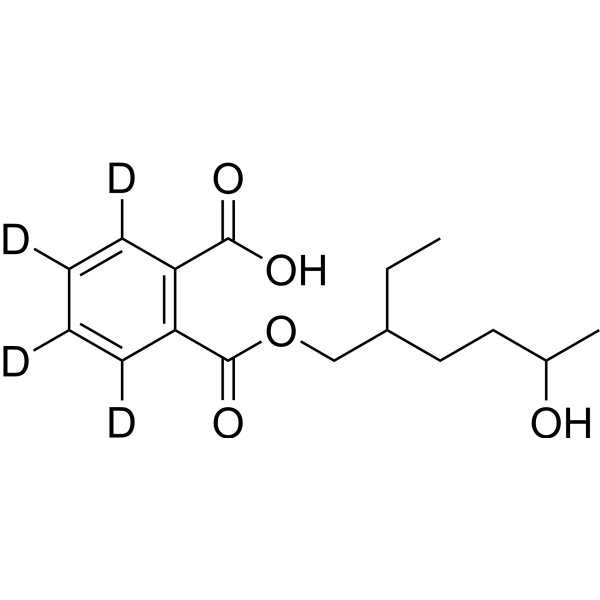 0 ImagesCat. No.: HY-133677SCAS No.: 679789-43-6Synonyms: MEHHP-d4Mono(2-ethyl-5-hydroxyhexyl) phthalate-d4 (MEHHP-d4) is a deuterium labeled Mono(2-ethyl-5-hydroxyhexyl) phthalate (HY-133677). Mono (2-ethyl-5-hydroxyhexyl) phthalate is a biomarker for human exposure to DEHP (HY-B1945). By activating the tryptophan-kynurenine-aryl hydrocarbon receptor (AhR) pathway, mono (2-ethyl-5-hydroxyhexyl) phthalate significantly increases the viability of primary uterine leiomyoma cells and reduces cell apoptosis. Mono (2-ethyl-5-hydroxyhexyl) phthalate correlates with decreased sperm DNA damage. Mono (2-ethyl-5-hydroxyhexyl) phthalate can be used in studies related to uterine leiomyoma.
-
AHR antagonist 5 hemimaleate
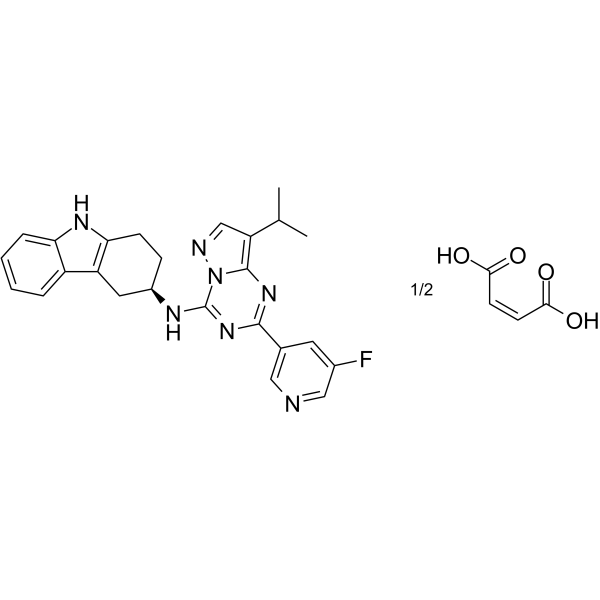 0 ImagesCat. No.: HY-136220AAHR antagonist 5 hemimaleate, a potent and orally active aryl hydrocarbon receptor (AHR) antagonist, has an IC50 of < 0.5 µΜ. AHR antagonist 5 hemimaleate significantly inhibits tumor growth combined with checkpoint inhibitor anti-PD-1 (WO2018195397, example 39).
-
ZSTK3744
 0 ImagesCat. No.: HY-181629APurity: 98.23%ZSTK3744 is an aryl hydrocarbon receptor (AhR) agonist. ZSTK3744 directly binds to AhR, upregulates the expression of AhR target genes including CYP1A1, CYP1B1 and TIPARP, and mediates cell growth inhibitory activity in triple-negative breast cancer cells. ZSTK3744 induces apoptosis in triple-negative breast cancer cells. ZSTK3744 exhibits anti-tumor activity and can be used in the research of chemoresistant triple-negative breast cancer.
-
ZSTK3744 free base
 0 ImagesCat. No.: HY-181629CAS No.: 3106975-38-3ZSTK3744 free base is an aryl hydrocarbon receptor (AhR) agonist. ZSTK3744 free base directly binds to AhR, upregulates the expression of AhR target genes including CYP1A1, CYP1B1 and TIPARP, and mediates cell growth inhibitory activity in triple-negative breast cancer cells. ZSTK3744 free base induces apoptosis in triple-negative breast cancer cells. ZSTK3744 free base exhibits anti-tumor activity and can be used in the research of chemoresistant triple-negative breast cancer.
-
1,4-Dihydroxy-2-naphthoic acid (Standard)
 0 Images1,4-Dihydroxy-2-naphthoic acid (Standard) is the analytical standard for 1,4-Dihydroxy-2-naphthoic acid (HY-W014701). 1,4-Dihydroxy-2-naphthoic acid is an orally active aryl hydrocarbon receptor (AhR) agonist and a bifidogenic growth stimulator. 1,4-Dihydroxy-2-naphthoic acid can improve the motor dysfunction in parkinson's disease (PD) model through AhR-dependent and -independent pathways. 1,4-Dihydroxy-2-naphthoic acid exerts anti-inflammatory effects by regulating the gut microbiota (such as promoting the proliferation of Bifidobacterium) and directly regulating the host immune system. 1,4-Dihydroxy-2-naphthoic acid induces apoptosis through G0/G1 cell cycle arrest in human keratinocyte to inhibit psoriasis.
-
AHR agonist 10
 0 ImagesCat. No.: HY-178053CAS No.: 1191937-43-5AHR agonist 10 is a potent AHR agonist (EC50 = 2.01 nM). AHR agonist 10 can elevate the transcript levels of key AHR downstream pathway target genes, including CYP1A1 and CYP1B1. AHR agonist 10 can downregulate the expression levels of CD36, IL-18 and shows low cytotoxicity (>40 μM) to normal cells. AHR agonist 10 can suppress the expression of CCL5, CCL20, IL-6, IL-8, S100A9, TLR4, TNF-α, and TNFR1, demonstrating that AHR agonist 10 effectively modulate inflammatory responses through AHR dependent signaling pathways. AHR agonist 10 can be used for psoriasis research.
-
Cyprodinil-13C6
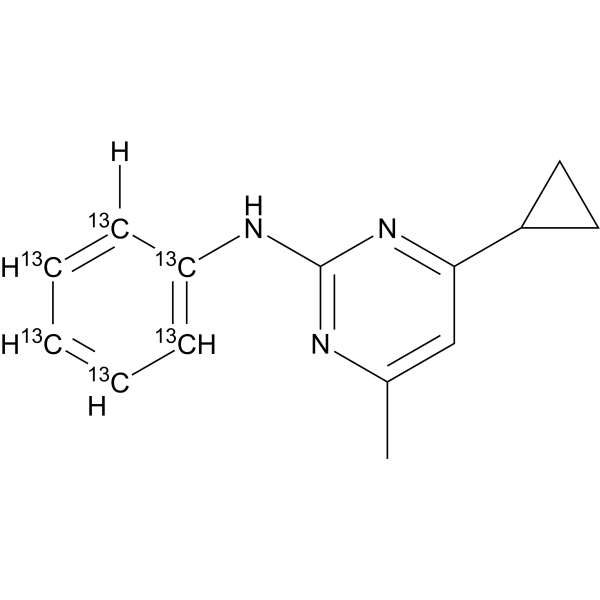 0 ImagesCat. No.: HY-116214S1CAS No.: 1773496-63-1Synonyms: CGA-219417-13C6Cyprodinil-13C6 (CGA-219417-13C6) is the 13C6 labeled Cyprodinil (HY-116214). Cyprodinil (CGA-219417) is a broad-spectrum anilinopyrimidine fungicide and an activator of the aryl hydrocarbon receptor. Cyprodinil also has anti-androgenic and androgenic activities. Cyprodinil can inhibit the biosynthesis of methionine in plant-pathogenic fungi and protect fruits and vegetables from a variety of pathogens.
-
Prochloraz-d7
 0 ImagesCat. No.: HY-W716464Synonyms: BTS 40542-d7Prochloraz-d7 (BTS 40542-d7) is the deuterium labeled Prochloraz (HY-B0845). Prochloraz is an imidazole antifungal. Prochloraz is as an estrogen receptor (ER) and androgen receptor (AR) antagonist and an aromatase inhibitor with IC50 values of 25 μM, 4 μM and 0.3 μM, respectively. Prochloraz is able to activate the aryl hydrocarbon receptor (AhR) having an EC50 of 1 μM.
-
hCYP1B1-IN-2
 0 ImagesCat. No.: HY-161649CAS No.: 3043683-33-3hCYP1B1-IN-2 (compound 3n) is a potent human cytochrome P450 1B1 enzyme hCYP1B1 inhibitor. hCYP1B1-IN-2 shows the extremely potent anti-hCYP1B1 activity (IC50=0.040 nM) and blocks AhR transcription activity. hCYP1B1-IN-2 potently inhibits hCYP1B1 via a mix inhibition manner, showing a Ki value of 21.71 pM.
-
Carbidopa hydrochloride
 0 ImagesCat. No.: HY-B0311DCAS No.: 65132-60-7Synonyms: (S)-(-)-Carbidopa hydrochlorideCarbidopa hydrochloride ((S)-(-)-Carbidopa hydrochloride) is a drug used to inhibit Parkinson's disease, which has the activity of inhibiting the peripheral metabolism of levodopa. Carbidopa hydrochloride can increase the proportion of peripheral levodopa penetrating the blood-brain barrier, thereby enhancing its effect on the central nervous system. Carbidopa hydrochloride has also been found to be an aryl hydrocarbon receptor (AhR) ligand with anticancer activity, which can inhibit the growth of pancreatic cancer cells and tumors. The selective AhR regulation properties of carbidopa hydrochloride provide potential prospects for its clinical application.
-
Carbidopa monohydrate (Standard)
 0 ImagesCat. No.: HY-B0311ARCAS No.: 38821-49-7Synonyms: (S)-(-)-Carbidopa monohydrate (Standard)Carbidopa (monohydrate) (Standard) is the analytical standard of Carbidopa (monohydrate). This product is intended for research and analytical applications. Carbidopa ((S)-(-)-Carbidopa) monohydrate, a peripheral decarboxylase inhibitor, can be used for the research of Parkinson's disease. Carbidopa monohydrate is a selective aryl hydrocarbon receptor (AhR) modulator. Carbidopa monohydrate inhibits pancreatic cancer cell and tumor growth.
-
AHR-IN-1
 0 ImagesCat. No.: HY-169753CAS No.: 2247951-12-6AHR-IN-1 (1-103) is an aryl hydrocarbon receptor (AHR) inhibitor with IC50 < 0.5 μM.
-
10(11)-Cl-BBQ
 0 ImagesCat. No.: HY-18147210 (11)-Cl-BBQ is a high-affinity aryl hydrocarbon receptor (AhR) agonist. 10 (11)-Cl-BBQ is a mixture of 10-Cl-BBQ and 11-Cl-BBQ, among which 11-Cl-BBQ exhibits higher AhR activation potency than 10-Cl-BBQ. Low-dose/short-term AhR activation by 10 (11)-Cl-BBQ promotes IL-17 production, while high-dose/sustained activation induces regulatory T cells and suppresses immune responses. 10 (11)-Cl-BBQ can be used in immunomodulation research.
-
Benzyl 2-naphthyl ether
 0 ImagesBenzyl 2-naphthyl ether is a compound mentioned in the study of the effects of aromatic sensitizers on zebrafish embryos. It can cause morphological abnormalities and changes in gene expression in zebrafish embryos. Its toxicity mechanism is partly related to AHR, and there may be other mechanisms independent of AHR.
-
X15695
 0 ImagesX15695 is selective and orally active estrogen receptor (ERα) degrader. X15695 is an aryl hydrocarbon receptor (AHR) ligand. X15695 enables AHR to form a complex with the ERα, promoting its proteasomal degradation. X15695 inhibits the breast cancer cells proliferation, promotes cell cycle block and induces apoptosis. X15695 can be used for the study of breast cancer.
-
AhR modulator-1
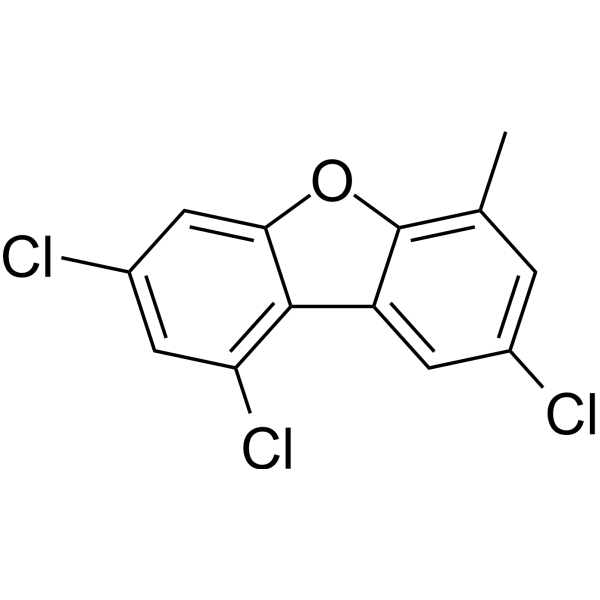 0 ImagesCat. No.: HY-135671CAS No.: 118174-38-2AhR modulator-1 (compound 6-MCDF) is a selective and orally active aryl hydrocarbon receptor (AhR) modulator. AhR modulator-1 inhibits metastasis, in part, by inhibiting prostatic VEGF production prior to tumor formation. AhR modulator-1 also possess anti-estrogenic properties in rat uterus.
-
Benzyl butyl phthalate (Standard)
 0 ImagesCat. No.: HY-W011338RCAS No.: 85-68-7Benzyl butyl phthalate (Standard) is the analytical standard of Benzyl butyl phthalate. This product is intended for research and analytical applications. Benzyl butyl phthalate, a member of phthalic acid esters (PAEs), can trigger the migration and invasion of hemangioma (HA) cells via upregulation of Zeb1. Benzyl butyl phthalate activates aryl hydrocarbon receptor (AhR) in breast cancer cells to stimulate SPHK1/S1P/S1PR3 signaling and enhances formation of metastasis-initiating breast cancer stem cells (BCSCs).
-
AHR antagonist 4
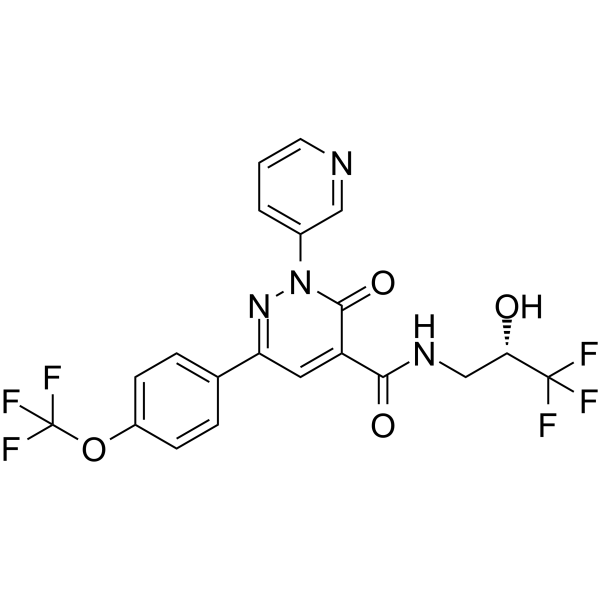 0 ImagesCat. No.: HY-135830CAS No.: 2242465-58-1AHR antagonist 4 is a 2-heteroaryl-3-oxo-2,3-dihydropyridazine-4-carboxamide compound and a potent aryl hydrocarbon receptor (AHR) antagonist extracted from patent WO2018146010A1, example 293, has an IC50 of 82.2 nM. AHR antagonist 4 has anti-cancer effects.




