



Aryl Hydrocarbon Receptor
AhR
Aryl Hydrocarbon Receptor (AhR or AHR) is a cytoplasmic receptor and transcription factor that belongs to the family of basic helix-loop-helix transcription factors. The AhR is activated or inhibited by various types of exogenous and endogenous ligands. AhR is an important factor in immunity and tissue homeostasis, and structurally diverse compounds from the environment, diet, microbiome, and host metabolism can induce AhR activity, such as 2,3,7,8-tetrachlorodibenzo-p-dioxin (TCDD).
Endogenous ligands include indigoids, heme metabolites, eicosanoids, tryptophan derivatives, and equilenin. Exogenous ligands include polycyclic aromatic hydrocarbons, polychlorinated biphenyls, natural compounds, and small molecule compounds. The different structures and properties of AhR ligands mean that when they combine with AhR they have distinct biological effects.
Unliganded AHR is sequestered in the cytoplasm by chaperone proteins including Hsp90, AHR-interacting protein (AIP), and p23. Upon ligand binding, AHR translocates to the nucleus and heterodimerizes with ARNT. The AHR-ARNT complex regulates transcription by binding with high affinity to specific DNA sequences termed aryl hydrocarbon response elements located in the regulatory regions of target genes including CYP1A1, CYP1B1, and TIPARP.
All Product Categories
-
Aryl Hydrocarbon Receptor Inhibitors
(18)
View all products
-
Aryl Hydrocarbon Receptor Agonists
(61)
View all products
-
Aryl Hydrocarbon Receptor Antagonists
(35)
View all products
-
Aryl Hydrocarbon Receptor Activators
(40)
View all products
-
Aryl Hydrocarbon Receptor Modulators
(12)
View all products
-
Aryl Hydrocarbon Receptor Controls
(5)
View all products
-
Aryl Hydrocarbon Receptor Ligands
(11)
View all products
-
Aryl Hydrocarbon Receptor Related Products (202)
Related Products (202)

-
Antibodies (1)
-
Benzyl butyl phthalate (Standard)
 0 ImagesCat. No.: HY-W011338RCAS No.: 85-68-7Benzyl butyl phthalate (Standard) is the analytical standard of Benzyl butyl phthalate. This product is intended for research and analytical applications. Benzyl butyl phthalate, a member of phthalic acid esters (PAEs), can trigger the migration and invasion of hemangioma (HA) cells via upregulation of Zeb1. Benzyl butyl phthalate activates aryl hydrocarbon receptor (AhR) in breast cancer cells to stimulate SPHK1/S1P/S1PR3 signaling and enhances formation of metastasis-initiating breast cancer stem cells (BCSCs).
-
AHR antagonist 4
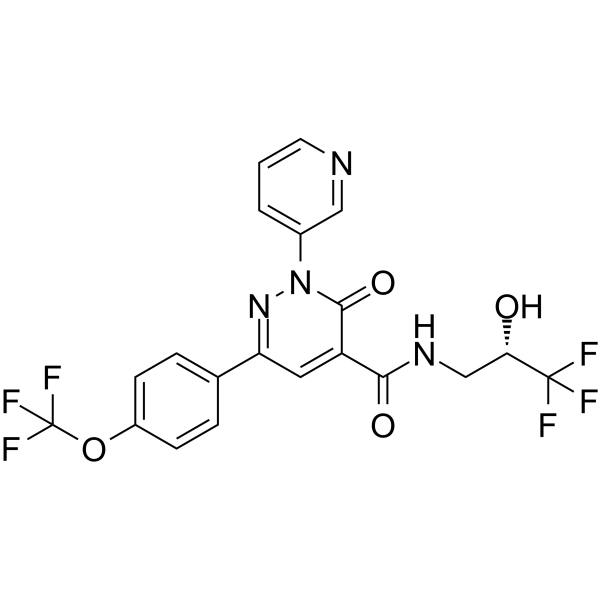 0 ImagesCat. No.: HY-135830CAS No.: 2242465-58-1AHR antagonist 4 is a 2-heteroaryl-3-oxo-2,3-dihydropyridazine-4-carboxamide compound and a potent aryl hydrocarbon receptor (AHR) antagonist extracted from patent WO2018146010A1, example 293, has an IC50 of 82.2 nM. AHR antagonist 4 has anti-cancer effects.
-
AhR agonist 5
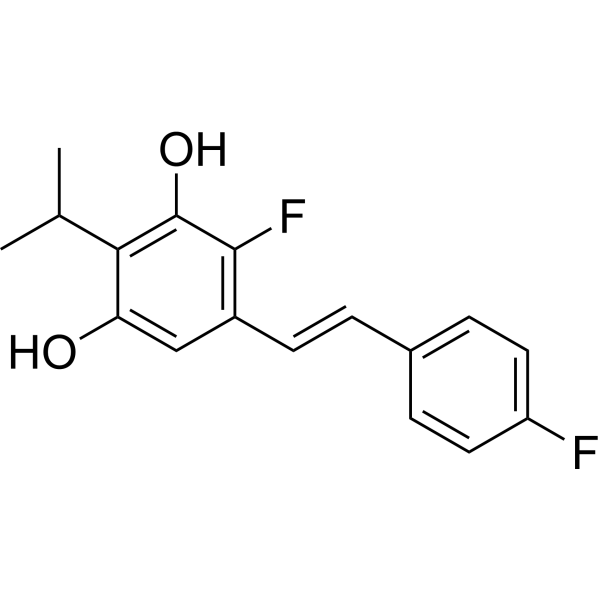 0 ImagesCat. No.: HY-158167CAS No.: 3033281-95-4AhR agonist 5 is an AHR agonist (EC50 = 6 nM). From patent WO2024061187A1, compound 5.
-
(2R,3S)-PD-1/PD-L1-IN-38
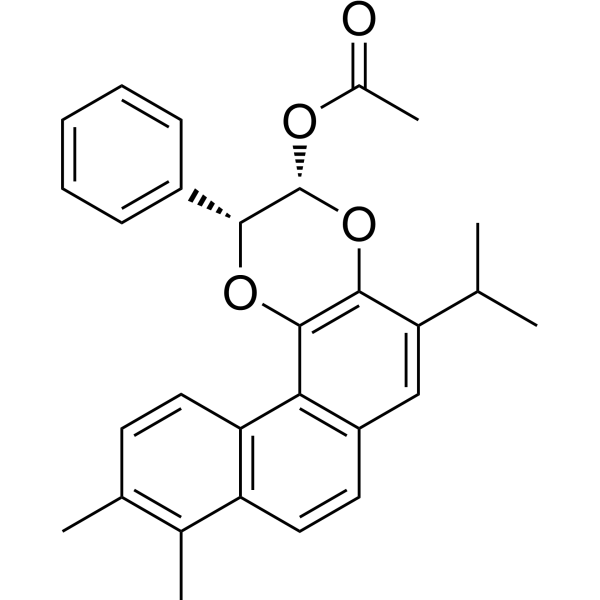 0 ImagesCat. No.: HY-N12537A(2R,3S)-PD-1/PD-L1-IN-38 (Compound (±)-13e) is an orally active Ah receptor (AhR) antagonist with in vivo and in vitro anticancer activity. (2R,3S)-PD-1/PD-L1-IN-38 promotes the secretion of INF-γ by CD8+T cells and inhibits the signal transduction of PD-1/PD-L1.
-
Dibenzothiophene-d8
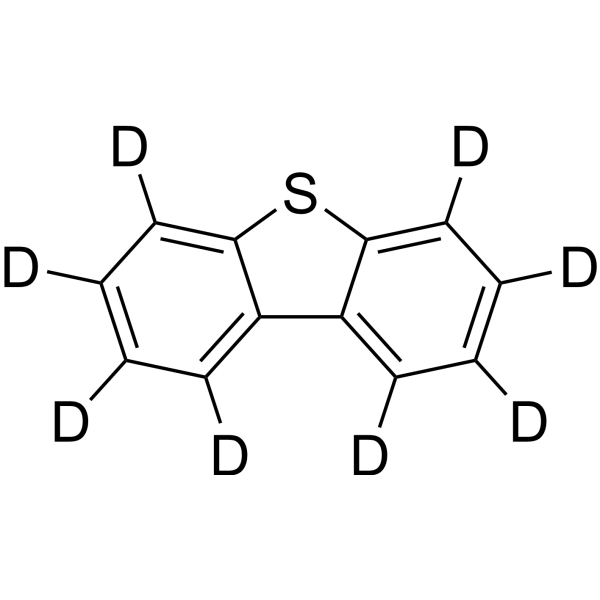 0 ImagesDibenzothiophene-d8 is the deuterium labeled Dibenzothiophene (HY-B0973). Dibenzothiophene is an orally active and a noncompetitive CYP1A inhibitor. Dibenzothiophene inhibits CYP1A-mediated EROD activity with Km of 0.592 μM. Dibenzothiophene interacts with the AHR pathway. Dibenzothiophene enhances the embryotoxicity of β-naphthoflavone (HY-114740). Dibenzothiophene shows acute toxicity in mice. Dibenzothiophene is mainly used for the study of the mechanism of developmental toxicity in organisms.
-
(Rac)-Carbidopa-13C,d3
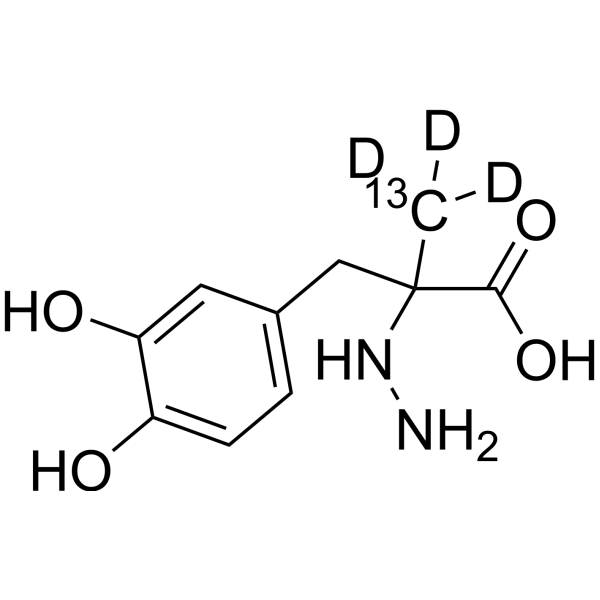 0 ImagesCat. No.: HY-B0311CS(Rac)-Carbidopa-13C,d3 is the 13C- and deuterium labeled DL-Carbidopa.
-
AhR agonist 8
 0 ImagesCat. No.: HY-168033CAS No.: 3036895-67-4AhR agonist 8 (compound 9) is a potent Aryl Hydrocarbon Receptor (AhR) agonist with an EC50 of 0.154 nM. AhR agonist 8 can be used in the study of psoriasis and atopic dermatitis.
-
Carbidopa-d3-1
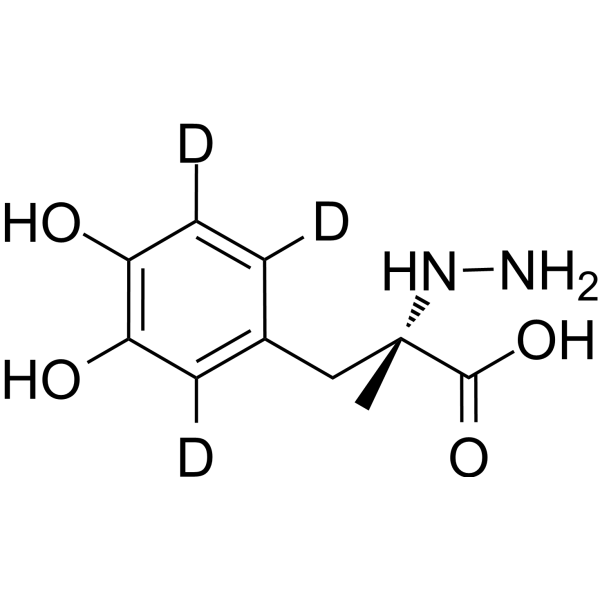 0 ImagesCat. No.: HY-B0311S1Synonyms: (S)-(-)-Carbidopa-d3Carbidopa-d3-1 is the deuterium labeled Carbidopa (HY-B0311). Carbidopa, a peripheral decarboxylase inhibitor, can be used for the research of Parkinson's disease. Carbidopa is a selective aryl hydrocarbon receptor (AhR) modulator. Carbidopa inhibits pancreatic cancer cell and tumor growth.
-
CYP1B1-IN-10
 0 ImagesCat. No.: HY-175554CAS No.: 2785358-47-4CYP1B1-IN-10 (Compound 15C) is a highly selective human cytochrome P450 1B1 (hCYP1B1) inhibitor (IC50=0.11 μM). CYP1B1-IN-10 is promising for research of hormone-dependent tumors (e.g., breast and ovarian cancers).
-
Omeprazole sulfone-d3
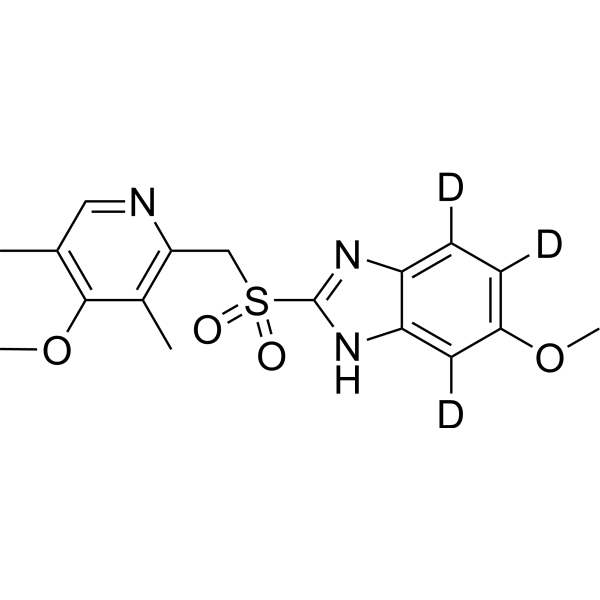 0 ImagesCat. No.: HY-G0007SCAS No.: 2749628-17-7Synonyms: Omeprazole sulfone-d3; Omeprazole sulphone-d3Omeprazole sulfone-d3 is the deuterium labeled Omeprazole sulfone. Omeprazole sulfone (Omeprazole sulphone) is one of the major circulating metabolites of Omeprazole (HY-B0113) in vivo, and belongs to class 4 non-mutagenic impurities. Omeprazole sulfone does not bind to the aryl hydrocarbon receptor (AhR), nor does it induce the expression of CYP1A1 or CYP1A2. However, Omeprazole sulfone promotes the migration of gastric epithelial cells under basal conditions and reverses the inhibitory effect of Indomethacin (HY-14397) on cell migration. Omeprazole sulfone does not promote cell proliferation, nor does it upregulate COX-2 expression or activate signaling pathways such as ERK, P38 MAPK and PI3K. Omeprazole sulfone maintains basal ulcer healing under non-acid-dependent conditions and can be used in studies related to gastric ulcer repair.
-
6,2′,4′-Trimethoxyflavone
 0 ImagesCat. No.: HY-139117CAS No.: 720675-90-16,2′,4′-Trimethoxyflavone is an AhR antagonist and has failed to show effective protective effects against cerebral ischemia/reperfusion injury in Sprague-Dawley rats.
-
ZSTK3341
 0 ImagesCat. No.: HY-188098ZSTK3341 is an aryl hydrocarbon receptor (AhR) and cytochrome P450 1A1 (CYP1A1) dependent cell growth inhibitor. ZSTK3341 exhibits growth inhibitory activity against cancer cells. ZSTK3341 can be used in the research of triple-negative breast cancer.
-
AhR agonist 6
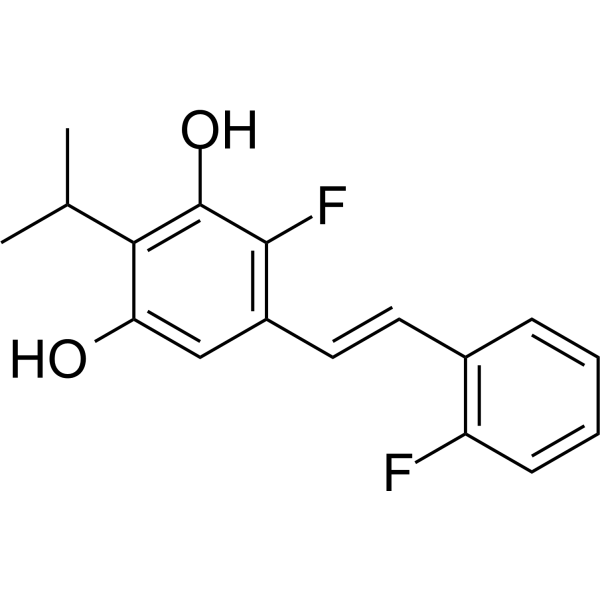 0 ImagesCat. No.: HY-158168CAS No.: 3033281-96-5AhR agonist 6 (Compound 6) is an agonist for aryl hydrocarbon receptor (AhR), with an EC50 of 0.01 nM.
-
AFP464
 0 ImagesCat. No.: HY-16031ACAS No.: 468719-53-1Synonyms: NSC710464AFP464 (NSC710464) is a prodrug of Aminoflavone (HY-132974) and an agonist of the aryl hydrocarbon receptor (AhR). AFP464 downregulates the expression of α6-integrin (α6-integrin), inhibits breast tumor growth, reduces the population of tumor-initiating cells, disrupts mammosphere structure, induces the formation of mucin lake clusters, triggers DNA damage, and exerts antiproliferative activity. AFP464 is rapidly converted to Aminoflavone by nonspecific esterases in plasma and cell culture media. AFP464 is applicable to research related to breast cancer.
-
Indeno[1,2,3-cd]pyrene (Standard)
![Indeno[1,2,3-cd]pyrene (Standard)](https://file.medchemexpress.com/product_pic/hy-23499r.gif "Click to View Indeno[1,2,3-cd]pyrene (Standard) Product Detail") 0 ImagesIndeno[1,2,3-cd]pyrene (Standard) is the analytical standard of Indeno[1,2,3-cd]pyrene. This product is intended for research and analytical applications. Indeno[1,2,3-cd]pyrene is a polycyclic aromatic hydrocarbon with moderate cytotoxicity in human pulmonary alveolar epithelial cells HPAEpiC. Indeno[1,2,3-cd]pyrene enhances allergic lung infammation via aryl hydrocarbon receptor.
0 ImagesIndeno[1,2,3-cd]pyrene (Standard) is the analytical standard of Indeno[1,2,3-cd]pyrene. This product is intended for research and analytical applications. Indeno[1,2,3-cd]pyrene is a polycyclic aromatic hydrocarbon with moderate cytotoxicity in human pulmonary alveolar epithelial cells HPAEpiC. Indeno[1,2,3-cd]pyrene enhances allergic lung infammation via aryl hydrocarbon receptor.
-
Stemregenin 1 hydrochloride
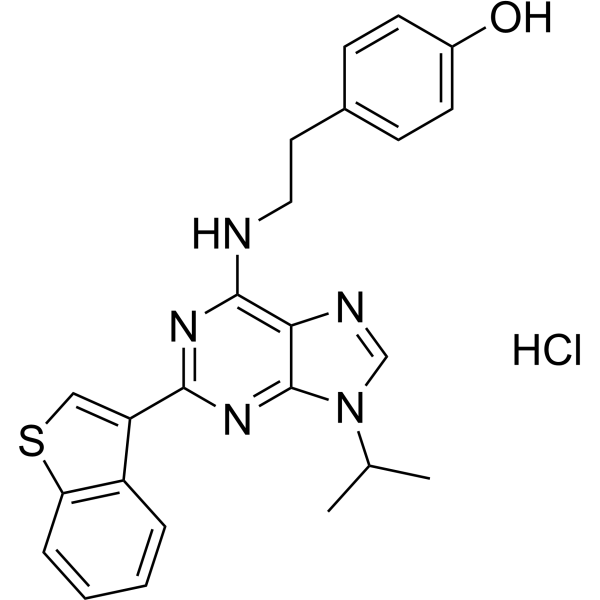 0 ImagesCat. No.: HY-15001ACAS No.: 2319882-01-2Synonyms: SR1 hydrochlorideStemregenin 1 hydrochloride is a purine derivative that antagonizes aryl hydrocarbon receptor signaling in CD34+ cells. IC50 The value is 127 nM. Stemregenin 1 hydrochloride can be used to expand the pluripotency of hematopoietic stem cells (HSC) in stem cell studies.
-
Penisimplicissin
 0 ImagesCat. No.: HY-182495CAS No.: 873207-55-7Penisimplicissin is a funicone-like compound and antiviral agent. Penisimplicissin reduces the expression of AhR and viral nucleocapsid protein. Penisimplicissin improves the cell viability and morphological characteristics of CCoV-infected cells. Penisimplicissin inhibits CCoV infection. Penisimplicissin can be used in studies related to canine coronavirus infection.
-
hCYP1B1-IN-1
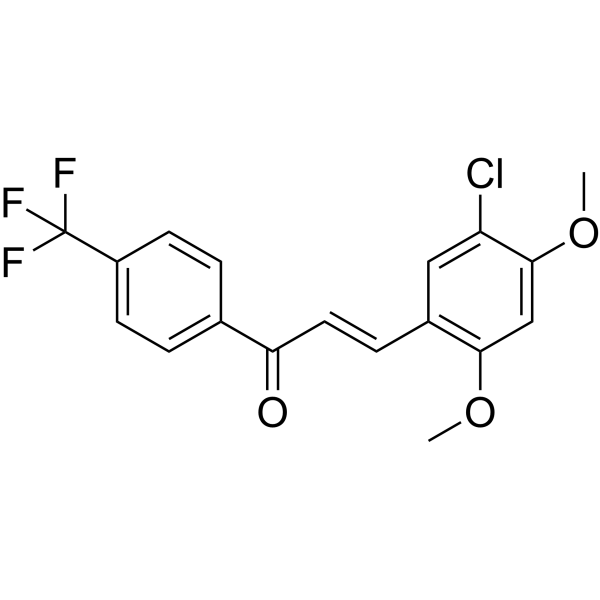 0 ImagesCat. No.: HY-155061CAS No.: 3049656-20-1hCYP1B1-IN-1 (compound B18) is a hCYP1B1 inhibitor (IC50=3.6 nM),as well as an antagonist of Aryl Hydrocarbon Receptor. hCYP1B1-IN-1 exhibtis suitable metabolic stability and good cell-permeability. hCYP1B1-IN-1 inhibits migration of MCF-7 cells.
-
3-OH-Kynurenamine
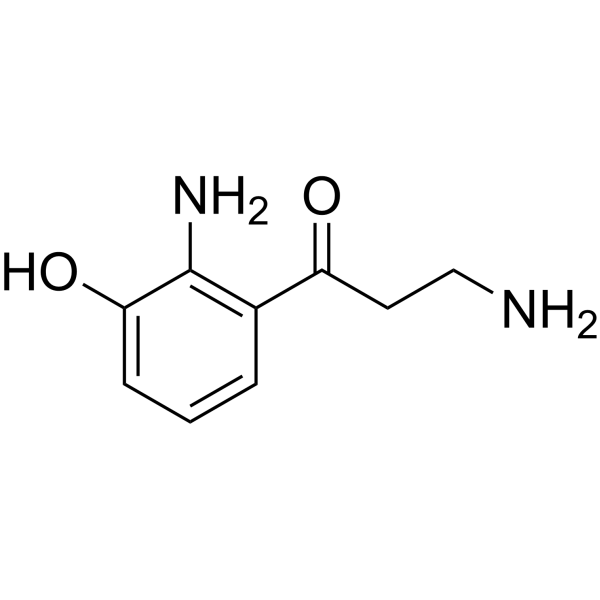 0 ImagesCat. No.: HY-156908CAS No.: 99362-47-73-OH-Kynurenamine dihydroiodide is an activator for aryl hydrocarbon receptor (AhR), and thus regulates the immune response. 3-OH-Kynurenamine dihydroiodide upregulates the expressions of Ido1 and Tgfb1, ameliorates the skin inflammation in psoriasis mouse model and kidney damage in nephrotoxic lupus mouse model.
-
AHR agonist 4
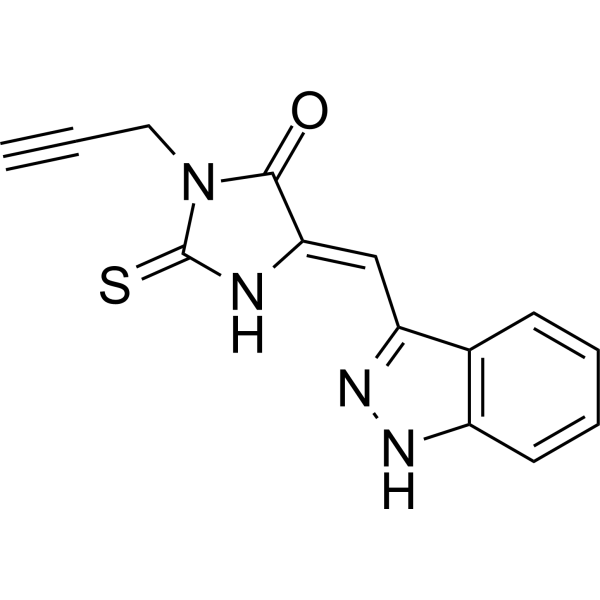 0 ImagesCat. No.: HY-155505CAS No.: 2953023-30-6AHR agonist 4 (compound 24e) is an agonist of Aryl hydrocarbon receptor (AHR), assocaited with the immune balance of Th17/22 and Treg cells. AHR agonist 4 serves as a lead compound for anti-psoriasis drug, alleviates imiquimod (IMQ)-induced psoriasis-like skin lesion. AHR agonist 4 is a click chemistry reagent, it contains an Alkyne group and can undergo copper-catalyzed azide-alkyne cycloaddition (CuAAc) with molecules containing Azide groups.




