



Bacterial
Anything that destroys bacteria or suppresses their growth or their ability to reproduce. Heat, chemicals such as chlorine, and antibiotic drugs all have antibacterial properties. Many antibacterial products for cleaning and handwashing are sold today. Such products do not reduce the risk for symptoms of viral infectious diseases in otherwise healthy persons. This does not preclude the potential contribution of antibacterial products to reducing symptoms of bacterial diseases in the home.
All Product Categories
-
Bacterial Inhibitors
(7553)
View all products
-
Bacterial Agonists
(3)
View all products
-
Bacterial Antagonists
(9)
View all products
-
Bacterial Activators
(25)
View all products
-
Bacterial Modulators
(27)
View all products
-
Bacterial Chemicals
(2)
View all products
-
Bacterial Inducers
(6)
View all products
-
Bacterial Controls
(14)
View all products
-
Bacterial Substrates
(2)
View all products
-
Bacterial Ligand
(1)
View all products
-
Bacterial Related Products (8893)
Related Products (8893)

-
Antibodies (14)
-
Related Compound Screening Libraries (1)
-
Metallo-β-lactamase-IN-3
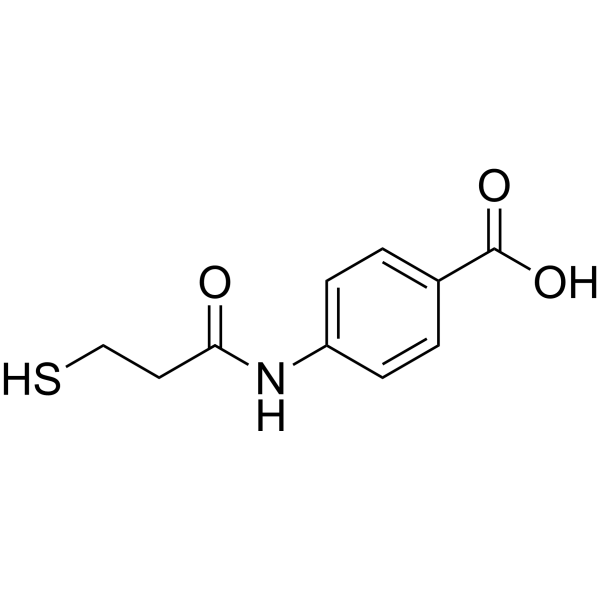 0 ImagesCat. No.: HY-144261CAS No.: 128294-71-3Metallo-β-lactamase-IN-3 (compound 35) is a potent metallo-β-lactamases (MBL) inhibitor. Metallo-β-lactamase-IN-3 shows high activity against VIM-1 and NDM-1, with IC50 of 0.6 and 1.0 μM, respectively. Metallo-β-lactamase-IN-3 does not show inhibition of IMP-7.
-
Melimine acetate
 0 ImagesCat. No.: HY-P5552AMelimine acetate is an antimicrobial peptide with broad-spectrum antimicrobial activity against Gram-negative/Gram-positive bacteria, fungi and protozoa. Melimine acetate neutralizes endotoxin activity by interacting with the phosphate groups of lipid A, depolarizes and permeabilizes the cytoplasmic membrane of *Pseudomonas aeruginosa*, and induces bacterial lysis. Melimine acetate exerts additive antiviral effects against H1N1 and MHV-1 when used in combination with RK610. Melimine acetate retains its antimicrobial activity when conjugated to polymer and titanium surfaces. Melimine acetate can be used in infection-related research.
-
Antibacterial agent 34
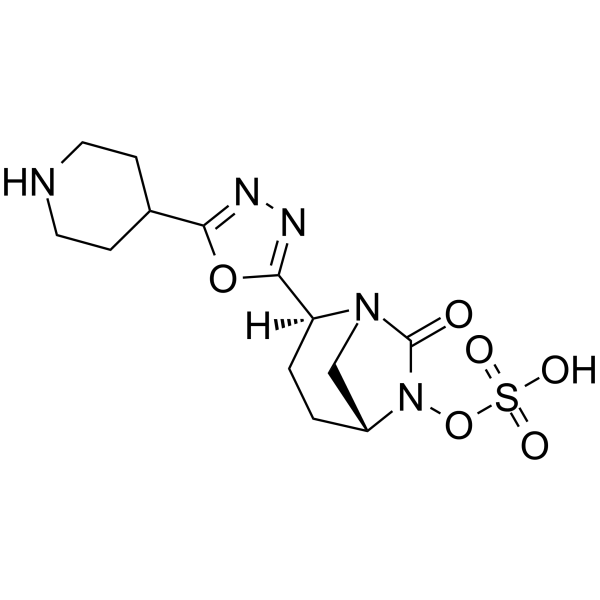 0 ImagesCat. No.: HY-139750CAS No.: 1426572-58-8Antibacterial agent 35, an antibacterial agent, significantly lowers MIC value of antibacterial agent Ceftazidime.
-
Camaric acid
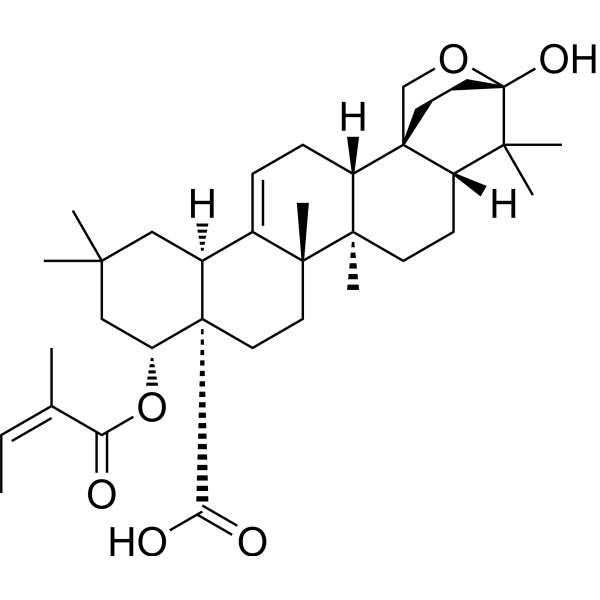 0 ImagesCat. No.: HY-N3528CAS No.: 146450-83-1Camaric acid can be isolated from the root of Lantana montevidensis and has antibacterial activity.
-
Antibacterial agent 161 trifluoromethanesulfonate
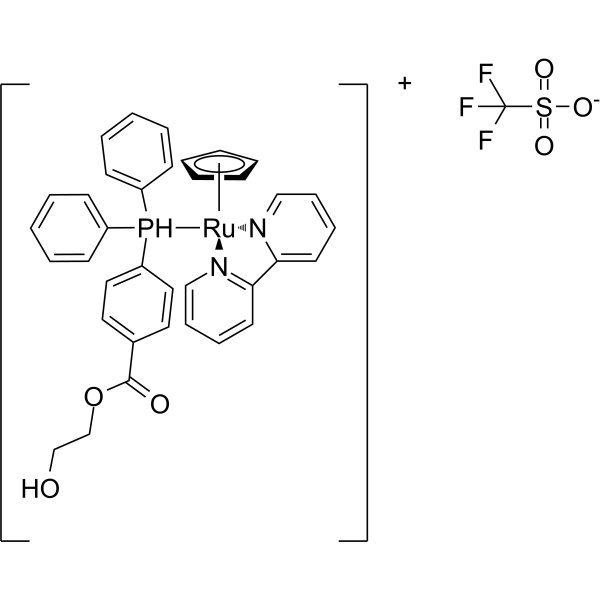 0 ImagesCat. No.: HY-157043Antibacterial agent 161 trifluoromethanesulfonate (Compound 6) has antibacterial activity. Antibacterial agent 161 trifluoromethanesulfonate has high antiproliferative effects against colon cancer and non-small cell lung cancer.
-
Asperglaucin A
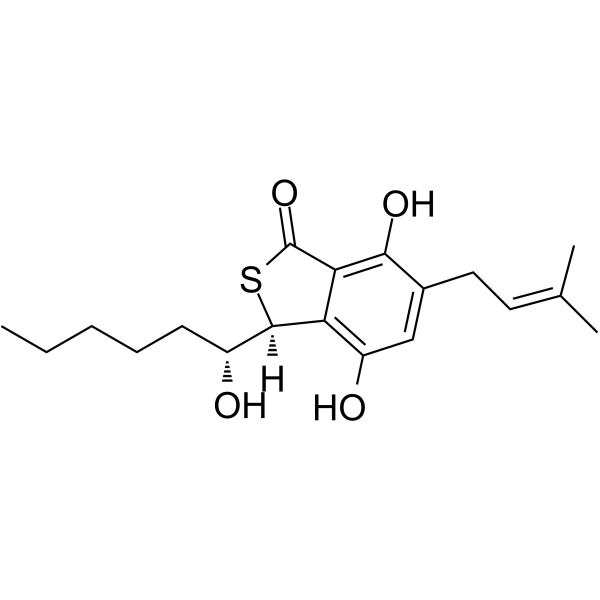 0 ImagesCat. No.: HY-N10280CAS No.: 2701570-79-6Asperglaucin A represents an unusual phthalide-like derivative. Asperglaucin A exhibits potent antibacterial activities against two plant pathogens Pseudomonas syringae pv actinidae (Psa) and Bacillus cereus, with an MIC value of 6.25 μM.
-
CAP18 (rabbit)
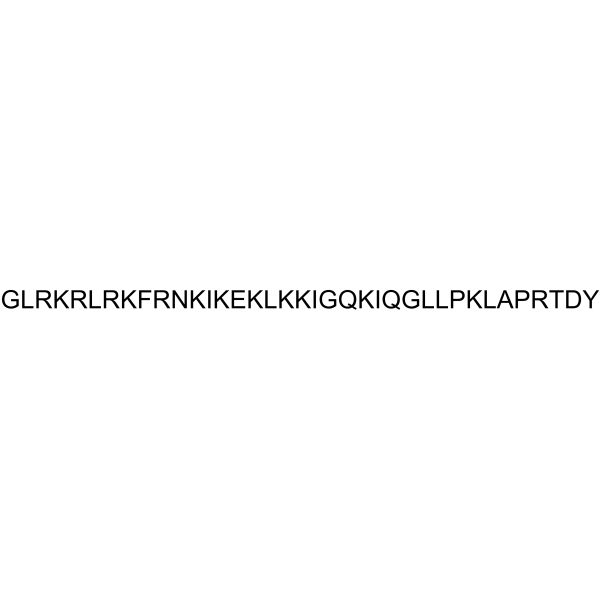 0 ImagesCat. No.: HY-P2458CAS No.: 152742-15-9CAP18 (rabbit) is a 37 amino acids antimicrobial peptide originally isolated from rabbit granulocytes. CAP18 (rabbit) has broad antimicrobial activity against both Gram-positive (IC50, 130-200 nM) and Gram-negative (IC50, 20-100 nM) bacteria. CAP18 (rabbit) has the potential for bacterial sepsis research.
-
Agaric acid (Standard)
 0 ImagesAgaric acid (Standard) (Agaricinic Acid (Standard)) is the analytical standard of Agaric acid (HY-N4104). This product is intended for research and analytical applications. Agaric acid (Agaricinic Acid) is an orally active inhibitor of adenine nucleotide translocase found in specific fungi. Agaric acid can inhibit the biofilm formation of various bacteria such as Salmonella. Agaric acid can also induce mitochondrial permeability transition, prompting mitochondria to release Ca2+, disrupting the transmembrane potential, and causing mitochondrial swelling. In addition, Agaric acid can also inhibit citrate transport in liver mitochondria and participate in the inhibition of fatty acid synthesis, affecting multiple metabolic processes.
-
L-leucyldoxorubicin
 0 ImagesCat. No.: HY-121560CAS No.: 70774-25-3Synonyms: LeurubicinL-leucyldoxorubicin (Leurubicin) is a promising Top II inhibitor that holds potential for research in bacterial infections.
-
Benzylideneacetone (Standard)
 0 ImagesSynonyms: Benzalacetone (Standard)Benzylideneacetone (Standard) is the analytical standard of Benzylideneacetone. This product is intended for research and analytical applications. Benzylideneacetone (Benzalacetone) is an orally active antibiotic, tyrosinase inhibitor, phospholipase A2 inhibitor, and immunosuppressant. Benzylideneacetone has antibacterial activity against some gram-negative plant-pathogenic bacteria. Benzylideneacetone can also be used in the synthesis of chemicals and drugs, and as a flavoring additive for some foods.
-
Albaflavenone
 0 ImagesCat. No.: HY-N14937CAS No.: 157078-47-2Albaflavenone is a sesquiterpene antibiotic with a zizaene skeleton. Albaflavenone is active against Bacillus subtilis.
-
Ceftezole
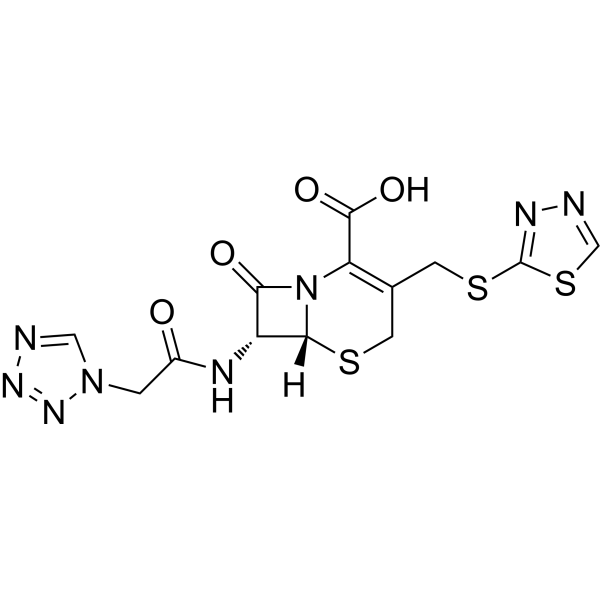 0 ImagesCat. No.: HY-N7095CAS No.: 26973-24-0Synonyms: CTZCeftezole (CTZ) is a broad-spectrum cephem antibiotic against many species of gram-positive and gram-negative bacteria. Ceftezole (CTZ) is an alpha-glucosidase inhibitor with in vivo anti-diabetic activity.
-
D-Arabinopyranose-13C5
 0 ImagesCat. No.: HY-N7082SPurity: 99.9%D-Arabinopyranose-13C5 is the 13C-labeled D-Arabinopyranose (HY-N7082). D-Arabinpyranose is is an orally active antidepressant and a growth inhibitor of C. elegans (IC50 is 7.5 mM). D-Arabinpyranose can penetrate the blood-brain barrier, selectively interfere with the metabolism of D-ribose and D-fructose, and inhibit the growth of nematodes. D-Arabinpyranose can also inhibit the synthesis of cell biofilm and exert antibacterial activity. D-Arabinpyranose activates the ACSS2-PPARγ/TFEB-CRTC1 axis through the lysosomal AXIN-LKB1-AMPK pathway, inducing CRTC1 transcription, exerts antidepressant-like activity. D-Arabinpyranose is the ring-opened form of the aldopentose D-Arabinpyranose (HY-N7082).
-
Brevinin-1
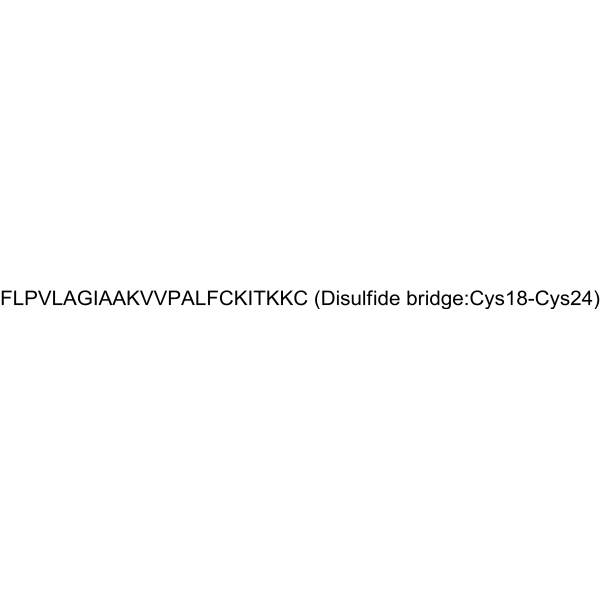 0 ImagesCat. No.: HY-P5659CAS No.: 145963-49-1Brevinin-1 is an antimicrobial peptide derived from the skin secretions of Rana esculenta.
-
KDO
 0 ImagesCat. No.: HY-160192CAS No.: 10149-14-1Synonyms: 3-Deoxy-D-manno-2-octulosonic acidKDO (3-Deoxy-D-manno-2-octulosonic acid) is a characteristic monosaccharide component of capsular polysaccharides of Gram-negative bacteria and meningococcal lipooligosaccharide (LOS), and can also be present in the polysaccharide components of Nelumbo nucifera. KDO together with lipid A constitutes the LOS inner core and is an essential molecule for CD14/TLR4-mediated proinflammatory signaling. KDO can be used in research related to meningococcal disease and inflammation.
-
Bombinin-like peptide 3
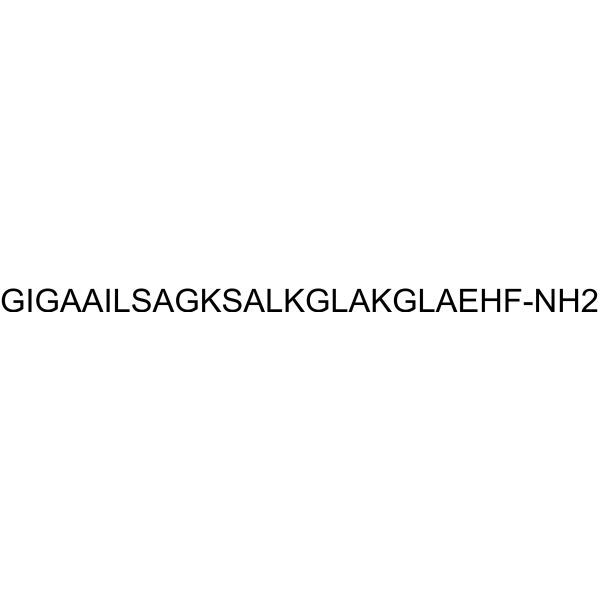 0 ImagesCat. No.: HY-P5634CAS No.: 138220-02-7Synonyms: BLP-3Bombinin-like peptide 3 is an antimicrobial peptide derived from skin secretions of asian toad Bombina orientalis.
-
Veratraldehyde-13C
 0 ImagesCat. No.: HY-W738270CAS No.: 1173022-44-0Synonyms: 3,4-Dimethoxy[7-13C]-benzaldehydeVeratraldehyde-13C (3,4-Dimethoxy[7-13C]-benzaldehyde) is the 13C-labeled Veratraldehyde (HY-N1096). Veratraldehyde is an orally active aromatic compound and antibacterial agent. Veratraldehyde can be isolated from essential oils of plants such as peppermint and ginger. Veratraldehyde targets the PilY1 protein. Veratraldehyde has antibacterial activity against Pseudomonas aeruginosa. Veratraldehyde has a repellent effect against mosquitoes and ticks. Veratraldehyde can be used as a flavoring agent.
-
Glicophenone
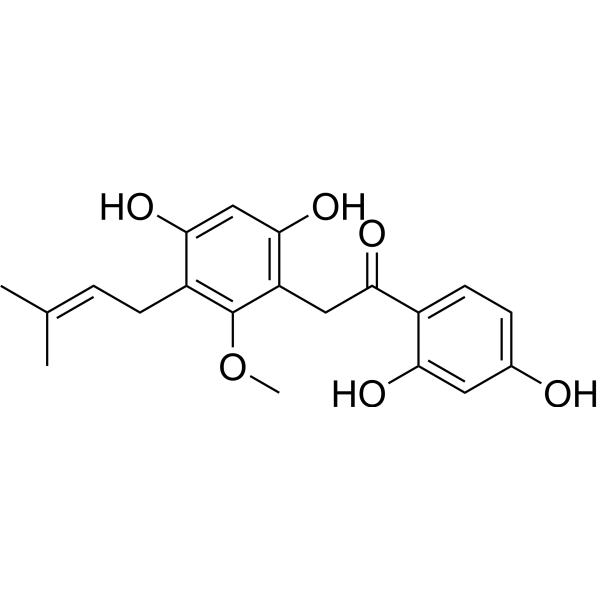 0 ImagesCat. No.: HY-142097CAS No.: 303175-66-8Glicophenone is an antibacterial agent with MICs of both 32 μg/mL against MRSA OM481, MRSA OM505, MRSA OM584, MRSA OM623 and MSSA 209P.
-
Urease-IN-11
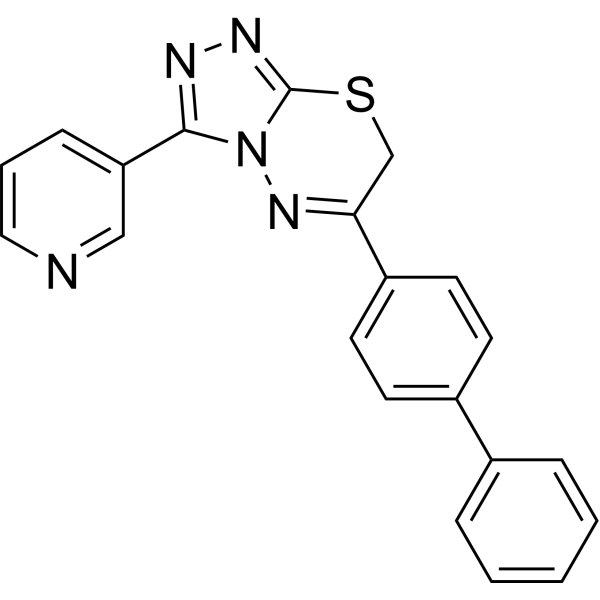 0 ImagesCat. No.: HY-162139CAS No.: 517906-12-6Urease-IN-11 (Compound 6e) is a competitive urease inhibitor (IC50)=10.41 µM). Urease-IN-11 can be used to study diseases such as urease-related gastritis and peptic ulcer.
-
DRGN-1
 0 ImagesCat. No.: HY-P11165CAS No.: 2173394-02-8DRGN-1 is an antimicrobial peptide. DRGN-1 exhibits potent antimicrobial and anti-biofilm activities, inhibiting both Gram-negative and Gram-positive bacteria, with an EC50 range of 0.50-4.62 μM. DRGN-1 exerts its antimicrobial effect by disrupting bacterial membrane permeability and slightly depolarizing the membrane potential. DRGN-1 inhibits the formation of biofilms of single bacterial species and mixed species of Pseudomonas aeruginosa and Staphylococcus aureus. DRGN-1 can significantly promote the healing of uninfected and mixed biofilm-infected mouse wounds. DRGN-1 can be used for the study of infections.




