



Bacterial
Anything that destroys bacteria or suppresses their growth or their ability to reproduce. Heat, chemicals such as chlorine, and antibiotic drugs all have antibacterial properties. Many antibacterial products for cleaning and handwashing are sold today. Such products do not reduce the risk for symptoms of viral infectious diseases in otherwise healthy persons. This does not preclude the potential contribution of antibacterial products to reducing symptoms of bacterial diseases in the home.
All Product Categories
-
Bacterial Inhibitors
(7528)
View all products
-
Bacterial Agonists
(3)
View all products
-
Bacterial Antagonists
(9)
View all products
-
Bacterial Activators
(24)
View all products
-
Bacterial Modulators
(27)
View all products
-
Bacterial Chemicals
(2)
View all products
-
Bacterial Inducers
(6)
View all products
-
Bacterial Controls
(14)
View all products
-
Bacterial Substrates
(2)
View all products
-
Bacterial Ligand
(1)
View all products
-
Bacterial Related Products (8859)
Related Products (8859)

-
Antibodies (14)
-
Related Compound Screening Libraries (1)
-
L-640876
 0 ImagesCat. No.: HY-126732CAS No.: 77527-71-0L-640876 is a broad-spectrum and orally active lactam antimicrobial agent. L-640876 showa MIC90 of 0.125 pg/mL for the E. coli strains, 2 /mg/mL for the S.choleraerai strains and 4 pg/mL for the S. typhinwrium strains.
-
CB-182804
 0 ImagesCat. No.: HY-107120CAS No.: 1231767-35-3CB-182804, Polymyxin B (HY-149179) analogue, is a polypeptide antibiotic. CB-182804 has inhibitory activity against all Gram-negative pathogenic bacteria, including Escherichia coli, Klebsiella pneumoniae, Acinetobacter baumannii, and Pseudomonas aeruginosa with MIC50 values of 2 μg/mL. CB-182804 is mainly used for the research on refractory infections caused by multidrug-resistant (MDR) Gram-negative bacteria.
-
Streptozotocin (Standard)
 0 ImagesCat. No.: HY-13753RCAS No.: 18883-66-4Synonyms: Streptozocin (Standard); NSC-85998 (Standard); U 9889 (Standard)Streptozotocin (Standard) is the analytical standard of Streptozotocin (HY-13753). This product is intended for research and analytical applications. Streptozotocin (Streptozocin; STZ) is an antibiotic widely used in experimental animal models of induced diabetes. Streptozotocin enters B cells via the glucose transporter (GLUT2) and causes the alkylation of DNA ( DNA-methylating ). Streptozotocin can induce the apoptosis of β cells.
-
trans-Clopenthixol dihydrochloride (Standard)
 0 ImagesSynonyms: (E)-Clopenthixol dihydrochloride (Standard)trans-Clopenthixol (dihydrochloride) (Standard) is the analytical standard of trans-Clopenthixol (dihydrochloride). This product is intended for research and analytical applications. trans-Clopenthixol ((E)-Clopenthixol) dihydrochloride is an antibiotic agent, without neuroleptic effect. trans-Clopenthixol can be used to inhibit Pseudomonas aeruginosa and Plasmodium falciparum in vitro[1][2].
-
Hexahydrohippuric acid
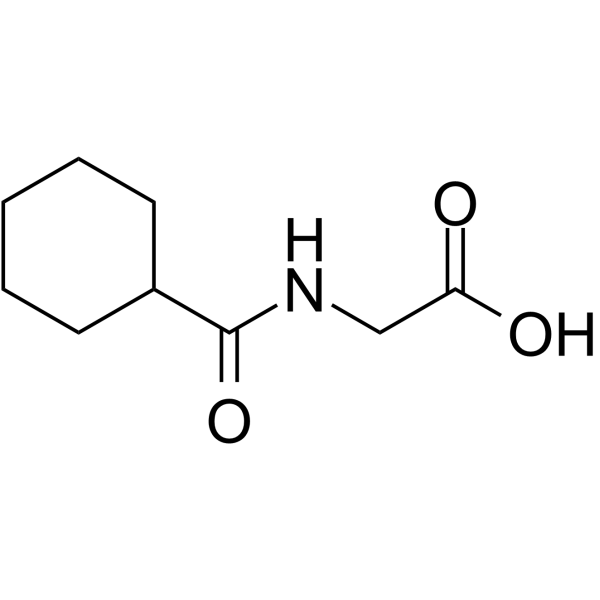 0 ImagesHexahydrohippuric acid is a metabolite of Shikimate acid in both liver and kidney, under microbial metabolism effect. Hexahydrohippuric acid is made of cyclohexane carboxylic acid and glycinamide, and shows antibacterial activity.
-
Sublancin
 0 ImagesCat. No.: HY-P10230CAS No.: 207410-26-2Sublancin is an antimicrobial peptide, which inhibits DNA replication, transcription and translation, without affecting membrane integrity. Sublancin suppresses glucose uptake for the competition of phosphotransferase system (PTS). Sublancin inhibits B. subtilis strain 168 ΔSPβ with MIC of 0.312 μM.
-
Dinactin
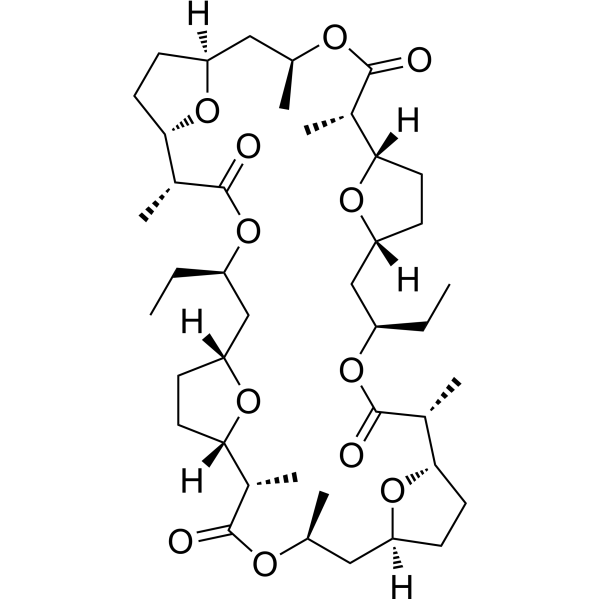 0 ImagesCat. No.: HY-121333CAS No.: 20261-85-2Dinactin, an antibiotic ionophore produced by Streptomyces species, as an effective small molecule targeting Wnt/β-catenin signaling pathway in cancer cells. Dinactin shows marked inhibition of HCT-116 cell growth with an IC50 of 1.1 μM. Dinactin shows anti-proliferative activity against the cancer cells in apoptosis-independent manner. Dinactin is also an effective agent for the research of neuropathic pain.
-
Altersolanol A
 0 ImagesCat. No.: HY-125461CAS No.: 22268-16-2Synonyms: Stemphylin; NSC 173943Altersolanol A (Stemphylin; NSC 173943) exhibits antimicrobial activities against Bacillus subtilis and Pseudomonas aeruginosa, with MIC of 25-100 μg/mL. Altersolanol A exhibits no phytotoxicity to Taxus (at dose of 4 μg/μL).
-
(+)-Thienamycin
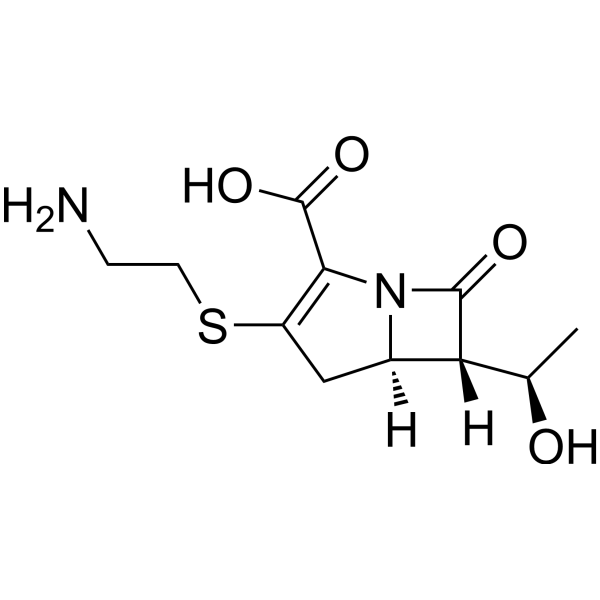 0 ImagesCat. No.: HY-W588257CAS No.: 59995-64-1(+)-Thienamycin is a potent broad-spectrum antibacterial and β-lactamase inhibitor that can be from Streptomyces cattleya.
-
Ethambutol-d4 dihydrochloride
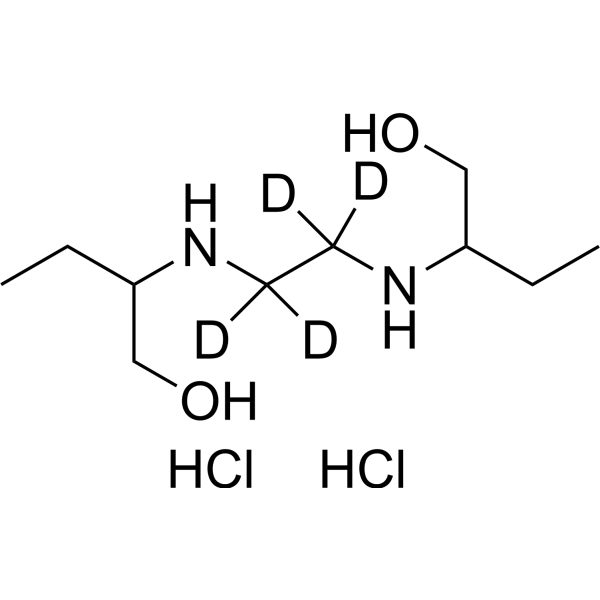 0 ImagesCat. No.: HY-B0535ASSynonyms: Emb-d4 dihydrochlorideEthambutol-d4 dihydrochloride is deuterated labeled Ethambutol dihydrochloride (HY-B0535A). Ethambutol dihydrochloride is an antimycobacterial compound that prevents cell wall formation by inhibiting arabinosyltransferase activity.
-
DNA Gyrase-IN-17
 0 ImagesCat. No.: HY-172962DNA Gyrase-IN-17 (Compound 5C) is a DNA Gyrase inhibitor. DNA Gyrase-IN-17 exhibits significant antibacterial activity against a variety of Gram-positive and Gram-negative strains (such as Enterococcus faecalis, Escherichia coli, Pseudomonas aeruginosa, etc.), with a MIC value of 62.5 μg/mL. DNA Gyrase-IN-17 interferes with DNA replication by inhibiting bacterial DNA gyrase. DNA Gyrase-IN-17 can be used in the development of antibacterial drugs, especially for the study of drug-resistant strains.
-
Nyasol
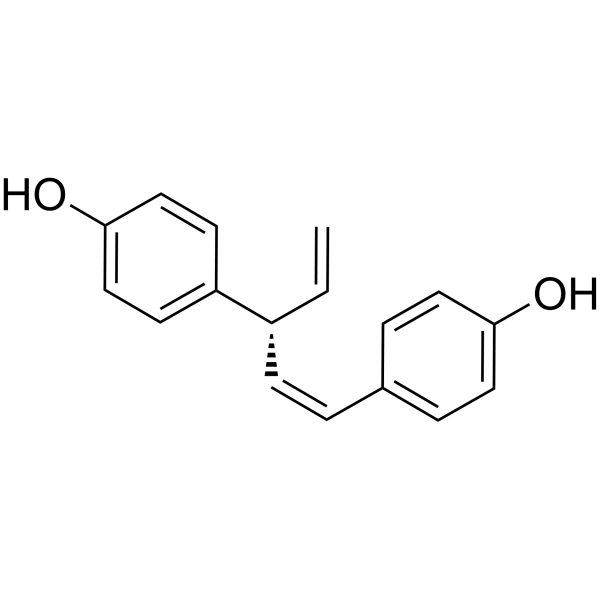 0 ImagesCat. No.: HY-138050CAS No.: 96895-25-9Synonyms: (-)-Nyasol; (Z)-Hinokiresinol; cis-HinokiresinolNyasol ((-)-Nyasol) is an active compound that has antifungal, antibacterial, antileishmanial, hyaluronidase inhibition activities. Nyasol inhibits LTB4 binding to human neutrophils. Nyasol suppresses neuroinflammatory response through the inhibition of I-κB degradation in LPS (HY-D1056)-stimulated BV-2 microglial cells.
-
Polyalanine peptide
 0 ImagesCat. No.: HY-P10546Synonyms: pALAPolyalanine peptide (pALA) is an antimicrobial peptide that targets biofilms and Gram-negative bacteria and is non-toxic to mammalian cells. Polyalanine peptide forms an α-helical conformation that effectively permeabilizes Gram-negative bacterial membranes, thereby inducing lethal cell leakage. Polyalanine peptide can be used in anti-infection research.
-
Zelkovamycin
 0 ImagesCat. No.: HY-P2206CAS No.: 221197-33-7Zelkovamycin is a cyclic peptide antibiotic originally isolated from Streptomyces. It inhibits growth of X. oryzae, P. oryzae, S. aureus, and A. laidlawii in a concentration-dependent manner when used at concentrations ranging from 0.01 to 300 μg/mL.

-
Pefloxacin (Standard)
 0 ImagesCat. No.: HY-B0147RCAS No.: 70458-92-3Synonyms: Pefloxacinium (Standard)Pefloxacin (Standard) (Pefloxacinium (Standard)) is the analytical standard of Pefloxacin (HY-B0147). This product is intended for research and analytical applications. Pefloxacin (Pefloxacinium) is a broad spectrum antibiotic. Pefloxacin blocks DNA replication by inhibiting DNA gyrase. Pefloxacin inhibits DNA relaxation catalyzed by topoisomerase I with an IC50 of 45 μg/mL. Pefloxacin exhibits antibacterial activity against Escherichia coli, Pseudomonas aeruginosa, and Bacteroides fragilis with MIC90s of 0.12, 4, and 16 mg/L, respectively. Pefloxacin has anti-Plasmodium yoelii infection activity. Pefloxacin increase UVA-induced edema and immunesuppression. Pefloxacin can be used for infection studies.
-
Antibacterial agent 104
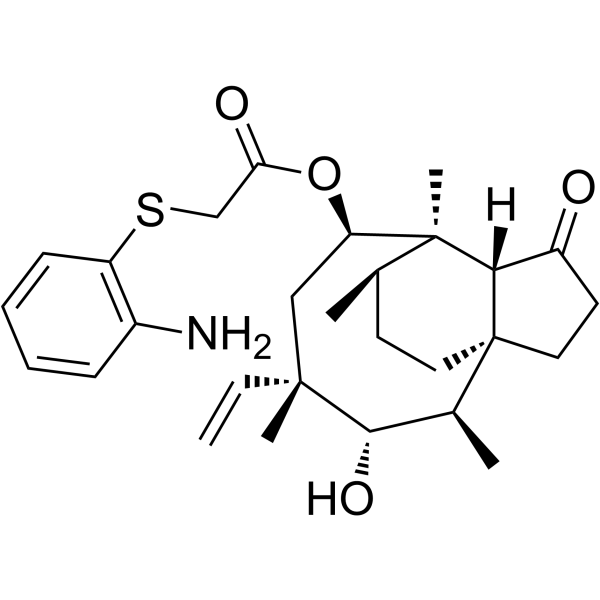 0 ImagesCat. No.: HY-112240CAS No.: 2095612-29-4Antibacterial agent 104 (Compound 7) is a potent antibacterial agent. Antibacterial agent 104 displays excellent antibacterial activity in vitro and good efficacy in vivo against MRSA.
-
Rudolfomycin
 0 ImagesCat. No.: HY-126731CAS No.: 69245-38-1Rudolfomycin is an anthracycline Antibiotic, composed of the aglycone ε-pyrromycinone and three glycosyl sugar units. Rudolfomycin inhibits the growth of mammalian tumors and exhibits antibacterial activity against Gram-positive bacteria. Rudolfomycin can be used in the research of leukemia and Gram-positive bacterial infections.
-
Hordenine-d6 hydrochloride
 0 ImagesCat. No.: HY-N0113BSSynonyms: Ordenina-d6 hydrochloride; Peyocactine-d6 hydrochlorideHordenine-d6 hydrochloride (Ordenina-d6 hydrochloride; Peyocactine-d6 hydrochloride) is the deuterated-labeled Hordenine hydrochloride (HY-N0113B). Hordenine hydrochloride (Ordenina hydrochloride; Peyocactine hydrochloride) is a multifunctional alkaloid with oral activity and blood-brain barrier penetration. Hordenine hydrochloride inhibits LPS-induced phosphorylation of p38, JNK, ERK1/2, p65, IκB, and AKT, prevents p65 nuclear translocation, and suppresses inflammatory cytokines and mediators. Hordenine hydrochloride inhibits melanin synthesis in melanocytes and reconstructed epidermis. Hordenine hydrochloride activates the Wnt/β-catenin signaling pathway. Hordenine hydrochloride activates DRD2, acts as a D3R partial agonist, α2A-AR full agonist, and 5-HT2A-R antagonist, and inhibits SERT and DAT. Hordenine hydrochloride inhibits α-synuclein accumulation and ameliorates motor deficits in Parkinson's disease models. Hordenine hydrochloride limits alcohol intake, reduces relapse drinking behavior. Hordenine hydrochloride can be used for research on mastitis, skin pigmentation, acute lung injury, foodborne diseases, hair loss, Parkinson's disease, bacterial infections, and alcohol use disorder.
-
Sodium citrate dihydrate, United States Pharmacopeia (USP) Reference Standard
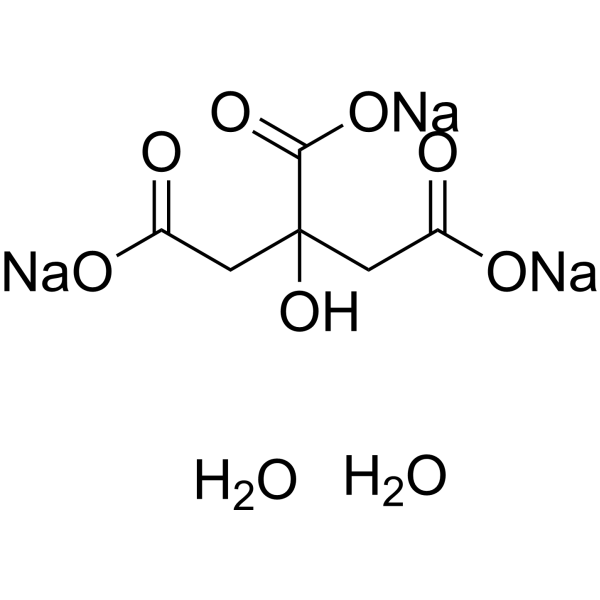 0 ImagesSynonyms: Trisodium citrate dihydrate (Pharmaceutical primary standard, USP)Sodium citrate (Trisodium citrate) dihydrate, United States Pharmacopeia (USP) Reference Standard is an orally active natural product that can be found in citrus fruits. Sodium citrate dihydrate can inhibit the proliferation of tumor cells and induce apoptosis. Sodium citrate dihydrate has antibacterial, anti-tumor and antioxidant activities. Sodium citrate dihydrate can be prepared as a cosolvent or buffer.




