



CDK
Cyclin dependent kinase
CDKs (Cyclin-dependent kinases) are serine-threonine kinases first discovered for their role in regulating the cell cycle. They are also involved in regulating transcription, mRNA processing, and the differentiation of nerve cells. CDKs are relatively small proteins, with molecular weights ranging from 34 to 40 kDa, and contain little more than the kinase domain. In fact, yeast cells can proliferate normally when their CDK gene has been replaced with the homologous human gene. By definition, a CDK binds a regulatory protein called a cyclin. Without cyclin, CDK has little kinase activity; only the cyclin-CDK complex is an active kinase.
There are around 20 Cyclin-dependent kinases (CDK1-20) known till date. CDK1, 4 and 5 are involved in cell cycle, and CDK 7, 8, 9 and 11 are associated with transcription.
CDK levels remain relatively constant throughout the cell cycle and most regulation is post-translational. Most knowledge of CDK structure and function is based on CDKs of S. pombe (Cdc2), S. cerevisia (CDC28), and vertebrates (CDC2 and CDK2). The four major mechanisms of CDK regulation are cyclin binding, CAK phosphorylation, regulatory inhibitory phosphorylation, and binding of CDK inhibitory subunits (CKIs).
CDK Isoform Specific Products
-
CDK
(488)
View all products
-
CDK1
(187)
View all products
-
CDK2
(302)
View all products
-
CDK3
(28)
View all products
-
CDK4
(223)
View all products
-
CDK5
(96)
View all products
-
CDK6
(168)
View all products
-
CDK7
(115)
View all products
-
CDK8
(55)
View all products
-
CDK9
(200)
View all products
-
CDK11
(8)
View all products
-
CDK12
(50)
View all products
-
CDK13
(25)
View all products
-
CDK14
(6)
View all products
-
CDK16
(8)
View all products
-
CDK19
(25)
View all products
-
CDC
(21)
View all products
-
CLK
(31)
View all products
-
Pho85
(1)
View all products
-
CDK10
(1)
View all products
-
CDK15
(1)
View all products
-
CDK17
(2)
View all products
-
CDK18
(1)
View all products
-
CDK20
(1)
View all products
-
PITSLRE
(1)
View all products
All Product Categories
-
CDK Inhibitors
(1060)
View all products
-
CDK Agonists
(3)
View all products
-
CDK Antagonists
(2)
View all products
-
CDK Activators
(15)
View all products
-
CDK Modulators
(14)
View all products
-
CDK Degraders
(83)
View all products
-
CDK Controls
(4)
View all products
-
CDK Substrate
(1)
View all products
-
CDK Ligands
(15)
View all products
-
Cyclin-Dependent Kinases (CDKs) Proteins
(81)
View all products
-
Cyclin Dependent Kinase 1 (CDK1) Proteins
(9)
View all products
-
Cyclin-Dependent Kinase 2 (CDK2) Proteins
(12)
View all products
-
Cyclin-Dependent Kinase 3 (CDK3) Proteins
(6)
View all products
-
Cyclin-Dependent Kinase 4 (CDK4) Proteins
(5)
View all products
-
Cyclin-Dependent Kinase 5 (CDK5) Proteins
(5)
View all products
-
Cyclin-Dependent Kinase 6 (CDK6) Proteins
(6)
View all products
-
Cyclin-Dependent Kinase 7 (CDK7) Proteins
(4)
View all products
-
CDK Related Products (1316)
Related Products (1316)

-
Recombinant Proteins (83)
-
Antibodies (42)
-
CDK Isoform Comparison
-
NecroIr1
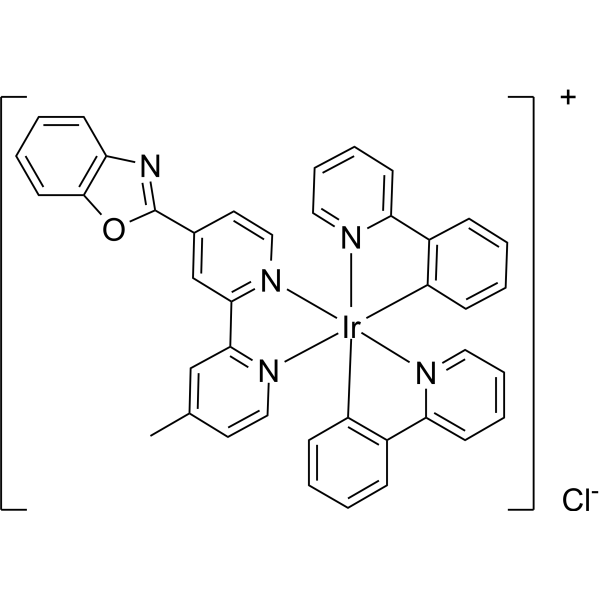 0 ImagesCat. No.: HY-148365Purity: 98.53%NecroIr1 is an iridium(III) complex, serves as necroptosis inducers in Cisplatin (HY-17394)-resistant lung cancer cells (A549R). NecroIr1 selectively accumulates in mitochondria, leading to oxidative stress and loss of mitochondrial membrane potential (MMP). NecroIr1 activates receptor-interacting serine-threonine kinase 3 (RIPK3) and Mixed Lineage Kinase (MLKL), and regulates CDK4 expression.
-
CDK12/13-IN-3
 0 ImagesCDK12/13-IN-3 (Compound 12b) is the orally active inhibitor for CDK that inhibits CDK12 and CDK13 with IC50 of 107.4 nM and 79.4 nM. CDK12/13-IN-3 inhibits the phosphorylation of Ser2 on the CTD of RNA polymerase II, induces DNA damage, and downregulates the gene expression of DNA damage response (DDR). CDK12/13-IN-3 exhibits antiproliferative activity against multiple cancer cells with IC50 of nanomolar levels. CDK12/13-IN-3 exhibits antitumor effect in mouse models, exhibits good pharmacokinetic properties with an oral bioavailability of 53.6%.
-
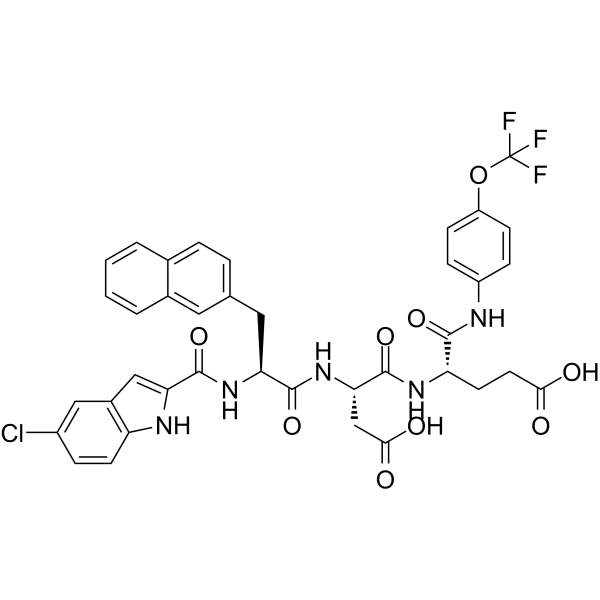
Aurora-A ligand 1
 0 ImagesAurora-A ligand 1 is a high-affinity and specific Aurora-A inhibitor with a dissociation constant (Kd) value of 0.85 nM. Aurora-A ligand 1 can serve as a ligand for target protein (Ligands for Target Protein for PROTAC) for the development of PROTAC Aurora-A degraders with antitumor activity. Aurora-A ligand 1 can be used for the synthesis of HLB-0532259 (HY-168439). HLB-0532259 shows anti-tumor activity against neuroblastoma.
-
NSC23005 sodium
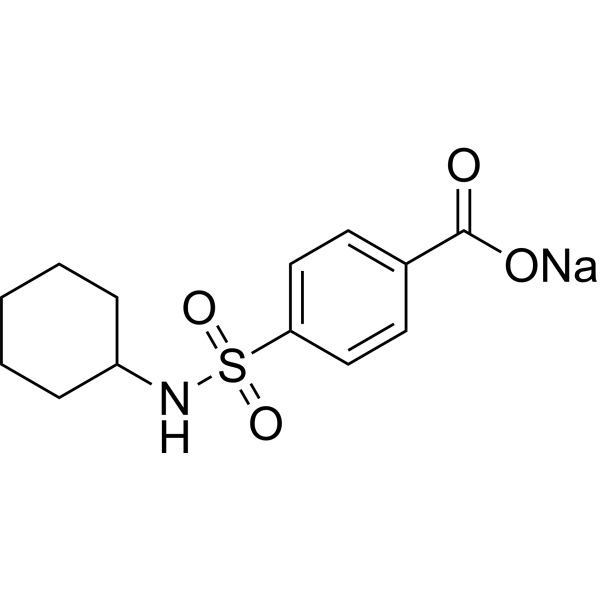 0 ImagesNSC23005 sodium is a novel and effective p18 inhibitor (ED50=5.21 nM) in promoting Hematopoietic stem cells (HSCs) expansion in both murine and human models.
-
(2S,3R,4S)-ASX-173
 0 Images(2S,3R,4S)-ASX-173 is the (2S,3R,4S)-enantiomer of ASX-173 (HY-175282). ASX-173 is an orally active inhibitor of asparagine synthetase (ASNS) (IC50 = 0.113 μM, Ki = 0.4 nM). ASX-173 enhances the anticancer activity of L-asparaginase (ASNase) (HY-P1923). ASX-173 disrupts nucleotide synthesis and induces leukemia cell cycle arrest, apoptosis and autophagy in leukemia cells in combination with ASNase. ASX-173 slows the growth of OCI-AML2 xenografts in combination with ASNase. ASX-173 is indicated for the study of acute lymphoblastic leukemia, acute myeloid leukemia, colorectal cancer, and other cancers.
-
PROTAC CDK2/4/6 Degrader-2
 0 ImagesCat. No.: HY-185121CAS No.: 2541626-49-5PROTAC CDK2/4/6 Degrader-2 is a CDK2/4/6 PROTAC degrader. PROTAC CDK2/4/6 Degrader-2. PROTAC CDK2/4/6 Degrader-2 can be converted into the prodrug PROTAC CDK2/4/6 Degrader-1 (HY-171826) through a one-step reaction with chloromethyl pivalate. PROTAC CDK2/4/6 Degrader-2 degrades CDK2/4/6 and their complex in malignant melanomas cells. PROTAC CDK2/4/6 Degrader-2 induces cell cycle arrest and cell apoptosis in various cancer cells, in particular for melanomas. PROTAC CDK2/4/6 Degrader-2 can be used for malignant melanomas research.

-
P18IN003
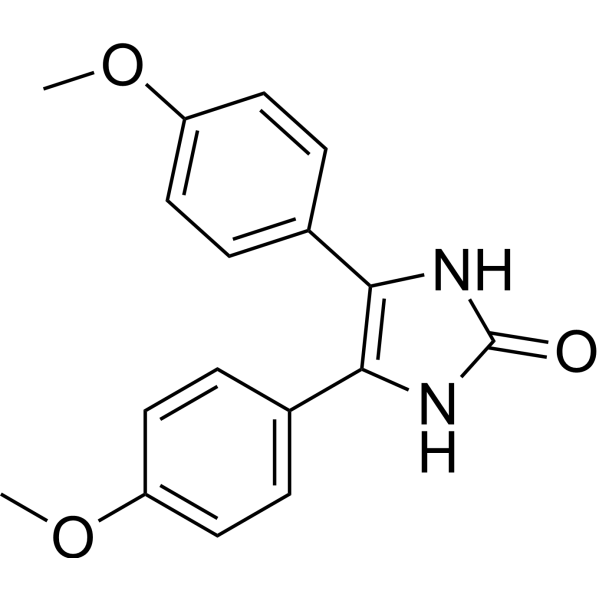 0 ImagesP18IN003 is a potent p18(INK4C) inhibitor andspecifically block the activity of p18 protein. P18IN003 has the potential to be aneffective chemical agent for therapeutic expansion of HSC.
-
Palbociclib monohydrochloride (Standard)
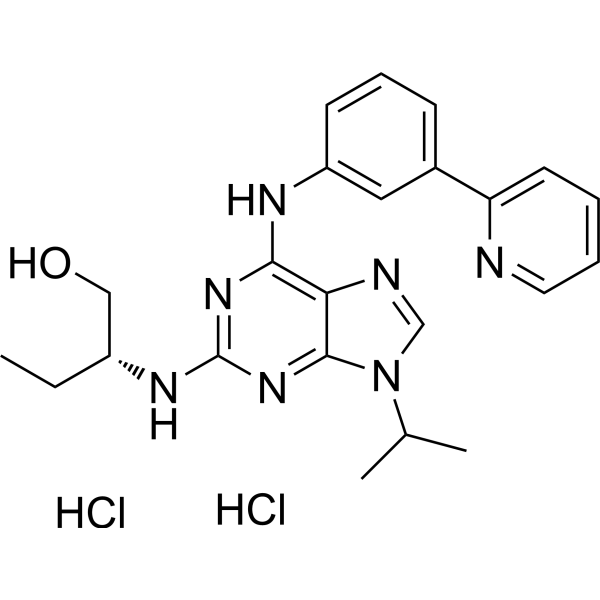
 0 ImagesSynonyms: PD 0332991 monohydrochloride (Standard)Palbociclib (monohydrochloride) (Standard) is the analytical standard of Palbociclib (monohydrochloride). This product is intended for research and analytical applications. Palbociclib (PD 0332991) monohydrochloride is an orally active selective CDK4 and CDK6 inhibitor with IC50 values of 11 and 16 nM, respectively. Palbociclib monohydrochloride has potent anti-proliferative activity and induces cell cycle arrest in cancer cells, which can be used in the research of HR-positive and HER2-negative breast cancer and hepatocellular carcinoma.

-
Atuveciclib S-Enantiomer
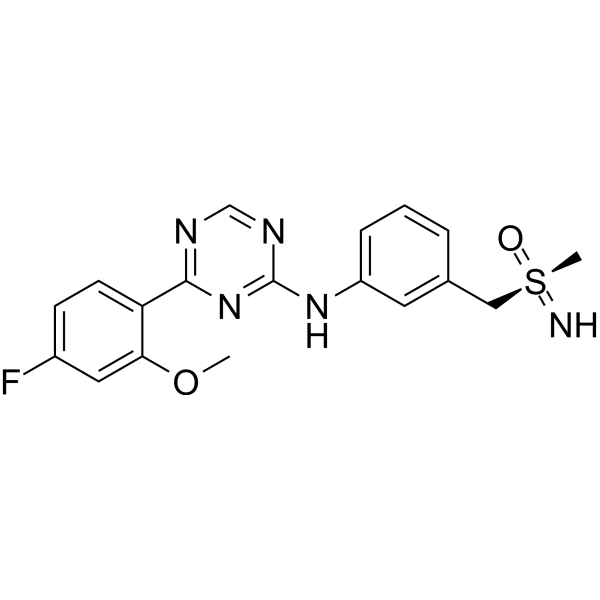 0 ImagesSynonyms: BAY-1143572 S-Enantiomer; (+)-Atuveciclib; (+)-BAY-1143572
-
CDK7-IN-1
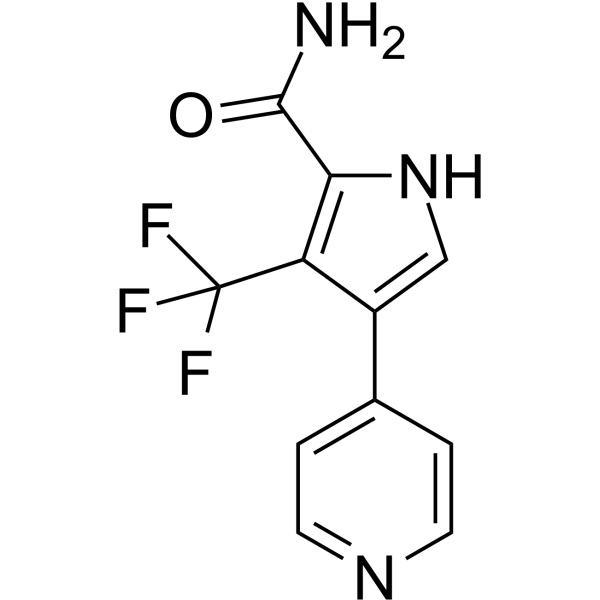
 0 ImagesCat. No.: HY-101257ACAS No.: 1957203-02-9CDK7-IN-1, an analog of YKL-5-124, is a cyclin-dependent kinase 7 (cdk7) inhibitor, with an IC50 of less than 100 nM, extracted from patent WO 2016105528 A2, Compound 215.
-
GDC-4198
 0 ImagesSynonyms: RGT-419BGDC-4198 (RGT-419B) is an orally active CDK4/2 inhibitor with desired degrees of selectivity against kinases such as CDK6, CDK9 and GSK3β. GDC-4198 inhibits the activity of cyclin-CDK complexes, blocks phosphorylation of the retinoblastoma protein (pRb), arresting the cell cycle transition from G1 to S phase. GDC-4198 is promising for research of cancers, such as breast cancer (especially hormone receptor-positive, HER2-negative type), lung cancer, and colorectal cancer.
-
PROTAC D16-M1P2
 0 ImagesCat. No.: HY-180485PROTAC D16-M1P2 is an orally active CRBN-mediated selective PKMYT1 PROTAC degrader, with a DC50 of 0.7 nM in CCNE1-amplified HCC1569 breast cancer cells. PROTAC D16-M1P2 induces PKMYT1 degradation via the ubiquitin-proteasome system, directly inhibits PKMYT1 kinase activity, suppresses Thr14 phosphorylation of CDK1, and depends on functional CRBN and ubiquitination-like modification processes. PROTAC D16-M1P2 can be used for the research of CCNE1-amplified breast cancer, FBXW7-mutated cholangiocarcinoma, and PPP2R1A-deficient cancers.
-
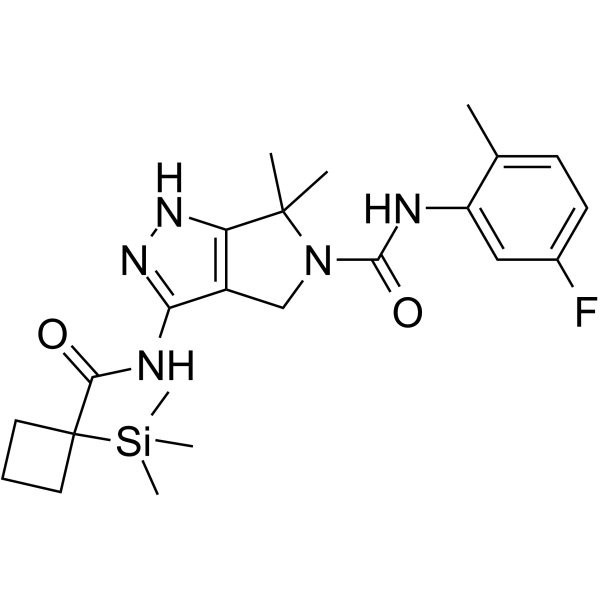
(S)-LY3177833 hydrate
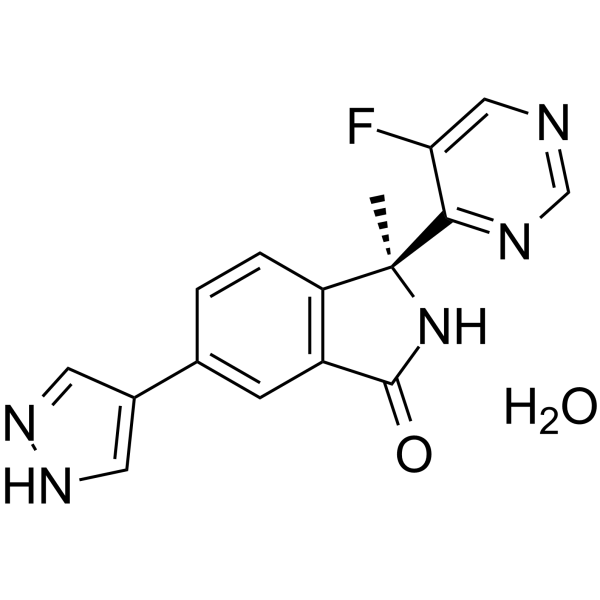 0 ImagesCat. No.: HY-143430ACAS No.: 2733342-93-1(S)-LY3177833 ((S)-Example 2) hydrate is an orally active CDC7 kinase inhibitor. (S)-LY3177833 hydrate shows broad in vitro anticancer activity.
-
LY3177833 monhydrate
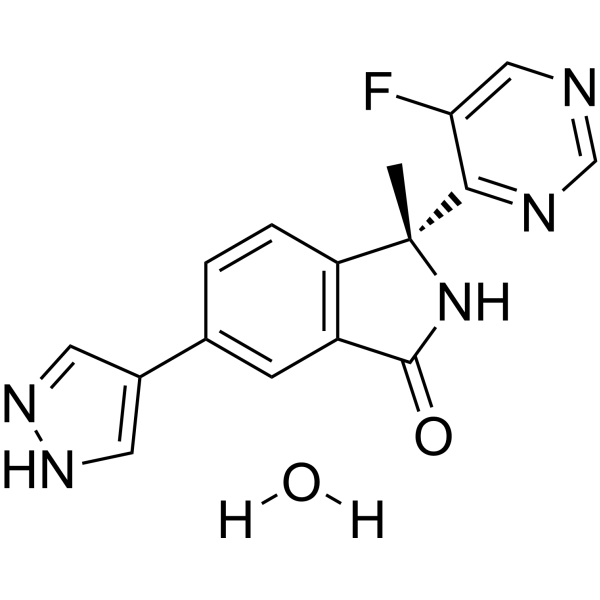 0 ImagesCat. No.: HY-100023ACAS No.: 1627696-53-0LY3177833 (Example 4) monhydrate is an orally active CDC7 and pMCM2 inhibitor with IC50 values of 3.3 nM and 290 nM, respectively. LY3177833 monhydrate is a senescence inducer.




