



CDK
Cyclin dependent kinase
CDKs (Cyclin-dependent kinases) are serine-threonine kinases first discovered for their role in regulating the cell cycle. They are also involved in regulating transcription, mRNA processing, and the differentiation of nerve cells. CDKs are relatively small proteins, with molecular weights ranging from 34 to 40 kDa, and contain little more than the kinase domain. In fact, yeast cells can proliferate normally when their CDK gene has been replaced with the homologous human gene. By definition, a CDK binds a regulatory protein called a cyclin. Without cyclin, CDK has little kinase activity; only the cyclin-CDK complex is an active kinase.
There are around 20 Cyclin-dependent kinases (CDK1-20) known till date. CDK1, 4 and 5 are involved in cell cycle, and CDK 7, 8, 9 and 11 are associated with transcription.
CDK levels remain relatively constant throughout the cell cycle and most regulation is post-translational. Most knowledge of CDK structure and function is based on CDKs of S. pombe (Cdc2), S. cerevisia (CDC28), and vertebrates (CDC2 and CDK2). The four major mechanisms of CDK regulation are cyclin binding, CAK phosphorylation, regulatory inhibitory phosphorylation, and binding of CDK inhibitory subunits (CKIs).
CDK Isoform Specific Products
-
CDK
(488)
View all products
-
CDK1
(187)
View all products
-
CDK2
(303)
View all products
-
CDK3
(28)
View all products
-
CDK4
(223)
View all products
-
CDK5
(96)
View all products
-
CDK6
(168)
View all products
-
CDK7
(115)
View all products
-
CDK8
(56)
View all products
-
CDK9
(200)
View all products
-
CDK11
(8)
View all products
-
CDK12
(50)
View all products
-
CDK13
(25)
View all products
-
CDK14
(6)
View all products
-
CDK16
(8)
View all products
-
CDK19
(25)
View all products
-
CDC
(21)
View all products
-
CLK
(31)
View all products
-
Pho85
(1)
View all products
-
CDK10
(1)
View all products
-
CDK15
(1)
View all products
-
CDK17
(2)
View all products
-
CDK18
(1)
View all products
-
CDK20
(1)
View all products
-
PITSLRE
(1)
View all products
All Product Categories
-
CDK Inhibitors
(1062)
View all products
-
CDK Agonists
(3)
View all products
-
CDK Antagonists
(2)
View all products
-
CDK Activators
(15)
View all products
-
CDK Modulators
(14)
View all products
-
CDK Degraders
(83)
View all products
-
CDK Controls
(4)
View all products
-
CDK Substrate
(1)
View all products
-
CDK Ligands
(15)
View all products
-
Cyclin-Dependent Kinases (CDKs) Proteins
(81)
View all products
-
Cyclin Dependent Kinase 1 (CDK1) Proteins
(9)
View all products
-
Cyclin-Dependent Kinase 2 (CDK2) Proteins
(12)
View all products
-
Cyclin-Dependent Kinase 3 (CDK3) Proteins
(6)
View all products
-
Cyclin-Dependent Kinase 4 (CDK4) Proteins
(5)
View all products
-
Cyclin-Dependent Kinase 5 (CDK5) Proteins
(5)
View all products
-
Cyclin-Dependent Kinase 6 (CDK6) Proteins
(6)
View all products
-
Cyclin-Dependent Kinase 7 (CDK7) Proteins
(4)
View all products
-
CDK Related Products (1318)
Related Products (1318)

-
Recombinant Proteins (83)
-
Antibodies (42)
-
CDK Isoform Comparison
-
CDK-IN-9
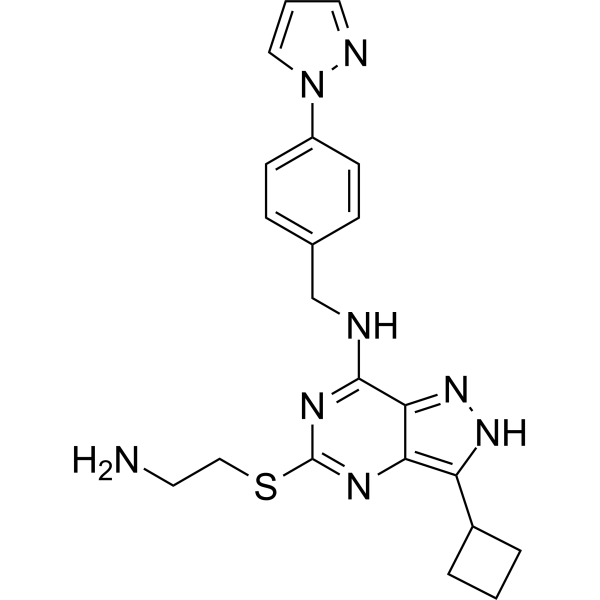 0 ImagesCat. No.: HY-150641CAS No.: 3031561-92-6CDK-IN-9 (compound 24) is a potent CDK inhibitor, also as a molecular glue inducing an interaction between CDK12 and DDB1, with an IC50 values of 4 nM for CDK2/E. CDK-IN-9 leads to polyubiquitination of cyclin K and its subsequent degradation. CDK-IN-9 induce apoptosis through dephosphorylation of retinoblastoma protein and RNA polymerase II.
-
PROTAC CDK2/4/6 Degrader-1
 0 ImagesCat. No.: HY-171826CAS No.: 2541626-55-3
-
Tubulin polymerization-IN-85
 0 ImagesCat. No.: HY-180190Tubulin polymerization-IN-85 (Compound C21) is a tubulin polymerization inhibitor (IC50 = 1.59 μM) targeting the colchicine binding site. Tubulin polymerization-IN-85 can cause cancer cells G2/M phase arrest and induce apoptosis. Tubulin polymerization-IN-85 downregulates the expression of Bcl-2, Bcl-xl, Mcl-1, Cyclin B1, cdc25, cdc2 protein and upregulates P53, P21, Bad and Bax levels. Tubulin polymerization-IN-85 can be used for the research of cancer, such as cervical cancer.
-
PROTAC CDK4/6/9 degrader 1
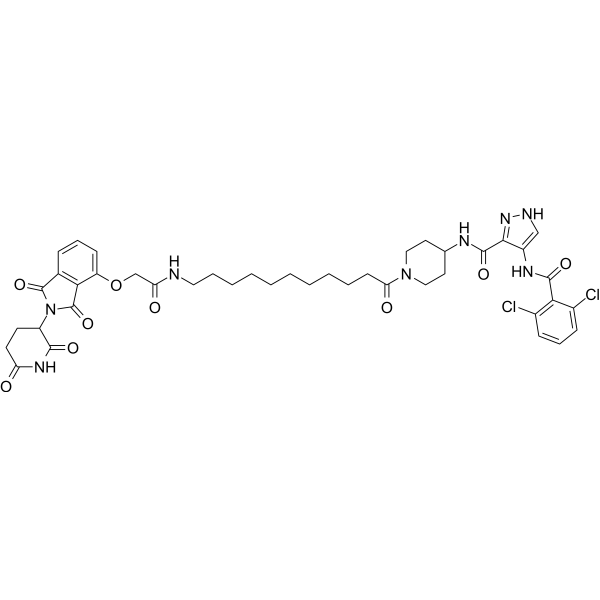
 0 ImagesCat. No.: HY-178452CAS No.: 3064994-97-1PROTAC CDK4/6/9 degrader 1 is a CDK4/6/9 PROTAC degrader. PROTAC CDK4/6/9 degrader 1 degrades CDK4, CDK6, and CDK9 in TNBC cells and inhibits TNBC cell proliferation. PROTAC CDK4/6/9 degrader 1 induces G1 phase arrest, promotes apoptosis, and suppresses cell migration and invasion in TNBC cells. PROTAC CDK4/6/9 degrader 1 can be used for the study of triple-negative breast cancer (TNBC). (Pink: CDK4/6/9 ligand (HY-168440), Blue: CRBN Ligand (HY-14658), Black: Linker (HY-178512), E3 ligase ligand-linker conjugate (HY-178515)).
-
Aloisine RP106
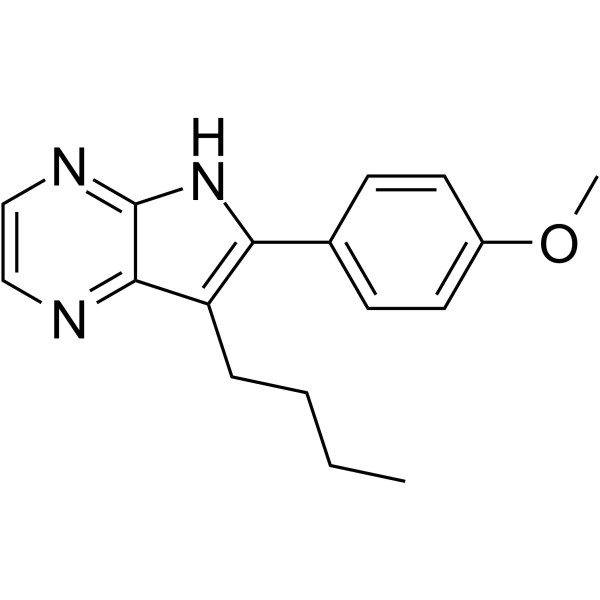 0 ImagesAloisine RP106 (compound 38) is a potent inhibitor of Cdk1/cyclin B, Cdk5/p25, and GSK3 with IC50s of 0.70µM, 1.5µM, 0.92 µM, respectively.
-
Roccellic acid
 0 ImagesCat. No.: HY-N12218CAS No.: 29838-46-8Synonyms: (+)-Roccellic acid; NSC 249985Roccellic acid is a methanol extract of Roccella montagnei with cytotoxicity with an IC50 value of 71.26 μg/ml.
-
PARP1-IN-50
 0 ImagesCat. No.: HY-179614CAS No.: 2255341-36-5PARP1-IN-50 is a selective and orally active PARP-1 inhibitor with an IC50 of 64.98 nM. PARP1-IN-50 can inhibit PAR formation and induce DNA double strand breaks, thereby causing DNA damage. PARP1-IN-50 can induce G2/M phase arrest and cancer cells apoptosis. PARP1-IN-50 demonstrates significant antiproliferative activity against various cancer cells. PARP1-IN-50 can be used for the research of cancer, such as breast cancer.
-
Indirubin-5-sulfonate
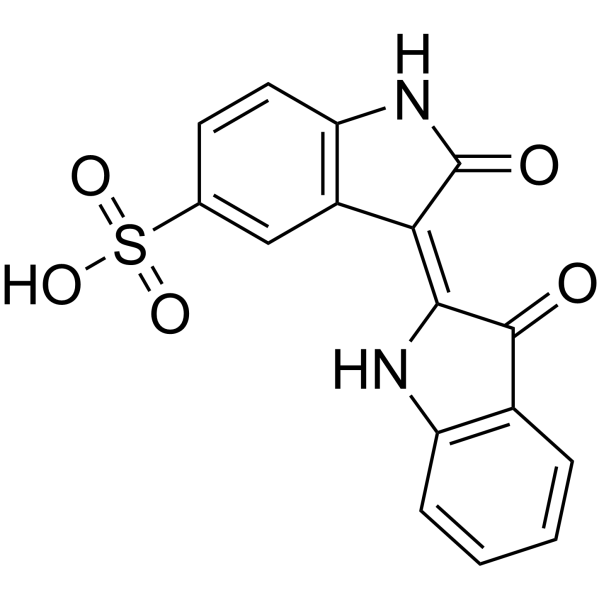 0 ImagesCat. No.: HY-111932CAS No.: 244021-67-8Indirubin-5-sulfonate is a cyclin-dependent kinase (CDK) inhibitor, with IC50 values of 55 nM, 35 nM, 150 nM, 300 nM and 65 nM for CDK1/cyclin B, CDK2/cyclin A, CDK2/cyclin E, CDK4/cyclin D1, and CDK5/p35, respectively. Indirubin-5-sulfonate also shows inhibitory activity against GSK-3β.
-
SNX631
 0 ImagesCat. No.: HY-187035CAS No.: 868066-26-6SNX631 is an orally active and selective CDK8/CDK19 inhibitor. SNX631 reduces the phosphorylation of STAT1/STAT3 S727, and upregulates miR-21-5p, miR-21-3p and miR-221 in cancer cells. SNX631 transcription-independently inhibits meiotic resumption in mouse oocytes, blocks nuclear envelope breakdown, first polar body extrusion and mitochondrial expansion and aggregation, with no cytotoxicity. SNX631, in combination with Lapatinib (HY-50898) or Trastuzumab (HY-P9907), synergistically inhibits cancer cell growth, upregulates the tumor suppressor BTG2, prevents Lapatinib-induced upregulation of oncogenic miRNAs, overcomes drug resistance, reduces the infiltration of αSMA+ stromal fibroblasts and ARG1+ M2 macrophages, and exhibits favorable biosafety. SNX631 can be used in studies related to HER2-positive breast cancer and cancer.
-
CDK1-IN-9
 0 ImagesCat. No.: HY-182752CDK1-IN-9 is an orally active and selective CDK1 inhibitor with an IC50 of 5.5 nM. CDK1-IN-9 exhibits broad antiproliferative activity, particularly against HCT116 colon cancer cells. CDK1-IN-9 induces G2/M phase arrest and downregulates CDK1, cyclin B1, and the replication initiation factor CDC45. CDK1-IN-9 induces severe DNA replication stress, subsequently activating the p53 signaling pathway to trigger apoptosis. CDK1-IN-9 can be used for research on colon cancer, liver cancer and gastric cancer.
-
CDK1/CycB1 Recombinant Human Active Protein Kinase
 0 ImagesCat. No.: HY-E70653CDK1 is a cyclin-dependent kinase that functions as a serine/threonine protein kinase, and is a key player in cell cycle regulation. CDK1/CycB1 Recombinant Human Active Protein Kinase is an ortholog of CDK1. CDK1/cyclin B1 complexes initiates mitotic entry by phosphorylating a multitude of proteins to condense chromosomes, disrupt the nuclear envelope, and enable microtubules polymerization to attach and to segregate the chromosomes.

-
CDK2-IN-42
 0 ImagesCat. No.: HY-173147CDK2-IN-42 (Compound H63) is a CDK12 inhibitor with an IC50 value of 10 nM. CDK2-IN-42 has anti-ESCC (Esophageal Squamous Cell Carcinoma) cell activity. It can block transcriptional elongation, downregulate the core genes in the G1 phase to induce cell cycle arrest, and alter the CDK12-ATM/ATR-CHEK1/CHEK2 signaling axis, resulting in DNA damage. CDK2-IN-42 can effectively inhibit tumor growth in a xenograft mouse model of human ESCC KYSE150. CDK2-IN-42 holds great promise for research in the field of cancer.
-
CDK4/6-IN-17
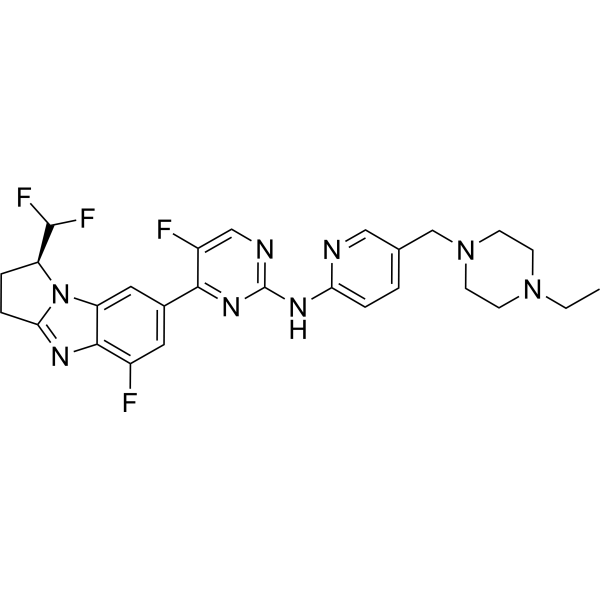 0 ImagesCat. No.: HY-153704CAS No.: 2035069-96-4CDK4/6-IN-17 (compound 12) is an orally active CDK4/6 inhibitor with IC50 ranging of 10-100 nM in BE(2) cells. CDK4/6-IN-17 inhibits tumor growth in COLO205 xenograft model.
-
CDK2 degrader 11
 0 ImagesCat. No.: HY-187363CAS No.: 3121124-92-0CDK2 degrader 11 (Example 5) is a CDK2 degrader. CDK2 degrader 11 is applicable for cancer research.
-
Cyclin K degrader 2
 0 ImagesCat. No.: HY-177780Cyclin K degrader 2 is a molecular glucose degrading agent that targets the cyclin K protein. Cyclin K degrader 2 has inhibitory activity against CDK1 and CDK9. Cyclin K degrader 2 causes a decrease in RNA polymerase II Ser2 phosphorylation levels, downregulation of DNA damage response gene expression, accumulation of DNA damage, G1 phase arrest of the cell cycle, and apoptosis. Cyclin K degrader 2 can be used for cancer research.

-
CDK4/6-IN-19
 0 ImagesCat. No.: HY-162529CAS No.: 3033950-86-3CDK4/6-IN-19 (Compound II-7) is a CDK4/CDK6 inhibitor with IC50 values of 0.2, 5.0 nM, respectively. CDK4/6-IN-19 also inhibits cell proliferation and can be used in cancer research.
-
(rac)-ZK-304709
 0 ImagesCat. No.: HY-19471CAS No.: 1010440-84-2(rac)-ZK-304709 is an isoform of ZK-304709 and is an orally active multi-targeted tumor growth inhibitor that inhibits multiple cell cycle-dependent kinases (CDKs), vascular endothelial growth factor receptor kinases (VEGF-RTKs), and platelet-derived growth factor receptor kinase β (PDGF-RTKβ). (rac)-ZK-304709 can dose-dependently inhibit the proliferation and colony formation of neuroendocrine tumor (NET) cells. (rac)-ZK-304709 directly acts on NET cells by inducing G2 cell cycle arrest and apoptosis, while reducing the expression of MCL1, survivin, and HIF1α. (rac)-ZK-304709 effectively controls tumor growth by inducing apoptosis and inhibiting tumor-induced angiogenesis, and may become a potential agent for inhibiting NET.




