



CDK
Cyclin dependent kinase
CDKs (Cyclin-dependent kinases) are serine-threonine kinases first discovered for their role in regulating the cell cycle. They are also involved in regulating transcription, mRNA processing, and the differentiation of nerve cells. CDKs are relatively small proteins, with molecular weights ranging from 34 to 40 kDa, and contain little more than the kinase domain. In fact, yeast cells can proliferate normally when their CDK gene has been replaced with the homologous human gene. By definition, a CDK binds a regulatory protein called a cyclin. Without cyclin, CDK has little kinase activity; only the cyclin-CDK complex is an active kinase.
There are around 20 Cyclin-dependent kinases (CDK1-20) known till date. CDK1, 4 and 5 are involved in cell cycle, and CDK 7, 8, 9 and 11 are associated with transcription.
CDK levels remain relatively constant throughout the cell cycle and most regulation is post-translational. Most knowledge of CDK structure and function is based on CDKs of S. pombe (Cdc2), S. cerevisia (CDC28), and vertebrates (CDC2 and CDK2). The four major mechanisms of CDK regulation are cyclin binding, CAK phosphorylation, regulatory inhibitory phosphorylation, and binding of CDK inhibitory subunits (CKIs).
CDK Isoform Specific Products
-
CDK
(488)
View all products
-
CDK1
(187)
View all products
-
CDK2
(303)
View all products
-
CDK3
(28)
View all products
-
CDK4
(223)
View all products
-
CDK5
(96)
View all products
-
CDK6
(168)
View all products
-
CDK7
(115)
View all products
-
CDK8
(56)
View all products
-
CDK9
(200)
View all products
-
CDK11
(8)
View all products
-
CDK12
(50)
View all products
-
CDK13
(25)
View all products
-
CDK14
(6)
View all products
-
CDK16
(8)
View all products
-
CDK19
(25)
View all products
-
CDC
(21)
View all products
-
CLK
(31)
View all products
-
Pho85
(1)
View all products
-
CDK10
(1)
View all products
-
CDK15
(1)
View all products
-
CDK17
(2)
View all products
-
CDK18
(1)
View all products
-
CDK20
(1)
View all products
-
PITSLRE
(1)
View all products
All Product Categories
-
CDK Inhibitors
(1062)
View all products
-
CDK Agonists
(3)
View all products
-
CDK Antagonists
(2)
View all products
-
CDK Activators
(15)
View all products
-
CDK Modulators
(14)
View all products
-
CDK Degraders
(83)
View all products
-
CDK Controls
(4)
View all products
-
CDK Substrate
(1)
View all products
-
CDK Ligands
(15)
View all products
-
Cyclin-Dependent Kinases (CDKs) Proteins
(81)
View all products
-
Cyclin Dependent Kinase 1 (CDK1) Proteins
(9)
View all products
-
Cyclin-Dependent Kinase 2 (CDK2) Proteins
(12)
View all products
-
Cyclin-Dependent Kinase 3 (CDK3) Proteins
(6)
View all products
-
Cyclin-Dependent Kinase 4 (CDK4) Proteins
(5)
View all products
-
Cyclin-Dependent Kinase 5 (CDK5) Proteins
(5)
View all products
-
Cyclin-Dependent Kinase 6 (CDK6) Proteins
(6)
View all products
-
Cyclin-Dependent Kinase 7 (CDK7) Proteins
(4)
View all products
-
CDK Related Products (1318)
Related Products (1318)

-
Recombinant Proteins (83)
-
Antibodies (42)
-
CDK Isoform Comparison
-
Bisindolylmaleimide III hydrochloride
 0 ImagesCat. No.: HY-112454CAS No.: 683775-59-9Bisindolylmaleimide III hydrochloride is a protein kinase C (PKC) inhibitor with IC50 values of 0.26, 5.7, and 6 μM against PKCα, PKCδ, and PKCμ, respectively. Bisindolylmaleimide III hydrochloride also exhibits inhibitory activity against other off-targets, with IC50 values of 0.17, 1, and 2 μM against SLK, adenosine kinase (AK), and CDK2, respectively; its Ki for NQO2 is 16.5 μM. Bisindolylmaleimide III hydrochloride selectively binds to activated Rsk1 following EGF stimulation, and serves as a tool for detecting the activation status of intracellular Rsk1 and PKCα, as well as for functional analysis of SLK. Bisindolylmaleimide III hydrochloride can be used in studies of signal transduction and colorectal cancer.
-
CDK7-IN-33 maleate
 0 ImagesCat. No.: HY-181565A
-
Bisindolylmaleimide X
 0 ImagesCat. No.: HY-108136CAS No.: 131848-97-0Synonyms: BIM-X; Ro31-8425Bisindolylmaleimide X (Ro 31-8425, BIM-X) is a cell-penetrating PKC inhibitor. Bisindolylmaleimide X is a potent cyclin-dependent kinase 2 (CDK2) antagonist with an IC50 of 200 nM. Bisindolylmaleimide X inhibits the proliferation of CD4 T cells in vitro. Bisindolylmaleimide X inhibits eNOS-Ser1177 phosphorylation in human embryonic vein endothelial cells. Bisindolylmaleimide X can be used for research on the immune system and cardiovascular diseases.
-
CDK4/6-IN-8
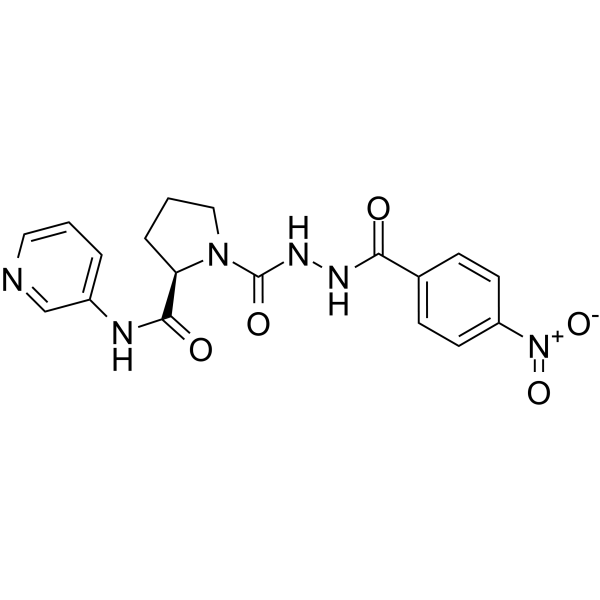 0 ImagesCat. No.: HY-143258CAS No.: 2649120-22-7
-
CDK9-Cyclin T1 PPI-IN-1
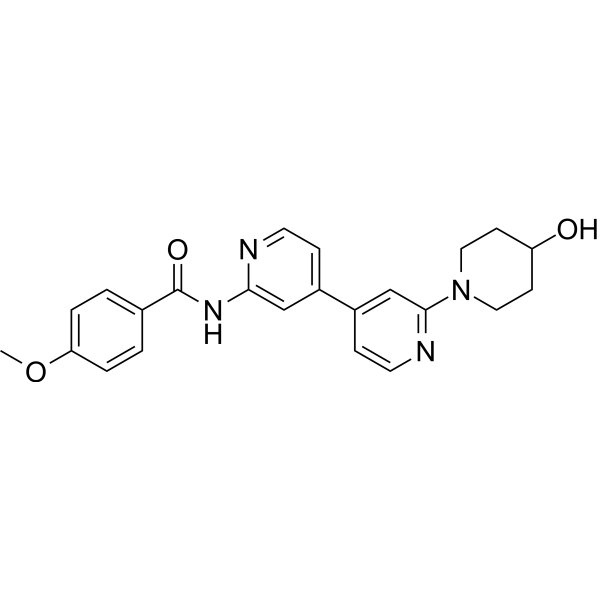 0 ImagesCat. No.: HY-156296CAS No.: 2995336-58-6CDK9-Cyclin T1 PPI-IN-1 (Compound B19) is a selective CDK9-Cyclin T1 protein-protein interaction (PPI) inhibitor. CDK9-Cyclin T1 PPI-IN-1 inhibits cell proliferation in TNBC MDA-MB-231 cells (IC50: 0.044 μM), and induces apoptosis. CDK9-Cyclin T1 PPI-IN-1 inhibits CDK9 transcription activity, reduces the phosphorylation of RNA Pol II CTD ser2. CDK9-Cyclin T1 PPI-IN-1 inhibits tumor growth in a TNBC 4T1 mouse model.
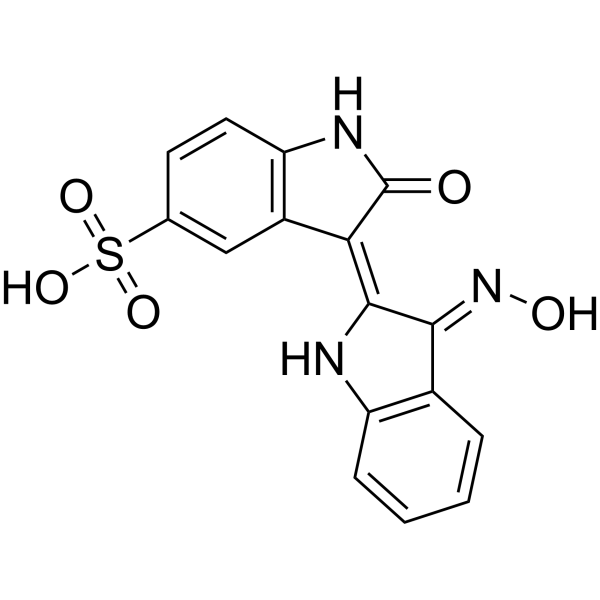

-
KM05382
 0 ImagesCat. No.: HY-123668CAS No.: 882291-64-7KM05382 serves as an inhibitor of CDK9 and reduces the transcription of GAPDH.
-
ODN BW001
 0 ImagesCat. No.: HY-150213CAS No.: 886862-38-0ODN BW001 is an oligodeoxynucleotide (ODN). ODN BW001 plays a regulatory role in the proliferation and activation of osteoblast.
-
Anticancer agent 306
 0 ImagesCat. No.: HY-181769CAS No.: 3043892-01-6Anticancer agent 306 is a spiro tetramic acid derivative and a inhibitor of MMP1, MMP7 and PLK1. Anticancer agent 306 exerts antiproliferative activity against H1299, RKO and MCF-7 cells with IC50 values of 19.25 μM, 3.29 μM and 102.36 μM, respectively. Anticancer agent 306 can up-regulate p21 protein and down-regulate CCND1 and CCNB1 proteins to induce cell cycle arrest, regulate the expression of Bcl-2 and Bax to induce cell apoptosis. Anticancer agent 306 can down-regulate MMP1 and MMP7 proteins to inhibit tumor invasion and metastasis. Anticancer agent 306 can be used for the research of lung cancer, colorectal cancer, breast cancer.
-
p27
 0 ImagesCat. No.: HY-P11013CAS No.: 959369-94-9
-
CDK12/CycK Recombinant Human Active Protein Kinase
 0 ImagesCat. No.: HY-E70659CDK12/CycK Recombinant Human Active Protein Kinase is a cyclin-dependent kinase that phosphorylates the C-terminal domain (CTD) of RNA polymerase II (Pol II), thereby regulating different phases of the transcription cycle from transcription initiation to elongation and termination.

-
CDK7-IN-33
 0 ImagesCat. No.: HY-181565CAS No.: 2640208-32-6
-
Multi-kinase-IN-6
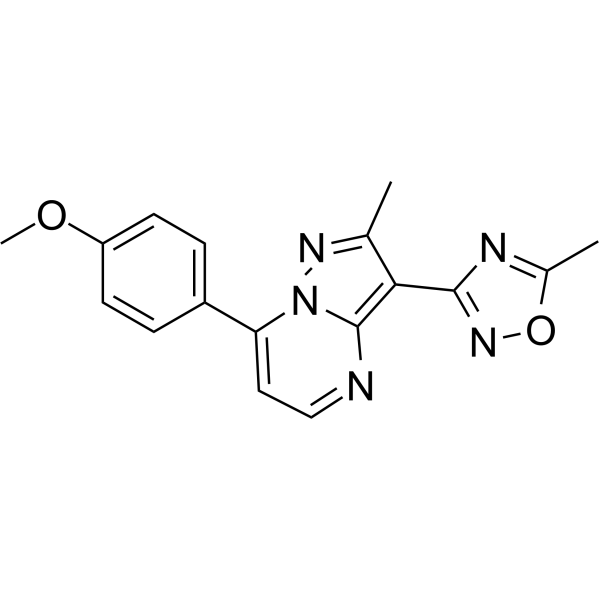 0 ImagesCat. No.: HY-156470CAS No.: 3009081-73-3Multi-kinase-IN-6 (compound 10e) is a multikinase inhibitor that shows good enzyme inhibitory activity against TrkA, ALK2, c-KIT, EGFR, PIM1, CK2α, CHK1, and CDK2. Multi-kinase-IN-6 reveals antiproliferative activity against MCF7, HCT116 and EKVX with IC50 values of 3.36 μM, 1.40 μM and 3.49 μM, respectively. Multi-kinase-IN-6 shows cell cycle arrest at the G1/S phase and G1 phase in MCF7 and HCT116 cells with good apoptotic effect.
-
CDK12 ligand-2
 0 ImagesCat. No.: HY-150948CAS No.: 2519822-93-4
-
CLZX-205
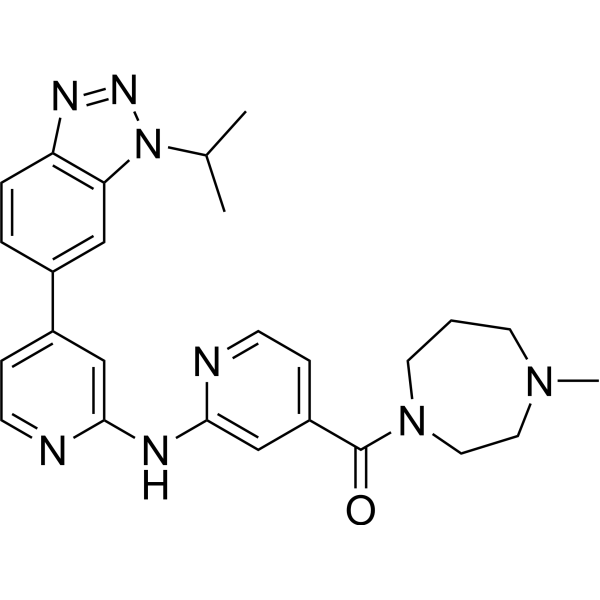 0 ImagesCat. No.: HY-161379CAS No.: 3033694-01-5
-
CDK9-IN-23
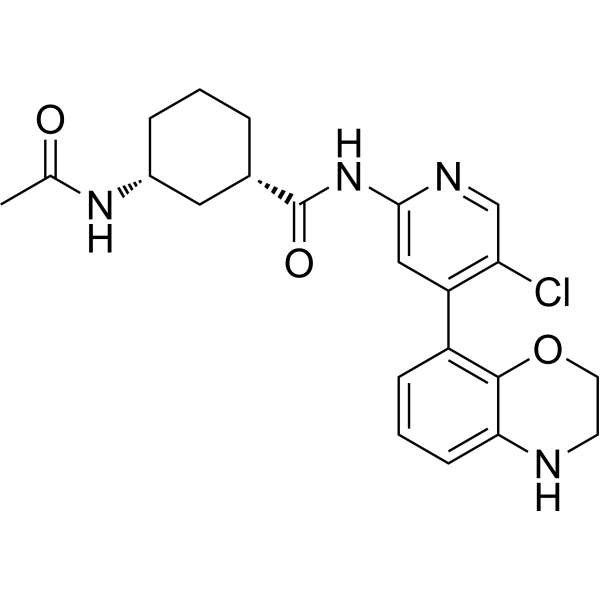 0 ImagesCat. No.: HY-153426CAS No.: 2761572-96-5CDK9-IN-23 (Example 4) is a CDK9 inhibitor with an IC50 of <20 nM.
-
KGA-4066
 0 ImagesCat. No.: HY-180222KGA-4066 is a novel non-ATP-competitive CDK2 inhibitor. KGA-4066 inhibits CDK2/Cyclin A2 with an IC50 value of 236.7 nM, disrupts their interaction, promots CDK2 degradation via the lysosomal pathway. KGA-4066 has anticancer activity against hepatocellular carcinoma.
-
EGFR-IN-45
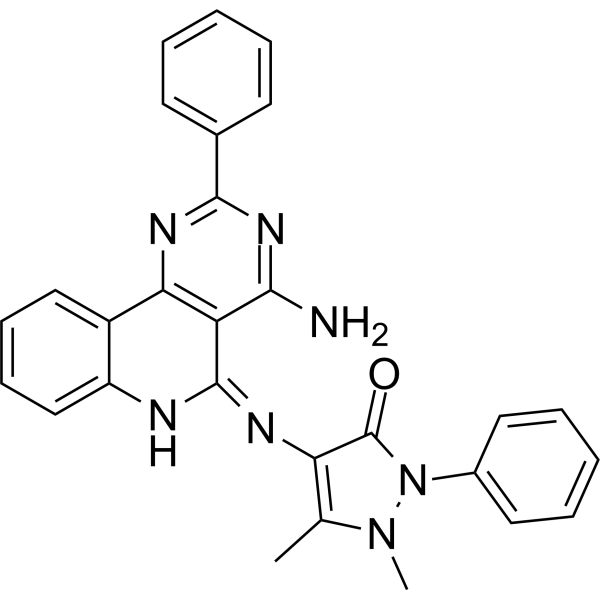 0 ImagesCat. No.: HY-145867CAS No.: 2765560-03-8




