



COX-2 Activator
-
Oxidopamine hydrobromide
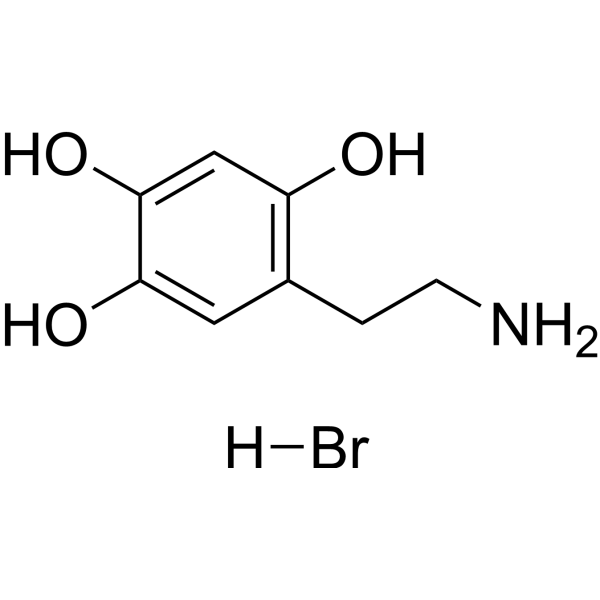 0 ImagesSynonyms: 6-Hydroxydopamine hydrobromide; 6-OHDA hydrobromide
Oxidopamine (6-OHDA) hydrobromide is an antagonist of the neurotransmitter dopamine. Oxidopamine hydrobromide is a widely used neurotoxin and selectively destroys dopaminergic neurons. Oxidopamine hydrobromide promotes COX-2 activation, leading to PGE2 synthesis and pro-inflammatory cytokine IL-1β secretion. Oxidopamine hydrobromide can be used for the research of Parkinson’s disease (PD), attention-deficit hyperactivity disorder (ADHD), and Lesch-Nyhan syndrome.
-
Oxidopamine hydrochloride
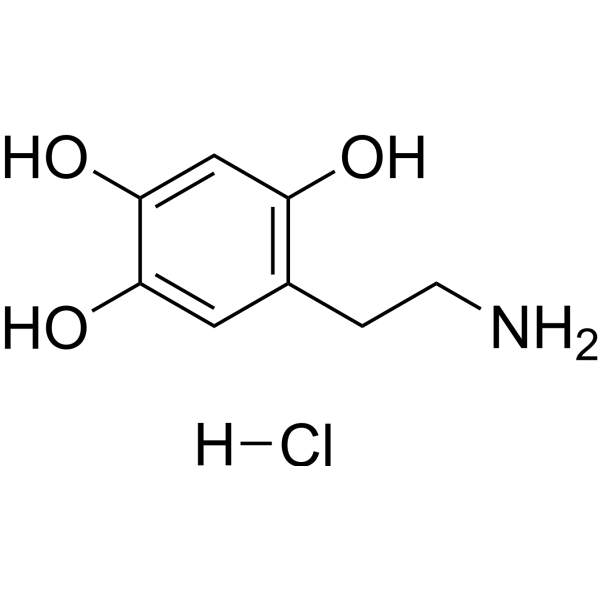 0 ImagesSynonyms: 6-Hydroxydopamine Hydrochloride
Oxidopamine (6-OHDA) hydrochloride is an antagonist of the neurotransmitter dopamine. Oxidopamine hydrochloride is a widely used neurotoxin and selectively destroys dopaminergic neurons. Oxidopamine hydrochloride promotes COX-2 activation, leading to PGE2 synthesis and pro-inflammatory cytokine IL-1β secretion. Oxidopamine hydrochloride can be used for the research of Parkinson’s disease (PD), attention-deficit hyperactivity disorder (ADHD), and Lesch-Nyhan syndrome.
-
Rebamipide
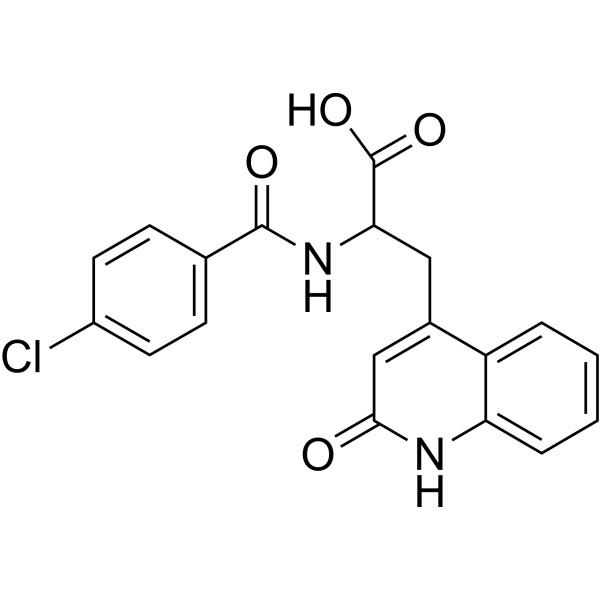 0 ImagesSynonyms: OPC12759; Proamipide
Rebamipide (OPC12759) is an orally active gastroprotective agent that enhances the production of endogenous PGs (especially intragastric PGE2) by inducing COX-2 expression, thereby protecting the gastric mucosa from injury. Rebamipide exerts anti-proliferative activity against gastric cancer cells. Rebamipide can be used in studies of mucosal protection, gastroduodenal ulcer, gastritis and gastric cancer.
-
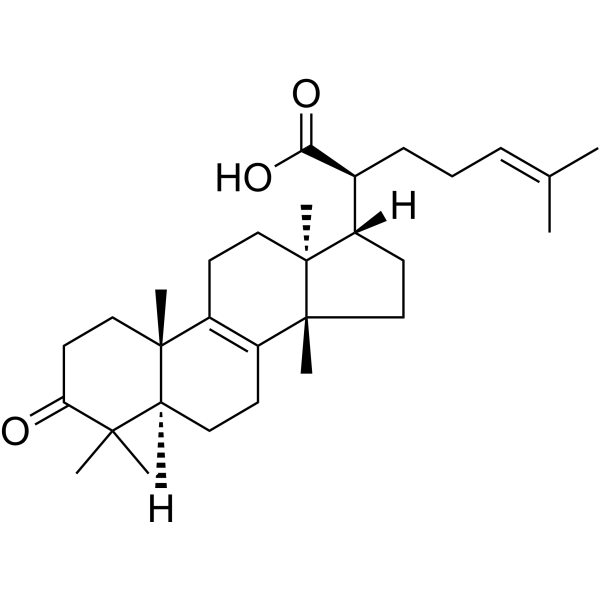
β-Elemonic acid
 0 Images
β-Elemonic acid is a triterpene isolated from Boswellia carterii. β-Elemonic acid induces cell apoptosis, reactive oxygen species (ROS) and COX-2 expression and inhibits prolyl endopeptidase. β-Elemonic acid exhibits anticancer and anti-inflammatory effects.
-
2,4-Dinitrobenzenesulfonic acid sodium salt
 0 ImagesSynonyms: Sodium 2,4-dinitrobenzenesulfonate; DNBS sodium salt; DNBSO sodium salt
2,4-Dinitrobenzenesulfonic acid (DNBS; DNBSO) sodium salt (Sodium 2,4-dinitrobenzenesulfonate) is a classic colitis inducer that relies on activation of the NF-κB p65/COX-2/p38 pathway. As a hapten, 2,4-Dinitrobenzenesulfonic acid sodium salt stimulates the production of immune responses in colonic tissues, triggers oxidative stress and inflammatory reactions, and thereby leads to colonic injury. 2,4-Dinitrobenzenesulfonic acid sodium salt successfully induces models of colitis and ulcerative colitis in rats, causing pathological changes such as ulcers, edema, stenosis, shortening and organ adhesion in the distal colon, along with significant increases in the levels of inflammatory indicators and endoplasmic reticulum stress marker proteins. 2,4-Dinitrobenzenesulfonic acid sodium salt is widely used in studies on the mechanisms related to colitis and ulcerative colitis.
-
Benzanthrone
 0 Images
Benzanthrone is an immunotoxic, pro-inflammatory Photosensitizer. Benzanthrone upregulates iNOS, COX-2 and inflammatory cytokines; activates ERK1/2, p38, JNK, AP-1 and NF-κB; inhibits Nrf2; and induces oxidative stress and DNA damage. Upon radiation exposure, Benzanthrone generates singlet oxygen and superoxide anion radicals, induces photohemolysis and lipid peroxidation, and alters the levels of skin xenobiotic enzymes. Benzanthrone exhibits differential genotoxicity in different cell lines. Benzanthrone possesses skin tumor-initiating and promoting activities. Benzanthrone can be used in skin tumor-related studies.
-
Antitumor agent-77
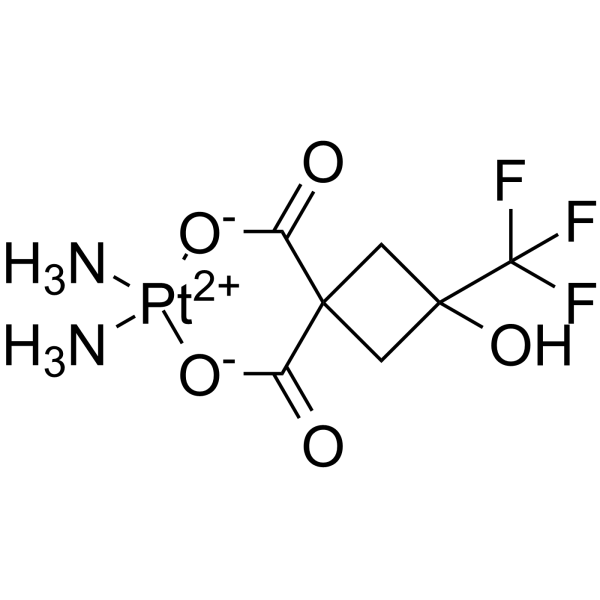 0 ImagesCat. No.: HY-151429CAS No.: 2870703-21-0
Antitumor agent-77 is an antitumor agent, inhibits cancer cells growth and migration. Antitumor agent-77 triggers ferroptosis by inhibiting GPx-4 and elevating COX2. Antitumor agent-77 also activates intrinsic apoptotic pathway (Bax-Bcl-2-caspase-3) and hinders Epithelial-mesenchymal transition (EMT) process of cancer cells.
-
Antitumor agent-78
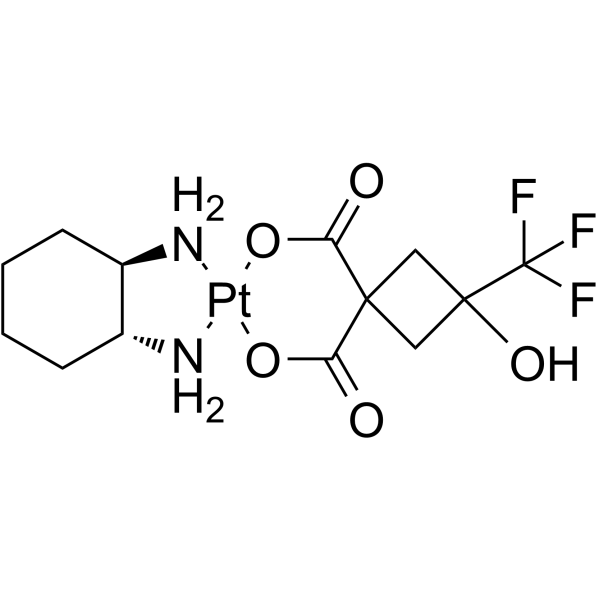 0 ImagesCat. No.: HY-151428CAS No.: 2870703-23-2
Antitumor agent-78 is an antitumor agent, inhibits cancer cells growth and migration. Antitumor agent-78 triggers ferroptosis by inhibiting GPx-4 and elevating COX2. Antitumor agent-78 also activates intrinsic apoptotic pathway (Bax-Bcl-2-caspase-3) and hinders Epithelial-mesenchymal transition (EMT) process of cancer cells.
-
1α-Hydroxyvitamin D5
 0 ImagesCat. No.: HY-13692CAS No.: 187935-17-7Synonyms: CARD-024
1α-Hydroxyvitamin D5 (CARD-024) is a vitamin D analog with extremely low hypercalcemic effects. 1α-Hydroxyvitamin D5 effectively attenuates the pro-fibrotic response of colonic myofibroblasts to TGFβ and high-stiffness substrates by inhibiting the expression of αSMA, the phosphorylation of FAK, and the gene expression of MLCK and ET-1, while activating the anti-inflammatory pathway of IL-1β/COX-2. 1α-Hydroxyvitamin D5 can be used in research related to intestinal fibrosis associated with Crohn's disease.



