



EGFR
Epidermal growth factor receptor; ErbB-1; HER1
The EGFR family of receptor tyrosine kinases (RTK) comprises four distinct receptors: the EGFR (also known as ErbB-1/HER1), ErbB-2 (neu, HER2), ErbB-3 (HER3) and ErbB-4 (HER4). All EGFR family members are characterized by a modular structure consisting of an extracellular ligand-binding domain, a single hydrophobic transmembrane region, and the intracellular part harbouring the highly conserved tyrosine kinase domain. The ErbB family of receptor tyrosine kinases (RTKs) couples binding of extracellular growth factor ligands to intracellular signaling pathways regulating diverse biologic responses, including proliferation, differentiation, cell motility, and survival. Ten growth factors and their ErbB specificities are: EGF, amphiregulin (AR), and TGF bind ErbB-1; betacellulin, and epiregulin bind both ErbB-1 and ErbB-4; the neuregulins (also called heregulins and Neu differentiation factors) NRG-1 and NRG-2 bind ErbB-3 and ErbB-4; and NRG-3 and NRG-4 bind ErbB-4. No known ligand binds ErbB-2. The three best characterized signaling pathways induced through ErbBs are Ras-mitogen-activated protein kinase (Ras-MAPK), phosphatidylinositol 3 kinase-protein kinase B (PI3K-PKB/Akt), and phospholipase C-protein kinase C (PLC-PKC) pathways.
EGFR Isoform Specific Products
All Product Categories
-
EGFR Inhibitors
(1051)
View all products
-
EGFR Agonists
(4)
View all products
-
EGFR Antagonists
(5)
View all products
-
EGFR Activators
(9)
View all products
-
EGFR Modulators
(7)
View all products
-
EGFR Chemicals
(3)
View all products
-
EGFR Inducers
(4)
View all products
-
EGFR Degraders
(54)
View all products
-
EGFR Controls
(6)
View all products
-
EGFR Substrate
(1)
View all products
-
EGFR Ligands
(20)
View all products
-
ErbB2/HER2 Proteins
(40)
View all products
-
ErbB3/HER3 Proteins
(15)
View all products
-
EGFR Proteins
(47)
View all products
-
ErbB4/HER4 Proteins
(10)
View all products
-
EGFR Related Products (1284)
Related Products (1284)

-
Recombinant Proteins (112)
-
Antibodies (19)
-
EGFR Isoform Comparison
-
Pertuzumab-LD3
 0 ImagesCat. No.: HY-185460Pertuzumab-LD3 is a humanized antibody-drug conjugate (ADC) targeting HER2. Pertuzumab-LD3 consists of the anti-HER2 humanized IgG1 monoclonal antibody Pertuzumab (HY-P9912), the cleavable linker Gly-Gly-Phe-Gly (HY-P3669), and the PI3K/mTOR-IN-21 (HY-185456) payload. Pertuzumab-LD3 can be used in research on metastatic HER2-positive breast cancer.
-
(E/Z)-CP-724714
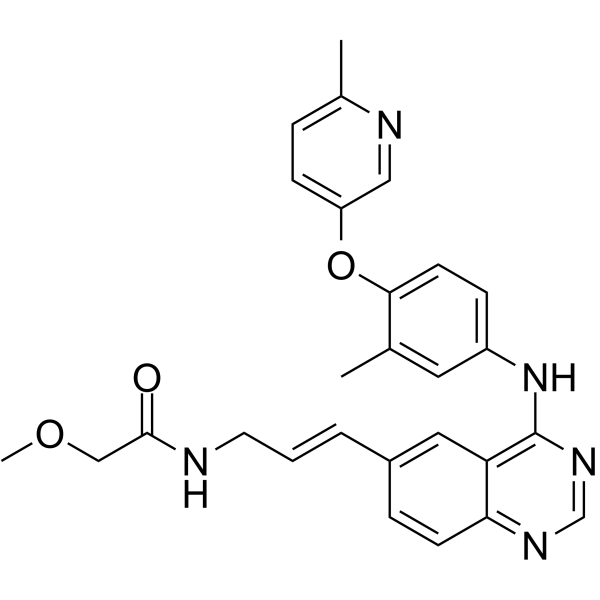 0 ImagesCat. No.: HY-W008914CAS No.: 537705-08-1(E/Z)-CP-724714 is a racemic compound of (E)-CP-724714 and (Z)-CP-724714 isomers. CP-724714 is a potent and selective orally active ErbB2 (HER2) inhibitor.

-
Pro-PEG3-BA
 0 ImagesCat. No.: HY-180965CAS No.: 3057939-64-4Pro-PEG3-BA is an EML4-ALK/EGFR PROTAC degrader, degrading EML4 ALK and EGFR mutant (L858R/T790M) with DC50 values of 0.42 and 13.50 μM, respectively. Pro-PEG3-BA hinders proliferation and induces cell cycle arrest and apoptosis of NSCLC cells in vitro. Pro-PEG3-BA shows safety profile and decreases EML4-ALK protein via rewiring the ubiquitin- proteasome system in vivo. Pro-PEG3-BA can be used for non-small cell lung cancer research.
-
PDE5-IN-3
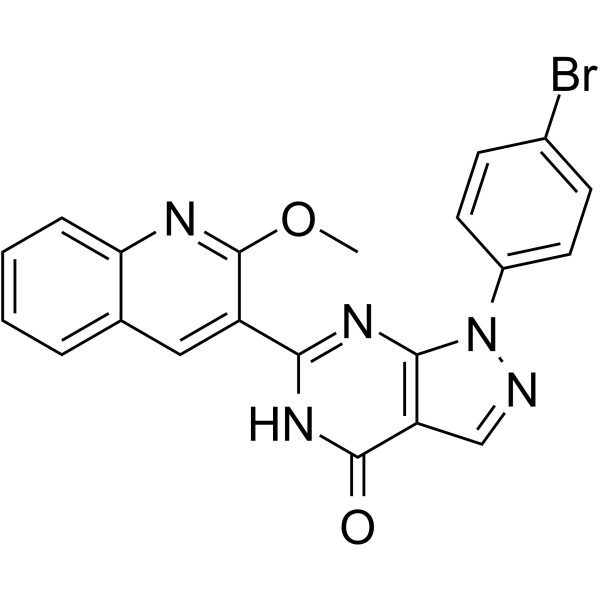 0 ImagesCat. No.: HY-131710CAS No.: 2538149-57-2PDE5-IN-3 (compound 11j) is a potent PDE5 inhibitor with an IC50 of 1.57 nM. PDE5-IN-3 shows moderate EGFR inhibition with IC50 of 5.827 µM. PDE5-IN-3 significantly inhibits the Wnt/β-catenin pathway (IC50=1286.96 ng/mL). PDE5-IN-3 induces the intrinsic apoptotic mitochondrial pathway in HepG2 cells. PDE5-IN-3 has strong antitumor activity.
-
Anti-ERBB3/HER3 (SGP1)
 0 ImagesCat. No.: HY-P991245Anti-ERBB3/HER3 (SGP1) is a human monoclonal antibody (mAb) targeting ERBB3/HER3. Anti-ERBB3/HER3 (SGP1) inhibits Neuregulin stimulated growth of cultured breast cancer cells. Anti-ERBB3/HER3 (SGP1) can be used in breast cancer research.
-
HER2-targeted peptide H10
 0 ImagesCat. No.: HY-P11760CAS No.: 1802710-54-8HER2-targeted peptide H10 is a HER2-targeting peptide with a Kd value of 30.4 nM. HER2-targeted peptide H10 specifically accumulates in HER2-positive tumor tissues of xenograft mice, when conjugated with nanoparticles. HER2-targeted peptide H10 can be used for studies related to HER2-positive breast cancer.
-
Almonertinib-d6
 0 ImagesCat. No.: HY-112823SSynonyms: HS-10296-d6Almonertinib-d6 (HS-10296-d6) is the deuterium labeled Almonertinib (HY-112823). Almonertinib (HS-10296) is an orally available, irreversible, third-generation EGFR tyrosine kinase inhibitor with high selectivity for EGFR-sensitizing and T790M resistance mutations. Almonertinib shows great inhibitory activity against T790M, T790M/L858R and T790M/Del19 (IC50: 0.37, 0.29 and 0.21 nM, respectively), and is less effective against wild type (3.39 nM). Almonertinib is used for the research of the non-small cell lung cancer.

-
A2AR/EGFR-IN-1
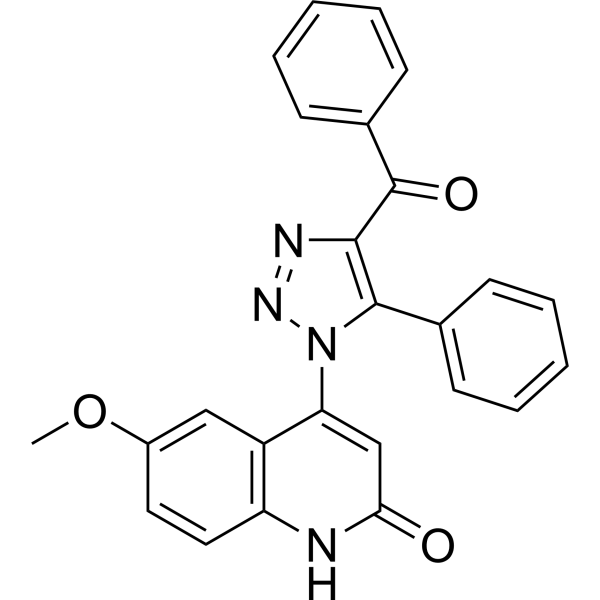
 0 ImagesCat. No.: HY-184116A2AR/EGFR-IN-1 is a dual A2AR/EGFR inhibitor, with an IC50 of 0.037 μM against A2AR and an IC50 of 8.37 μM against EGFR. A2AR/EGFR-IN-1 induces cell cycle arrest at S and G2/M phases. A2AR/EGFR-IN-1 upregulates the expression of TP53, Caspase3 and Bax, downregulates the expression of Bcl2, and promotes cell Apoptosis. A2AR/EGFR-IN-1 restores colon crypt structure in an azoxymethane (HY-111375)-induced colorectal cancer model in vivo. A2AR/EGFR-IN-1 can be used for research related to colorectal cancer.
-
EGFR-IN-63
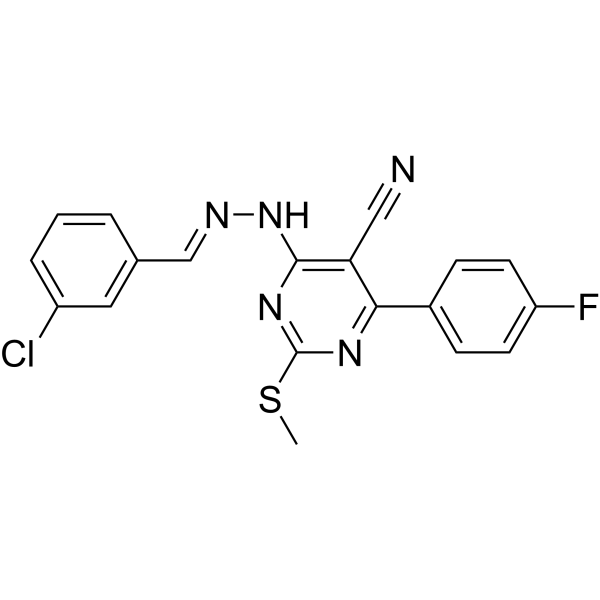
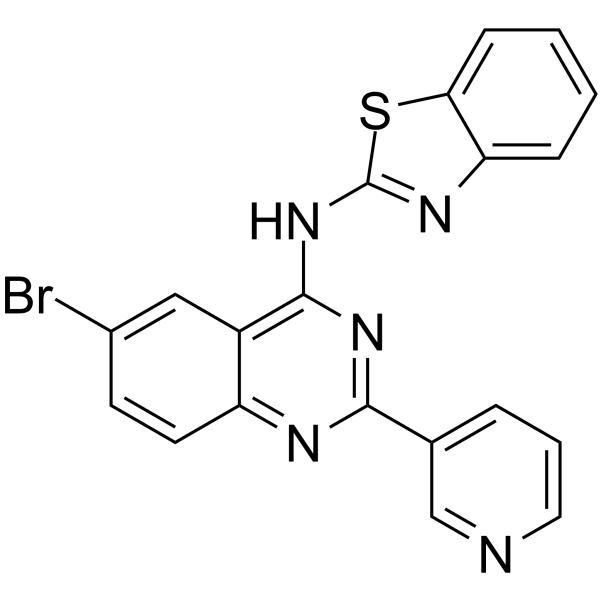 0 ImagesCat. No.: HY-147967CAS No.: 2414635-72-4EGFR-IN-63 is an EGFR inhibition (IC50: 0.096 μM) and it has anticancer activity in MCF-7 cells (IC50: 2.49 μM).
-
Gefitinib impurity 2
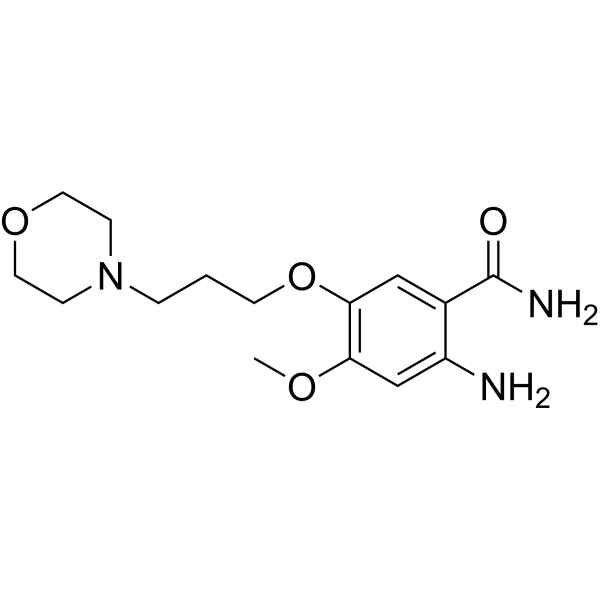 0 ImagesGefitinib impurity 2 is the impurity of Gefitinib. Gefitinib (ZD1839; HY-50895) is a potent, selective and orally active EGFR tyrosine kinase inhibitor with an IC50 of 33 nM. Gefitinib selectively inhibits EGF-stimulated tumor cell growth (IC50 of 54 nM) and that blocks EGF-stimulated EGFR autophosphorylation in tumor cells. Gefitinib also induces autophagy. Gefitinib has antitumour activity.
-
EGFR/BRAFV600E-IN-2
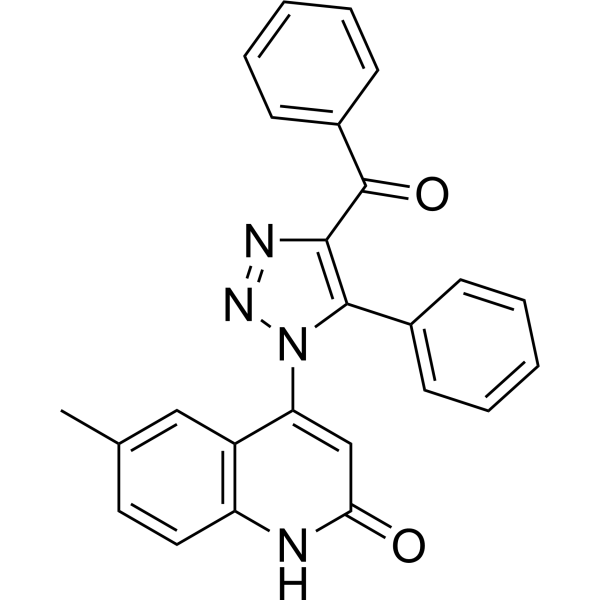 0 ImagesCat. No.: HY-149517EGFR/BRAFV600E-IN-2 (compound 3g) is a potential multi-target inhibitor of EGFR, BRAFV600E, and EGFRT790M, and an inducer of apoptosis. EGFR/BRAFV600E-IN-2 can activate caspase-3, 8, and Bax, and downregulate the anti-apoptotic protein Bcl2, inducing apoptosis. EGFR/BRAF V600E-IN-2 also has antioxidant activity and DPPH free radical scavenging potency.
-
EGFR/HER2-IN-10
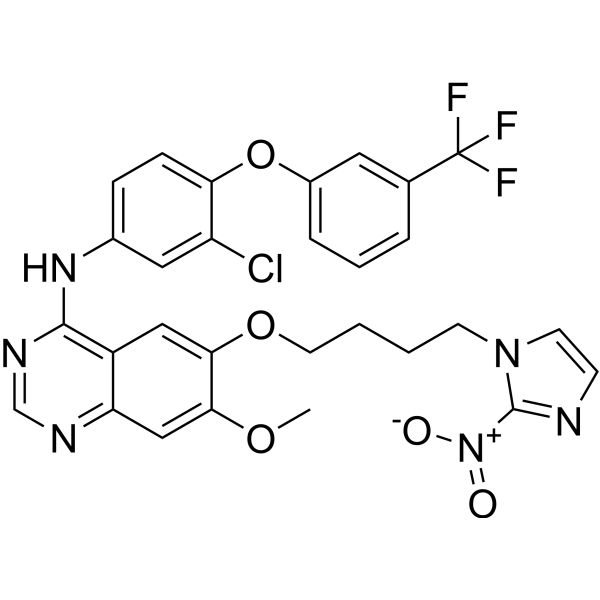 0 ImagesCat. No.: HY-157399CAS No.: 2931499-82-8EGFR/HER2-IN-10 (compound 9F) is a potent and selective dual EGFR/HER2 inhibitor with IC50s of 2.3 nM and 234 nM for EGFR and HER2, respectively. EGFR/HER2-IN-10 shows an effective antiproliferative action against prostate carcinoma.
-
Adonertinib
 0 ImagesCat. No.: HY-187838SCAS No.: 2211116-92-4Synonyms: FHND9041Adonertinib (FHND9041) is a third-generation epidermal growth factor receptor (EGFR) tyrosine kinase inhibitor, which is applicable to research related to advanced non-small cell lung cancer carrying EGFR-sensitive mutations.
-
AfaPhos1
 0 ImagesCat. No.: HY-176938AfaPhos1 is a new, Afatinib (HY-10261)-based EGFR PhosTAC. AfaPhos1 induces EGFR dephosphorylation at both pY1068 and pY845. AfaPhos1 induces Apoptosis. AfaPhos1 has anticancer activity against non-small cell lung cancer.

-
ErbB-2-binding peptide-2
 0 ImagesCat. No.: HY-P12120CAS No.: 499773-67-0Synonyms: KCCYSLErbB-2-binding peptide-2 (KCCYSL) is a peptide targeting ErbB-2/HER2, which specifically binds to the extracellular domain of HER2 and accumulates in HER2-expressing cancer cells. When radiolabeled, ErbB-2-binding peptide-2 serves as a SPECT/CT and PET imaging agent, enabling the visualization of HER2-expressing tumor xenografts. ErbB-2-binding peptide-2 is applicable to research related to ovarian cancer and breast cancer.




