



HDAC4
HDAC4 is a class IIa histone deacetylase that acts as a signal-dependent transcriptional regulator linking extracellular cues to chromatin remodeling, gene expression, and cell differentiation[1][2]. Mechanistically, class IIa HDACs, including HDAC4, shuttle between nuclear and cytoplasmic compartments through post-translational modification, and this localization controls their transcriptional functions[3]. In liver, HDAC4, HDAC5, and HDAC7 respond to glucagon by entering the nucleus, associating with gluconeogenic promoters, recruiting HDAC3, activating FOXO transcription factors, and increasing blood-glucose-related gene expression[4]. In skeletal muscle, class II HDAC proteins repress MEF2 activity and suppress slow-twitch oxidative myofiber formation, while MEF2 activation promotes endurance-associated fiber programs[5]. In pancreatic endocrine models, HDAC4, HDAC5, and HDAC9 regulate β-cell and δ-cell lineage control, and class IIa HDAC inhibition with MC1568 amplifies endocrine β- and δ-cells[6]. Compared with related isoforms, HDAC4 belongs to the HDAC4/5/7/9 class IIa subgroup, which shares MEF2-related transcriptional partners but shows distinct disease-linked regulatory roles[7]. For experimental applications, LBH589 confined HDAC4 to the cytoplasm, prolonged γ-H2AX foci after irradiation, and sensitized non-small cell lung cancer models to radiation-induced DNA double-strand breaks[8]. Selective inhibitor design also identified LMK235 as showing nanomolar inhibition of HDAC4 and HDAC5, unlike vorinostat and TSA, which inhibited these isoforms in the higher micromolar range[9].
References:
- [1]. Verdin E, et al. Class II histone deacetylases: versatile regulators. Trends Genet. 2003 May;19(5):286-93. [Content Brief]
- [2]. Yang XJ, et al. Class II histone deacetylases: from sequence to function, regulation, and clinical implication. Mol Cell Biol. 2005 Apr;25(8):2873-84. [Content Brief]
- [3]. Mathias RA, et al. Post-translational modifications regulate class IIa histone deacetylase (HDAC) function in health and disease. Mol Cell Proteomics. 2015 Mar;14(3):456-70. [Content Brief]
- [4]. Mihaylova MM, et al. Class IIa histone deacetylases are hormone-activated regulators of FOXO and mammalian glucose homeostasis. Cell. 2011 May 13;145(4):607-21. [Content Brief]
- [5]. Potthoff MJ, et al. Histone deacetylase degradation and MEF2 activation promote the formation of slow-twitch myofibers. J Clin Invest. 2007 Sep;117(9):2459-67. [Content Brief]
- [6]. Lenoir O, et al. Specific control of pancreatic endocrine β- and δ-cell mass by class IIa histone deacetylases HDAC4, HDAC5, and HDAC9. Diabetes. 2011 Nov;60(11):2861-71. [Content Brief]
- [7]. Clocchiatti A, et al. Class IIa HDACs: from important roles in differentiation to possible implications in tumourigenesis. J Cell Mol Med. 2011 Sep;15(9):1833-46. [Content Brief]
- [8]. Geng L, et al. Histone deacetylase (HDAC) inhibitor LBH589 increases duration of gamma-H2AX foci and confines HDAC4 to the cytoplasm in irradiated non-small cell lung cancer. Cancer Res. 2006 Dec 1;66(23):11298-304. [Content Brief]
- [9]. Marek L, et al. Histone deacetylase (HDAC) inhibitors with a novel connecting unit linker region reveal a selectivity profile for HDAC4 and HDAC5 with improved activity against chemoresistant cancer cells. J Med Chem. 2013 Jan 24;56(2):427-36. [Content Brief]
-
HDAC4 Related Products (72)
Related Products (72)

-
Antibodies (2)
-
HDAC ligand-5
 0 ImagesCat. No.: HY-168864HDAC ligand-5 is a template for the non-selective HDAC inhibitor Vorinostat (HY-10221). HDAC ligand-5 can serve as a ligand for target protein (Ligands for Target Protein for PROTAC) for the development of PROTAC HDAC degraders with antitumor activity. HDAC ligand-5 can be used for the synthesis of FF2049 (HY-168863).
-
HDAC6-IN-44
 0 ImagesCat. No.: HY-162630HDAC6-IN-44 (compound H10) is a selective HDAC6 inhibitor with an IC50 value of 8.97 nM. HDAC6-IN-44 can inhibit the idiopathic pulmonary fibrosis (IPF) phenotype and exhibits antifibrotic activity. Additionally, HDAC6-IN-44 reduces fibrogenesis in a bleomycin-induced pulmonary fibrosis mouse model and demonstrates good metabolic stability. HDAC6-IN-44 holds promise for research in the field of idiopathic pulmonary fibrosis.
-
JAK/HDAC-IN-2
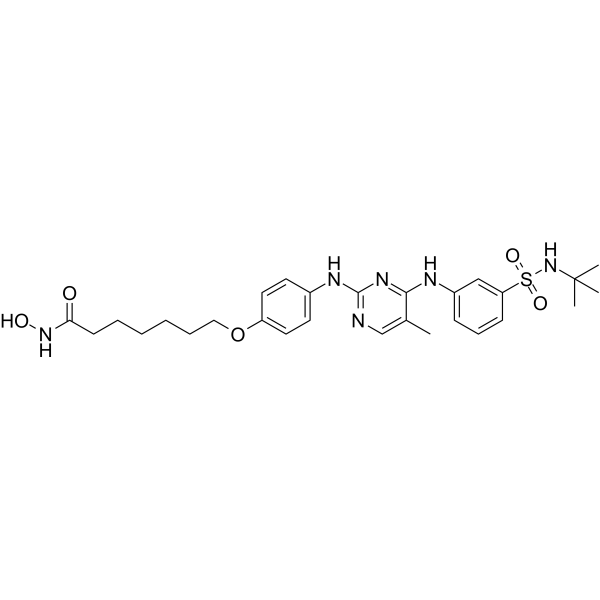 0 ImagesCat. No.: HY-149283CAS No.: 3029138-43-7JAK/HDAC-IN-2 is a potent 2-amino-4-phenylaminopyrimidine JAK/HDAC dual-target inhibitor. JAK/HDAC-IN-2 potently inhibits HDAC3/6 and JAK1/2 at nanomolar levels. JAK/HDAC-IN-2 has proapoptotic activity and inhibits histone deacetylation and STAT3 phosphorylation. JAK/HDAC-IN-2 presents remarkable antiproliferative activity in both hematological malignancies and solid cancers.
-
PIM-1/HDAC-IN-1
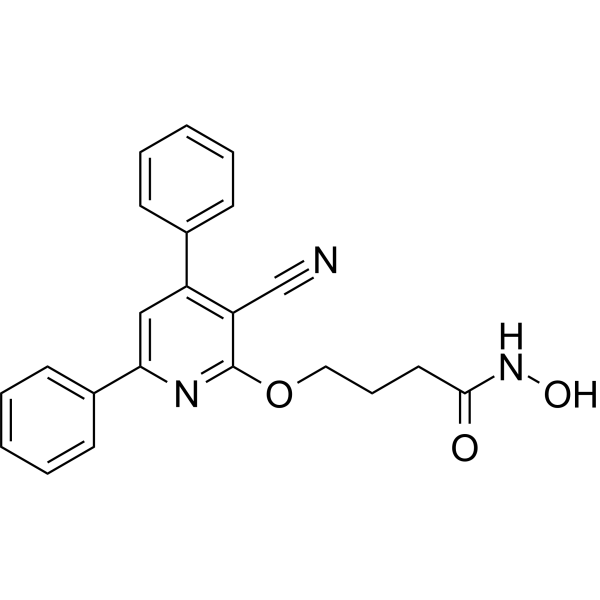 0 ImagesCat. No.: HY-143233CAS No.: 2897622-19-2PIM-1/HDAC-IN-1 (compound 4d) is a PIM-1 inhibitor, with an IC50 of 343.87 nM. PIM-1/HDAC-IN-1 has strong inhibitory activity and selectivity against HDAC 1 and HDAC 6, with IC50 values of 63.65 and 62.39 nM, respectively. PIM-1/HDAC-IN-1 exhibits apoptosis inducing potential in MCF-7 cell lines. PIM-1/HDAC-IN-1 shows pre-G1 apoptosis and cell cycle arrest at G2/M phase.
-
HDAC6-IN-14
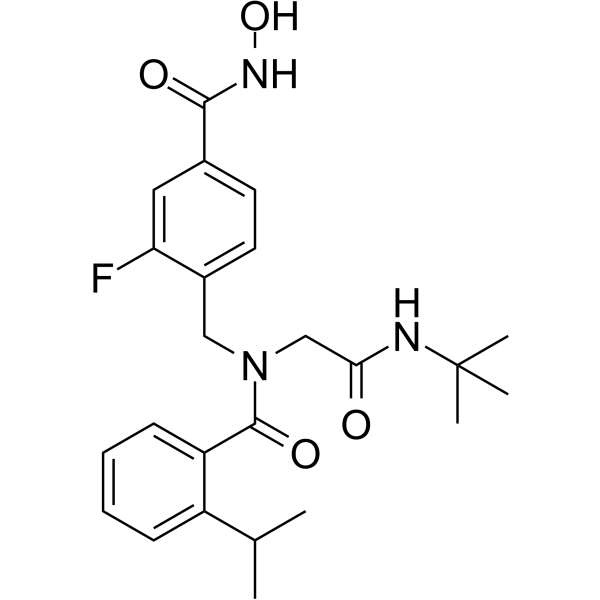 0 ImagesCat. No.: HY-151896CAS No.: 3023019-97-5
-
ZG-126
 0 ImagesCat. No.: HY-161778CAS No.: 3049802-32-3ZG-126 is an agonist for vitamin D receptor (VDR) and an inhibitor for histone deacetylase (HDAC) (IC50=0.63-67.6 μM). ZG-126 exhibits cytotoxicity in cancer cells MDA-MB-231 and 4T1. ZG-126 exhibits antitumor and anti-metastatic efficacy against melanoma and triple-negative breast cancer (TNBC) in mouse models. ZG-126 also exhibits anti-inflammatory activity, through the reduction of macrophage infiltration and immunosuppressive M2-polarization.
-
HDAC-IN-49
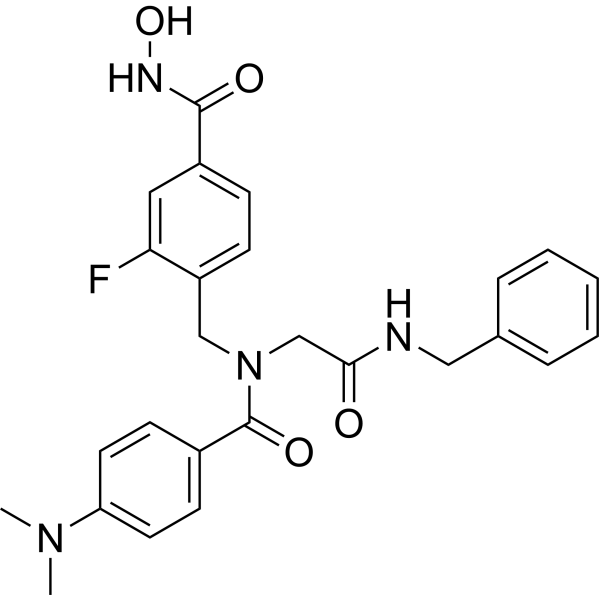 0 ImagesCat. No.: HY-151897CAS No.: 3035173-63-5

-
Quisinostat hydrochloride
 0 ImagesCat. No.: HY-15433BCAS No.: 1083078-98-1Synonyms: JNJ26481585 hydrochlorideQuisinostat (JNJ-26481585) hydrochloride is a potent and orally active pan-HDAC inhibitor (HDACi), with IC50 values ranging from 0.11 nM to 0.64 nM for HDAC1, HDAC2, HDAC4, HDAC10 and HDAC11. Quisinostat hydrochloride has a broad spectrum antitumoral activity. Quisinostat hydrochloride can induce autophagy in neuroblastoma cells.
-
CM-444
 0 ImagesCat. No.: HY-163803CAS No.: 2256079-52-2CM-444 is inhibitor for HDAC (IC50 is 6 nM-0.6 μM) and DNA methyltransferases (DNMT, IC50 is 1.8-2.3 μM). CM-444 is an inducer for the differentiation of acute myeloid leukemia cells. CM-444 exhibits anti-leukemic activity and improves the survival rate in mouse models.
-
HDAC6-IN-74
 0 ImagesCat. No.: HY-181579HDAC6-IN-74 is an orally active, selective histone deacetylase 6 (HDAC6) inhibitor with an IC50 of 0.036 μM. HDAC6-IN-74 induces tumor cell apoptosis, arrests cells at the S phase of the cell cycle, and impairs cell migration, invasion and colony-forming abilities. HDAC6-IN-74 exerts anticancer effects with no obvious toxicity. HDAC6-IN-74 can be used in the research of cancers such as liver cancer.
-
Azumamide E
 0 ImagesCat. No.: HY-P2044CAS No.: 585535-37-1Azumamide E is a HDAC inhibitor, with an IC50 of 0.064 μM against HDAC, 1.22 μM against HDAC1, and 2.28 μM against HDAC4. Azumamide E inhibits HDAC activity in nuclear extracts of leukemia cells and cervical adenocarcinoma cells. Azumamide E suppresses angiogenesis. Azumamide E is applicable for research on leukemia, cervical adenocarcinoma, and anti-angiogenesis.




