



HIV Activator
-
CHMA1004 dihydrochloride
 0 ImagesSynonyms: Methyl piperazine-2-carboxylate dihydrochloride; METTL3 activator-1
CHMA1004 (Methyl piperazine-2-carboxylate; METTL3 activator-1) dihydrochloride is a METTL3/METTL14/WTAP methyltransferase complex activator. CHMA1004 dihydrochloride exhibits neuroprotective and anxiolytic potential by enhancing m6A methylation modification of RNA. CHMA1004 dihydrochloride promotes HIV replication in an infection context. CHMA1004 dihydrochloride can be used in studies related to anxiety disorders and HIV-1 infection.
-
Panobinostat (Standard)
 0 ImagesSynonyms: LBH589 (Standard); NVP-LBH589 (Standard)
Panobinostat (Standard) (LBH589 (Standard)) is the analytical standard of Panobinostat (HY-10224). This product is intended for research and analytical applications. Panobinostat is a potent and orally active non-selective HDAC inhibitor, and has antineoplastic activities. Panobinostat induces HIV-1 virus production even at low concentration range 8-31 nM, stimulates HIV-1 expression in latently infected cells. Panobinostat induces cell apoptosis and autophagy. Panobinostat can be used for the study of refractory or relapsed multiple myeloma.

-
Panobinostat-d4
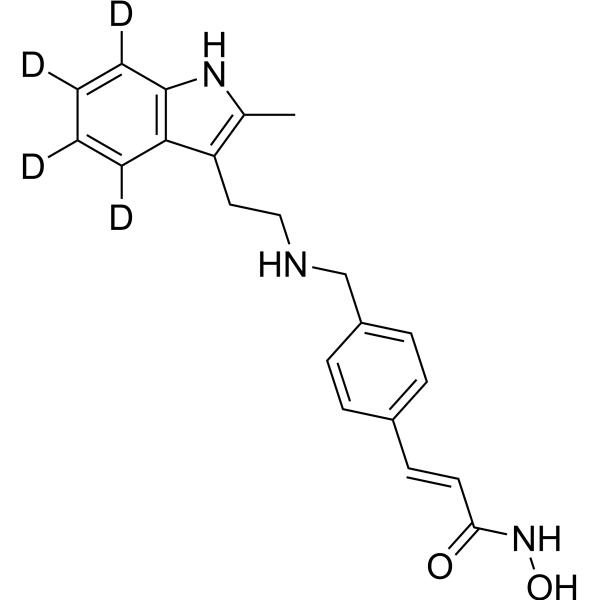 0 ImagesArt. -Nr.: HY-10224SCAS. Nr.: 1185237-51-7Synonyms: LBH589-d4; NVP-LBH589-d4
Panobinostat-d4 is the deuterium labeled Panobinostat. Panobinostat (LBH589; NVP-LBH589) is a potent and orally active non-selective HDAC inhibitor, and has antineoplastic activities[1][2]. Panobinostat induces HIV-1 virus production even at low concentration range 8-31 nM, stimulates HIV-1 expression in latently infected cells[4]. Panobinostat induces cell apoptosis and autophagy. Panobinostat can be used for the study of refractory or relapsed multiple myeloma[3].
-
Panobinostat-d4 hydrochloride
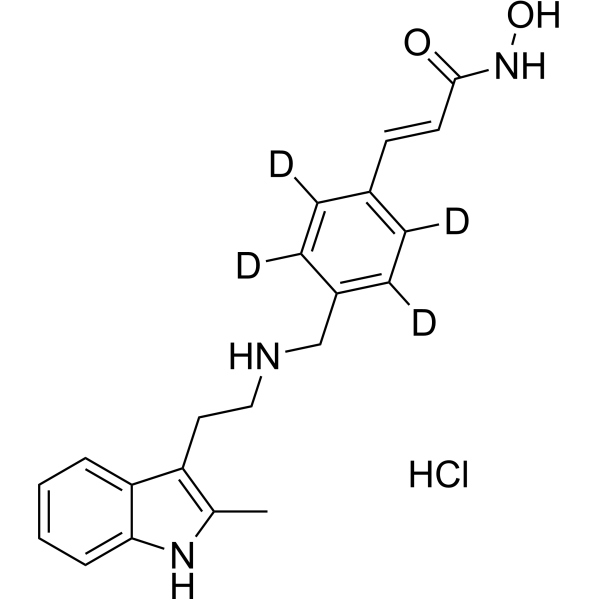 0 ImagesArt. -Nr.: HY-10224S1Synonyms: LBH589-d4 hydrochloride; NVP-LBH589-d4 hydrochloride
Panobinostat-d4 (hydrochloride) is deuterium labeled Panobinostat. Panobinostat (LBH589; NVP-LBH589) is a potent and orally active non-selective HDAC inhibitor, and has antineoplastic activities[1][2]. Panobinostat induces HIV-1 virus production even at low concentration range 8-31 nM, stimulates HIV-1 expression in latently infected cells[4]. Panobinostat induces cell apoptosis and autophagy. Panobinostat can be used for the study of refractory or relapsed multiple myeloma[3].
-
UMB-136
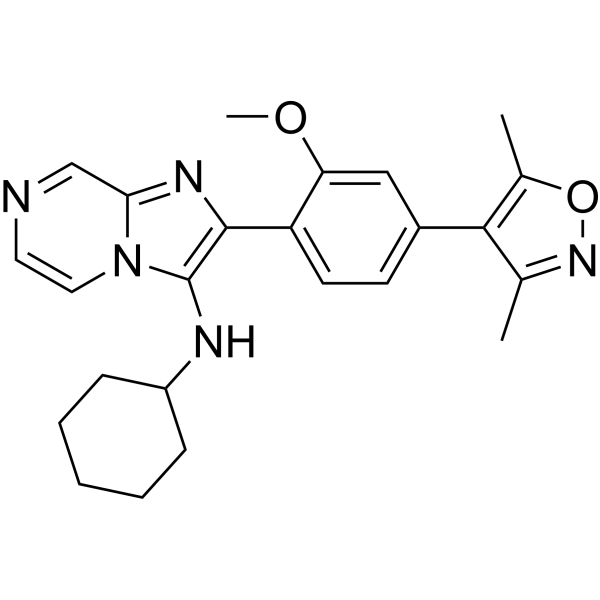 0 ImagesArt. -Nr.: HY-119490CAS. Nr.: 2109805-83-4
-
CHMA1004
 0 ImagesArt. -Nr.: HY-W125425CAS. Nr.: 2758-98-7Synonyms: Methyl piperazine-2-carboxylate; METTL3 activator-1 free base
CHMA1004 (Methyl piperazine-2-carboxylate; METTL3 activator-1 free base) is a METTL3/METTL14/WTAP methyltransferase complex activator. CHMA1004 exhibits neuroprotective and anxiolytic potential by enhancing m6A methylation modification of RNA. CHMA1004 promotes HIV replication in an infection context. CHMA1004 can be used in studies related to anxiety disorders and HIV-1 infection.
-
Panobinostat lactate (Standard)
 0 ImagesSynonyms: LBH589 lactate (Standard); NVP-LBH589 lactate (Standard)
Panobinostat lactate (Standard) is the analytical standard of Panobinostat lactate (HY-10224A). This product is intended for research and analytical applications. Panobinostat lactate is a potent and orally active non-selective HDAC inhibitor. Panobinostat lactate has antineoplastic activities. Panobinostat lactate effectively disrupts HIV latency. Panobinostat lactate induces cell apoptosis and autophagy. Panobinostat lactate can be used for the study of refractory or relapsed multiple myeloma.



