



MMP-2
MMP-2 (matrix metalloproteinase-2), also known as gelatinase A, is a zinc-dependent extracellular endopeptidase that plays a central role in extracellular matrix remodeling through the degradation of gelatin, type IV collagen, and other basement membrane components[6][7]. Mechanistically, MMP-2 is synthesized as a latent proenzyme and is activated at the cell surface through the MT1-MMP/TIMP-2/pro-MMP-2 activation complex, linking its proteolytic activity to tightly regulated pericellular signaling and matrix turnover[1][2]. Through these functions, MMP-2 contributes to cell migration, tissue remodeling, angiogenesis, and inflammatory regulation, making it an important mediator of both physiological repair processes and pathological tissue remodeling[6][7]. Dysregulated MMP-2 expression or activation has been associated with cancer progression, cardiovascular disorders, kidney disease, diabetic complications, and fibrotic conditions, where excessive extracellular matrix degradation promotes disease development and tissue dysfunction[6]. In tumor models, elevated MMP-2 activity correlates with invasive behavior, metastatic dissemination, and angiogenic remodeling, supporting its widespread use as a biomarker and mechanistic target in cancer research[3][4]. Compared with the closely related gelatinase MMP-9, MMP-2 is constitutively expressed in many tissues and is preferentially regulated through MT1-MMP- and TIMP-2-dependent activation mechanisms, whereas MMP-9 is more commonly induced by inflammatory stimuli and exhibits distinct substrate and regulatory profiles[7]. For experimental applications, broad-spectrum metalloproteinase inhibitors such as batimastat have been widely used to investigate MMP-2-dependent signaling and matrix remodeling, although selective targeting remains an active area of therapeutic development[5].
References:
- [1]. Khurana S, et al. MF59 adjuvant enhances diversity and affinity of antibody-mediated immune response to pandemic influenza vaccines. Sci Transl Med. 2011 Jun 1;3(85):85ra48. [Content Brief]
- [2]. Heidenfelder BL, et al. Hairpin formation in Friedreich's ataxia triplet repeat expansion. J Biol Chem. 2003 Jan 24;278(4):2425-31. [Content Brief]
- [3]. Forsyth PA, et al. Gelatinase-A (MMP-2), gelatinase-B (MMP-9) and membrane type matrix metalloproteinase-1 (MT1-MMP) are involved in different aspects of the pathophysiology of malignant gliomas. Br J Cancer. 1999 Apr;79(11-12):1828-35. [Content Brief]
- [4]. Johnson M, et al. Multiple triangulation and collaborative research using qualitative methods to explore decision making in pre-hospital emergency care. BMC Med Res Methodol. 2017 Jan 24;17(1):11. [Content Brief]
- [5]. Chang M. Matrix metalloproteinase profiling and their roles in disease. RSC Adv. 2023;13:6304-6316.
- [6]. Wolosowicz M, et al. The Complex Role of Matrix Metalloproteinase-2 (MMP-2) in Health and Disease. Int J Mol Sci. 2024;25(24):13691.
- [7]. Nikolov A, et al. Role of gelatinases MMP-2 and MMP-9 in healthy and complicated pregnancy and their future potential as preeclampsia biomarkers[J]. Diagnostics, 2021, 11(3): 480.
-
MMP-2 Related Products (145)
Related Products (145)

-
Recombinant Proteins (7)
-
Antibodies (1)
-
VEGFR2 AUTOTAC-1
 0 ImagesCat. No.: HY-187534VEGFR2 AUTOTAC-1 is a VEGFR2 AUTOTAC degrader. VEGFR2 AUTOTAC-1 recruits p62, activates the autophagy-lysosome pathway through the p62-LC3 axis cascade, forms a ternary complex with VEGFR2 and p62, and drives UPS-independent post-translational degradation of VEGFR2. VEGFR2 AUTOTAC-1 induces G1 phase arrest and endogenous apoptosis in cells via the mitochondrial and caspase apoptotic pathways, thereby inhibiting cancer cell proliferation, migration and malignant phenotypes; meanwhile, it inhibits endothelial cell tube formation, migration and endothelial-mesenchymal transition by regulating E-cadherin and MMP2. VEGFR2 AUTOTAC-1 is applicable to research related to triple-negative breast cancer.(Pink: VEGFR2 target protein ligand (HY-187558); Blue: p62 ligand (HY-W014292); Black: Linker)
-
Pipoxolan hydrochloride
 0 ImagesCat. No.: HY-105854CAS No.: 18174-58-8Pipoxolan hydrochloride is an anti-spasmotic agent. Pipoxolan hydrochloride induces Apoptosis, increases intracellular ROS. Pipoxolan hydrochloride down-regulates phosphorylation JNK and p38, and then, MMP-2 and -9. Pipoxolan hydrochloride relieves smooth muscle spasms in the digestive, urinary, and gynecological systems. Pipoxolan hydrochloride also exhibits anticancer activity against leukemia, oral squamous cell carcinoma, and lung adenocarcinoma.
-
TRAP-14 amide
 0 ImagesCat. No.: HY-P5764CAS No.: 141923-36-6TRAP-14 amide, a proteinase activated receptor (PAR)-activating peptide, is a PAR agonist with an EC50 of 24 μM. TRAP-14 amide significantly induces platelet aggregation through ADP- and MMP-2-dependent pathways with Aspirin (HY-14654)-insensitivity. TRAP-14 amide also effectively increases glycoprotein (GP) Ib and GPIIb/IIIa surface expression and ADP release.

-
ASPH-IN-1
 0 ImagesCat. No.: HY-160720CAS No.: 2477878-52-5ASPH-IN-1 (Compound 14c) is an orally active ASPH inhibitor. ASPH-IN-1 down-regulates MMP2 and MMP14 protein expression. ASPH-IN-1 exhibits anti-cancer activity against cholangiocarcinoma.
-
MMP-9-IN-14
 0 ImagesCat. No.: HY-181272MMP-9-IN-14 is a MMP-9 inhibitor (IC50 = 34.46 μM). MMP-9-IN-14 induces G1-phase cell cycle arrest and caspase-dependent apoptosis in cancer cells. MMP-9-IN-14 promotes the accumulation of phosphorylated γH2AX. MMP-9-IN-14 inhibits the migration and invasion of cancer cells, and downregulates the expressions of MMP-2, MMP-9 and hTERT in cancer cells. MMP-9-IN-14 inhibits tumor growth and angiogenic spread in animal models. MMP-9-IN-14 can be used for the research of cancers such as lung adenocarcinoma, cervical cancer and colorectal cancer.

-
(E)-N-(4-Methoxyphenyl)cinnamamide
 0 ImagesCat. No.: HY-W1057938CAS No.: 76228-15-4
-
Alisol B 23-acetate (Standard)
 0 ImagesSynonyms: 23-Acetylalismol B (Standard); 23-O-Acetylalisol B (Standard); Alisol B monoacetate (Standard)Alisol B 23-acetate (Standard) is the analytical standard of Alisol B 23-acetate (HY-N0805). This product is intended for research and analytical applications. Alisol B 23-acetate is an orally active prototerpane-type triterpenoid. Alisol B 23-acetate can be isolated from Alisma orientalis. Alisol B 23-acetate induces Apoptosis, promotes ROS generation, downregulates CDK4/6, MMP-2/9, upregulates cleaved PARP, activates FXR and inhibits Syk. Alisol B 23-acetate has anti-inflammatory and hepatoprotective activities. Alisol B 23-acetate protects the kidney from ischemia-reperfusion injury. Alisol B 23-acetate has anticancer activity against ovarian cancer, colon cancer, lung cancer, and gastric cancer. Alisol B 23-acetate can be used in the study of atherosclerosis and allergic asthma.
-
Lixisenatide (Leu-13C6,15N) TFA
 0 ImagesCat. No.: HY-P0119SLixisenatide (Leu-13C6,15N) TFA is the 13C- and 15N-labeled Lixisenatide (HY-P0119). Lixisenatide is a glucagon-like peptide-1 (GLP-1) receptor agonist. Lixisenatide inhibits the inflammatory response through down regulation of pro-inflammatory cytokines, and suppresses of the Akt-MEK1/2 signaling pathway. Lixisenatide can inhibit oxidative stress, mitochondrial dysfunction and apoptosis. Lixisenatide can be used for the researches of inflammation, metabolic disease, neurological disease and cardiovascular disease, such as rheumatoid arthritis, diabetes, Alzheimer's disease and atherosclerosis.
-
MMI-166
 0 ImagesCat. No.: HY-183408CAS No.: 193809-84-6MMI-166 is an orally active selective matrix metalloproteinase (MMP) inhibitor (MMP-2 (IC50 = 2 nM), MMP-9 (IC50 = 53 nM)). MMI-166 can prevent tumor invasion, metastasis and angiogenic, and promotes apoptosis. MMI-166 dose not only directly inhibits the enzymatic activity of MMP-2 and MMP-9 but also downregulates their protein synthesis and expression levels at the post-transcriptional level. MMI-166 can be used in research on colon cancer, head and neck squamous cell carcinoma, microglioma, lung cancer, and pancreatic cancer.

-
Pipoxolan
 0 ImagesCat. No.: HY-105854ACAS No.: 23744-24-3Pipoxolan is an orally active smooth muscle relaxant, anti-inflammatory agent and anticancer agent. Pipoxolan modulates PI3K/AKT signaling pathways, and reduces the levels of Ras/MEK/p-ERK, MMP-2 and MMP-9. Pipoxolan inhibits pro-inflammatory transcription factor pathways, activates Nrf2/HO-1, and suppresses the production of pro-inflammatory mediators. Pipoxolan induces ROS generation, endogenous mitochondrial Apoptosis, and G0/G1 cell cycle arrest. Pipoxolan reduces cerebral infarction size and inhibits intimal hyperplasia. Pipoxolan can be used in research related to cerebral ischemia, intimal hyperplasia, oral squamous cell carcinoma, leukemia and lung cancer.
-
SD-7300
 0 ImagesCat. No.: HY-164525CAS No.: 748120-89-0Synonyms: SC-81490; PF-02881307SD-7300 (SC-81490) is an orally active inhibitor of MMP-2, MMP-9, and MMP-13 with Ki values ??of 0.03, 0.01, and 0.03 nM, respectively. SD-7300 can reduce the degradation of extracellular matrix by tumor cells, thereby inhibiting the invasion and metastasis of tumor cells. In addition, SD-7300 is also a dose-dependent inhibitor of mouse corneal angiogenesis and an inhibitor of interleukin-1-induced bovine cartilage degradation. SD-7300 can be used in breast cancer research.
-
Pexmetinib hydrochloride
 0 ImagesCat. No.: HY-16782ACAS No.: 1416216-01-7Synonyms: ARRY-614 hydrochloridePexmetinib hydrochloride (ARRY-614 hydrochloride) is an orally active dual Tie-2 and p38 MAPK inhibitor. Pexmetinib hydrochloride binds to Tie-2 and p38 MAPK in a "DFG-out" conformation, attenuates the phosphorylation of p38, inhibits STAT3 activation, reduces the promoter-binding activity of NFATc1, and decreases the expression of MMPs. Pexmetinib hydrochloride inhibits leukemia cell proliferation, abrogates TNF-α-mediated myelosuppression of healthy hematopoietic stem cells, stimulates hematopoiesis in primary myelodysplastic syndrome (MDS) samples, inhibits RANKL-induced osteoclast formation and bone resorption, and suppresses migration, invasion and induced osteolysis of breast cancer cells. Pexmetinib hydrochloride can be used in research related to myelodysplastic syndrome, acute myeloid leukemia and breast cancer-induced osteolysis.
-
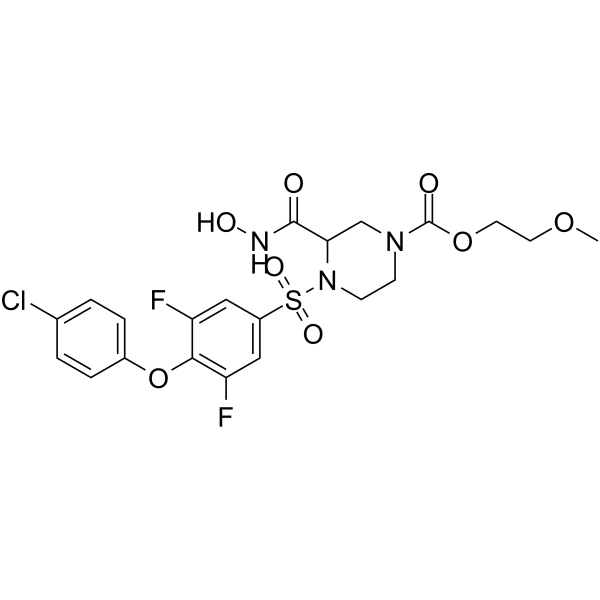
ABT-770
 0 ImagesCat. No.: HY-123130CAS No.: 220614-50-6

-
(E)-N-(2-Fluorophenyl)cinnamamide
 0 ImagesCat. No.: HY-W1058004CAS No.: 1065481-24-4
-
Sorafenib tosylate (Standard)
 0 ImagesSynonyms: Bay 43-9006 tosylate (Standard)Sorafenib (tosylate) (Standard) (Bay 43-9006 (tosylate) (Standard)) is the analytical standard of Sorafenib (tosylate) (HY-10201A). This product is intended for research and analytical applications. Sorafenib (Bay 43-9006) tosylate is a potent oral active multikinase inhibitor. Sorafenib blocks autophosphorylation and activity of receptor tyrosine kinases (VEGFR-2, VEGFR-3) and RAF family kinases, thereby suppressing the RAF/MEK/ERK and PI3K/Akt pathways, inhibiting STAT3 phosphorylation, and selectively inhibiting the MAPK pathway in cancer cells. Sorafenib tosylate induces cell cycle arrest, autophagy, apoptosis, and PARP cleavage, reduces Bcl-2, Bcl-XL, cyclin D1 levels, and activates Bak and Bax. Sorafenib tosylate inhibits tumor growth and metastasis in mouse and rat models. Sorafenib tosylate can be used for cancer research, such as colon, breast, non-small-cell lung cancer (NSCLC), ovarian, pancreatic, melanoma, colorectal and hepatocellular carcinoma.




