



MyD88
MyD88 (Myeloid differentiation primary response gene 88) is a protein that, in humans, is encoded by the MYD88 gene. Available evidence suggests that MYD88 is dispensable for human resistance to common viral infections and to all but a few pyogenic bacterial infections, demonstrating a major difference between mouse and human immune responses. MyD88 is an essential adaptor protein in the IL-1R1 signaling pathway. MyD88 may define a family of signal transduction molecules with an ancestral function in the activation of the immune system. MyD88 functions as a pure adaptor linking the IL-1R1 to downstream IRAK kinases. Mutation in MYD88 at position 265 leading to a change from leucine to proline have been identified in many human lymphomas including ABC subtype of Diffuse Large B-cell Lymphoma and Waldenstrom's Macroglobulinemia.
All Product Categories
-
MyD88 Related Products (68)
Related Products (68)

-
Antibodies (2)
-
SMU-C409
 0 ImagesCat. No.: HY-180580CAS No.: 3113739-61-7SMU-C409 is a TLR1/2 agonist with an EC50 of 65 nM in HEK-Blue hTLR2 Cells. SMU-C409 activates the TLR1/2–MyD88–NF-κB pathway, inducing TNF-α/IL-1β secretion and robust immune cell activation for antitumor immunomodulation. SMU-C409 shows low toxicity in virto. SMU-C409 can be used for cancer immunotherapy research.

-
LYRM03
 0 ImagesCat. No.: HY-N19847CAS No.: 1820750-36-4LYRM03 is a derivative of Ubenimex (HY-B0134) and a Aminopeptidase N inhibitor. LYRM03 is isolated from Streptomyces HCCB10043. LYRM03 inhibits TLR4, MyD88, NLRP3, ASC, NF-κB and p38 MAPK, stabilizes IκB, and suppresses LPS-induced expression of iNOS and COX-2. LYRM03 reduces the levels of inflammatory cytokines and oxidative stress markers, and alleviates pulmonary edema. LYRM03 exhibits anticancer activity against breast cancer. LYRM03 has anti-inflammatory activity. LYRM03 can be used in the research of acute lung injury and breast cancer.
-
Antimicrobial Peptide YD
 0 ImagesCat. No.: HY-P11913CAS No.: 2124174-65-6Antimicrobial Peptide YD is an Antimicrobial peptide. Antimicrobial Peptide YD attenuates the TLR4/MYD88/NF-κB signaling pathway, inhibits ROS production, upregulates the expression of antioxidant enzymes, reduces the levels of inflammation-related factors, and prevents the downregulation of E-cadherin and upregulation of Vimentin. Antimicrobial Peptide YD exhibits activity against Gram-positive bacteria, Gram-negative bacteria, and multidrug-resistant bacteria. Antimicrobial Peptide YD possesses anti-inflammatory, antifibrotic, and antioxidant effects. Antimicrobial Peptide YD can be used in pulmonary fibrosis research.

-
Phoenixin-14 TFA
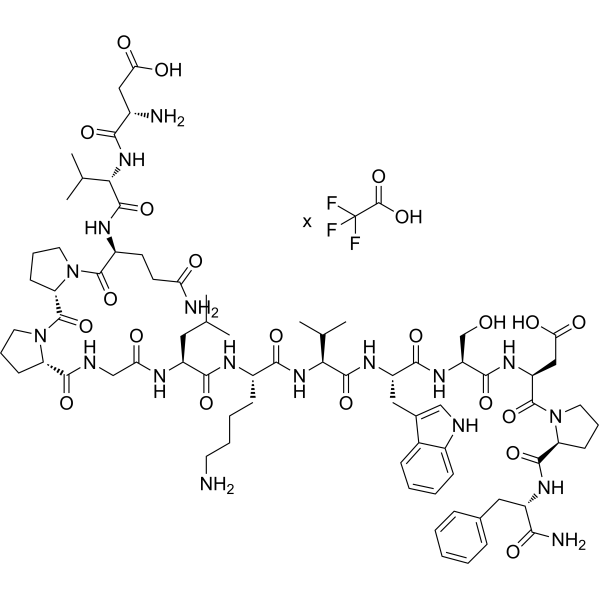 0 ImagesCat. No.: HY-P5762ASynonyms: PNX-14 TFAPhoenixin-14 (PNX-14) TFA is an endogenous neuropeptide with multiple biological activities, and serves as the endogenous ligand of GPR173. Phoenixin-14 TFA reduces ROS production by inhibiting the HMGB1/TLR4/MyD88/NF-κB signaling axis, thereby exerting antioxidant and mitochondrial protective effects. Phoenixin-14 TFA inhibits FOXO3 phosphorylation by upregulating SIRT3 expression, suppresses apoptosis, and improves myocardial systolic/diastolic function. Phoenixin-14 TFA resists ferroptosis by activating the ATF4/SLC7A11/GPX4 axis; it activates ERK1/2 phosphorylation via GPR173. Phoenixin-14 TFA can be used in researches on neuroprotection, diabetes, cardiomyopathy, reproductive protection and so on.
-
Astringin (Standard)
 0 ImagesCat. No.: HY-N4093RCAS No.: 29884-49-9Synonyms: trans-Astringin (Standard)Astringin (trans-Astringin) (Standard) is the analytical standard of Astringin (HY-N4093). This product is intended for research and analytical applications. Astringin (trans-Astringin) is an orally active natural flavonoid compound. Astringin can inhibit the production of oxidative stress, inflammatory factors, etc. Astringin has multiple activities such as anti-oxidation, anti-inflammation, and anti-apoptosis. Astringin is also an inhibitor of ferroptosis. Astringin can be used in the research of diseases such as acute lung injury.
-
CRX 527
 0 ImagesCat. No.: HY-155801CAS No.: 216014-14-1CRX 527 is a TLR4 agonist. CRX 527 activates the MyD88-dependent, TRIF-dependent, and TRAF6/NF-κB signaling pathways downstream of TLR4, mimics lipid A, and regulates antigen processing and presentation by dendritic cells. CRX 527 stimulates innate immune responses and enhances vaccine efficacy. CRX 527 maintains the structural integrity of hematopoietic tissues, spleen and intestine, alleviates radiation-induced damage, preserves intestinal homeostasis, and inhibits apoptosis, inflammatory responses, oxidative stress and DNA damage. CRX 527 can be used in the research of acute radiation syndrome, melanoma, HPV-related tumors and intracerebral hemorrhage.
-
Anti-inflammatory agent 88
 0 ImagesCat. No.: HY-163775Anti-inflammatory agent 88 (compound 6) is a carbazole derivative with anti-inflammatory activity found in marine Streptomyces. It exerts its anti-inflammatory effect by inhibiting pro-inflammatory factors and enhancing the expression of anti-inflammatory factors in the Myd88/Nf-κB pathway. Anti-inflammatory agent 88 can be used for the development of anti-inflammatory drugs.
-
Dendrocandin U
 0 ImagesCat. No.: HY-N21802CAS No.: 1922084-93-2Dendrocandin U is a bibenzyl compound found in Dendrobium officinale that exhibits anti-inflammatory activity and α-glucosidase inhibitory effect (IC50 = 9.46 mM). Dendrocandin U inhibits the expression of TLR4 and MyD88 in the TLR4/MyD88/NF-kB pathway, suppresses the phosphorylation of NF-kB p65 and I-kBα, and blocks the nuclear translocation of NF-kB p65. Dendrocandin U inhibits M1 polarization, NO secretion, and TNF-α release in alveolar macrophages, and reduces inflammatory morphological changes in macrophages. Dendrocandin U promotes neurite outgrowth in PC12 cells. Dendrocandin U can be used for research on inflammation-related diseases and type 2 diabetes.
-
LM9
 0 ImagesCat. No.: HY-180336CAS No.: 2249864-11-5LM9 is a potent, orally active MyD88 inhibitor. LM9 blocks TLR4/MyD88 binding, MyD88 homodimer formation, and TLR4/MyD88/NF-κB signaling pathway activation. LM9 prevents atherosclerosis by regulating inflammatory responses and oxidative stress in macrophages. LM9 efficiently mitigates inflammatory responses and fibrosis in obesity-induced cardiomyopathy. LM9 can be used for fibrosis and atherosclerosis research.
-
P53/TLR2 modulator-1
 0 ImagesCat. No.: HY-173309P53/TLR2 modulator-1 (Compound Z9) is a modulator that targets both the P53 pathway and TLR2 simultaneously, exhibiting anti-radiation activity. P53/TLR2 modulator-1 reduces apoptosis by inhibiting the radiation-induced expression of P53 and Bax. At the same time, it activates the TLR2 pathway, upregulates the expression of downstream proteins MyD88 and P65, and promotes the secretion of cytokines such as IL-6, thus exerting an anti-radiation effect. P53/TLR2 modulator-1 shows significant anti-radiation activity against both AHH-1 cells and HUVECs. It can also increase the survival rate of C57BL/6J mice irradiated with a lethal dose of radiation and reduce the damage to their hematopoietic system, the villous structure of the small intestine, and the spleen caused by radiation. P53/TLR2 modulator-1 can be used in the research of radiation injury-related diseases.
-
SMU-L11-R
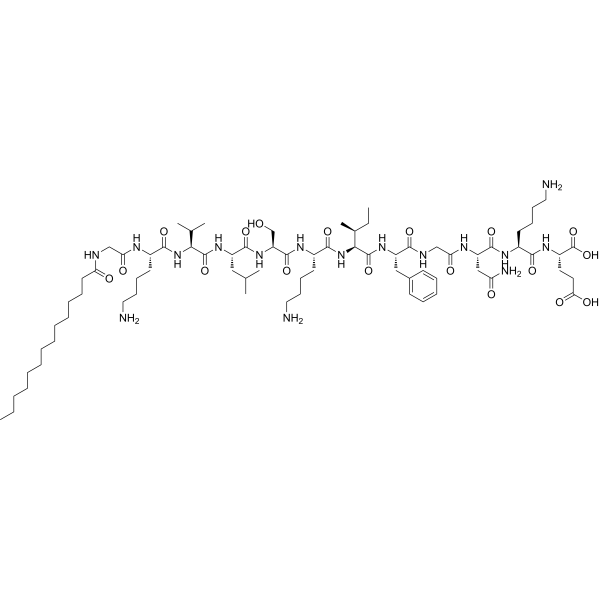
 0 ImagesCat. No.: HY-179047CAS No.: 3040320-18-8SMU-L11-R is a selective TLR7 agonist with an EC50 of 0.012 μM for human TLR7. SMU-L11-R specifically activates TLR7, recruits MyD88, and triggers MAPK/NF-κB pathways, leading to TNF-α/IL-1β/IL-6 secretion in both mouse and human peripheral blood mononuclear cells. SMU-L11-R promotes M1-like macrophage polarization. SMU-L11-R exhibits excellent synergistic anti-tumor effects with PD-L1 inhibitors by upregulating CD8+T cells. SMU-L11-R shows potential in colorectal cancer studies.
-
MyD88-IN-4
 0 ImagesCat. No.: HY-178690CAS No.: 1801552-15-7MyD88-IN-4 is a MyD88 inhibitor. MyD88-IN-4 exerts antiviral effects by up-regulating IFN-β, and anti-inflammatory effects by inhibiting pro-inflammatory cytokine production. MyD88-IN-4 prevents MyD88 homodimer formation and its interaction with IRF3/IRF7. MyD88-IN-4 demonstrates efficacy against encephalitic alphavirus infections by reducing viral replication and improving survival in VEEV TC-83-infected mouse models. MyD88-IN-4 can be used for the study of alphavirus infections, bacterial toxin-related diseases, and sepsis.
-
COX-2-IN-57
 0 ImagesCat. No.: HY-175637COX-2-IN-57 is an orally active COX-2 inhibitor with an IC50 value of 0.02 μM. COX-2-IN-57 reduces MyD88 expression and decreases serum levels of COX-2, PGE2, and COX-1 in Cisplatin (HY-17394)/radiation-induced neuropathy rat model. COX-2-IN-57 demonstrates superior antinociceptive efficacy in hot plate, cold allodynia, and Randall-Selitto tests, along with hepato-/renal protection. COX-2-IN-57 can be used for the study of inflammation.
-
BIM-46174
 0 ImagesCat. No.: HY-183400CAS No.: 195450-11-4BIM-46174 is a heterotrimeric G protein complex inhibitor. BIM-46174 blocks GPCR downstream signaling by trapping Gα proteins in a nucleotide-free pocket conformation, thereby inhibiting Gαq-mediated calcium release, Gαs-mediated cAMP production, and GPCR-regulated cancer cell invasion. In vitro, BIM-46174 effectively suppresses a variety of clinically multidrug-resistant cell lines and induces tumor cell apoptosis through activation of caspase-3 and PARP cleavage. BIM-46174 also inhibits activation of the Neu1-MMP-9-GPCR signaling platform and downstream NF-κB signaling, and is widely used in the study of cancer signaling pathways and inflammation-related research, including lung cancer, pancreatic cancer, breast cancer, melanoma, and leukemia.
-
6-Methoxyflavone (Standard)
 0 ImagesCat. No.: HY-W097625RCAS No.: 26964-24-96-Methoxyflavone (Standard) is the analytical standard of 6-Methoxyflavone (HY-W097625). This product is intended for research and analytical applications. 6-Methoxyflavone is an orally active methoxyflavone. 6-Methoxyflavone suppresses neuroinflammation in microglia through the inhibition of TLR4/MyD88/p38 MAPK/NF-κB dependent pathways and the activation of HO-1/NQO-1 signaling. 6-Methoxyflavone induces S-phase arrest through the CCNA2/CDK2/p21CIP1 signaling pathway and activates the PERK/EIF2a/ATF4/CHOP pathway in HeLa cells. 6-Methoxyflavone acts as a Flumazenil (HY-B0009)-insensitive positive allosteric modulator at human recombinant α1β2γ2L and α2β2γ2L GABAα receptors. 6-Methoxyflavone inhibits NFAT Translocation into the nucleus and suppresses T cell activation. 6-Methoxyflavone partially restores chronic ethanol-induced behavioral deficits in mice. 6-Methoxyflavone antagonizes chronic constriction injury and diabetes associated neuropathic nociception expression. 6-Methoxyflavone can be used for the study of cancer, inflammation and neurological diseases.
-
2,4′-Dihydroxybenzophenone (Standard)
 0 ImagesCat. No.: HY-W014223RCAS No.: 131-56-6Synonyms: Ultraviolet absorber UV-0 (Standard)2,4′-Dihydroxybenzophenone (Standard) is the analytical standard of 2,4′-Dihydroxybenzophenone. This product is intended for research and analytical applications. 2,4′-Dihydroxybenzophenone (Ultraviolet absorber UV-0) occupies the hydrophobic pocket of MD2 and blocks the dimerization of TLR4. 2,4′-Dihydroxybenzophenone inhibits the LPS induced mtROS production, and LPS induced inflammatory response by downregulating pro-inflammatory mediators and decreasing the expression of MyD88, p-IRAK4, and NF-κB. 2,4′-Dihydroxybenzophenone is also a UV absorber.
-
Heclin (Standard)
 0 ImagesCat. No.: HY-110204RCAS No.: 890605-54-6Heclin (Standard) is the analytical standard of Heclin (HY-110204). This product is intended for research and analytical applications. Heclin is a HECT E3 ubiquitin ligases inhibitor. Heclin inhibits Smurf2, Nedd4, WWP1 (IC50 values are 6.8, 6.3, 6.9 μM) and can be used for the research of gastric cancer.




