



PDK-1
3-Phosphoinositide-dependent protein kinase 1
PDK-1 (3-Phosphoinositide-dependent protein kinase 1), a member of the protein A, G and C (AGC) family of proteins, is a Ser/Thr protein kinase. PDK-1, is the pivotal node in the PI3K pathway, has a key role in insulin and growth-factor signalling through phosphorylation and subsequent activation of a number of other AGC kinase family members, such as protein kinase B.
PDK-1 is responsible for the regulation of cell proliferation and migration and it also has been found to play a key role in different cancers, pancreatic and breast cancer amongst others. Many cancer-driving mutations induce activation of PDK-1 targets including Akt, S6K (p70 ribosomal S6 kinase) and SGK. Thus, PDK1 is a critical activator of multiple pro-survival and oncogenic protein kinases, for which it has garnered considerable interest as an oncology drug target.
All Product Categories
-
PDK-1 Related Products (51)
Related Products (51)

-
Antibodies (2)
-
PDK1-IN-2
 0 ImagesPDK1-IN-2 is a small molecule inhibitor of 3-phosphoinositol-dependent protein kinase-1 (PDK1). PDK1-IN-2 inhibits the binding of PDK1 to its substrate by competitively binding to the PIF pocket of PDK1, thereby inhibiting the kinase activity and downstream signaling of PDK1. PDK1-IN-2 can be used for cell survival and proliferation in cancer.

-
PDK1-IN-1
 0 ImagesPDK1-IN-1 (Compound 2-11) is a PDK1 inhibitor. PDK1-IN-1 is also useful as inhibitor of other kinases such as FGFR3, NTRK3, RP-S6K and WEE1. PDK1-IN-1 selectively inhibits microtubule affinity regulating kinase (MARK). PDK1-IN-1 can be used for researches of myeloproliferative disorders, cancer and Alzheimer's disease.
-
PKM2 activator 6
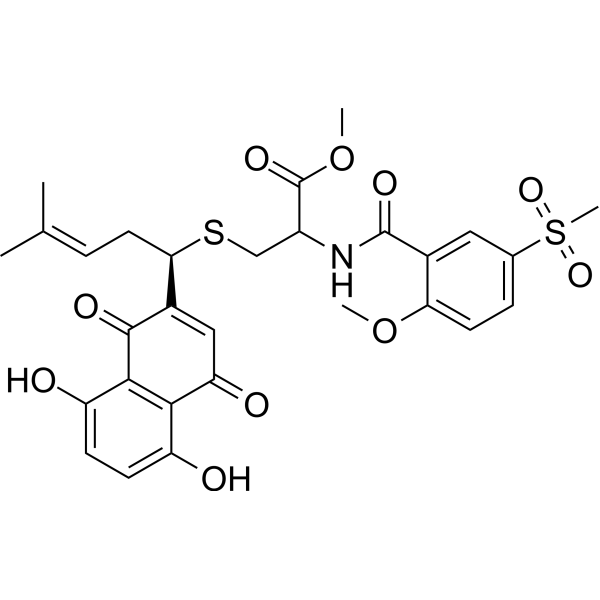 0 ImagesCat. No.: HY-156375PKM2 activator 6 (Compound Z10) is a PKM2 activator and PDK1 inhibitor (KD: 121 and 19.6 μM respectively). PKM2 activator 6 induces colorectal cell apoptosis, and inhibits cell proliferation and migration . PKM2 activator 6 inhibits glycolysis. PKM2 activator 6 inhibits proliferation of DLD-1, HCT-8, HT-29, MCF-10A cells (IC50: 10.04, 2.16, 3.57, 66.39 μM).

-
3-Amino-5-(2-furyl)pyrazole
 0 ImagesCat. No.: HY-W074538CAS No.: 96799-02-9Synonyms: 5-(Furan-2-yl)-1H-pyrazol-3-amine

-
PDK1-IN-4
 0 ImagesCat. No.: HY-172142PDK1-IN-4 (Compound R-29) is a PDK1 inhibitor. PDK1-IN-4 can be used for research of lung cancer.
-
PDK1-IN-3
 0 ImagesCat. No.: HY-13844CAS No.: 853909-77-0PDK1-IN-3 (Compound C) is a PDK1 inhibitor, with an IC50 of 34 nM.
-
LDHA/PDKs-IN-1
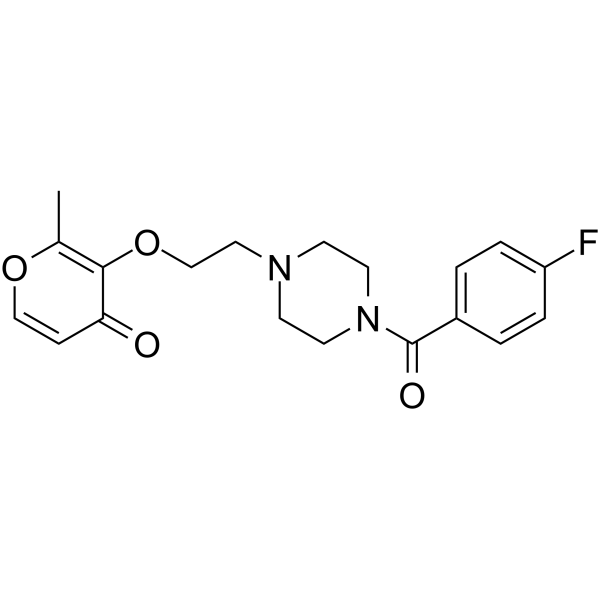 0 ImagesCat. No.: HY-146977CAS No.: 2490699-40-4LDHA/PDKs-IN-1 (compound 20e) is a potent and dual inhibitor of PDKs and LDHA with IC50s of 0.8 and 0.15 μM, respectively. LDHA/PDKs-IN-1 reduces A549 cell proliferation with an EC50 of 13.2 μM and decreases the lactate formation, and increases oxygen consumption. LDHA/PDKs-IN-1 has the potential for the research of cancer diseases.
-
OSU-02067
 0 ImagesCat. No.: HY-177913CAS No.: 618068-98-7
-
Solenopsin
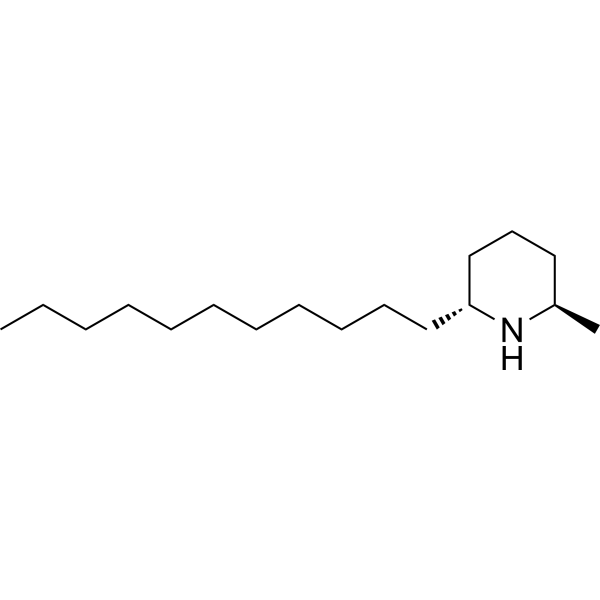 0 ImagesCat. No.: HY-16461CAS No.: 137038-57-4Synonyms: (-)-Solenopsin ASolenopsin ((-)-Solenopsin A) is an ATP-competitive and selective Akt-1 inhibitor with an IC50 of 5-10 μM, and also acts as an RSK1 inhibitor. Solenopsin inhibits the activities of PDK1 in lipid rafts, downregulates PI3K, blocks PI3K-dependent generation of 3-phosphoinositides, and suppresses the phosphorylation of FOXO1a. Solenopsin induces Mitophagy and ROS production, reduces mitochondrial oxygen consumption, and exhibits antiproliferative and antiangiogenic activities. Solenopsin can be used in research related to hyperproliferative skin diseases and malignant diseases.
-
Sexangularetin 3-sophoroside
 0 ImagesCat. No.: HY-N17990CAS No.: 114882-17-6Sexangularetin 3-sophoroside is a PDK1 and Akt phosphorylation activator with neuroprotective properties. Sexangularetin 3-sophoroside restores phosphorylated GSK-3β protein levels. Sexangularetin 3-sophoroside acts as a ROS inhibitor and regulates mRNA expression of superoxide dismutase 1 and catalase. Sexangularetin 3-sophoroside can be used for the research of Parkinson’s disease.
-
WH23
 0 ImagesCat. No.: HY-181670WH23 is a dehydrogenase/reductase SDR family member 11 (DHRS11) inhibitor with IC50 values of 0.037 μM. WH23 binds to DHRS11, forming a hydrogen bond with the enzyme’s His210 residue. WH23 suppresses androgen receptor mRNA and protein expression, reduces c-Myc expression, and inhibits cancer cell proliferation. WH23 inhibits PI3K/AKT signaling by reducing phosphorylation of PDK1, AKT, mTOR, and ERK. WH23 enhances Capivasertib (HY-15431)-induced cytotoxicity and apoptosis. WH23 can be used for the research of luminal androgen receptor-positive triple-negative breast cancer.
-
Bisdemethoxycurcumin
 0 ImagesCat. No.: HY-N2942CAS No.: 52328-96-8Bisdemethoxycurcumin is an orally effective curcuminoid. Bisdemethoxycurcumin downregulates pro-inflammatory cytokines in macrophages by inhibiting the phosphorylation of PI3K/Akt and p38 MAPK. Bisdemethoxycurcumin relieves autophagy inhibition and promotes lipophagy to clear vascular smooth muscle foam cells by inhibiting the PDK1/Akt/mTOR pathway. Bisdemethoxycurcumin activates the cAMP/Epac/AMPKα axis and the NRF2/HO-1 antioxidant axis, thereby indirectly inhibiting the phosphorylation of NF-κB p65 and pro-inflammatory outputs such as IL-1β/IL-6/TNF-α, so as to alleviate pulmonary oxidative stress, inflammatory infiltration and pulmonary edema. Bisdemethoxycurcumin blocks NLRP3-mediated pyroptosis and protects cartilage extracellular matrix degradation by activating NRF2/HO-1. Bisdemethoxycurcumin also exerts a synergistic effect with potassium iodide against Candida.
-
(+)-Neoalbaconol
 0 ImagesCat. No.: HY-N20662CAS No.: 2779545-15-0(+)-Neoalbaconol is a selective Akt/PDK1 inhibitor (with an IC50 of 10 μM against hPDK1). (+)-Neoalbaconol selectively inhibits cancer cell proliferation, and induces energy depletion, apoptosis, autophagy and necroptosis in cancer cells. In addition, (+)-Neoalbaconol downregulates cIAP1/2 and TRAFs to activate non-canonical NF-κB and promote TNFα transcription, blocks EGFR-mediated VEGF production and receptor activation, and mediates cell necrosis via the RIPK3-ROS-dependent pathway. (+)-Neoalbaconol can be used in research related to nasopharyngeal carcinoma, melanoma, breast cancer and gastric cancer.




