



PPARγ
PPARγ (Peroxisome Proliferator-Activated Receptor Gamma) is a ligand-activated nuclear receptor that functions as a central transcriptional regulator of adipocyte differentiation, lipid metabolism, insulin sensitivity, inflammation, and cellular energy homeostasis[1][2]. Mechanistically, PPARγ forms heterodimers with retinoid X receptors and regulates target gene expression through PPAR response elements, thereby coordinating metabolic and transcriptional programs that govern adipose tissue development and systemic glucose and lipid metabolism[3][4]. Because of its pivotal role in adipogenesis and insulin-responsive pathways, PPARγ has been extensively implicated in obesity, type 2 diabetes, metabolic syndrome, and related metabolic disorders[1][3]. In addition to metabolic regulation, PPARγ contributes to immune-cell maturation and function, particularly in macrophages and other inflammatory cell populations, linking metabolic signaling with inflammatory responses[4]. Compared with the related PPARα and PPARδ isoforms, which are predominantly associated with fatty acid oxidation and broader energy utilization pathways, PPARγ is distinguished by its dominant role in adipocyte differentiation and adipose tissue function[3]. Furthermore, alternative promoter usage and splicing generate multiple PPARG transcript variants, including γ1, γ2, and γ3, with evidence indicating isoform-specific regulation and distinct metabolic functions in different tissues[2][5]. For experimental applications, synthetic thiazolidinedione agonists activate PPARγ and improve insulin sensitivity, making them valuable pharmacological tools for investigating metabolic regulation, although their clinical use is limited by adverse effects such as weight gain[3][5].
References:
- [1]. Houseknecht KL, et al. Peroxisome proliferator-activated receptor gamma (PPARgamma) and its ligands: a review. Domest Anim Endocrinol. 2002 Mar;22(1):1-23. [Content Brief]
- [2]. Liu X, et al. Physical layer encryption scheme based on biological genetic variation mechanisms in CO-OFDM system. Opt Express. 2025 Oct 6;33(20):42528-42541. [Content Brief]
- [3]. Semple RK, et al. PPAR gamma and human metabolic disease. J Clin Invest. 2006 Mar;116(3):581-9. [Content Brief]
- [4]. Hernandez-Quiles M, et al. PPARgamma in Metabolism, Immunity, and Cancer: Unified and Diverse Mechanisms of Action. Front Endocrinol (Lausanne). 2021 Feb 26;12:624112. [Content Brief]
- [5]. Hermans A, et al. A 3D-Printed and Freely Available Device to Measure the Zebrafish Optokinetic Response Before and After Injury. Zebrafish. 2024 Apr;21(2):144-148. [Content Brief]
All Product Categories
-
PPARγ Inhibitors
(34)
View all products
-
PPARγ Agonists
(116)
View all products
-
PPARγ Antagonists
(11)
View all products
-
PPARγ Activators
(49)
View all products
-
PPARγ Modulators
(15)
View all products
-
PPARγ Inducer
(1)
View all products
-
PPARγ Ligands
(2)
View all products
-
PPAR gamma Proteins
(7)
View all products
-
PPARγ Related Products (231)
Related Products (231)

-
Recombinant Proteins (7)
-
Antibodies (2)
-
T2384
 0 ImagesCat. No.: HY-122083CAS No.: 315222-83-4T2384 is a peroxisome proliferator-activated receptor γ (PPARγ) ligand. T2384 also is an orally active antidiabetic agent. T2384 reduces the fasting plasma glucose levels and plasma insulin levels.
-
Acanthoic acid
 0 ImagesCat. No.: HY-116136CAS No.: 119290-87-8Synonyms: NP1302Acanthoic acid (NP1302) is an orally active pimarane-type diterpenoid. Acanthoic acid is isolated from the root bark of Araliaceae family plant Eleutherococcus senticosus (Siberian ginseng). Acanthoic acid activates LXR and FXR. Acanthoic acid activates the AMPK-LKB1, SIRT1, and p38 MAPK signaling pathways and increases the phosphorylation level of ACC. Acanthoic acid downregulates the expression of SREBP-1, CYP2E1, HIF-1α, and PPARγ, and upregulates the expression of PPARα. Acanthoic acid induces Apoptosis by activating Caspase-3, promoting PARP cleavage, and downregulating Bcl-xL. Acanthoic acid exhibits antioxidant, anti-fibrotic, and hepatoprotective effects. It reduces lipid accumulation and lipogenesis. Acanthoic acid is used in studies on non-alcoholic fatty liver disease, alcoholic liver disease, acute promyelocytic leukemia, and Acetaminophen-induced hepatotoxicity.
-
SR-1903
 0 ImagesCat. No.: HY-138007CAS No.: 1414248-06-8
-
Idescarpin
 0 ImagesCat. No.: HY-N19582CAS No.: 188557-53-1Idescarpin is a phenolic glycoside compound isolated from Idesia polycarpa and exhibits an extremely bitter taste. Idescarpin possesses significant anti-inflammatory, antioxidant, and potent anti-adipogenic activities. Idescarpin reduces melanin biosynthesis by inhibiting tyrosinase activity. Idescarpin is applicable to research on obesity and type 2 diabetes, as well as related studies in food and cosmetics.
-
Inolitazone
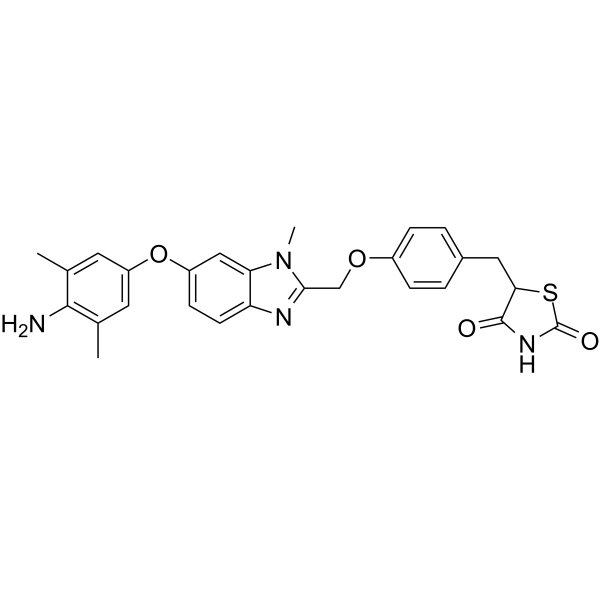 0 ImagesCat. No.: HY-14792CAS No.: 223132-37-4Synonyms: Efatutazone; CS-7017; RS5444
-
17-Oxo-7(Z),10(Z),13(Z),15(E),19(Z)-docosapentaenoic acid
 0 ImagesCat. No.: HY-116115CAS No.: 1233715-33-7Synonyms: 17-Oxo-DPA; 17-Oxo-7(Z),10(Z),13(Z),15(E),19(Z)-DPA17-Oxo-7(Z),10(Z),13(Z),15(E),19(Z)-docosapentaenoic acid (17-Oxo-DPA; 17-Oxo-7(Z),10(Z),13(Z),15(E),19(Z)-DPA) is an electrophilic oxo-derivative (EFOX) of the docosahexaenoic acid (DHA) (HY-B2167). 17-Oxo-7(Z),10(Z),13(Z),15(E),19(Z)-docosapentaenoic acid is generated during inflammation by COX-2-catalyzed mechanism in activated macrophages. 17-Oxo-7(Z),10(Z),13(Z),15(E),19(Z)-docosapentaenoic acid acts as an agonist for PPARγ and a modulator for NF-κB signaling pathway, inhibits the production of pro-inflammatory cytokines and nitric oxide, and exhibits anti-inflammatory efficacy.
-
TZD18
 0 ImagesCat. No.: HY-121798CAS No.: 228577-00-2

-
CLX-0921
 0 ImagesCat. No.: HY-19394CAS No.: 249886-47-3CLX-0921 is an orally active PPARγ agonist with an IC50 of 1.54 μM. CLX-0921 has a potent antihyperglycemic activity, and can be used for the study of type 2 diabetes.
-
7-Hydroxy-3-(3-methoxyphenyl)-4H-chromen-4-one
 0 ImagesCat. No.: HY-W508552CAS No.: 139256-06-77-Hydroxy-3-(3-methoxyphenyl)-4H-chromen-4-one is a dual agonist of PPARα and PPARγ, with an EC50 of 23.10 μM for human PPARα and an EC50 of 22.29 μM for human PPARγ. 7-Hydroxy-3-(3-methoxyphenyl)-4H-chromen-4-one regulates the expression of lipid metabolism-related genes via PPARα, and modulates the expression of genes associated with glucose homeostasis and adipogenesis via PPARγ. 7-Hydroxy-3-(3-methoxyphenyl)-4H-chromen-4-one can be used in the research of type 2 diabetes and metabolic syndrome.
-
NS-220
 0 ImagesCat. No.: HY-19425CAS No.: 377731-45-8NS-220 is an orally active PPARα agonist with high subtype selectivity, with EC50 values of 1.9×10⁻⁸ M, 9.6×10⁻⁶ M and >10-4 M for PPARα, PPAR γ and PPARδ, respectively. NS-220 is used in the research for hyperlipidemia or metabolic disorders in type-2 diabetes.




