



PPARγ
PPARγ (Peroxisome Proliferator-Activated Receptor Gamma) is a ligand-activated nuclear receptor that functions as a central transcriptional regulator of adipocyte differentiation, lipid metabolism, insulin sensitivity, inflammation, and cellular energy homeostasis[1][2]. Mechanistically, PPARγ forms heterodimers with retinoid X receptors and regulates target gene expression through PPAR response elements, thereby coordinating metabolic and transcriptional programs that govern adipose tissue development and systemic glucose and lipid metabolism[3][4]. Because of its pivotal role in adipogenesis and insulin-responsive pathways, PPARγ has been extensively implicated in obesity, type 2 diabetes, metabolic syndrome, and related metabolic disorders[1][3]. In addition to metabolic regulation, PPARγ contributes to immune-cell maturation and function, particularly in macrophages and other inflammatory cell populations, linking metabolic signaling with inflammatory responses[4]. Compared with the related PPARα and PPARδ isoforms, which are predominantly associated with fatty acid oxidation and broader energy utilization pathways, PPARγ is distinguished by its dominant role in adipocyte differentiation and adipose tissue function[3]. Furthermore, alternative promoter usage and splicing generate multiple PPARG transcript variants, including γ1, γ2, and γ3, with evidence indicating isoform-specific regulation and distinct metabolic functions in different tissues[2][5]. For experimental applications, synthetic thiazolidinedione agonists activate PPARγ and improve insulin sensitivity, making them valuable pharmacological tools for investigating metabolic regulation, although their clinical use is limited by adverse effects such as weight gain[3][5].
References:
- [1]. Houseknecht KL, et al. Peroxisome proliferator-activated receptor gamma (PPARgamma) and its ligands: a review. Domest Anim Endocrinol. 2002 Mar;22(1):1-23. [Content Brief]
- [2]. Liu X, et al. Physical layer encryption scheme based on biological genetic variation mechanisms in CO-OFDM system. Opt Express. 2025 Oct 6;33(20):42528-42541. [Content Brief]
- [3]. Semple RK, et al. PPAR gamma and human metabolic disease. J Clin Invest. 2006 Mar;116(3):581-9. [Content Brief]
- [4]. Hernandez-Quiles M, et al. PPARgamma in Metabolism, Immunity, and Cancer: Unified and Diverse Mechanisms of Action. Front Endocrinol (Lausanne). 2021 Feb 26;12:624112. [Content Brief]
- [5]. Hermans A, et al. A 3D-Printed and Freely Available Device to Measure the Zebrafish Optokinetic Response Before and After Injury. Zebrafish. 2024 Apr;21(2):144-148. [Content Brief]
All Product Categories
-
PPARγ Inhibitors
(34)
View all products
-
PPARγ Agonists
(118)
View all products
-
PPARγ Antagonists
(11)
View all products
-
PPARγ Activators
(49)
View all products
-
PPARγ Modulators
(15)
View all products
-
PPARγ Inducer
(1)
View all products
-
PPARγ Ligands
(2)
View all products
-
PPAR gamma Proteins
(7)
View all products
-
PPARγ Related Products (233)
Related Products (233)

-
Recombinant Proteins (7)
-
Antibodies (2)
-
PPARα agonist 5
 0 ImagesCat. No.: HY-173217PPARα agonist 5 is an orally available, selective partial agonist of PPARα (EC50: 3 nM). PPARα agonist 5 reduces lipid accumulation and upregulates key PPARα target genes, exerting anti-fatty liver effects. PPARα agonist 5 also exhibits significant hypolipidemic and hypoglycemic effects through partial PPARγ agonist activity and mild inhibition of protein tyrosine phosphatase 1B (PTP1B) (IC50: 79.1 μM). PPARα agonist 5 has a good safety profile and can be used in the study of type 2 diabetes with dyslipidemia.
-
S-Petasin
 0 ImagesCat. No.: HY-N17617CAS No.: 70238-51-6S-Petasin is a phosphodiesterase (PDE) inhibitor with IC50 values of 25.5 μM and 17.5 μM for PDE3 and PDE4, respectively. S-Petasin inhibits cholesterol side-chain cleavage enzyme, 11β-hydroxylase, PPAR-γ, and iNOS induction at RNA and protein levels. S-Petasin induces apoptosis, activates caspases, cleaves PARP, modulates mitochondrial membrane permeability, and regulates BCL2/BAX, p53, Bcl-XL, MMP-2, MMP-9, p21, CDK4, and cyclin D1 expression. S-Petasin reduces inflammatory cell accumulation, cytokine and IgE levels, and enhances serum IgG2a levels. S-Petasin relaxes isolated sensitized guinea pig trachealis and exhibits gastrointestinal anti-spasmodic activity. S-Petasin reduces tonsillitis severity and asthmatic attack frequency. S-Petasin can be used for the research of prostate cancer, obesity, melanoma, allergic asthma, asthma, and peritonitis.
-
SR2595
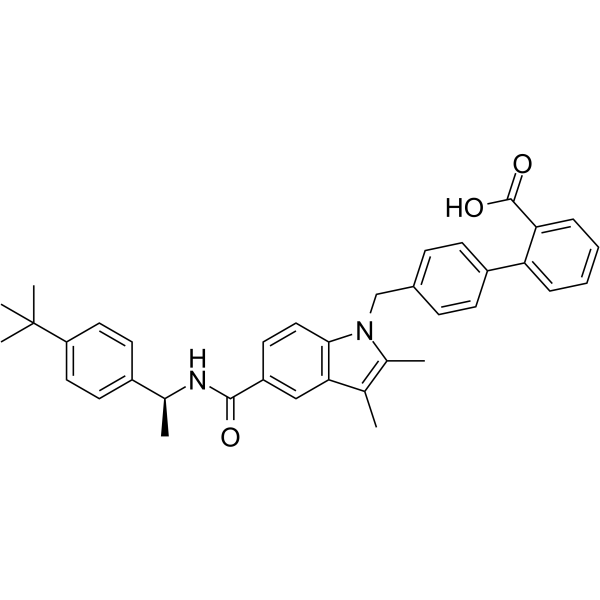 0 ImagesCat. No.: HY-116521CAS No.: 1415252-61-7SR2595 is an inverse agonist of PPARγ with an IC50 of 30 nM.
-
Zaltoprofen sulfoxide
 0 ImagesCat. No.: HY-180952CAS No.: 134085-79-3Zaltoprofen sulfoxide (Compound M2) is the main metabolite of Zaltoprofen (HY-B0619). Zaltoprofen sulfoxide is an efficient and selective COX-2 inhibitor (IC50 = 45.38 nM) and a PPAR-γ activator. Zaltoprofen sulfoxide effectively inhibits NF-κB and MAPK inflammatory signaling pathways and alleviates acute lung injury induced by LPS (HY-D1056B3). Zaltoprofen sulfoxide can be used for the study of acute lung injury.
-
LTD4 antagonist 3
 0 ImagesCat. No.: HY-19178CAS No.: 149437-51-4Synonyms: FK011 hydrochlorideLTD4 antagonist 3 (FK011 hydrochloride) is a LTD4 antagonist. LTD4 antagonist 3 has agonistic activity for PPAR-γ, with a fold-increase of 1.50 at 1 μM and 2.35 at 10 μM. LTD4 antagonist 3 can be used of development of non-steroidal anti-inflammatory drugs (NSAIDs).
-
PPARγ modulator-1
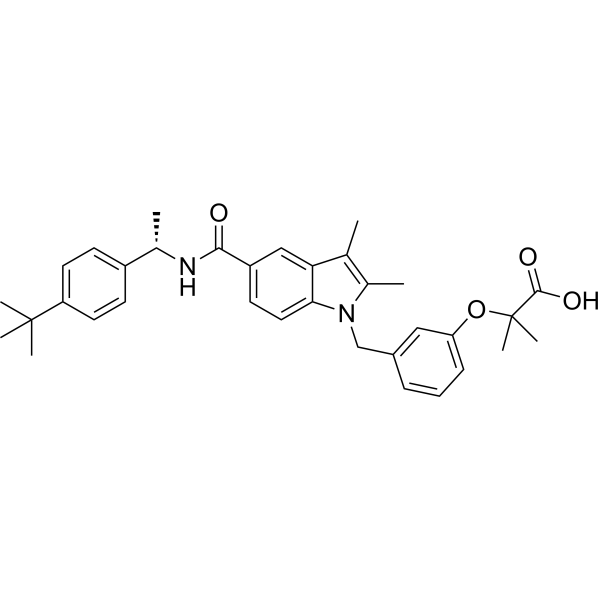 0 ImagesCat. No.: HY-160159CAS No.: 1415321-54-8Anticancer agent 183 (example 48) is a non-agonistic PPARG modulator. Anticancer agent 183 has a high affinity to PPARG (PPARγ). Anticancer agent 183 inhibits kinase-mediated phosphorylation of PPARG. Anticancer agent 183 can used for research on metabolic diseases to avoid side effects.
-
DN203316
 0 ImagesCat. No.: HY-162963CAS No.: 2982696-04-6Synonyms: PPARδ agonist 11DN203316 (PPARδ agonist 11) is a potent, selective, orally active PPARδ agonist (EC50 = 20 nM) with high selectivity over PPARα and PPARγ. DN203316 suppresses NF-κB-mediated inflammatory signaling, inhibits ferroptosis by upregulating xCT and GPX4, and attenuates STING-TBK1-IRF3-driven fibrogenic responses. DN203316 is useful for research on inflammatory disorders, metabolic dysfunction-associated steatohepatitis (MASH), and liver fibrosis.
-
PPARγ agonist 19
 0 ImagesCat. No.: HY-176214PPARγ agonist 19 (Compound 5e) is a PPARγ agonist. PPARγ agonist 19 has an IC50 of 11.27 μM against COX-1 and an IC50 of 0.05 μM against COX-1. PPARγ agonist 19 increases glucose uptake in rat hemidiaphragm assay and is superior to pioglitazone (HY-13956). PPARγ agonist 19 alleviates hyperglycemia and insulin resistance in an in vivo model of type 2 diabetes in rats and protects against renal and lipidemia damage caused by metabolic dysfunction.
-
PPARγ agonist 2
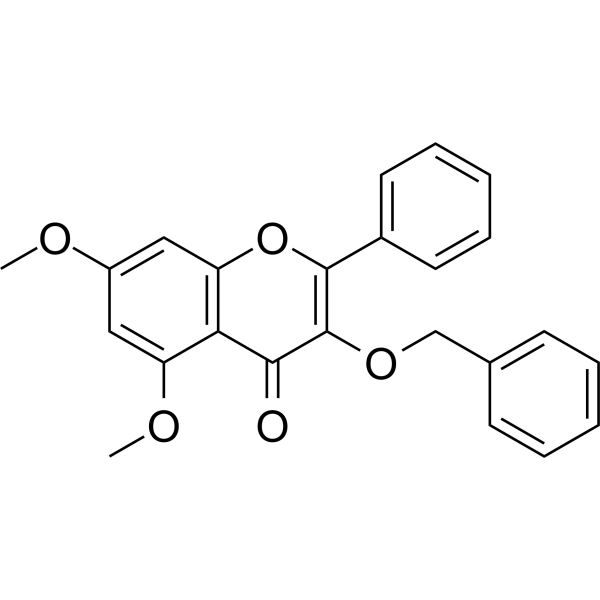 0 ImagesCat. No.: HY-146742CAS No.: 3024531-27-6
-
Busegampar
 0 ImagesCat. No.: HY-187862CAS No.: 1190427-41-8Busegampar is a selective PPARγ agonist. Busegampar exhibits anti-inflammatory, immunomodulatory, and skin barrier repair activities. Busegampar can be used in research on inflammatory and barrier-related skin diseases.
-
PPARα/δ agonist 3
 0 ImagesCat. No.: HY-168485CAS No.: 3050611-33-8
-
PPARγ agonist-22
 0 ImagesCat. No.: HY-181233CAS No.: 931956-54-6
-
(Rac)-Pinostrobin
 0 ImagesCat. No.: HY-N2127ACAS No.: 75291-74-6Synonyms: (±)-Pinostrobin(Rac)-Pinostrobin ((±)-Pinostrobin) is a dual agonist of TGR5 and PPARγ. (Rac)-Pinostrobin specifically activates TGR5 without acting on other endogenously expressed GPCRs. (Rac)-Pinostrobin exhibits moderate PPARγ activation activity. (Rac)-Pinostrobin possesses metabolic regulatory activity. (Rac)-Pinostrobin can be used in research related to obesity and type 2 diabetes.
-
CAY10410
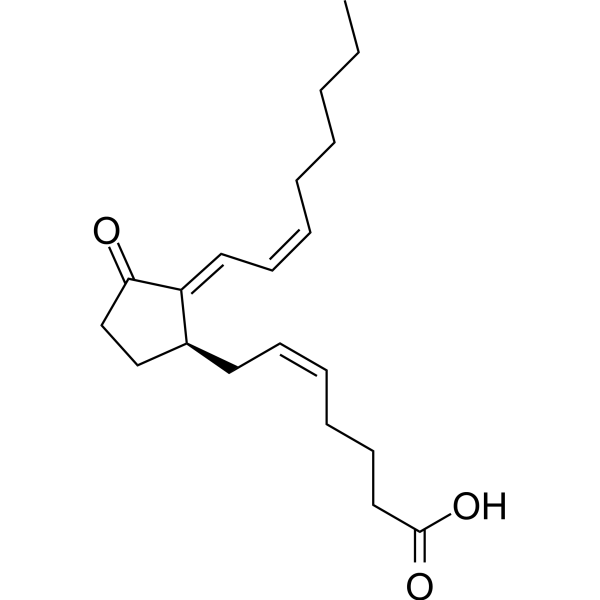 0 ImagesCat. No.: HY-117422CAS No.: 596104-94-8Synonyms: 11-Oxo-prosta-5Z,12E,14Z-trien-1-oic acid
-
15-Keto-prostaglandin E2-d9
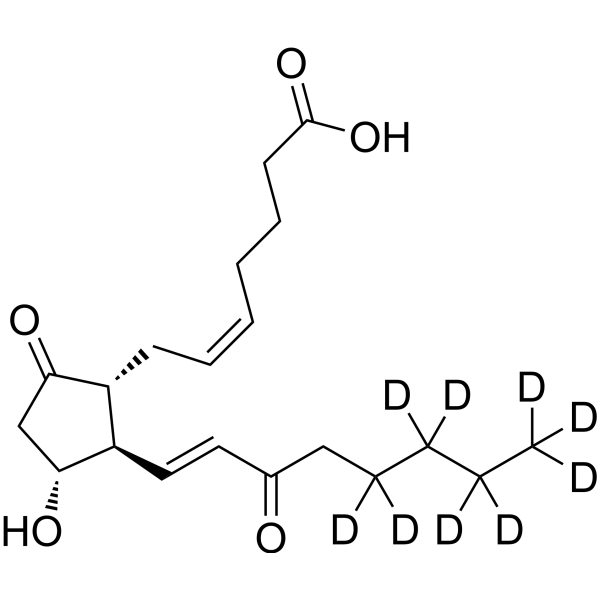 0 Images15-Keto-prostaglandin E2-d9 is the d9 labeled 15-keto-Prostaglandin E2 (HY-113205). 15-keto-Prostaglandin E2 (15-keto-PGE2) is an endogenous PGE2 metabolite. 15-keto-Prostaglandin E2 inhibits STAT3 activation by binding to the Cys259 residue of STAT3. 15-keto-Prostaglandin E2 binds to and stabilizes EP2 and EP4 receptors. 15-keto-Prostaglandin E2 inhibits the growth and progression of breast cancer cells. 15-keto-Prostaglandin E2 activates PPAR-γ and promotes fungal growth. 15-keto-Prostaglandin E2 disrupts glomerular vascularization during zebrafish development and reduces the surface area of the glomerular filtration barrier.
-
LCI765
 0 ImagesCat. No.: HY-10843CAS No.: 870194-96-0LCI765 is an orally active and selective PPARδ agonist, with an EC50 of 0.07 nM. LCI765 can be used for the research of diseases related to energy homeostasis such as metabolic syndrome.
-
Hydrangeic acid
 0 ImagesHydrangeic acid is an orally effective stilbene-type glycolipid metabolism regulator that lowers blood glucose and lipids. It can be isolated from processed leaves of Hydrangea macrophylla var. thunbergii. Hydrangeic acid is associated with glycolipid metabolism and insulin sensitivity regulation. Hydrangeic acid does not directly activate PPARγ or PPARα, but instead upregulates the mRNA expression of adiponectin, PPARγ2, GLUT4, and fatty acid-binding protein aP2, and downregulates TNF-α mRNA expression, promoting adipogenesis, glucose uptake, and GLUT4 translocation in 3T3-L1 cells. Simultaneously, Hydrangeic acid inhibits inflammatory factor-induced NO production, exerting activity in improving insulin resistance. Hydrangeic acid can be used in research related to type 2 diabetes and does not cause liver weight gain as a side effect.

-
15-LOX-IN-2
 0 ImagesCat. No.: HY-17311515-LOX-IN-2 (Compound 2a) is an orally active COX-2/15-LOX inhibitor and a partial agonist of PPARγ. 15-LOX-IN-2 has anti-inflammatory activity and inhibits the levels of 20-HETE, IL-1β and TNF-α in RAW 264.7 cells treated with LPS (HY-D1056). In addition, 15-LOX-IN-2 has significant glucose uptake capacity in the absence of insulin. 15-LOX-IN-2 can be used for the research of metabolic diseases.
-
GW7845
 0 ImagesCat. No.: HY-121746CAS No.: 196809-22-0GW7845 is an orally active non-thiazolidinedione, tyrosine-derived PPARγ agonist. GW7845 is effective at inhibiting voltage-dependent calcium channels (VDCC) and relaxing pressurized arteries with IC50 of 3 μM by using Ba2+ as the charge carrier through VDCC. GW7845-induced apoptosis is mitochondria- and apoptosome-dependent. GW7845 induces rapid mitochondrial membrane depolarization and release of cytochrome c in primary pro-B cells and BU-11 cells.




