



Proteasome
Proteasomes are very large protein complexes inside all eukaryotes and archaea, and in some bacteria. In eukaryotes, they are located in the nucleus and the cytoplasm. The main function of the proteasome is to degrade unneeded or damaged proteins by proteolysis, a chemical reaction that breaks peptide bonds. Enzymes that carry out such reactions are called proteases. Proteasomes are part of a major mechanism by which cells regulate the concentration of particular proteins and degrade misfolded proteins. The degradation process yields peptides of about seven to eight amino acids long, which can then be further degraded into amino acids and used in synthesizing new proteins. Proteins are tagged for degradation with a small protein called ubiquitin. The tagging reaction is catalyzed by enzymes called ubiquitin ligases. Once a protein is tagged with a single ubiquitin molecule, this is a signal to other ligases to attach additional ubiquitin molecules. The result is a polyubiquitin chain that is bound by the proteasome, allowing it to degrade the tagged protein.
All Product Categories
-
Proteasome Inhibitors
(224)
View all products
-
Proteasome Activators
(10)
View all products
-
Proteasome Modulator
(1)
View all products
-
Proteasome Degraders
(3)
View all products
-
Proteasome Controls
(3)
View all products
-
Proteasome Substrates
(6)
View all products
-
Proteasome Ligands
(7)
View all products
-
Proteasome Related Products (292)
Related Products (292)

-
Antibodies (22)
-
Bepridil
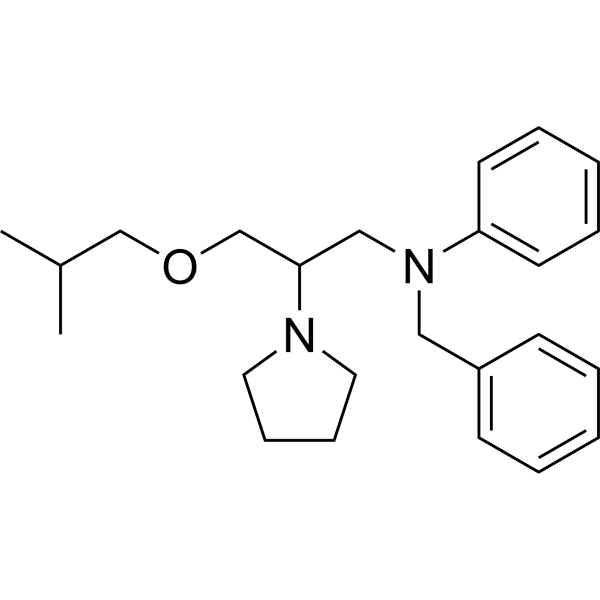 0 ImagesSynonyms: CERM 1978 free base; Org 5730Bepridil (CERM 1978 (free base); Org 5730) is an orally active non-selective calcium channel antagonist with multi-ion channel blocking activity. Bepridil modulates Calmodulin, the 20S proteasome, T-type/L-type calcium channels, cardiac sodium channels, multiple potassium channels, γ-secretase, β-secretase, and mitoKATP/sarcKATP channels. Bepridil acts as a hydroxyl radical scavenger, regulates mitochondrial and intracellular calcium handling, and exerts antiarrhythmic, antianginal, and cardioprotective effects. Bepridil alters amyloid precursor protein processing, reduces β-amyloid and thalamic calcium levels, restores seladin-1/DHCR24 expression, and improves sensorimotor recovery after cerebral ischemia. Bepridil also exhibits potent inhibitory effects on SARS-CoV-2 replication. Bepridil is used in studies related to stable angina, arrhythmias, cerebral ischemia, Alzheimer's disease, and SARS-CoV-2 infection.
-
Bortezomib-pinanediol
 0 ImagesBortezomib-pinanediol is a proteasome inhibitor and a prodrug of Bortezomib (HY-10227). Bortezomib-pinanediol inhibits cell growth and can be used for study of multiple myeloma.
-
Calpain Inhibitor VI
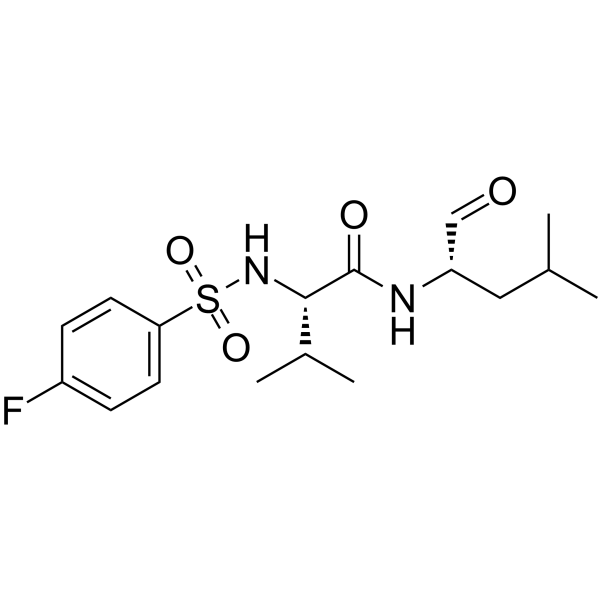 0 ImagesSynonyms: SJA6017Calpain Inhibitor VI (SJA6017) is a synthesized peptide aldehyde inhibitor of calpain. Calpain Inhibitor VI inhibits purified m-calpain with the IC50 of 80 nM. Calpain Inhibitor VI can be used for the research of cataract.
-
PI-1840
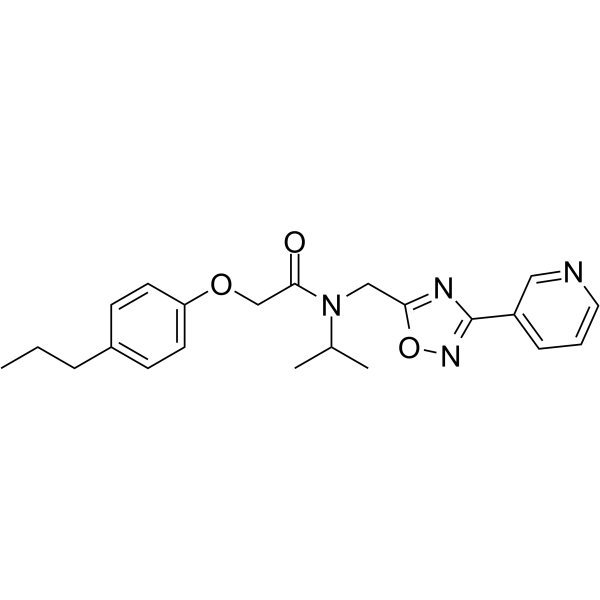 0 ImagesPI-1840 is a potent and selective chymotrypsin-like (CT-L) inhibitor for with an IC50 value of 27 nM. PI-1840 inhibits cell proliferation and arrest cell cycle at G2/M phase. PI-1840 induces apoptosis and induces autophagy. PI-1840 induces the accumulation of proteasome substrates p27, Bax, and IκB-α.
-
Aclacinomycin A hydrochloride
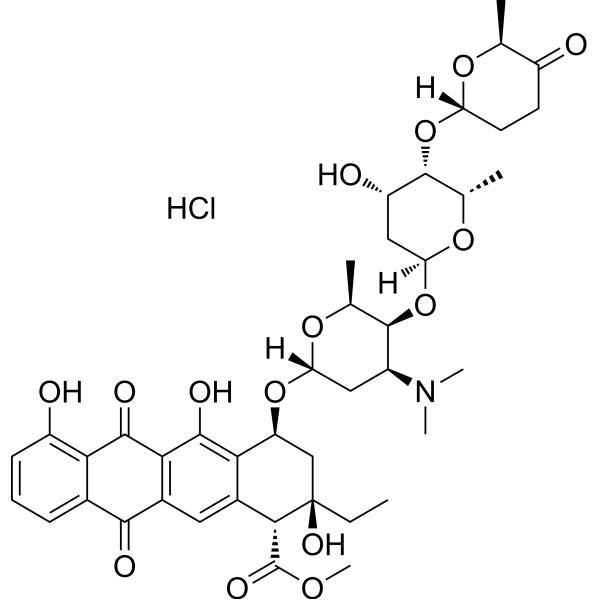 0 ImagesCat. No.: HY-N2306ACAS No.: 75443-99-1Synonyms: Aclarubicin hydrochlorideAclacinomycin A (Aclarubicin) hydrochloride is an orally active and potent anthracycline antitumor antibiotic. Aclacinomycin A hydrochloride is an inhibitor of topoisomerase I and II. Aclacinomycin A hydrochloride inhibits synthesis of nucleic acid, especially RNA. Aclacinomycin A hydrochloride might inhibit the 26S protease complex as well as the ubiquitin-ATP-dependent proteolysis.
-
Z-LLNle-CHO
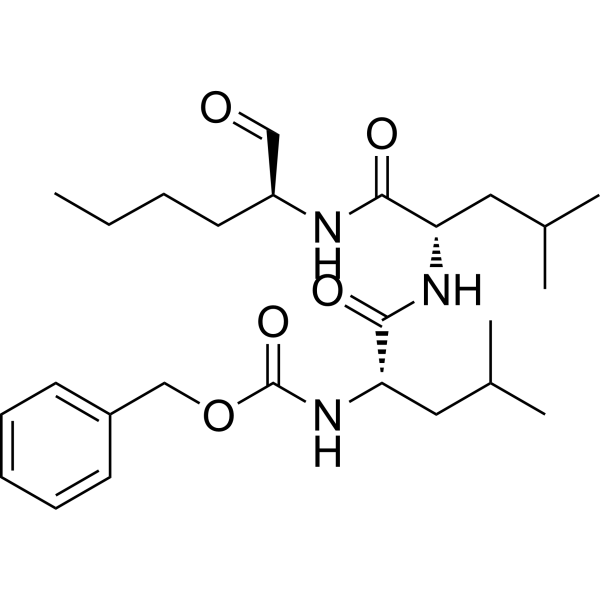 0 ImagesCat. No.: HY-120234CAS No.: 133407-83-7Synonyms: Z-Leu-Leu-Nle-CHO; GSII
-
Collagenase (Type B, animal free)
 0 ImagesCat. No.: HY-E70005LCAS No.: 9001-12-1Collagenase (Type B, animal free) is an animal-free collagen-degrading digestive enzyme and tissue dissociation reagent. Collagenase (Type B, animal free) can digest mouse aorta, myocardium, human umbilical cord, and human liver tissue to isolate primary leukocytes, adult mouse cardiomyocytes, human mesenchymal stem cells, and individual hepatocytes. Collagenase (Type B, animal free) can be used in studies related to liver cirrhosis.
-
Galeflaprit
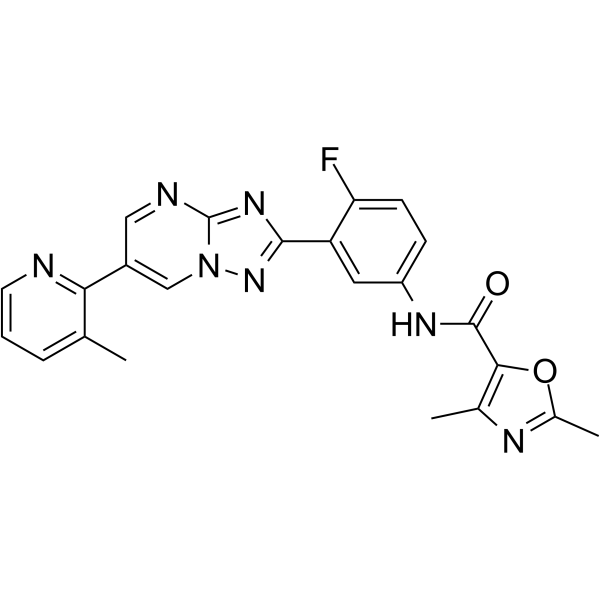 0 ImagesSynonyms: LXE408Galeflaprit (LXE408) is an orally active, non-competitive and kinetoplastid-selective proteasome inhibitor. Galeflaprit has an IC50 of 0.04 μM for L. donovani proteasome and an EC50 of 0.04 μM for L. donovani. Galeflaprit has a low propensity to cross the blood brain barrier. Galeflaprit has the potential for visceral leishmaniasis (VL) research.
-
iso-VQA-ACC acetate
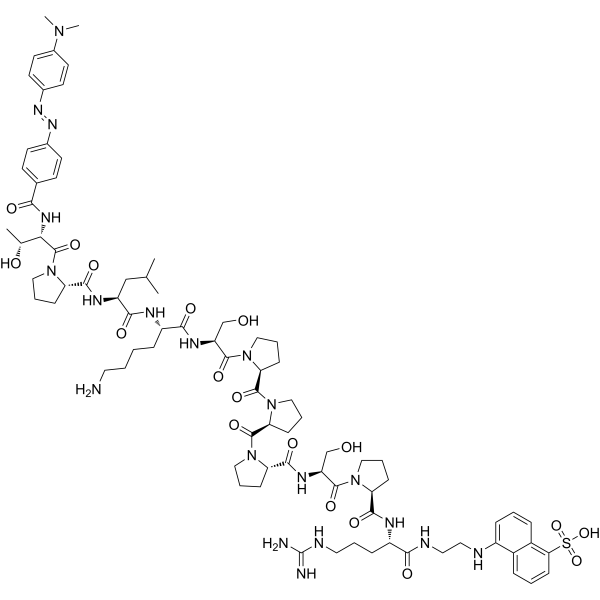
 0 ImagesCat. No.: HY-P10003BPurity: 99.54%iso-VQA-ACC acetate is a substrate for constitutive proteasome.
-
Ub4ix
 0 ImagesUb4ix is a DUB/26S proteasome inhibitor. Ub4ix can protect K48-linked Ub chains from being chopped up by deubiquitinating enzymes (DUBs) and prevent the proteasomal degradation of Ub-tagged proteins. Ub4ix can reduce the viability of Hela cells and induce apoptosis, with an IC50 value of 1.6 μM.
-
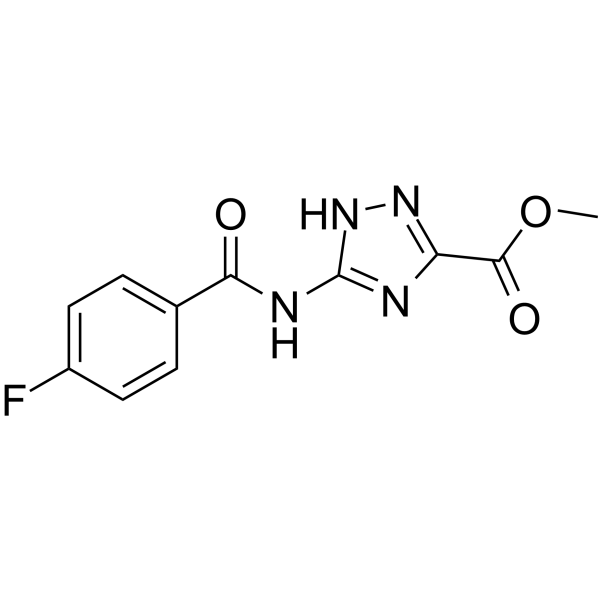
6-Chlorooxindole
 0 Images6-Chlorooxindole (compound 2) is a selective chymase inhibitor with an IC50 of 470 μM. 6-Chlorooxindole shows >100-fold selectivity for chymase over cathepsin G. 6-Chlorooxindole can be used for the study of cardiovascular disease.
-
Bortezomib-d8
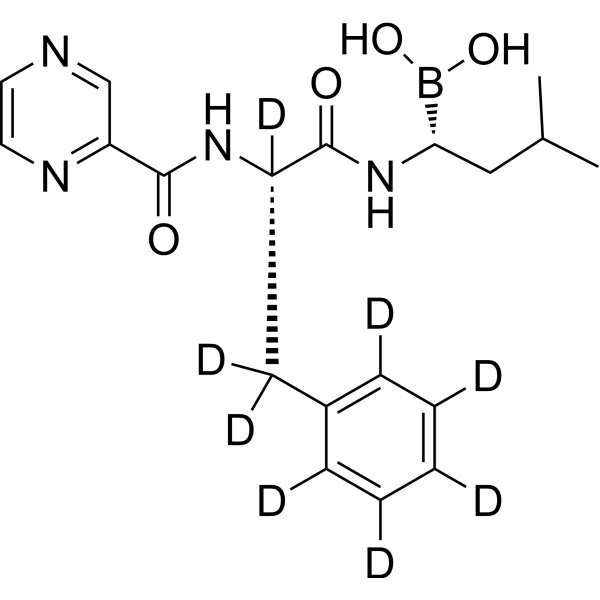 0 ImagesCat. No.: HY-10227SSynonyms: PS-341-d8; LDP-341-d8; NSC 681239-d8Bortezomib-d8 is the deuterium labeled Bortezomib. Bortezomib (PS-341) is a reversible and selective proteasome inhibitor, and potently inhibits 20S proteasome (Ki=0.6 nM) by targeting a threonine residue. Bortezomib disrupts the cell cycle, induces apoptosis, and inhibits NF-κB. Bortezomib is the first proteasome inhibitor anticancer agent. Bortezomib can be used for the study of multiple myeloma (MM). Bortezomib effectively inhibits TREM2 expression in tumor-associated macrophages (TAMs).
-
BC-23
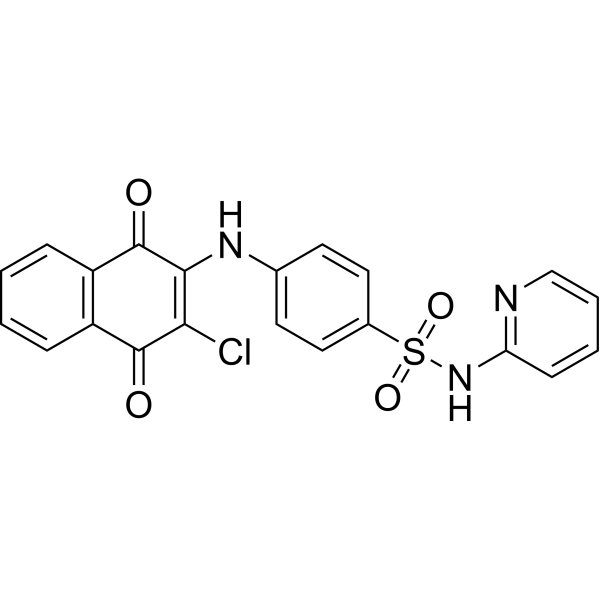 0 ImagesBC-23 (NSC 45382) is a proteasome inhibitor. BC-23 exhibits good inhibition of CT-L activity of the proteasome and is selective for malignant over normal cells.
-
10-Undecenoic acid (Standard)
 0 Images10-Undecenoic acid (Standard) is the analytical standard of 10-Undecenoic acid. This product is intended for research and analytical applications. 10-Undecenoic acid (Undecylenic acid) is an antifungal agent. 10-Undecenoic acid inhibits Aβ oligomerization, scavenges ROS and inhibits μ-calpain activity. 10-Undecenoic acid has neuroprotective effects. 10-Undecenoic acid has anticancer effects on a variety of tumors. 10-Undecenoic acid inhibits C. albicans biofilm formation and MRSA infection. 10-Undecenoic acid inhibits quorum sensing signals of Bacillus subtilis and Pseudomonas aeruginosa.
-
Z-Leu-Leu-Leu-AMC
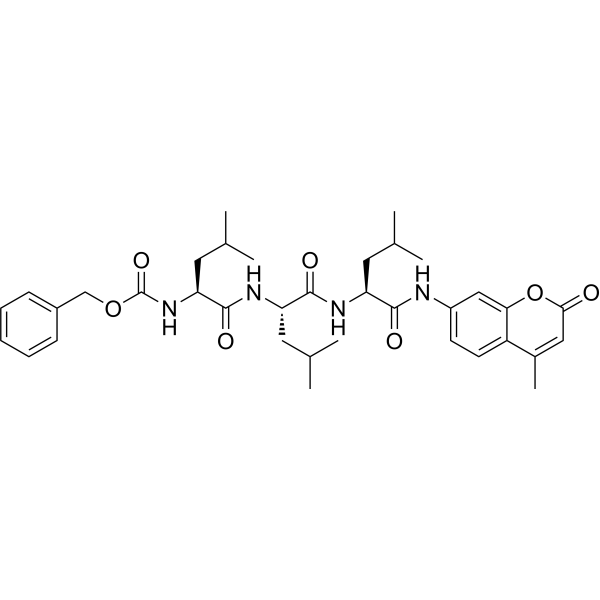 0 ImagesSynonyms: Z-LLL-AMCZ-Leu-Leu-Leu-AMC is a fluorogenic substrate for measuring the chymotrypsin-like protease activity of the 20S proteasome.
-
GSK3494245
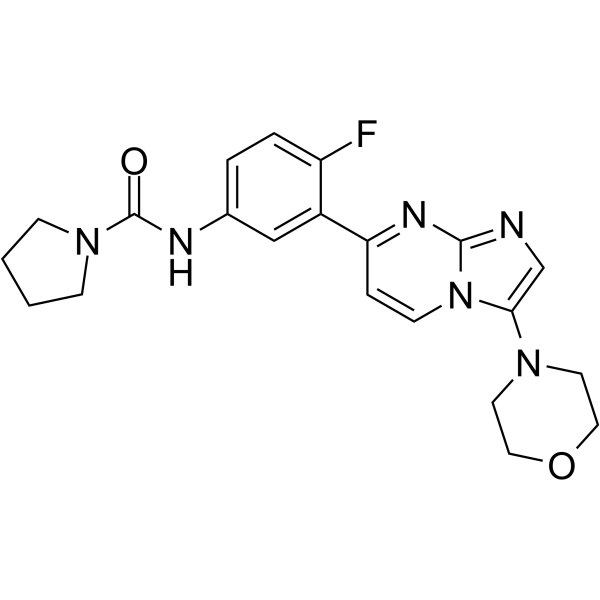 0 ImagesSynonyms: DDD01305143GSK3494245 (DDD01305143) is a potent, orally active, and selective inhibitor of the chymotrypsin-like activity of the parasite proteasome binding in a site sandwiched between the β4 and β5 subunits (IC50=0.16 μM for WT L. donovani proteasomes). GSK3494245 moderately inhibits chymotrypsin-like activity of human proteasome (IC50: purified 26S=13 µM; enriched THP-1 extracts IC50=40µM). GSK3494245 exhibits attractive biological and biosafety properties.
-
Carfilzomib-d8
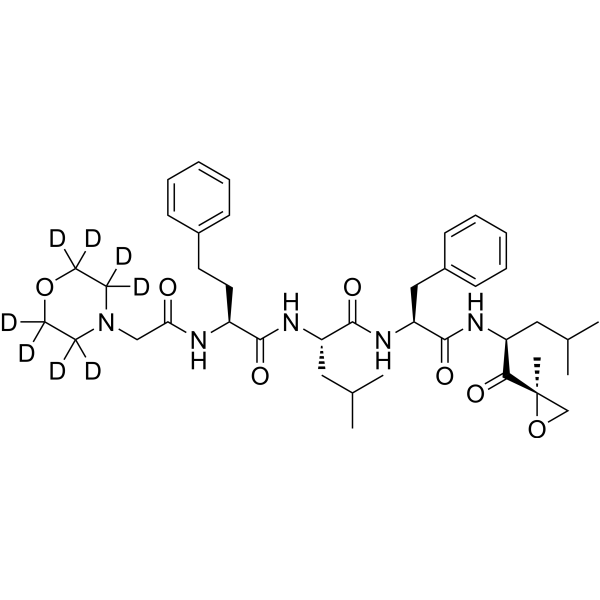 0 ImagesCarfilzomib-d8 is deuterium labeled Carfilzomib. Carfilzomib (PR-171) is an irreversible proteasome inhibitor with an IC50 of 5 nM in ANBL-6 and RPMI 8226 cells.
-
Immunoproteasome inhibitor 1
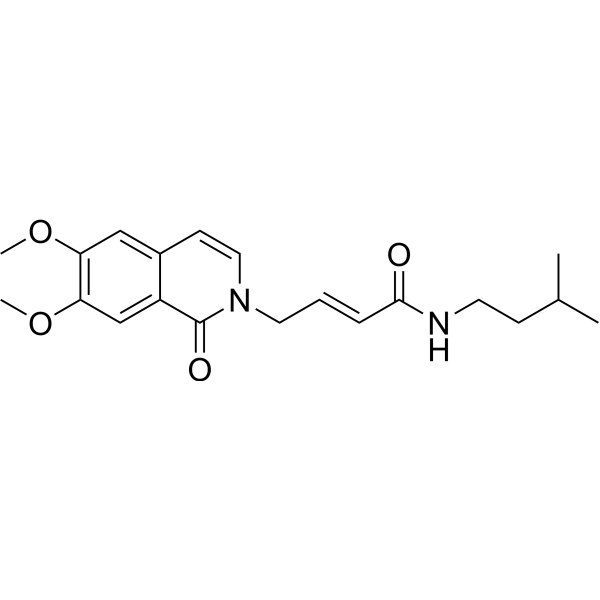 0 ImagesImmunoproteasome inhibitor 1 is a potent, reversible, time-independent immunoproteasome and proteasome inhibitor (Kis of 1.18, 0.27, 1.91 μM in β5c, β1i, β5i submits, respectively). Immunoproteasome inhibitor 1 can be used for the research of certain neoplastic diseases.




