



Proteasome
Proteasomes are very large protein complexes inside all eukaryotes and archaea, and in some bacteria. In eukaryotes, they are located in the nucleus and the cytoplasm. The main function of the proteasome is to degrade unneeded or damaged proteins by proteolysis, a chemical reaction that breaks peptide bonds. Enzymes that carry out such reactions are called proteases. Proteasomes are part of a major mechanism by which cells regulate the concentration of particular proteins and degrade misfolded proteins. The degradation process yields peptides of about seven to eight amino acids long, which can then be further degraded into amino acids and used in synthesizing new proteins. Proteins are tagged for degradation with a small protein called ubiquitin. The tagging reaction is catalyzed by enzymes called ubiquitin ligases. Once a protein is tagged with a single ubiquitin molecule, this is a signal to other ligases to attach additional ubiquitin molecules. The result is a polyubiquitin chain that is bound by the proteasome, allowing it to degrade the tagged protein.
All Product Categories
-
Proteasome Inhibitors
(225)
View all products
-
Proteasome Activators
(10)
View all products
-
Proteasome Modulator
(1)
View all products
-
Proteasome Degraders
(3)
View all products
-
Proteasome Controls
(3)
View all products
-
Proteasome Substrates
(6)
View all products
-
Proteasome Ligands
(7)
View all products
-
Proteasome Related Products (293)
Related Products (293)

-
Antibodies (22)
-
(Rac)-Calpain Inhibitor XII
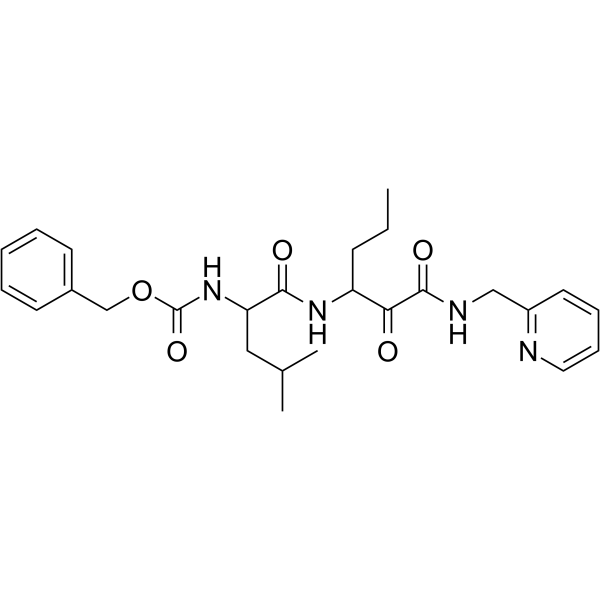 0 Images(Rac)-Calpain Inhibitor XII is a reversible and selective inhibitor of calpain I (μ-calpain, Ki=19 nM). (Rac)-Calpain Inhibitor XII has lower affinities for calpain II (m-calpain, Ki=120 nM) and cathepsin B (Ki=750 nM). (Rac)-Calpain Inhibitor XII has the potential for studying the role of calpains in diverse processes, including neutrophil chemotaxis, neuronal signaling, and cardiac response to injury.
-
Ac-Leu-Leu-Norleucinol
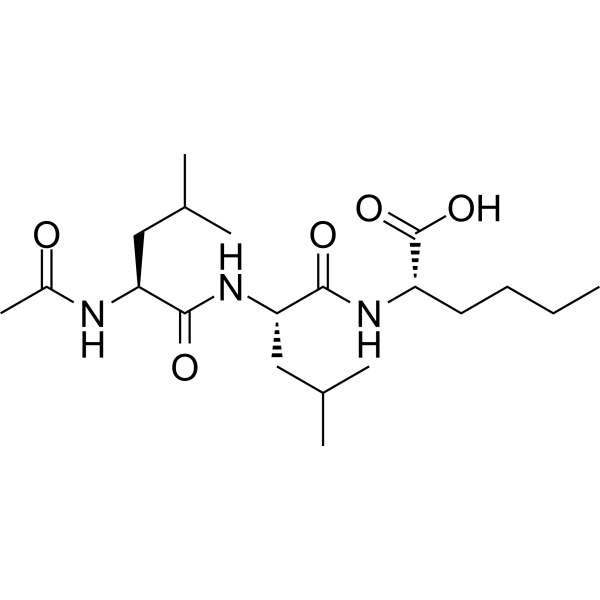 0 ImagesCat. No.: HY-P3690CAS No.: 148333-42-0Ac-Leu-Leu-Norleucinol (ALLN) is a calpain inhibitor, can be used for research of Acetaminophen (HY-66005) induced acute liver damage, and lowers glutamic-oxalacetic transaminease (ALT) and glutamic-pyruvic transaminase (AST).
-
RAMB4
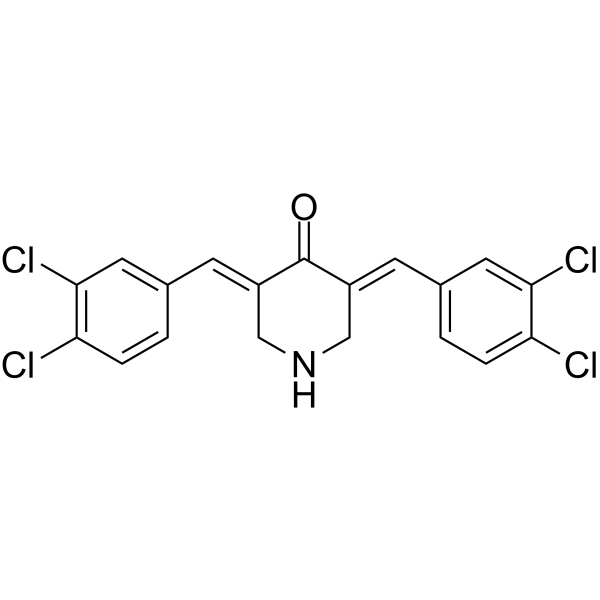 0 ImagesRAMB4 is a ubiquitin-proteasome system (UPS)-stressor. RAMB4 inhibits ubiquitin-mediated protein degradation upstream of the 20S proteasomal catalytic activites. RAMB4 triggers a ubiquitin-proteasome-system (UPS)-stress response without affecting 20S proteasome catalytic activities. Anticancer activity.
-
(1S,2R)-Alicapistat
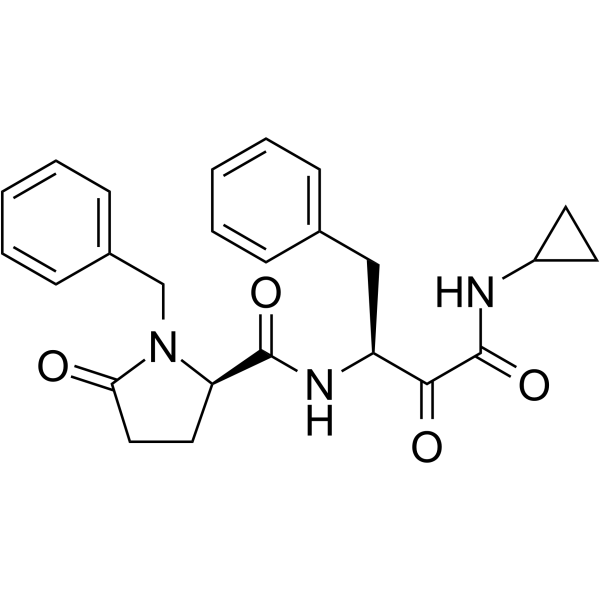 0 ImagesSynonyms: (1S,2R)-ABT-957(1S,2R)-Alicapistat ((1S,2R)-ABT-957) is an orally active selective inhibitor of human calpains 1 and 2 for the potential application of Alzheimer's disease (AD). (1S,2R)-Alicapistat mitigates the metabolic liability of carbonyl reduction and inhibits calpain 1 with an IC50 value of 395 nM.
-
Calpain Inhibitor-1
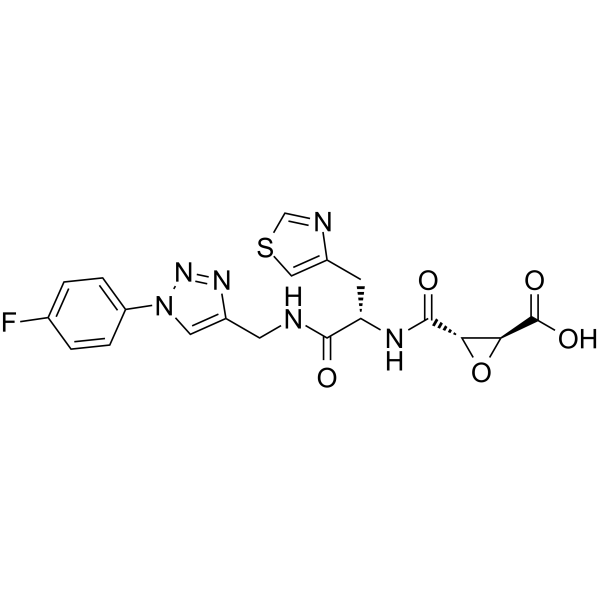 0 ImagesCat. No.: HY-115753CAS No.: 1448429-06-8
-
Enzyme-IN-1
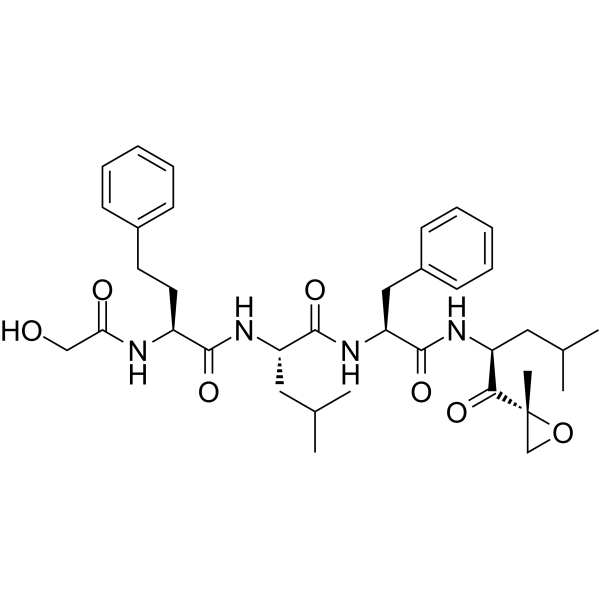 0 ImagesCat. No.: HY-150226CAS No.: 868540-02-7Enzyme-IN-1 (compound 1) is a peptide-based inhibitor of N-terminal nucleophile (Ntn) hydrolases. Specifically, Enzyme-IN-1 inhibits the chymotrypsin-like activity (CT-L) of the 20S proteasome. Enzyme-IN-1 may has potential antiinflammatory properties.
-
Z-GGF-CMK
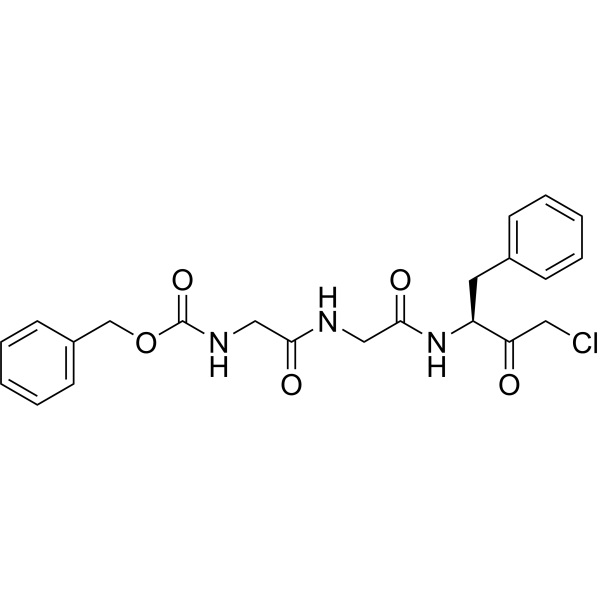 0 ImagesZ-GGF-CMK is an Antibacterial agent, an inhibitor of the ClpP1P2 serine protease complex (with an IC50 of 50 μM against intracellular ClpP1P2 protease activity in Mycobacterium bovis BCG), and a selective inhibitor of the mycobacterial Proteasome (with an IC50 of 50 μM against the proteasome in M. bovis BCG). Z-GGF-CMK inhibits the growth of mycobacteria. Z-GGF-CMK exhibits cytotoxic activity against liver cancer cells. Z-GGF-CMK can be used in the research of tuberculosis.
-
CH 5450
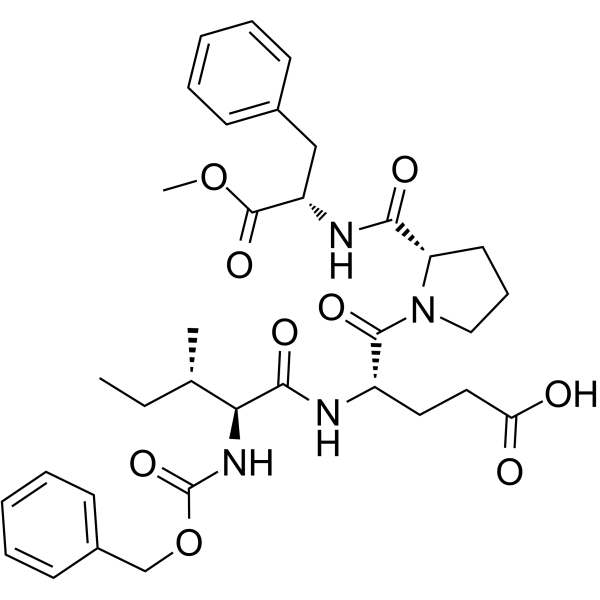 0 ImagesSynonyms: Z-Ile-Glu-Pro-Phe-OmeCH 5450 (Z-Ile-Glu-Pro-Phe-Ome) is a selective short peptide human cardiac chymase inhibitor. CH-5450 inhibits the action of rat MAB elastase 2 on substrate Ang I with an IC50 value of 49 µM and N-succinyl-Ala-Ala-Pro-Phe-p-nitroanilide with an IC50 value of 4.8 µM.
-
Collagenase (Type A, filtered, animal free)
 0 ImagesCat. No.: HY-E70005OCAS No.: 9001-12-1Collagenase (Type A, filtered, animal free) is a proteolytic enzyme targeting collagen, capable of releasing corneal endothelial cells (CECs) without damaging cell junctions.
-
Chymase-IN-1
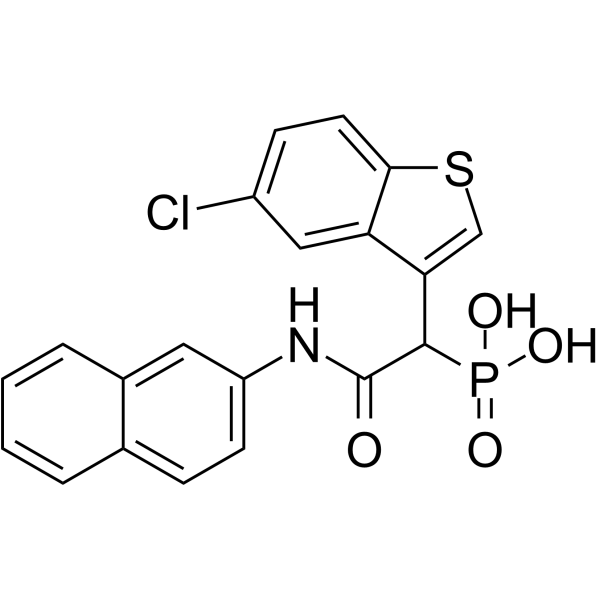 0 ImagesChymase-IN-1 is a potent, selective, orally active, nonpeptide inhibitor of human mast cell chymase with an IC50 of 29 nM.
-
Octaarginine TFA
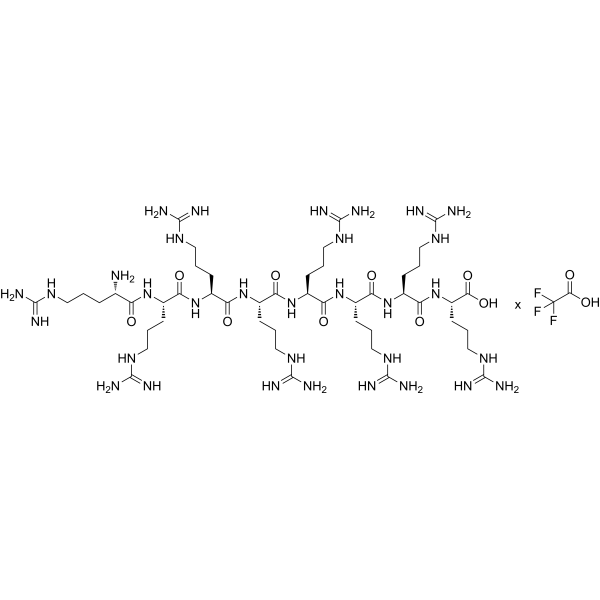 0 ImagesCat. No.: HY-P2483AOctaarginine TFA is a cell-penetrating peptide and proteasome inhibitor. Octaarginine TFA exhibits mixed-type inhibition against 20S proteasome chymotrypsin-like, caspase-like, and trypsin-like activities, and inhibits 26S proteasome activity with decreased efficiency. Octaarginine TFA induces ubiquitin-conjugated protein accumulation, mediates HSPG-dependent cellular internalization via macropinocytosis, enhances liposomal cargo uptake and gene delivery. Octaarginine TFA can be used for the research of cervix carcinoma, collagen antibody-induced arthritis, and bacterial infections.
-
20S Proteasome-IN-1
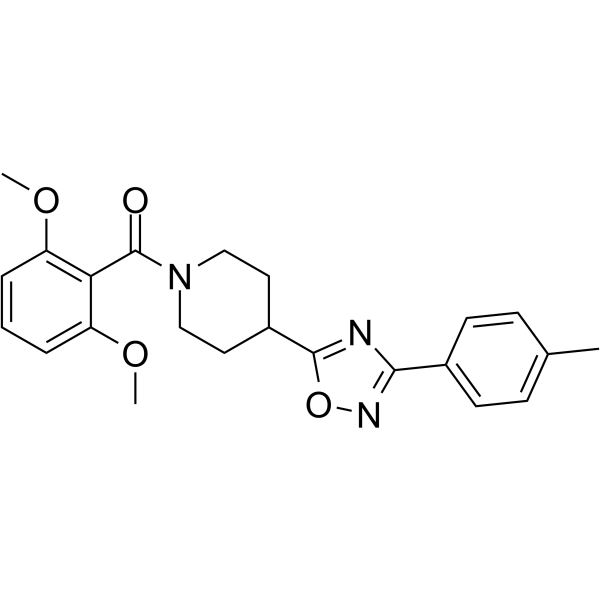 0 Images20S Proteasome-IN-1 is a 26S proteasome inhibitor extracted from patent WO2006128196A2 compound 2. 20S Proteasome-IN-1 has the potential for cancer, immune-related disorders, inflammation, ischemic conditions, neurodegenerative disorders and other diseases research.
-
Isovalerylcarnitine-d9-1 chloride
 0 ImagesCat. No.: HY-W654243Purity: 99.55%
-
Epoxomicin (Standard)
 0 ImagesCat. No.: HY-13821RCAS No.: 134381-21-8Synonyms: BU-4061T (Standard)Epoxomicin (Standard) is the analytical standard of Epoxomicin (HY-13821). This product is intended for research and analytical applications. Epoxomicin (BU-4061T) is an epoxyketone-containing natural product and a potent, selective and irreversible proteasome inhibitor. Epoxomicin covalently binds to the LMP7, X, MECL1, and Z catalytic subunits of the proteasome and potently inhibits primarily the chymotrypsin-like activity. Epoxomicin can cross the blood-brain barrier. Epoxomicin has strongly antitumor and anti-inflammatory activity.
-
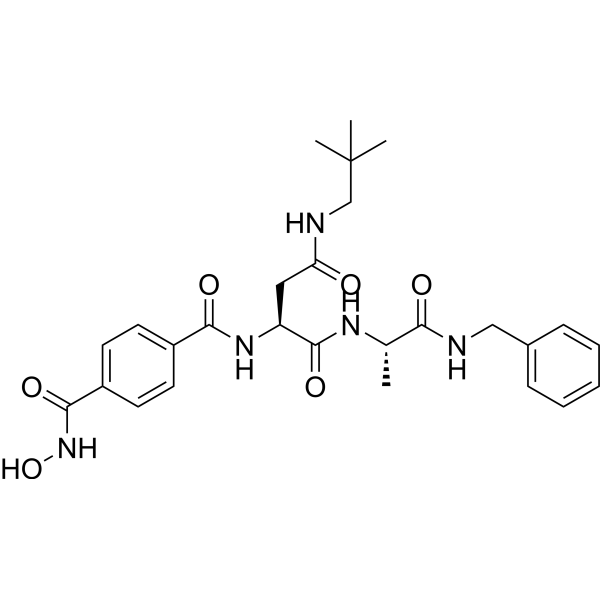
Ixazomib citrate (Standard)
 0 ImagesCat. No.: HY-10452RCAS No.: 1239908-20-3Synonyms: MLN9708 (Standard)Ixazomib citrate (Standard) is the analytical standard of Ixazomib citrate (HY-10452). This product is intended for research and analytical applications. Ixazomib citrate (MLN9708) is a selective, orally active, second-generation proteasome inhibitor. Ixazomib citrate can be used for the study of a broad range of human malignancies.
-
Ixazomib-d7
 0 ImagesCat. No.: HY-10453SCAS No.: 2177240-89-8Synonyms: MLN2238-d7Ixazomib-d7 is the deuterium labeled Ixazomib (HY-10453). Ixazomib (MLN2238) is a selective, potent, and reversible proteasome inhibitor, which inhibits the chymotrypsin-like proteolytic (β5) site of the 20S proteasome with an IC50 of 3.4 nM (Ki of 0.93 nM).
-
20S Proteasome-IN-2
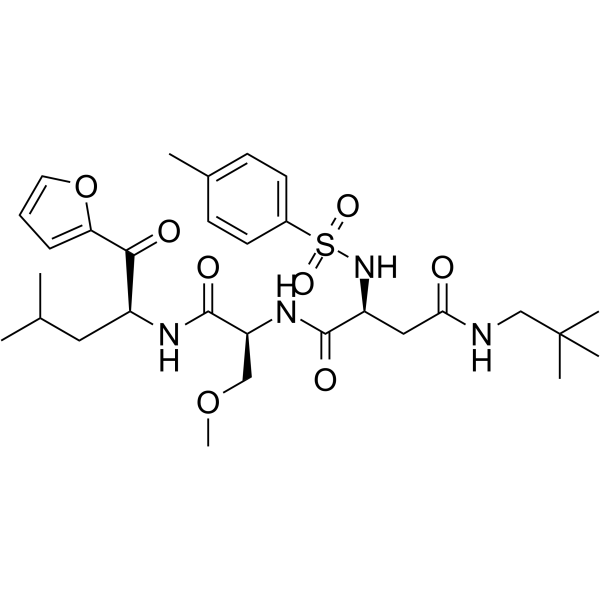 0 ImagesCat. No.: HY-150590CAS No.: 2028300-31-220S Proteasome-IN-2 is a human 20S proteasome inhibitor. 20S Proteasome-IN-2 shows high selectivity to its β5 subunit with the IC50 of 0.18 μM. 20S Proteasome-IN-2 displays anti-proliferative effect in vitro and in vivo, and arrests cell cycle at G2/M.
-
YSY01A
 0 ImagesCat. No.: HY-162885CAS No.: 1194235-46-5YSY01A is a proteasome inhibitor that can suppress cancer cell survival by inducing apoptosis (Apoptosis). Its IC50 values are 51.0 nM for HEK293T, 9.2 nM for A549, 5.2 nM for MCF-7, 8.9 nM for MGC-803, and 35.4 nM for PC-3M cells. Additionally, YSY01A eliminates constitutive STAT3 signaling by downregulating gp130 and JAK2 in human A549 lung cancer cells. YSY01A holds promise for research in the field of cancer therapy.
-
MG-132 (GMP)
 0 ImagesCat. No.: HY-13259GCAS No.: 133407-82-6Synonyms: Z-Leu-Leu-Leu-al (GMP)MG-132 (GMP) (Z-Leu-Leu-Leu-al (GMP)) is MG-132 (HY-13259) produced by using GMP guidelines. GMP small molecules works appropriately as an auxiliary reagent for cell therapy manufacture. MG-132 (Z-Leu-Leu-Leu-al) is a potent proteasome and calpain inhibitor with IC50s of 100 nM and 1.2 μM, respectively. MG-132 effectively blocks the proteolytic activity of the 26S proteasome complex. MG-132, a peptide aldehyde, also is an autophagy activator. MG-132 also induces apoptosis.




