



ULK
Unc-51 like kinase
The ULK (UNC51-like) enzymes are a family of mammalian kinases that have critical roles in autophagy and development. The ULK family of kinases comprises 5 genes in mammals: ULK1 through ULK4 and STK36. In mammals, ULK1 and ULK2 have been shown to be necessary for the proper autophagy induction and contribute to various developmental, physiological, and pathological processes.
The serine/threonine-protein kinases ULK1 and ULK2 are evolutionarily conserved serine/threonine kinase orthologs of the yeast autophagy related (Atg) family member Atg1, that have redundant roles in the regulation of autophagy. Autophagy targets long-lived proteins or organelles for degradation in lysosomes, and the products of this process are then recycled for other cellular pathways. The canonical ULK/Atg1 complex is composed of ULK1, ATG13, RB1CC1/FIP200/ATG17, and ATG101. It initiates autophagosome formation, at least in part by phosphorylating components of the autophagy-inducing class III phosphatidylinositol 3-kinase complex (e.g., PI3K3C/Vps34, PIK3R4/Vps15, BECN1/Vps30/ATG6, ATG14). ULK/Atg1 also promotes membrane recycling via ATG9. Consistent with the established role of ULK1/2 in autophagy, disrupting ULK1 expression in mice results in a defect in autophagy-mediated clearance of mitochondria during red blood cell maturation, and mice lacking both ULK1 and ULK2 expression die shortly after birth due to a defect in glycogen metabolism, which is similar to other autophagy-defective mice.
ULK Isoform Specific Products
All Product Categories
-
ULK Related Products (48)
Related Products (48)

-
Antibodies (3)
-
ULK Isoform Comparison

-
LYN-1604 hydrochloride
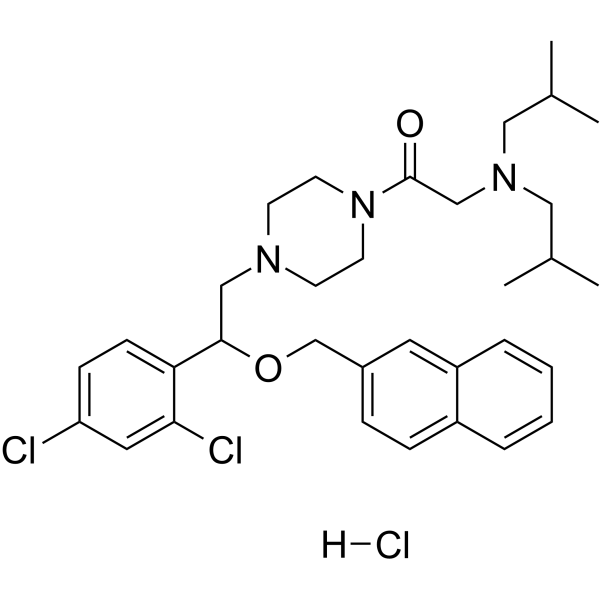 0 ImagesCat. No.: HY-101923ACAS No.: 2216753-86-3
-
MR-2088
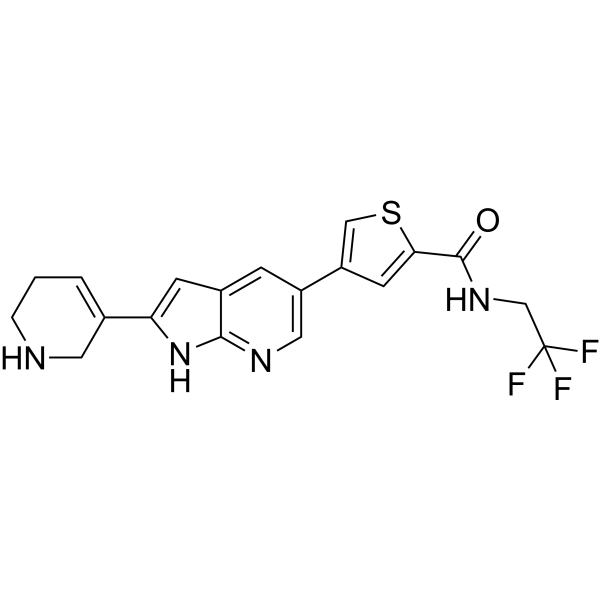 0 ImagesMR-2088 is a reversible, ATP-competitive, and selective ULK1/2 inhibitor with pEC50 values of 8.3 and 8.7 respectively. MR-2088 effectively inhibits autophagic flux and demonstrates a synergistic antiproliferative effect with Trametinib (HY-10999) (MEK inhibitor) in vitro. MR-2088 can be used for non-small lung cell cancer (NSCLC) research.
-
13-Oxyingenol-13-dodecanoate
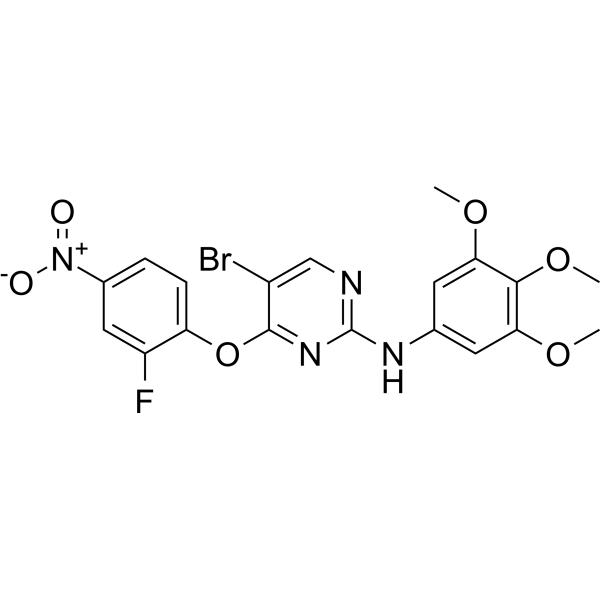
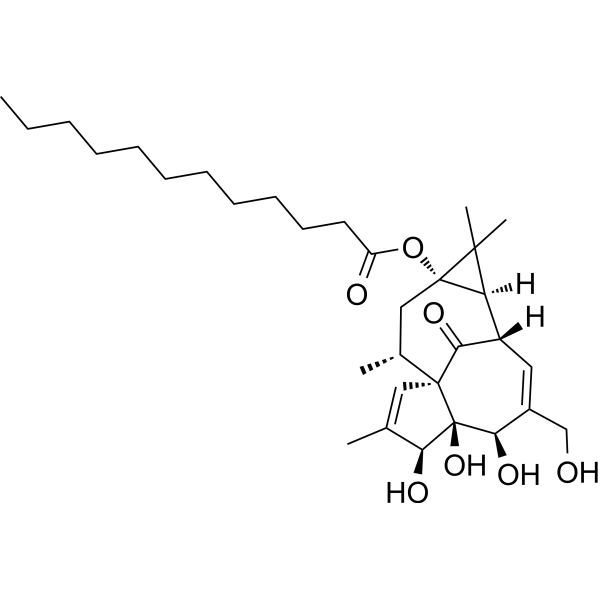 0 ImagesCat. No.: HY-N0867CAS No.: 54706-70-613-Oxyingenol-dodecanoate (13OD) is a tumor suppressor agent. 13-Oxyingenol-dodecanoate has anti-HIV-1 activity with EC50 value of 33.7 nM.13-Oxyingenol-dodecanoate can induce the expression of ULK1 to effect mitochondrial dysfunction and cellular autophagy. 13-Oxyingenol-dodecanoate also increases the expression of BAX and suppresses the expression of BCL-2 to effect apoptosis.


-
(Z/E)-GW406108X
 0 ImagesCat. No.: HY-115570ACAS No.: 265098-01-9Synonyms: (Z/E)-GW108X(Z/E)-GW406108X is a mixture of different configurations of GW406108X (HY-115570). GW406108X is a specific Kif15 (Kinesin-12) inhibitor with an IC50 of 0.82 uM.
-
UE01
 0 ImagesCat. No.: HY-184501CAS No.: 486440-74-8UE01 is an orally active, selective small-molecule modulator targeting both ULK1/ERK1/2. UE01 activates hULK1 with an EC50 of 695.30 nM and a KD of 114.3 nM for ULK1; it inhibits hERK1 with an IC50 of 179.90 nM and a KD of 114 nM for ERK1; it shows weak binding to ERK2 with a KD of 2.8 mM. UE01 induces the conformational transition of ULK1 from an inactive to an active state, enhances the phosphorylation of ULK1 Ser317 and mAtg13 Ser355, and reduces the phosphorylation of ULK1 Ser757. UE01 competitively occupies the ATP-binding pocket of ERK1, inhibits ERK1 kinase activity, and reduces the activity of the ERK1/2 signaling pathway. UE01 induces complete autophagy flux and apoptosis, upregulates Atg5, Atg7, LC3-II/LC3-I, Bax, cytochrome C (Cyt c), Cleaved-Caspase 3, Cleaved-PARP1 and E-cadherin, downregulates p62, Bcl-2, MMP-2 and MMP-9, reduces the phosphorylation of Exo70 Ser250, and promotes the proteasome-dependent degradation of Cav-1, thereby inhibiting EMT-related phenotypes and extracellular matrix degradation. UE01 can be used in studies related to triple-negative breast cancer.
-
VWK147
 0 ImagesCat. No.: HY-181062VWK147 is a second-generation HSP90 C-terminal domain (CTD) inhibitor. VWK147 targets the CTD dimerization interface, prevents HSP90 CTD dimerization, disrupts co-chaperone PPID binding to HSP90 CTD, and inhibits HSP90 chaperone function dependent on dimerization. VWK147 reduces protein levels of HSP90 client proteins ULK1, RIPK1, and CDK4 without inducing a heat shock response. VWK147 induces cell death, including apoptosis, in Cisplatin (HY-17394)-sensitive and -resistant urothelial carcinoma cells. VWK147 induces LC3-II accumulation, inhibits autophagosome-lysosome fusion to block canonical autophagy, and induces non-canonical LC3 lipidation independent of ULK1 and PIK3C3 complexes. VWK147 can be used for the research of urothelial carcinoma.
-
DRAK2-IN-2
 0 ImagesCat. No.: HY-184326CAS No.: 3080324-43-9DRAK2-IN-2 is a selective DRAK2 inhibitor with an IC50 value of 198.5 nM. DRAK2-IN-2 inhibits DRAK2-mediated phosphorylation of ULK1 at the Ser56 site. DRAK2-IN-2 enhances insulin secretion, increases mitochondrial membrane potential, alleviates Palmitic acid (HY-N0830)-induced mitochondrial membrane potential damage and Apoptosis, and improves glucose tolerance in vivo. DRAK2-IN-2 can be used for the research of type 2 diabetes.

-
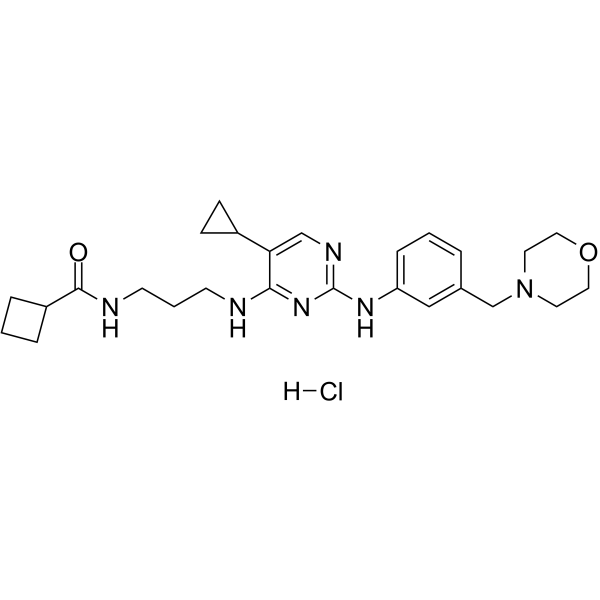
MRT67307 dihydrochloride
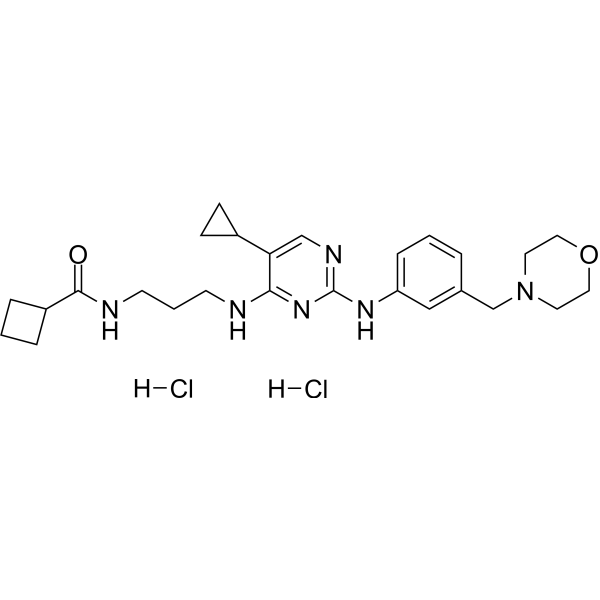 0 ImagesCat. No.: HY-13018BCAS No.: 1781882-89-0
-
MRT68921 hydrochloride
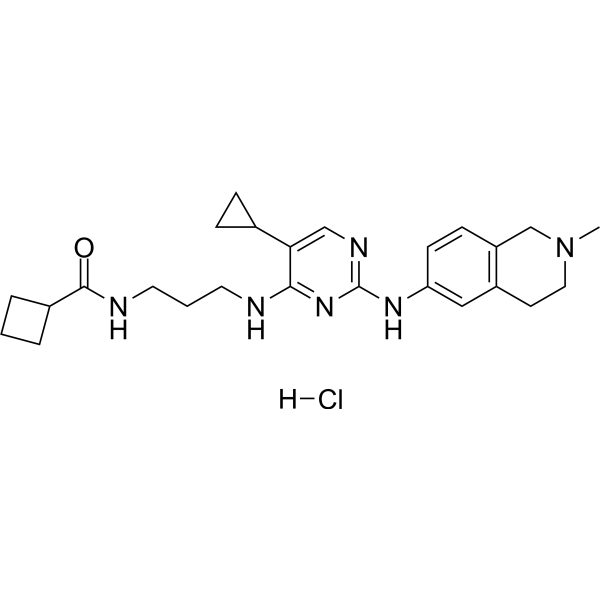 0 ImagesCat. No.: HY-100006BCAS No.: 2070014-87-6MRT68921 hydrochloride is a potent NUAK1/ULK1 dual inhibitor. MRT68921 hydrochloride inhibits ULK1 and ULK2 with IC50 values of 2.9 nM and 1.1 nM, respectively. MRT68921 hydrochloride can block cells autophagy and kill tumor cells by breaking the balance of oxidative stress signals. MRT68921 hydrochloride can inhibit cell proliferation and induce ROS production and apoptosis. MRT68921 hydrochloride can be used for the research of cancer, such as breast cancer.
-
ULK1 Recombinant Human Active Protein Kinase
 0 ImagesCat. No.: HY-E70875ULK1 (unc-51 like autophagy activating kinase 1), one of the core human autophagy-related genes, encodes a serine-threonine kinase and the mammalian ortholog of the yeast ATG1 gene. ULK1 Recombinant Human Active Protein Kinase is a recombinant ULK1 protein that can be used to study ULK1-related functions.

-
NZ-66
 0 ImagesCat. No.: HY-158408CAS No.: 3062992-25-7NZ-66 is a ULK1-Recruiting Chimera (ULKREC) and heterobifunctional chimeric molecule composed of a BL-918-derived ULK1 agonist linked to a mitochondrial outer membrane-targeting TSPO ligand via a six-carbon hexane linker. NZ-66 is a mitophagy inducer recruits ULK1 to mitochondria to induce ULK1-dependent mitophagy, enhanced by mitochondrial insult, independently of the PRKN/PINK axis. NZ-66 can be used for the research of parkinson’s disease.
-
ULK1-IN-4
 0 ImagesCat. No.: HY-181668ULK1-IN-4 (compound 12i) is a ULK1 inhibitor with an IC50 of 4.7 μM against human ULK1, and it exhibits selectivity for Aurora A/Aurora B kinases. ULK1-IN-4 forms a covalent bond with the thiol group of the Cys182 residue of ULK1, thereby inhibiting the kinase activity of ULK1. ULK1-IN-4 inhibits the growth of colorectal cancer cells and exerts tumor-suppressive activity in a mouse model of colorectal cancer.




