



iGluR
Ionotropic glutamate receptors
iGluR (ionotropic glutamate receptor) is a ligand-gated ion channel that is activated by the neurotransmitter glutamate. iGluR are integral membrane proteins compose of four large subunits that form a central ion channel pore. Sequence similarity among all known glutamate receptor subunits, including the AMPA, kainate, NMDA, and δ receptors.
AMPA receptors are the main charge carriers during basal transmission, permitting influx of sodium ions to depolarise the postsynaptic membrane. NMDA receptors are blocked by magnesium ions and therefore only permit ion flux following prior depolarisation. This enables them to act as coincidence detectors for synaptic plasticity. Calcium influx through NMDA receptors leads to persistent modifications in the strength of synaptic transmission.
iGluR Isoform Specific Products
All Product Categories
-
iGluR Inhibitors
(132)
View all products
-
iGluR Agonists
(128)
View all products
-
iGluR Antagonists
(347)
View all products
-
iGluR Activators
(35)
View all products
-
iGluR Modulators
(93)
View all products
-
iGluR MDM2 Inhibitor
(1)
View all products
-
iGluR Controls
(5)
View all products
-
iGluR Ligands
(3)
View all products
-
iGluR Related Products (827)
Related Products (827)

-
Antibodies (11)
-
iGluR Isoform Comparison
-
AMPA receptor antagonist-1
 0 ImagesCat. No.: HY-139350CAS No.: 923271-87-8AMPA receptor antagonist-1 (Example 143) is an AMPA receptor antagonist. AMPA receptor antagonist-1 can be used in the research of neurological disorders.
-
GluN2B receptor modulator-1
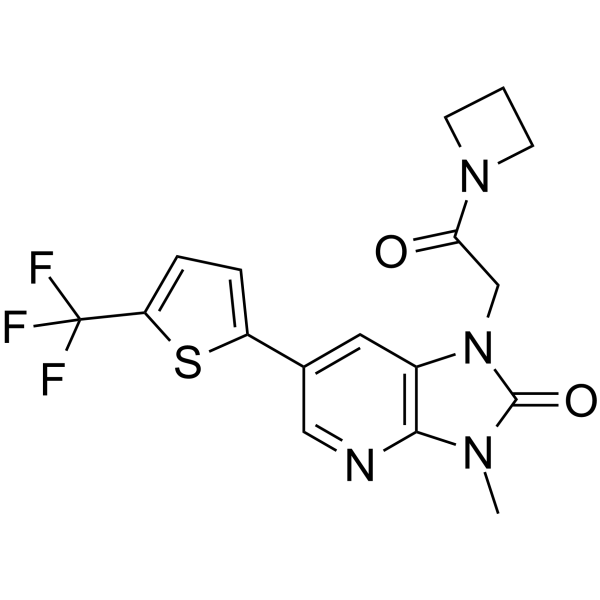 0 ImagesCat. No.: HY-145370CAS No.: 2222010-71-9GluN2B receptor modulator-1 is a selective GluN2B negative allosteric modulator with an IC50 value of 31 nM.
-
Procyclidine
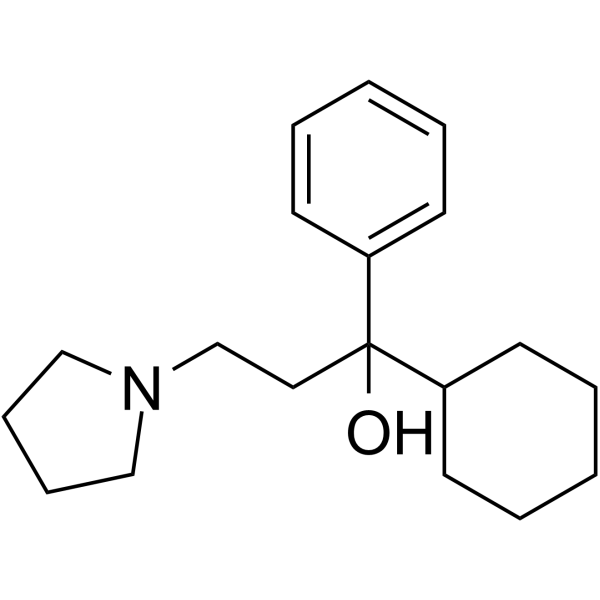 0 ImagesProcyclidine (Tricyclamol; (±)-Procyclidine), an anticholinergic agent, is a muscarinic receptor antagonist that also has the properties of an N-methyl-D-aspartate (NMDA) antagonist. Procyclidine can be used in studies of Parkinson's disease and related psychiatric disorders such as Soman-induced epilepsy.
-
CX1763
 0 ImagesCat. No.: HY-182631CAS No.: 1086378-73-5CX1763 is an AMPAR allosteric modulator. CX1763 allosterically potentiates glutamate-evoked currents, accelerates channel opening, and increases the surface levels of AMPAR containing Glur2 (R). CX1763 enhances synaptic transmission in the rat hippocampus. CX1763 improves attention in rats and attenuates amphetamine-induced hyperactivity in mice. CX1763 can be used in studies related to attention deficit hyperactivity disorder and opioid-induced respiratory depression.
-
GV-196771A
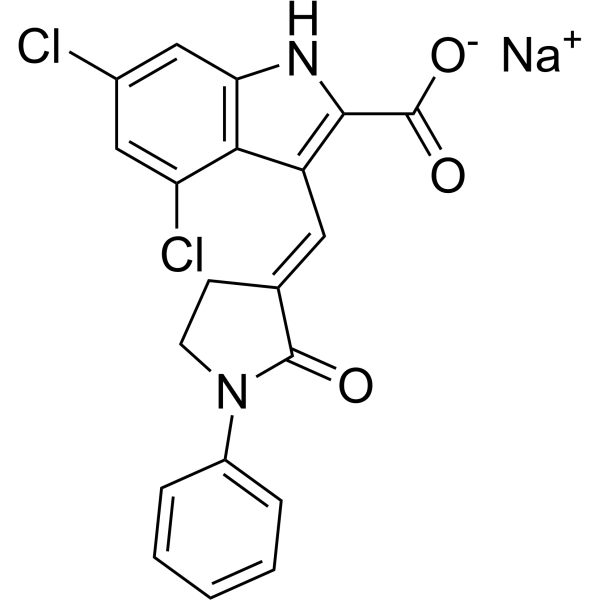 0 ImagesCat. No.: HY-19243CAS No.: 166974-23-8GV-196771A is the sodium salt form of GV196771, is an NMDA receptor antagonist.
-
Dehydroepiandrosterone sulfate sodium (Standard)
 0 ImagesSynonyms: DHEA sulfate sodium (Standard); Prasterone sulfate sodium (Standard)Dehydroepiandrosterone sulfate (DHEA sulfate; Prasterone sulfate) sodium salt (Standard) is the analytical standard of Dehydroepiandrosterone sulfate sodium salt (HY-B0765). This product is intended for research and analytical applications. Dehydroepiandrosterone sulfate (DHEA sulfate; Prasterone sulfate) is a neurosteroid and the main secretion product of the adrenal gland. Dehydroepiandrosterone sulfate has both non-competitive antagonist activity of GABAA receptor and agonist activity of σ1 receptor. Dehydroepiandrosterone sulfate can partially penetrate the blood-brain barrier, inhibit GABAA receptor-mediated chloride influx, enhance NMDA receptor activity through σ1 receptors, exert anti-inflammatory, anti-glucocorticoid and antidepressant effects, and increase convulsive sensitivity. Dehydroepiandrosterone sulfate participates in neuroprotection, neurite growth regulation and catecholamine secretion regulation, and can be used in the study of depression, post-traumatic stress disorder (PTSD), Alzheimer's disease, etc. Dehydroepiandrosterone sulfate may also be a biomarker for cardiovascular disease mortality, and its concentration is independently and negatively correlated with mortality.
-
Normethyl-ZCAN262
 0 ImagesCat. No.: HY-186183CAS No.: 3080492-21-0Normethyl-ZCAN262 (Normethyl-262) is a blood-brain barrier-permeable selective GluR2/AMPAR receptor modulator. Normethyl-ZCAN262 inhibits AMPA-mediated neurotoxicity, the formation of the GAPDH-GluR2 complex, and GluR2/AMPAR neurotoxicity. Normethyl-ZCAN262 enables in vivo imaging of brain AMPA receptors and is used in research related to multiple sclerosis, amyotrophic lateral sclerosis, neuroinflammation, stroke, epilepsy, Parkinson's disease, Alzheimer's disease, dementia, and Huntington's disease.
-
Ro 8-4304 hydrochloride
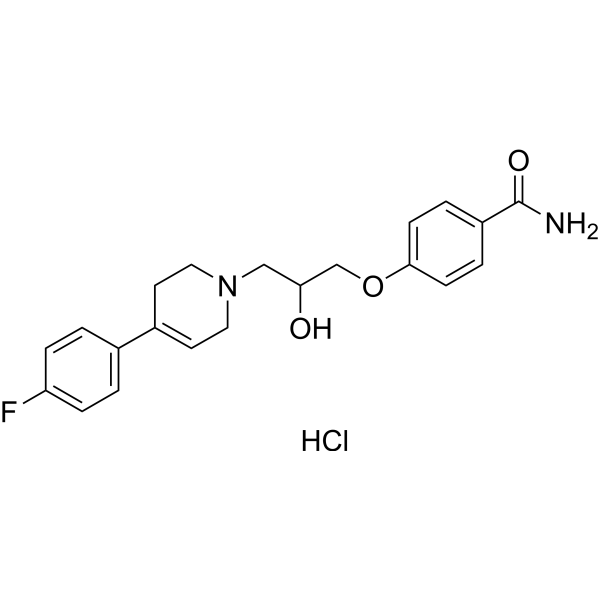 0 ImagesCat. No.: HY-107716CAS No.: 1312991-77-7Ro 8-4304 hydrochloride is a potent NMDA receptor antagonist. Ro 8-4304 hydrochloride is a NR2B selective, non-competitive, voltage-independent antagonist.
-
MDAR-IN-1
 0 ImagesCat. No.: HY-172884MDAR IN-1 (Compound 5m) is a brain-penetrant inhibitor of acetylcholinesterase (AChE) and antagonist of the GluN1/GluN2B subtype of NMDAR receptor. MDAR IN-1 effectively inhibits AChE activity, enhances cholinergic neurotransmission, and blocks NMDAR, reducing excitatory neurotoxicity. MDAR IN-1 is promising for research of Alzheimer's disease.
-
AMPA-IN-2
 0 ImagesCat. No.: HY-174899CAS No.: 75828-06-7AMPA-IN-2 is an orally active AMPA inhibitor that can cross the blood-brain barrier. AMPA-IN-2 improves epileptic seizures by inhibiting the intrinsic excitability of neurons and inhibiting the excitability of glutamatergic transmission. AMPA-IN-2 exerts anti-epileptic effects in the pentylenetetrazol (PTZ) model and can be used as a promising candidates with high broad-spectrum anti-epileptic potential.
-
p3Ysh-3
 0 ImagesCat. No.: HY-P3354p3Ysh-3 is a peptide inhibitor of STEP Phosphatase-GluA2 AMPA receptor interaction with a Ki of 1.09 μM. p3Ysh-3 restores the memory deficits and displays anxiolytic and antidepressant effects in a scopolamine-treated rat model. p3Ysh-3 is a promising lead compound for novel cognitive enhancers and/or behavioral modulators.
-
GYKI 53784
 0 ImagesCat. No.: HY-118278CAS No.: 161832-71-9Synonyms: LY303070GYKI 53784 (LY303070) is an orally active, blood-brain penetrant, selective, non-competitive AMPA receptor antagonist (IC50 = 0.32 μM). GYKI 53784 completely blocks AMPA-mediated synaptic transmission, protects against excitotoxicity, and partially inhibits Kainite (Kainic acid) (HY-N2309) responses, revealing both AMPA and kainate receptors. GYKI 53784 selectively blocks synaptic transmission (IC50 = 365.3 nM) without affecting neuronal excitability, and exhibits potent stereoselective antinociceptive effects via an opioid-independent mechanism. GYKI 53784 is a versatile tool for studying AMPA receptor function in synaptic transmission, excitotoxicity, neuroprotection, pain, and inflammation, with potential relevance to hearing loss, neonatal ischemia, neurodegenerative disorders, schizophrenia, and Alzheimer's disease.
-
Ro 04-5595
 0 ImagesCat. No.: HY-136659CAS No.: 194089-07-1Ro 04-5595 is a selective antagonist with specific activity against the NR2B subunit of the NMDA receptor. Ro 04-5595 exhibits favorable pharmacokinetic properties in in vitro and in vivo studies, with rapid uptake and clearance. Ro 04-5595 exhibits strong binding in NR2B receptor-enriched regions and low binding in the cerebellum. Ro 04-5595 is able to effectively inhibit specific binding, showing high affinity for the NR2B receptor and a clear ranking of binding affinity with a variety of other compounds.
-
AChE-IN-53
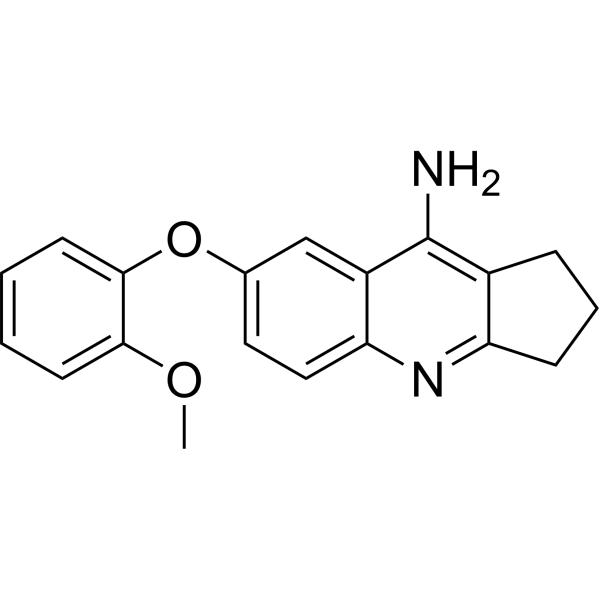 0 ImagesCat. No.: HY-157476CAS No.: 2807436-94-6AChE-IN-53 (Compound I-52) is a potent NMDAR inhibitor, which is a compound with favorable behavioral and neuroprotective effects.
-
PPPA
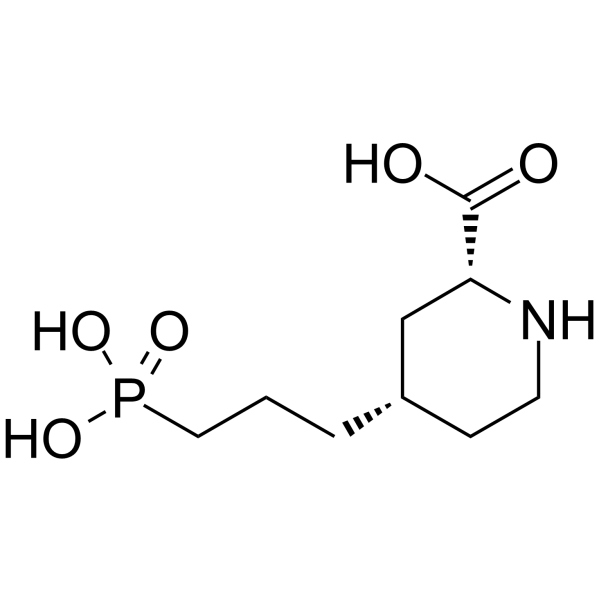 0 ImagesCat. No.: HY-107699CAS No.: 113190-92-4PPPA is a competitive NMDA receptor antagonist that displays moderate selectivity for NR2A-containing receptors.
-
ZD-9379
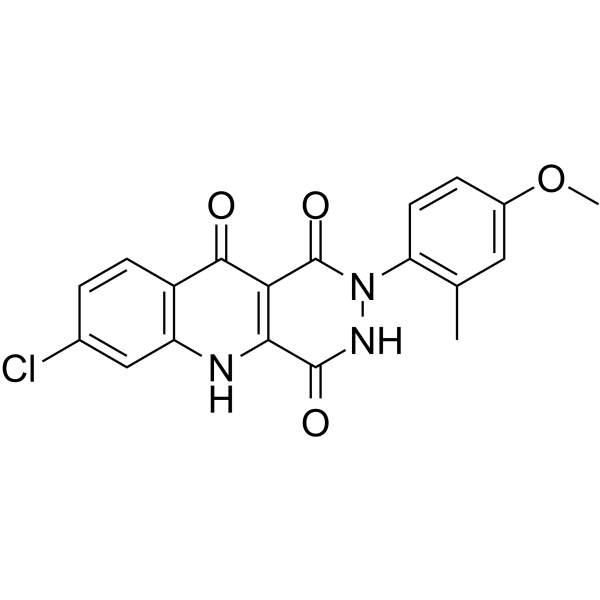 0 ImagesCat. No.: HY-106968CAS No.: 170142-20-8ZD-9379 is a potent, orally active, and brain penetrant full antagonist at the glycine site of the NMDA receptor. ZD-9379 has neuroprotective effect.
-
SPD-502 sodium
 0 ImagesCat. No.: HY-15076CAS No.: 205645-02-9Synonyms: NS-1209 sodiumSPD-502 sodium is a novel glutamate antagonist with potential neuroprotective properties, particularly in brain ischemia. It selectively targets the AMPA receptor, showing high affinity (IC50 = 0.043 μM) and competitive inhibition of AMPA-induced effects in rat cortical membranes and cultured mouse cortical neurons. In vivo, SPD-502 sodium effectively blocks AMPA-evoked spike activity in the hippocampus after intravenous administration, significantly increasing the seizure threshold in mice and demonstrating robust protection against ischemia-induced damage to hippocampal neurons in gerbils. These findings suggest SPD-502 sodium may be promising for studying neurodegenerative conditions associated with glutamate excitotoxicity.
-
JNJ-54082730
 0 ImagesCat. No.: HY-168966CAS No.: 2097493-39-3JNJ-54082730 (Compound 1) is the orally active inhibitor for phosphodiesterase (PDE) that inhibits PDE2A, PDE3B, and PDE10A2 with IC50s of 0.95 nM, 6.17 μM (pIC50=5.21) and 87.1 nM (pIC50=7.06), respectively. JNJ-54082730 modulates the activity of AMPA receptor, enhance the synaptic plasticity and promotes the learning and memory function in rats models. JNJ-54082730 can cross blood-brain barrier.
-
Gacyclidine
 0 ImagesGacyclidine, a non competitive N-methyl-D-aspartate (NMDA) antagonist, can be used in the study of spinal cord injuries.
-
Diphenhydramine-d3
 0 ImagesCat. No.: HY-B0303S1CAS No.: 170082-18-5Diphenhydramine-d3 is the deuterium labeled Diphenhydramine (HY-B0303). Diphenhydramine is a first-generation histamine H1-receptor antagonist with anti-cholinergic effect. Diphenhydramine hydrochloride can across the ovine blood-brain barrier (BBB).




