



Isotope-Labeled Compounds
Isotope-labeled compounds are chemical substances in which some atoms in their molecules are replaced by isotope atoms. The range of stable isotope products can cover from gases to complex molecules. Isotope-labeled compounds could provide a site-specific investigation of structures, making molecules easily detectable by mass spectrometry and NMR, and maintaining the physico-chemical properties of the target molecule at the same time.
MCE isotope-labeled compounds are all stable isotope-labeled compounds and are non-radioactive labeled substances. MCE isotope-labeled compounds are unique tools for identifying and understanding biological and chemical processes. Stable isotope-labeled products are now getting more and more popular among scientists. The scope of application is gradually penetrating into various scientific fields, such as life sciences, food and medicine, agriculture, environment, geology, etc. Stable isotope-labeled compounds have a wide range of applications in the Life Science areas, such as Metabolomics, Proteomics, Clinical studies, Deuterium drugs, etc.
All Product Categories
-
Isotope-Labeled Compounds Related Products (11126)
Related Products (11126)

-
(S)-2-(2-(1H-Indol-3-yl)acetamido)-3-phenylpropanoic acid-d4
 0 ImagesCat. No.: HY-W011280S(S)-2-(2-(1H-Indol-3-yl)acetamido)-3-phenylpropanoic acid-d4 is deuterium labeled (S)-2-(2-(1H-Indol-3-yl)acetamido)-3-phenylpropanoic acid. (S)-2-(2-(1H-Indol-3-yl)acetamido)-3-phenylpropanoic acid is a phenylalanine derivative.
-
4-Hydroxyantipyrine-d3
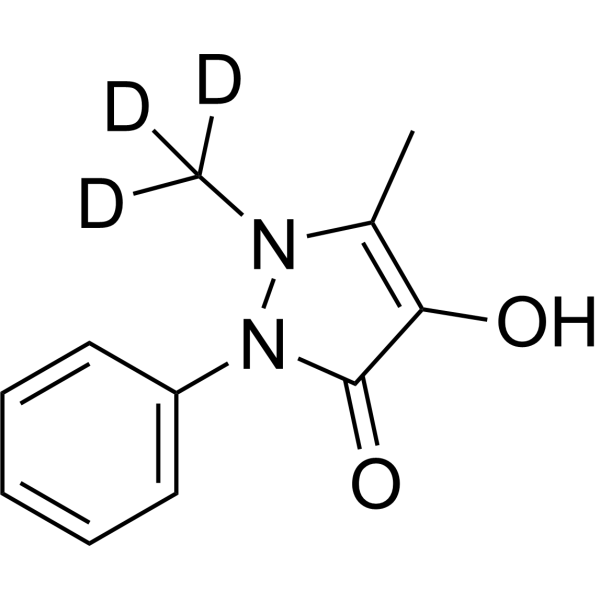 0 ImagesCat. No.: HY-B2150SCAS No.: 65566-65-6Synonyms: 4-Hydroxyphenazone-d3; NSC 174055-d34-Hydroxyantipyrine-d3 is the deuterium labeled 4-Hydroxyantipyrine. 4-Hydroxyantipyrine is the major metabolite of Antipyrine, can be as a biodistribution promoter. 4-Hydroxyantipyrine can increase distribution of concentration ratio of Antipyrine in the brain.
-
2-Methyltetraphene-d14
 0 ImagesCat. No.: HY-W704101CAS No.: 1795033-63-42-Methyltetraphene-d14 is the deuterium labeled 2-Methyltetraphene.
-
N,N-Dimethylsulfamide-d6
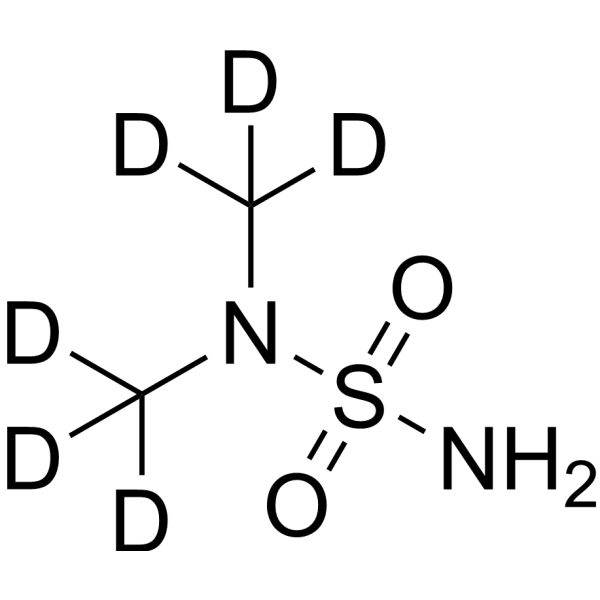 0 ImagesCat. No.: HY-W010465SCAS No.: 1189689-95-9Synonyms: N,N-dimethylsulfuric diamide-d6N,N-Dimethylsulfamide-d6 is the deuterium labeled N,N-Dimethylsulfamide.
-
DGKα-IN-5
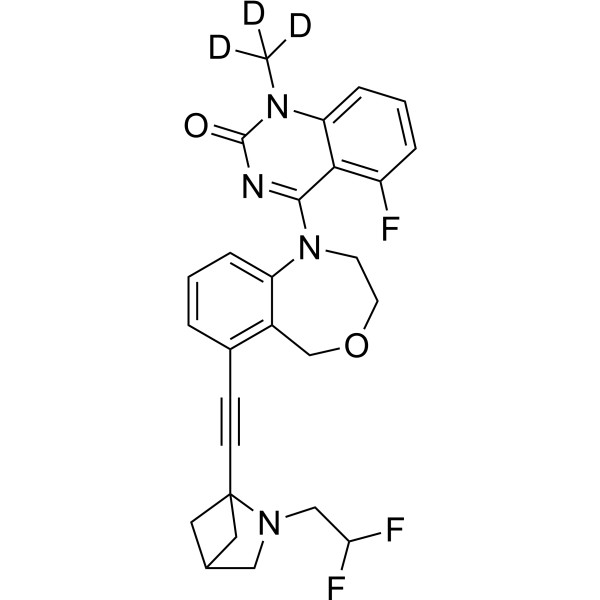 0 ImagesCat. No.: HY-156575SCAS No.: 2886721-97-5DGKα-IN-5 is a deuterium labeled compound.
-
Drotaverine-d10 hydrochloride
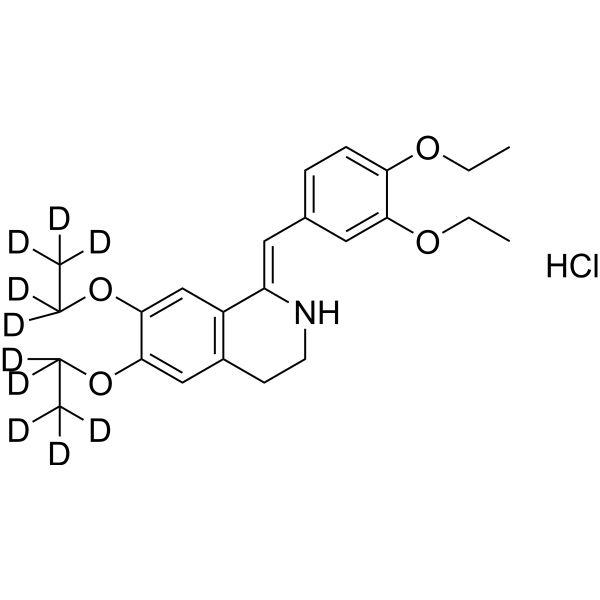 0 ImagesCat. No.: HY-108974SDrotaverine-d10 (hydrochloride) is the deuterium labeled Drotaverine hydrochloride. Drotaverine hydrochloride is a type 4 cyclic nucleotide phosphodiesterase (PDE4) inhibitor and an L-type voltage-dependent calcium channel (L-VDCC) blocker, blocks the degradation of 3',5'-cyclic adenosine monophosphate. Drotaverine hydrochloride exhibits in vivo antispasmodic efficacy without anticholinergic effects.
-
2-Azaspiro[4.5]decan-3-one-d6
![2-Azaspiro[4.5]decan-3-one-d6](https://file.medchemexpress.com/product_pic/hy-w744271.gif "Click to View 2-Azaspiro[4.5]decan-3-one-d6 Product Detail") 0 ImagesCat. No.: HY-W744271Synonyms: Gabapentin lactam-d62-Azaspiro[4.5]decan-3-one-d6 (Gabapentin lactam-d6) is the deuterium labeled 2-Azaspiro[4.5]decan-3-one (HY-W039179).
0 ImagesCat. No.: HY-W744271Synonyms: Gabapentin lactam-d62-Azaspiro[4.5]decan-3-one-d6 (Gabapentin lactam-d6) is the deuterium labeled 2-Azaspiro[4.5]decan-3-one (HY-W039179).
-
Methoxsalen-13C,d3
 0 ImagesCat. No.: HY-W777749CAS No.: 1246819-63-5Synonyms: 8-Methoxypsoralen-13C,d3; Xanthotoxin-13C,d3; 8-MOP-13C,d3Methoxsalen-13C,d3 (8-Methoxypsoralen-13C,d3) is the deuterium and 13C-labeled Methoxsalen (HY-30151). Methoxsalen (8-Methoxypsoralen) is a furanocoumarin compound used in psoralen, used in studies of psoriasis, eczema, vitiligo and some sun-exposed cutaneous lymphomas, and is a P450 inhibitor.
-
Dobesilate-d6 calcium
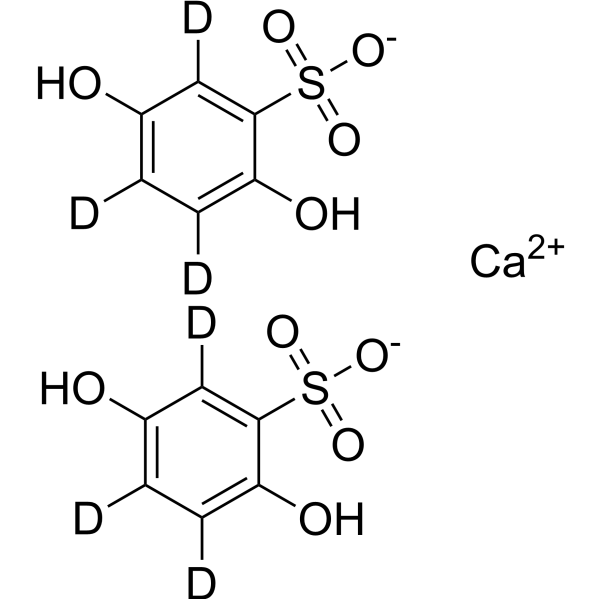 0 ImagesCat. No.: HY-111603SDobesilate-d6 (calcium) is deuterium labeled Calcium dobesilate. Calcium dobesilate, a vasoprotective, is widely used in chronic venous disease, diabetic retinopathy and the symptoms of haemorrhoidal attack in many countries.
-
9-Aminoacridine-13C6
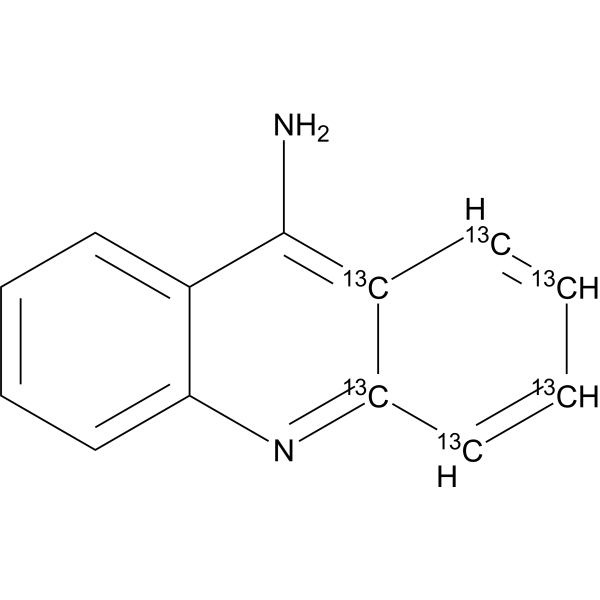 0 ImagesCat. No.: HY-B1422SSynonyms: Aminacrine-13C69-Aminoacridine-13C6 is the 13C-labeled 9-Aminoacridine(HY-B1422). 9-Aminoacridine, a fluorescent probe, acts as an indicator of pH for quantitative determination of transmembrane pH gradients (inside acidic). 9-Aminoacridine is an antimicrobial. 9-Aminoacridine exerts its antimicrobial activity by interacting with specific bacterial DNA and disrupting the proton motive force in K. pneumoniae. 9-Aminoacridine is a HIV-1 inhibitor and inhibits HIV LTR transcription highly dependent on the presence and location of the amino moiety. 9-Aminoacridine inhibits virus replication in HIV-1 infected cell lines. 9-Aminoacridine is used as a Rifampin (RIF; HY-B0272) adjuvant for the multidrug-resistant K. pneumoniae infections.
-
Decanoyl-L-carnitine-d3
 0 ImagesCat. No.: HY-135035SCAS No.: 1297655-08-3Synonyms: (-)-Decanoylcarnitine-d3Decanoyl-L-carnitine ((-)-Decanoylcarnitine)-d3 is deuterium labeled Decanoyl-L-carnitine (HY-135035). Decanoyl-L-carnitine is an endogenous metabolite. Decanoyl-L-carnitine can be used as a serum metabolic biomarkers as indicators in the progression of intravenous leiomyomatosis.
-
1-Bromononane-d3
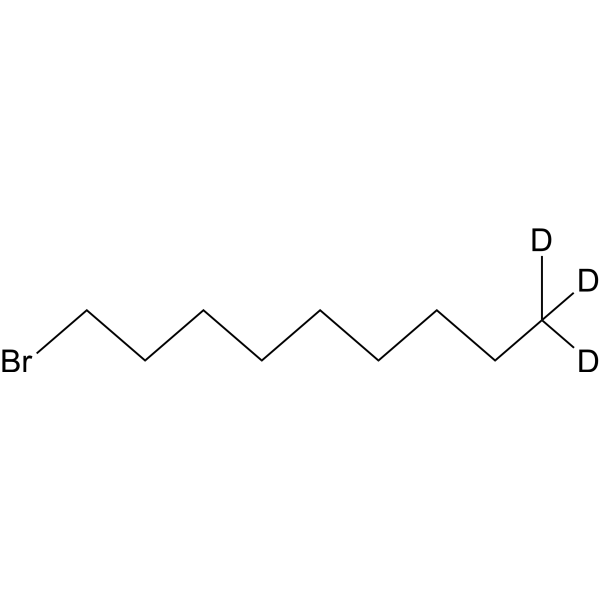 0 ImagesCat. No.: HY-W014559S1CAS No.: 1219799-20-81-Bromononane-d3 is the deuterium labeled 1-Bromononane.
-
Ethanolamine-13C2 hydrochloride
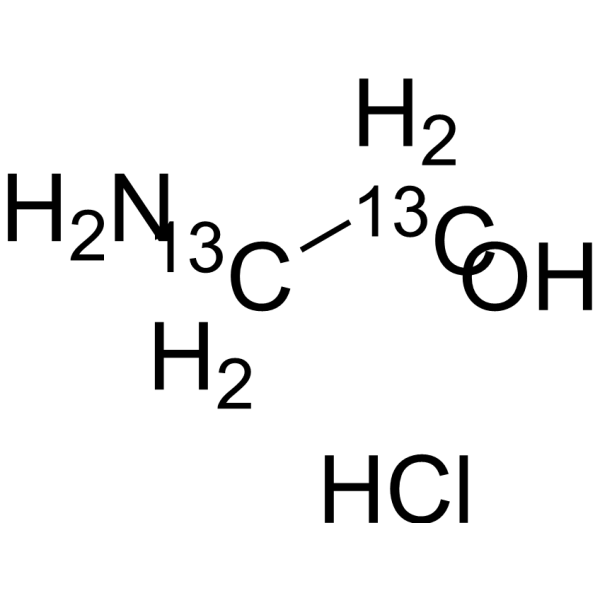 0 ImagesSynonyms: 2-Aminoethanol-13C2 hydrochlorideEthanolamine-13C2 hydrochloride is the 13C labeled Ethanolamine hydrochloride.
-
Ethyl (2-cyanoacetyl)carbamate-13C3,15N
 0 ImagesCat. No.: HY-W751753Synonyms: N-Cyanoacetylurethane-13C3,15NEthyl (2-cyanoacetyl)carbamate-13C3,15N (N-Cyanoacetylurethane-13C3,15N) is the 13C- and 15N-labeled Ethyl (2-cyanoacetyl)carbamate (HY-W001933).
-
2'-Deoxyadenosine-5'-triphosphate-13C10,15N5 (tetraammonia)
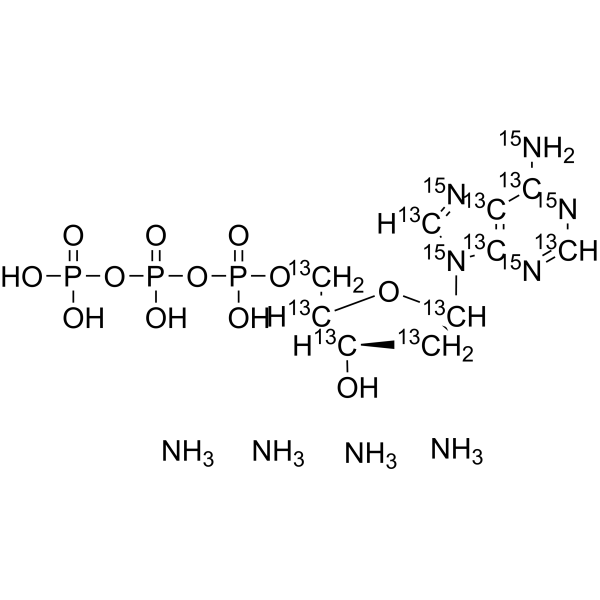 0 ImagesCat. No.: HY-136648SSynonyms: dATP-13C10,15N5 (tetraammonia)2'-Deoxyadenosine-5'-triphosphate-13C10,15N5 tetraammonia is the 13C10 and 15N5 labeled 2'-Deoxyadenosine-5'-triphosphate (HY-136648). 2'-Deoxyadenosine-5'-triphosphate (dATP) is a nucleotide used in cells for DNA synthesis (or replication), as a substrate of DNA polymerase.
-
Fluorofenidone impurity 1-d3
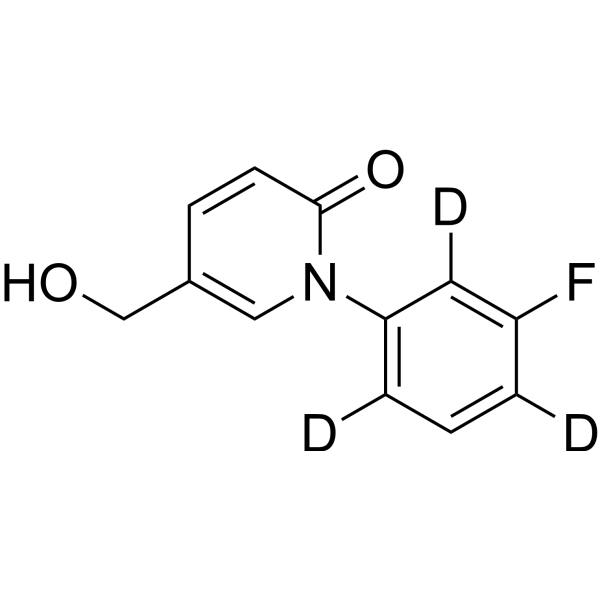 0 ImagesCat. No.: HY-143956SFluorofenidone impurity 1-d3 is the deuterium labeled Fluorofenidone impurity 1.
-
Prostaglandin F1a-d9
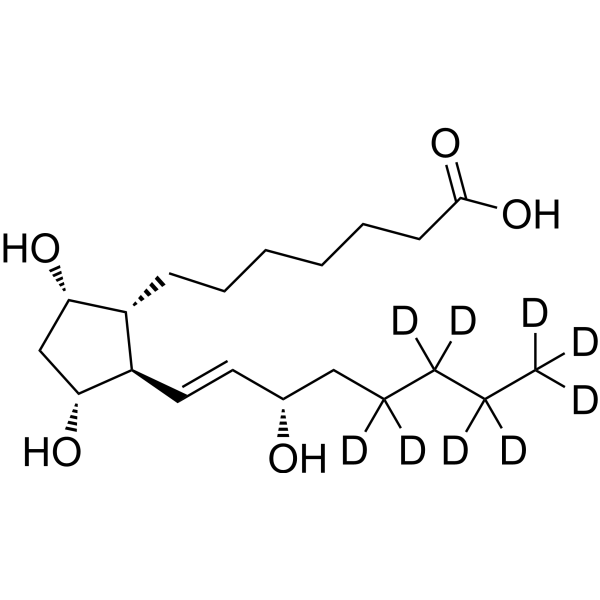 0 ImagesCat. No.: HY-113459SCAS No.: 1542166-81-3Prostaglandin F1a-d9 is the deuterium labeled Prostaglandin F1a. Prostaglandin F1a is an endogenous metabolite and a cyclooxygenase product with platelet activity inhibitory effects. Prostaglandin F1a can be used as a marker in coagulation-related studies.
-
Cholesteryl oleate-d7-1
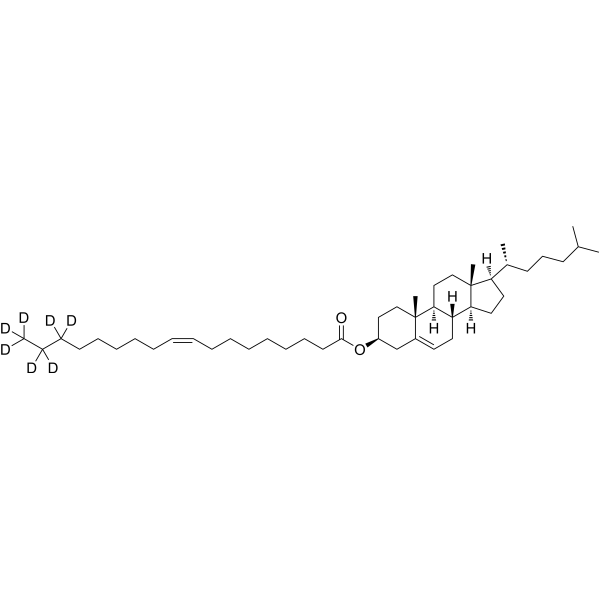 0 ImagesCat. No.: HY-113217S1CAS No.: 2260669-48-3Cholesteryl oleate-d7-1 is deuterium labeled Cholesteryl oleate. Cholesteryl oleate is an ester compound formed from Cholesterol (HY-N0322) and Oleic acid (HY-N1446), which is involved in lipid transport, storage and cell membrane formation in living organisms. Cholesteryl oleate may serve as a potential biomarker for prostate cancer. Cholesteryl oleate can also prepare cationic solid lipid nanoparticles (SLNs) for efficient gene silencing.
-
4-(tert-Butyl)benzene-1,2-diol-d12
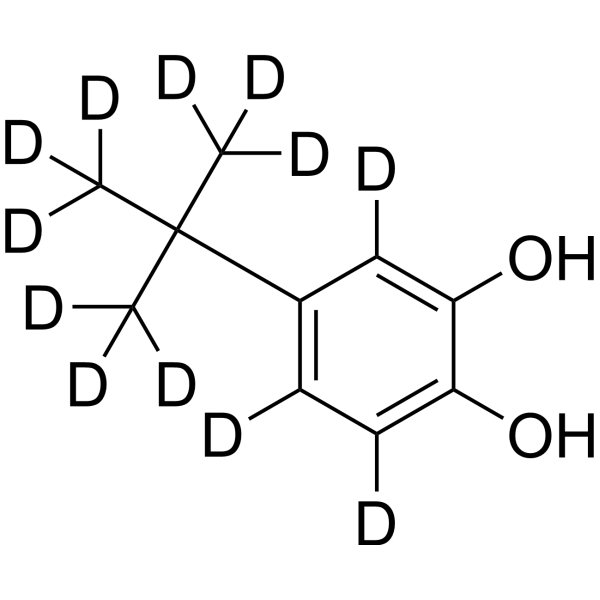 0 ImagesCat. No.: HY-W017145S4-(tert-Butyl)benzene-1,2-diol-d12 is the deuterium labeled 4-(tert-Butyl)benzene-1,2-diol.
-
Bis(4-chlorophenyl)methanone-d8
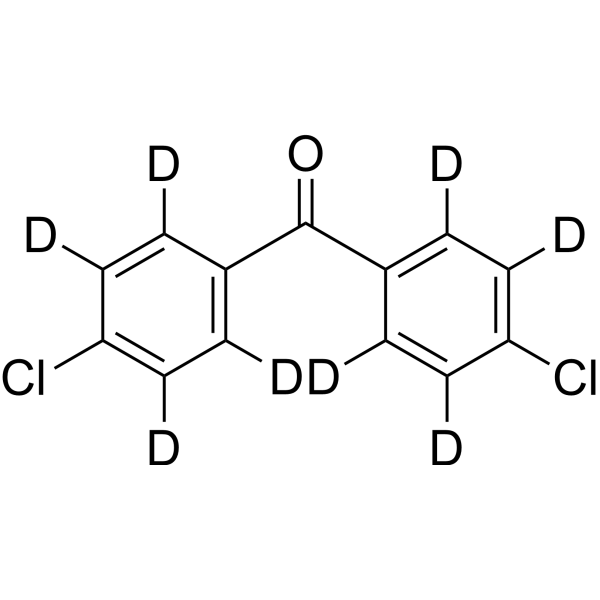 0 ImagesCat. No.: HY-W011918SCAS No.: 1219806-01-5Bis(4-chlorophenyl)methanone-d8 is the deuterium labeled Bis(4-chlorophenyl)methanone.



