



Isotope-Labeled Compounds
Isotope-labeled compounds are chemical substances in which some atoms in their molecules are replaced by isotope atoms. The range of stable isotope products can cover from gases to complex molecules. Isotope-labeled compounds could provide a site-specific investigation of structures, making molecules easily detectable by mass spectrometry and NMR, and maintaining the physico-chemical properties of the target molecule at the same time.
MCE isotope-labeled compounds are all stable isotope-labeled compounds and are non-radioactive labeled substances. MCE isotope-labeled compounds are unique tools for identifying and understanding biological and chemical processes. Stable isotope-labeled products are now getting more and more popular among scientists. The scope of application is gradually penetrating into various scientific fields, such as life sciences, food and medicine, agriculture, environment, geology, etc. Stable isotope-labeled compounds have a wide range of applications in the Life Science areas, such as Metabolomics, Proteomics, Clinical studies, Deuterium drugs, etc.
All Product Categories
-
Isotope-Labeled Compounds Related Products (11126)
Related Products (11126)

-
4-Bromoiodobenzene-d4
 0 Images4-Bromoiodobenzene-d4 is the deuterium labeled 4-Bromoiodobenzene (HY-W086988).
-
Dopamine-13C hydrochloride
 0 ImagesSynonyms: ASL279-13CDopamine-13C (hydrochloride) is the 13C labeled Dopamine hydrochloride (ASL279).
-
Adamantane-d16
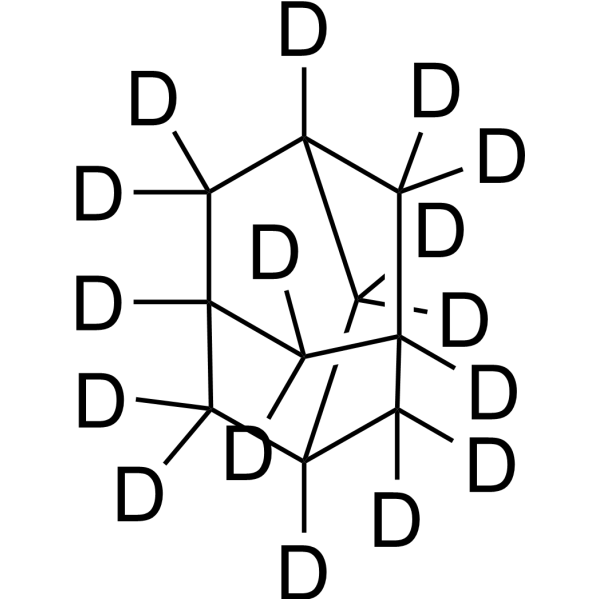 0 ImagesAdamantane-d16is the deuterium labeled Adamantane (HY-N2427). Adamantane, a polycyclic cage molecule with high symmetry and remarkable properties. Adamantane can be incorporated into a lipophilic part of the lipid bilayer that constitutes membranes and as an anchor in the lipid bilayer of liposomes. Adamantane can be used in research of surface recognition and drug delivery.
-
p-Hydroxybenzaldehyde-d4
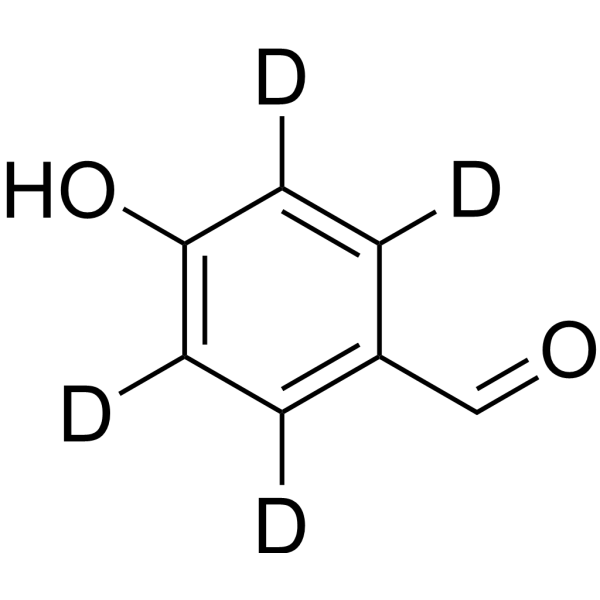 0 Imagesp-Hydroxybenzaldehyde-d4 is the deuterium labeled p-Hydroxybenzaldehyde. p-Hydroxybenzaldehyde is a one of the major components in Dendrocalamus asper bamboo shoots, with antagonistic effect on GABAA receptor of the α1β2γ2S subtype at high concentrations.
-
D-Xylulose-13C5
 0 ImagesCat. No.: HY-W010256S3Purity: 99.0%D-Xylulose-13C5 is the 13C-labeled D-Xylulose (HY-W010256). D-Xylulose is a toxic pentose. D-Xylulose does not induce pentitol production in cells. D-Xylulose can induce ATP and intracellular Pi depletion through the accumulation of Sedoheptulose 7-P.
-
N-Dodecyl-β-D-maltoside-d25
 0 ImagesSynonyms: Lauryl Maltoside-d25N-Dodecyl-β-D-maltoside-d25 (Lauryl Maltoside-d25) is deuterium labeled N-Dodecyl-β-D-maltoside (HY-128974). N-Dodecyl-β-D-maltoside is a non-ionic detergent. N-Dodecyl-β-D-maltoside has strong adsorption on alumina, titanium dioxide and hematite. N-Dodecyl-β-D-maltoside can promote the reactivation of various proteins. N-Dodecyl-β-D-maltoside can effectively stabilize photoactive reaction center complexes (RCs) and inhibit the degradation of Rhodopseudomonas spheroides R-26 reaction center in solution. N-Dodecyl-β-D-maltoside can be used for purification and stabilization of RNA polymerase and for detection of protein-lipid interactions.
-
Amitraz-d3
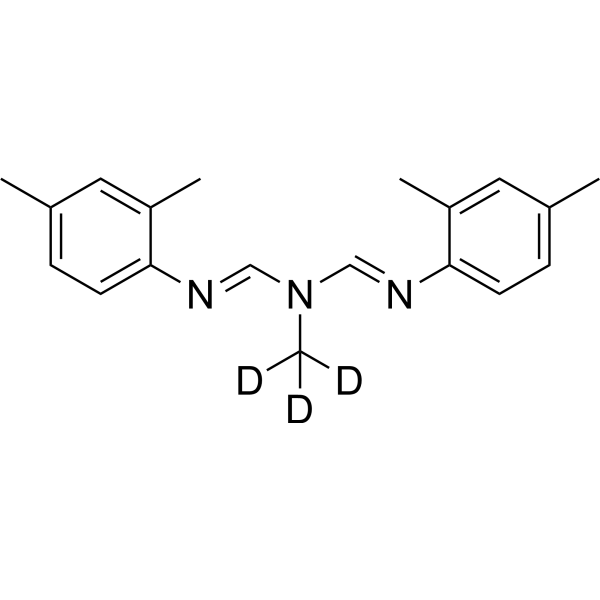 0 ImagesCat. No.: HY-B1111S1Purity: 99.5%Synonyms: BTS-27419-d3Amitraz-d3 is the deuterium labeled Amitraz. Amitraz is a non-systemic acaricide and insecticide, with alpha-adrenergic agonist activity, interaction with octopamine receptors of the central nervous system and inhibition of monoamine oxidases and prostaglandin synthesis.
-
Docosapentaenoic acid-d5
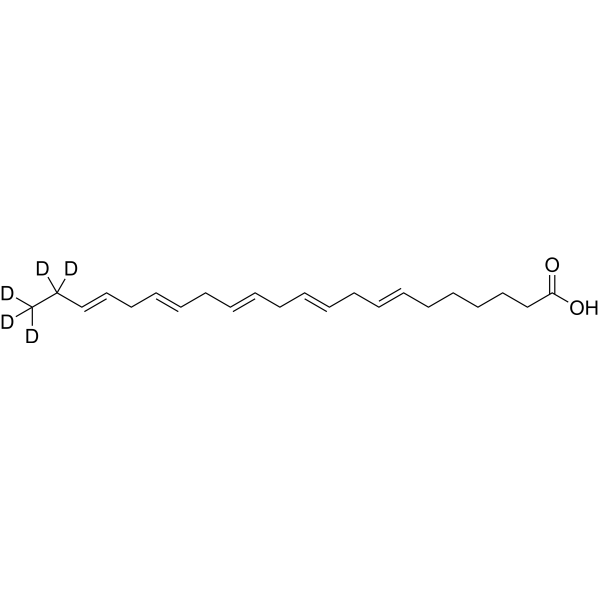 0 ImagesDocosapentaenoic acid-d5 is the deuterium labeled Docosapentaenoic acid.
-
Apixaban-d3
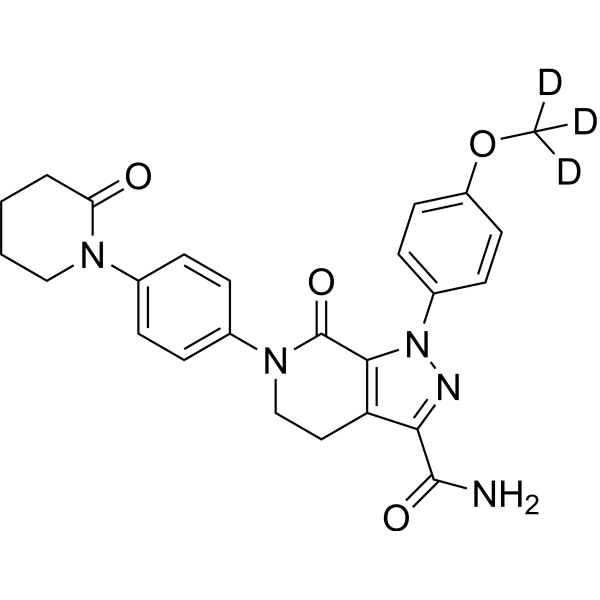 0 ImagesSynonyms: BMS-562247-01-d3Apixaban-d3 (BMS-562247-01-d3) is the deuterium labeled Apixaban (HY-50667). Apixaban (BMS-562247-01) is a highly selective, reversible and orally active inhibitor of Factor Xa with Kis of 0.08 nM and 0.17 nM in human and rabbit, respectively. Apixaban is in development for the prevention and treatment of various thromboembolic diseases.
-
Spaglumic acid-d3
 0 ImagesCat. No.: HY-W705331Purity: 99.44%Synonyms: N-Acetylaspartylglutamic acid-d3Spaglumic acid-d3 (N-Acetylaspartylglutamic acid-d3) is the deuterium labeled Spaglumic Acid (HY-100921). Spaglumic Acid is a neuropeptide.
-
DL-Metanephrine hydrochloride (a,b,b-d3, 98%)
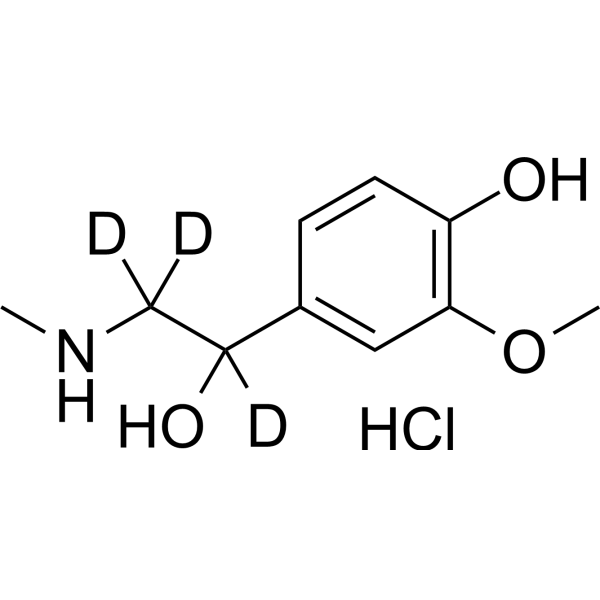 0 ImagesDL-Metanephrine (hydrochloride) (a,b,b-d3, 98%) is the deuterium labeled DL-Metanephrine (hydrochloride) (a,b,b, 98%).
-
Rapamycin-13C,d3
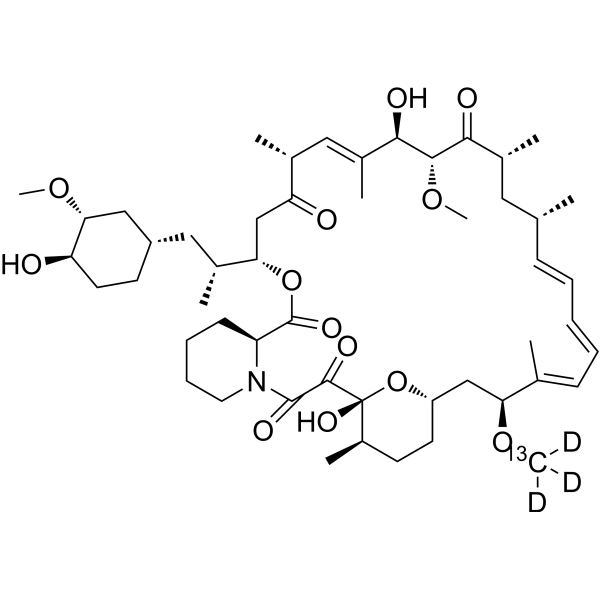 0 ImagesCat. No.: HY-10219S1Synonyms: Sirolimus-13C,d3; AY-22989-13C,d3 NSC 226080-13C,d3Rapamycin-13C,d3 (Sirolimus-13C,d3) is the 13C, deuterated-labeled Rapamycin (HY-10219). Rapamycin (Sirolimus; AY 22989) is a potent and specific blood-brain barrier-transmissible mTOR inhibitor with an IC50 of 0.1 nM in HEK293 cells. Rapamycin is a molecular glue that binds FKBP12 and mTOR proteins together, thereby inhibiting mTOR kinase activity. Rapamycin binds to FKBP12 and specifically acts as an allosteric inhibitor of mTORC1. Rapamycin is an autophagy activator, an immunosuppressant.
-
Cinnabarinic acid-d4
 0 ImagesCat. No.: HY-W753376Purity: 99.00%Cinnabarinic acid-d4 is deuterium labeled Cinnabarinic acid.
-
Acrolein 2,4-dinitrophenylhydrazone-3,5,6-d3
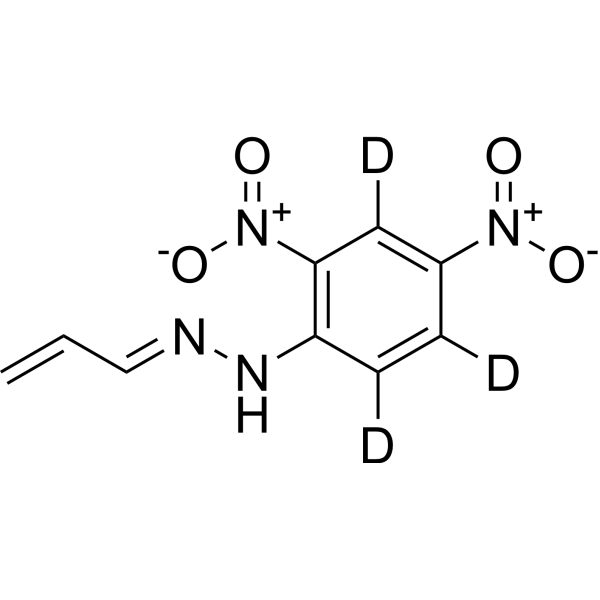 0 ImagesAcrolein 2,4-dinitrophenylhydrazone-3,5,6-d3 is the deuterium labeled Acrolein 2,4-dinitrophenylhydrazone-3,5,6.
-
5-Hydroxymethyl-2'-deoxycytidine-d3
 0 ImagesSynonyms: 5hmdC-d35-Hydroxymethyl-2'-deoxycytidine-d3 (5hmdC-d3) is the deuterium labeled 5-Hydroxymethyl-2'-deoxycytidine (HY-131394). 5-Hydroxymethyl-2’-deoxycytidine (5hmdC) is an oxidation derivative of 5-methyl-2'-deoxycytidine (5-mdC) in DNA. 5-Hydroxymethyl-2’-deoxycytidine may serve as a marker of irreversibly damaged cells.
-
Pyrimethamine-d3
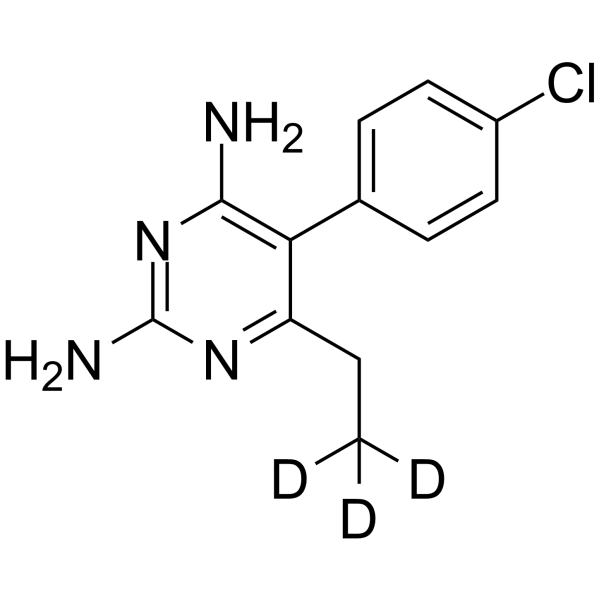 0 ImagesPyrimethamine-d3 is the deuterium labeled Pyrimethamine. Pyrimethamine is a medication used for protozoal infections; interferes with tetrahydrofolic acid synthesis from folic acid by inhibiting the enzyme dihydrofolate reductase (DHFR).
-
2-Naphthylboronic acid-d7
 0 ImagesCat. No.: HY-W002570SCAS No.: 1453542-02-32-Naphthylboronic acid-d7 is the deuterium labeled 2-Naphthylboronic acid (HY-W002570). 2-Naphthylboronic acid is a biochemical reagent that can be used as a biological material or organic compound for life science related research.
-
Desisopropylatrazine-d5
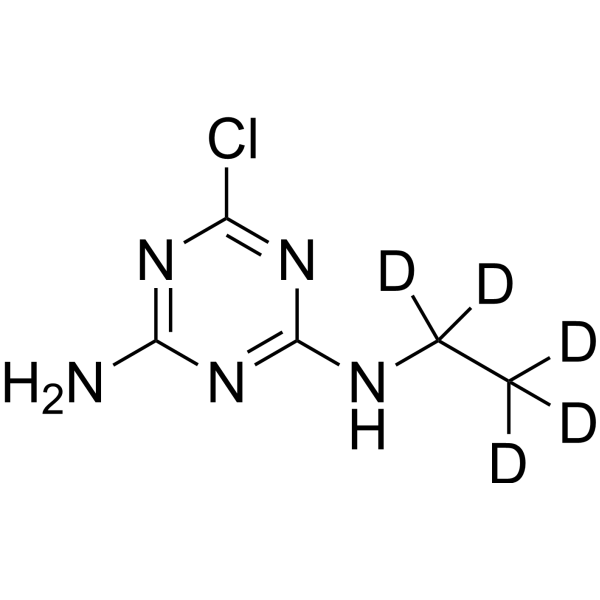 0 ImagesDesisopropylatrazine-d5 is the deuterium labeled Desisopropylatrazine.
-
Cholesterol stearate-d6
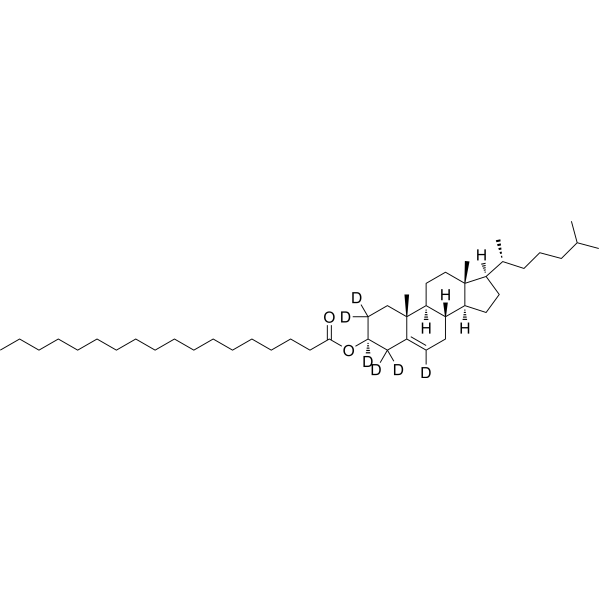 0 ImagesCholesterol stearate-d6 is the deuterium labeled Cholesterol stearate.
-
Octanoic acid-d3
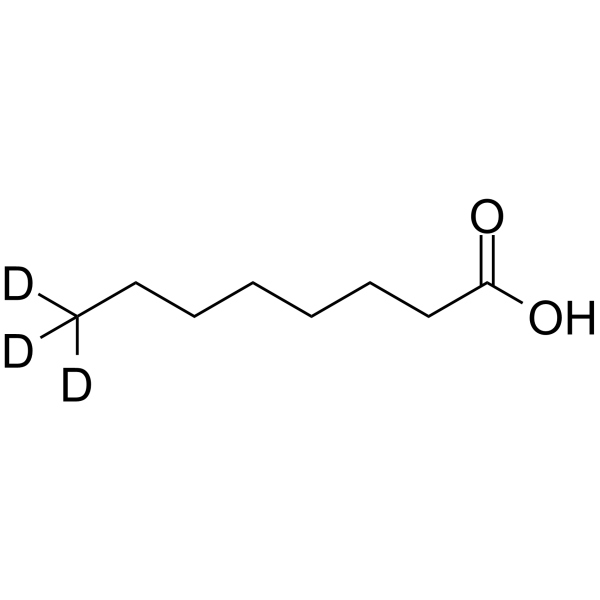 0 ImagesSynonyms: Caprylic acid-d3Octanoic acid-d3 is the deuterium labeled Octanoic acid. Octanoic acid (Caprylic acid) is an oily liquid with a slightly unpleasant rancid taste and used commercially in the production of esters used in perfumery and also in the manufacture of dyes.



