



Isotope-Labeled Compounds
Isotope-labeled compounds are chemical substances in which some atoms in their molecules are replaced by isotope atoms. The range of stable isotope products can cover from gases to complex molecules. Isotope-labeled compounds could provide a site-specific investigation of structures, making molecules easily detectable by mass spectrometry and NMR, and maintaining the physico-chemical properties of the target molecule at the same time.
MCE isotope-labeled compounds are all stable isotope-labeled compounds and are non-radioactive labeled substances. MCE isotope-labeled compounds are unique tools for identifying and understanding biological and chemical processes. Stable isotope-labeled products are now getting more and more popular among scientists. The scope of application is gradually penetrating into various scientific fields, such as life sciences, food and medicine, agriculture, environment, geology, etc. Stable isotope-labeled compounds have a wide range of applications in the Life Science areas, such as Metabolomics, Proteomics, Clinical studies, Deuterium drugs, etc.
All Product Categories
-
Isotope-Labeled Compounds Related Products (11126)
Related Products (11126)

-
Linuron-d6
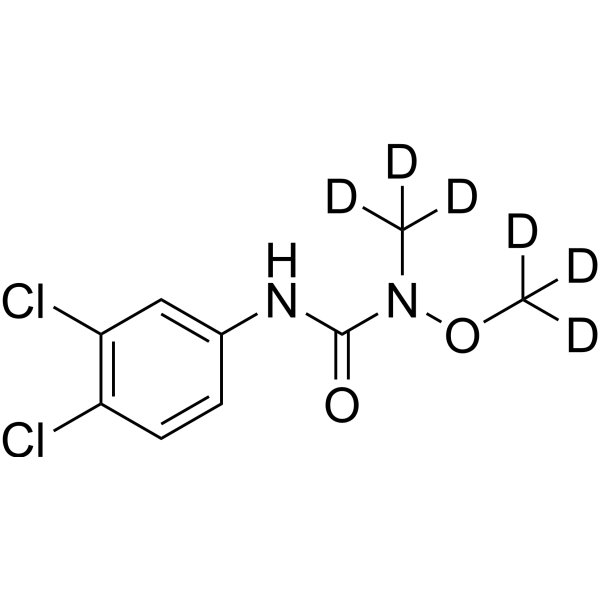 0 ImagesLinuron-d6 is the deuterium labeled Linuron (HY-B1866). Linuron is a phenylurea herbicide that is widely used to control the growth of grass and weeds in various agriculture crops and in orchards. Linuron is a photosystem II inhibitor. Linuron is also a competitive androgen receptor (AR) antagonist with a Ki of 100 μM. Linuron shows reproductive toxicity in animals that acts as an endocrine disruptor.
-
Monomethyl phthalate-d4
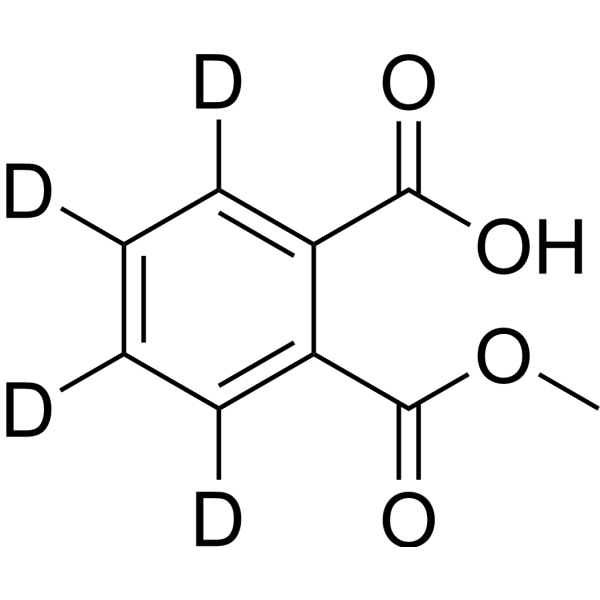 0 ImagesCat. No.: HY-Y1097SCAS No.: 1276197-40-0Synonyms: 2-(Methoxycarbonyl)benzoic acid-d4Monomethyl phthalate-d4 (2-(Methoxycarbonyl)benzoic acid-d4) is the deuterium labeled Monomethyl phthalate. Monomethyl phthalate is a phthalate metabolite. Monomethyl phthalate acts as a urinary biomarker of phthalates exposure and can be used as a standard for the determination of thyroid cancer and benign nodule.
-
D-Tyrosine-d7
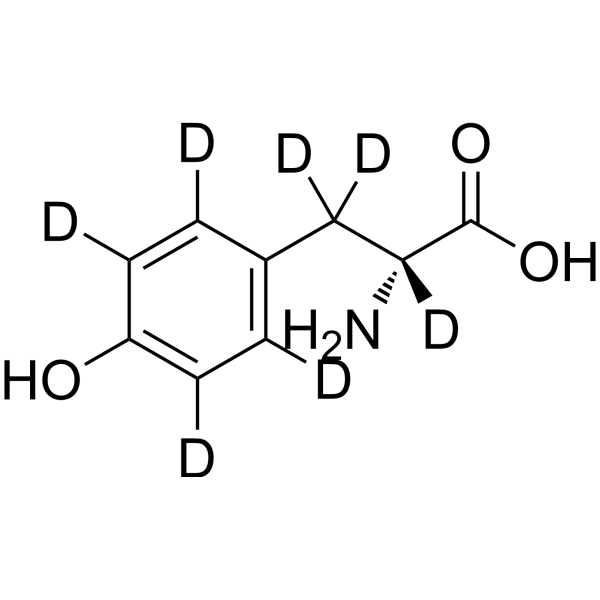 0 ImagesCat. No.: HY-Y0444S2CAS No.: 1426174-46-0D-Tyrosine-d7 is the deuterium labeled D-Tyrosine (HY-Y0444). D-Tyrosine is the D-isomer of tyrosine. D-Tyrosine negatively regulates melanin synthesis by inhibiting tyrosinase activity. D-Tyrosine inhibits biofilm formation and trigger the self-dispersal of biofilms without suppressing bacterial growth.
-
(±)-1,2-Propanediol-d6
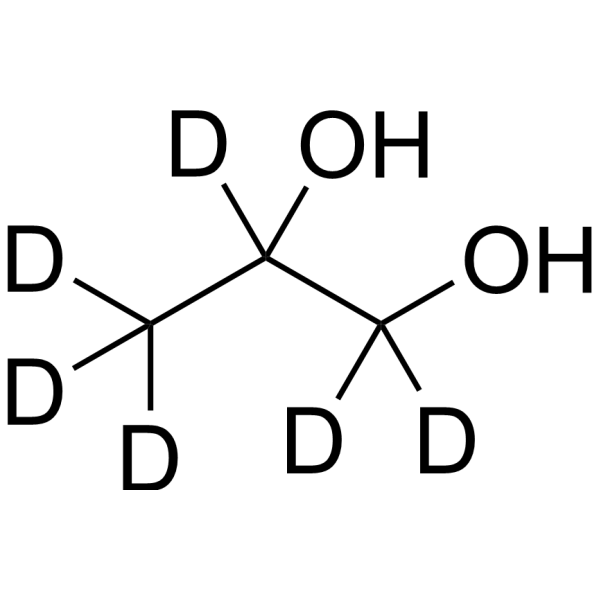 0 ImagesSynonyms: 1,2-(RS)-Propanediol-d6; 1,2-Propylene glycol-d6; Propylene glycol-d6(±)-1,2-Propanediol-d6 is the deuterium labeled (±)-1,2-Propanediol. (±)-1,2-Propanediol (1,2-(RS)-Propanediol) is an aliphatic alcohol and frequently used as an excipient in many agent formulations to increase the solubility and stability of agents.
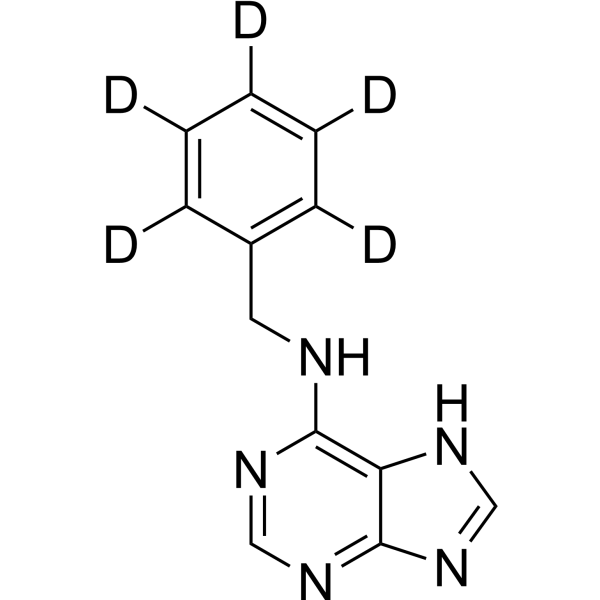
-
Propan-2-amine-d7 hydrochloride
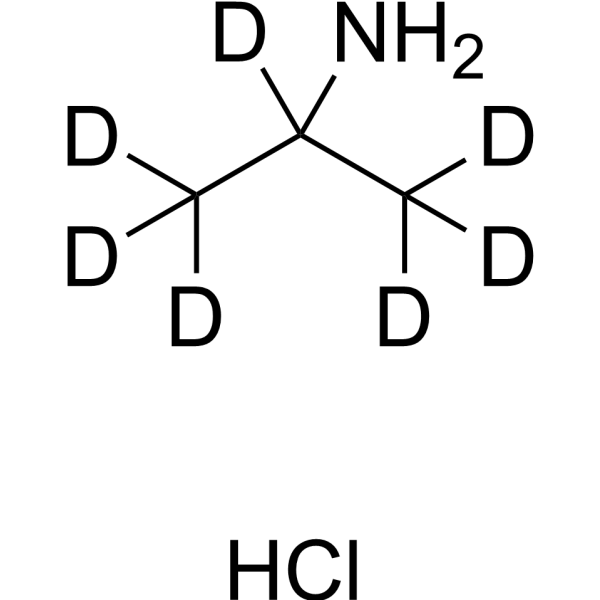 0 ImagesPropan-2-amine-d7 (hydrochloride) is the deuterium labeled Propan-2-amine hydrochloride.
-
4-(Trifluoromethyl)benzoic acid-13C6
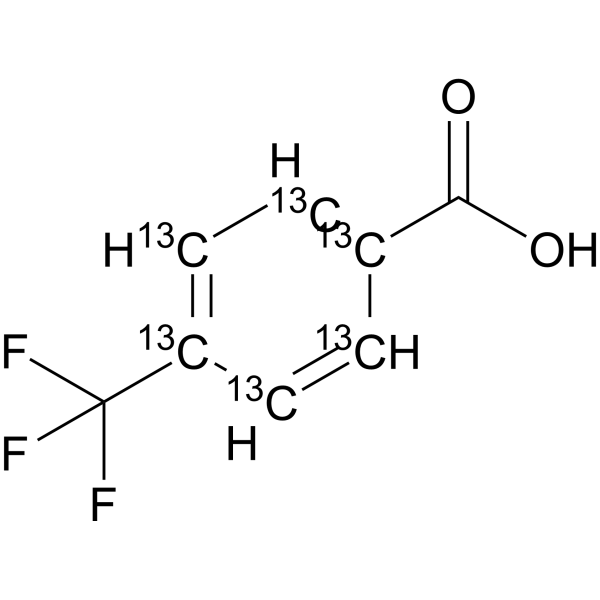 0 Images4-(Trifluoromethyl)benzoic acid-13C6 is the 13C labeled 4-(Trifluoromethyl)benzoic acid.
-
Phosphate monobasic-d2 potassium
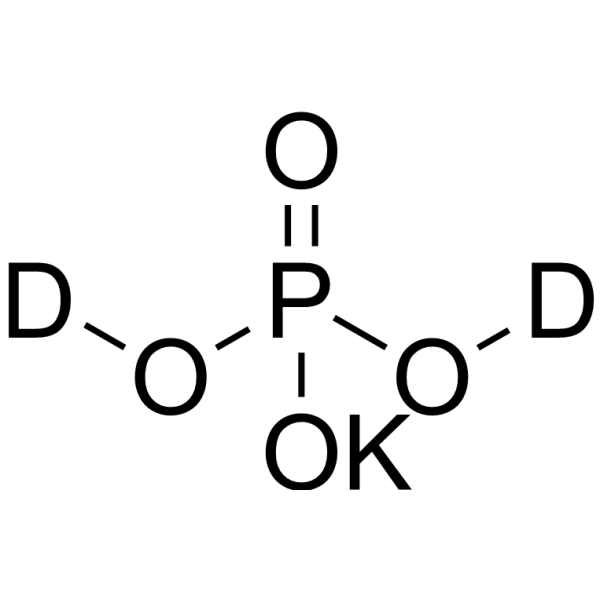 0 ImagesPhosphate monobasic-d2 (potassium) is the deuterium labeled Potassium phosphate monobasic. Potassium phosphate monobasic (DiA) is a commonly used in biological assay buffers. Potassium phosphate monobasic is moderate to highly concentrated aqueous solutions of potassium phosphate monobasic for the production of phosphate buffers and other laboratory applications.
-
26:0 Lyso PC-d4
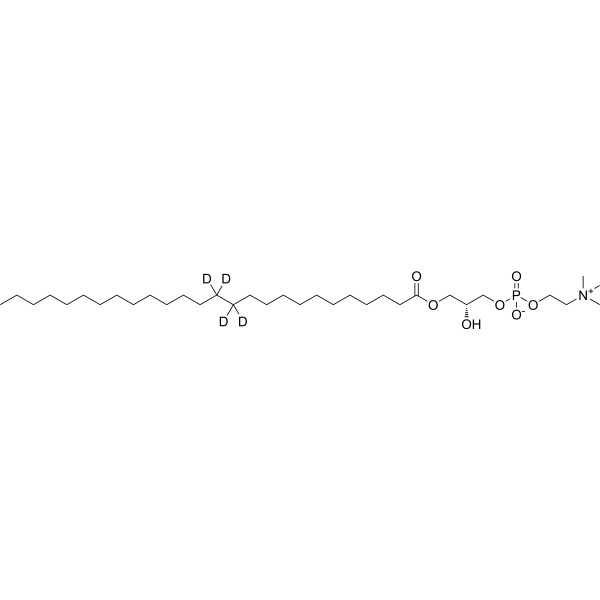 0 ImagesCat. No.: HY-146879SCAS No.: 1246303-15-026:0 Lyso PC-d4 is deuterium labeled 26:0 Lyso PC.
-
ATP-13C10,15N5 ammonium solution (100mM)
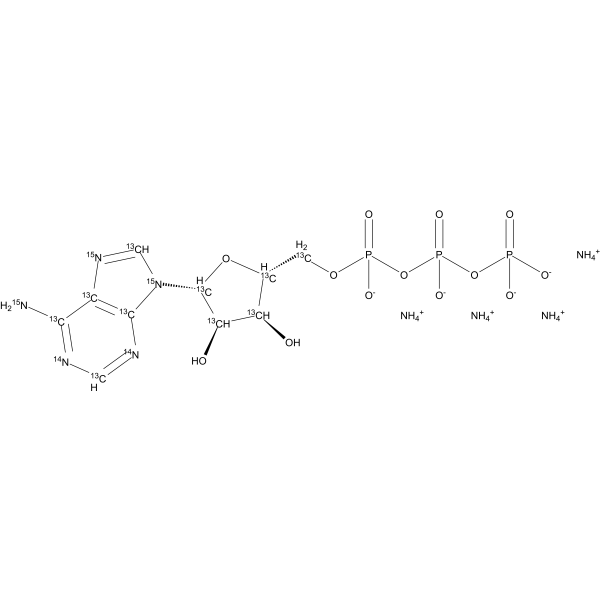 0 ImagesSynonyms: Adenosine 5'-triphosphate-13C10,15N5 ammonium solution (100mM)ATP-13C10,15N5 (Adenosine 5'-triphosphate-ATP-13C10,15N5) ammonium solution (100 mM) is the 13C10,15N5-labeled ATP (HY-B2176). ATP is a central component of energy storage and metabolism in vivo. ATP provides the metabolic energy to drive metabolic pumps and serves as a coenzyme in cells. ATP is an important endogenous signaling molecule in immunity and inflammation. ATP can activate the NLRP3 inflammasome and induce IL-1β and chemokines secretion. ATP has anti-bacterial infection effects and can protect mice against bacterial infection in mice.
-
Penicillin G-d5 potassium
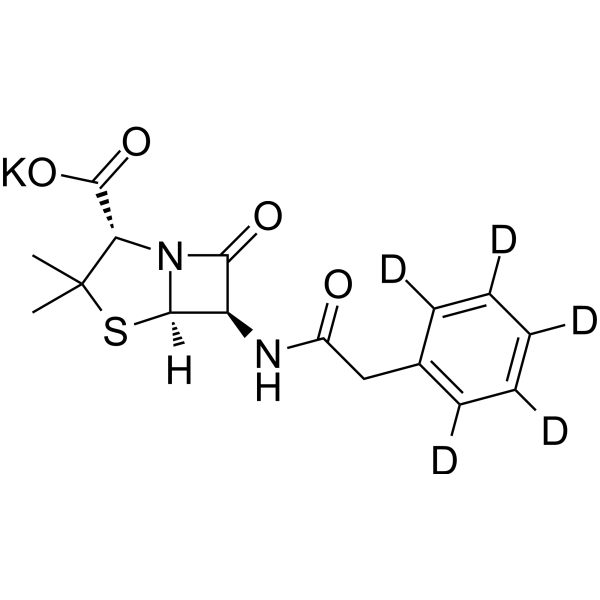 0 ImagesCat. No.: HY-17591SPurity: 98.73%Synonyms: Benzylpenicillin-d5 potassiumPenicillin G-d5 (potassium) is the deuterium labeled Penicillin G potassium. Penicillin G potassium is a fast-acting antibiotic; used to treat bacterial infections that affect the blood, heart, lungs, joints, and genital areas.
-
Desmethyl cariprazine-d8
 0 ImagesDesmethyl cariprazine-d8 is the deuterium labeled Desmethyl cariprazine (HY-100656). Desmethyl cariprazine is a major active metabolite of cariprazine, with activities at human dopamine receptors and serotonin receptors, showing a pEC50 of 8.90 at human D2 receptors, a pEC50 of 8.09 at D3 receptors, and a pEC50 of 6.28 at 5-HT1A receptors. Desmethyl cariprazine inhibits forskolin-induced cAMP production at D2, D3 and 5-HT1A receptors, and suppresses serotonin-induced Ca2+ release at 5-HT2B receptors. Desmethyl cariprazine is applicable to research related to schizophrenia, bipolar disorder type I and bipolar disorder.
-
4-(Dimethylamino)phenacyl bromide-d6
 0 ImagesCat. No.: HY-W128417S1Purity: 98.75%Synonyms: DmPABr-d64-(Dimethylamino)phenacyl bromide-d6 is deuterated labeled 4-(Dimethylamino)phenacyl bromide (HY-W128417).
-
N-Butyrylglycine-d2
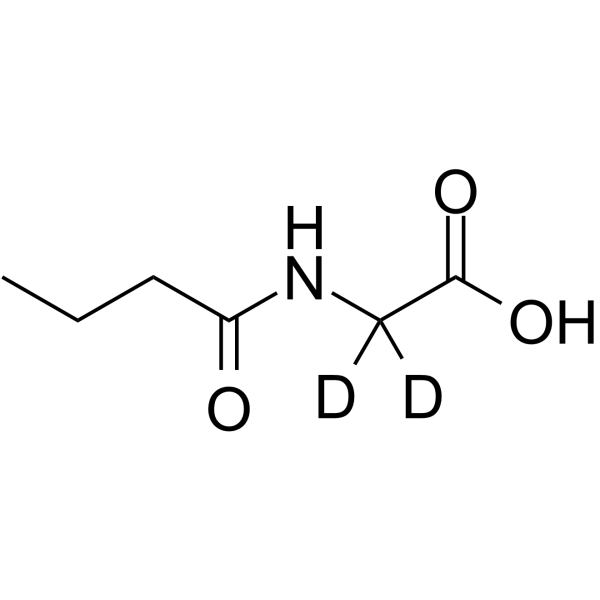 0 ImagesN-Butyrylglycine-d2 is the deuterium labeled N-Butyrylglycine.
-
5-Methyltetrahydrofolic acid-d3
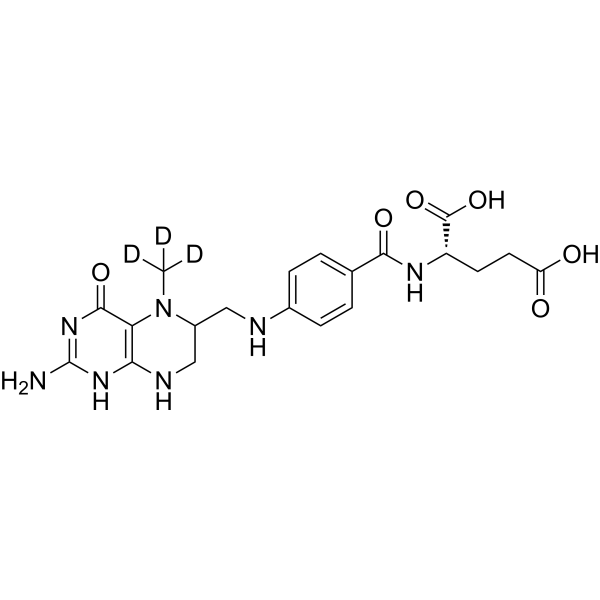 0 ImagesCat. No.: HY-132384SCAS No.: 1356019-97-0Synonyms: 5-Methyl THF-d3; 5-MTHF-d35-(Methyl-d3)tetrahydrofolic Acid is the deuterium labeled 5-(Methyl)tetrahydrofolic Acid.
-
2',3'-cGAMP-d8 ammonium
 0 ImagesCat. No.: HY-100564BSPurity: 99.88%Synonyms: 2'-3'-Cyclic GMP-AMP-d8 ammonium2',3'-cGAMP-d8 (2'-3'-Cyclic GMP-AMP-d8) ammonium is the deuterated-labeled 2',3'-cGAMP ammonium. 2',3'-cGAMP (2'-3'-cyclic GMP-AMP) is a endogenous cGAMP in mammalian cells. 2',3'-cGAMP binds to STING with a high affinity and is a potent inducer of interferon-β (IFNβ). 2',3'-cGAMP is produced in mammalian cells in response to DNA in the cytoplasm.
-
Didesmethyl cariprazine-d8
 0 ImagesDidesmethyl cariprazine-d8 is the deuterium labeled Didesmethyl cariprazine (HY-100658). Didesmethyl cariprazine is an orally active, BBB-permeable metabolite of Cariprazine (HY-14763). Didesmethyl cariprazine is a partial agonist at the D2 and D3 receptors, full agonist at the 5-HT1A receptor, and antagonist at the human 5-HT2B receptor (Ki: 1.41 nM (human D2L), 0.056 nM (human D3), 1.7 nM (human 5-HT1A), 0.52 nM (human 5-HT2B)). Didesmethyl cariprazine dose-dependently inhibits the spontaneous activity of rat midbrain dopaminergic neurons.
-
Momelotinib Metabolite M21-d4
 0 ImagesCat. No.: HY-182093SPurity: 99.88%N-(Cyanomethyl)-4-(2-((4-(3-oxo-4-morpholinyl)phenyl)amino)-4-pyrimidinyl)benzamide-d4 is the deuterium labeled N-(Cyanomethyl)-4-(2-((4-(3-oxo-4-morpholinyl)phenyl)amino)-4-pyrimidinyl)benzamide.
-
Vanillic acid-13C6
 0 ImagesVanillic acid-13C6 is the 13C labeled isotope of Vanillic acid-13C6(HY-N0708 ).Vanillic acid is a flavoring agent found in edible plants and fruits, and in the root of angelica. Vanillic acid inhibits NF-κB activation. It has anti-inflammatory and antimicrobial activities.
-
Nonanoic acid-d3
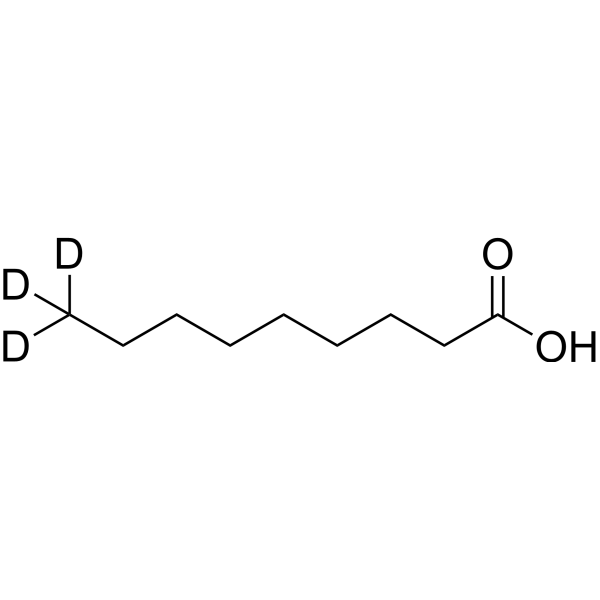 0 ImagesSynonyms: Pelargonic acid-d3Nonanoic acid (Pelargonic acid)-d3 is the deuterium labeled Nonanoic acid (HY-N7057). Nonanoic acid is a naturally-occurring saturated fatty acid with nine carbon atoms. Nonanoic acid significantly reduces bacterial translocation, enhances antibacterial activity, and remarkably increases the secretion of porcine β-defensins 1 (pBD-1) and pBD-2.



