



PANoptosis Inducer
-
Selinexor
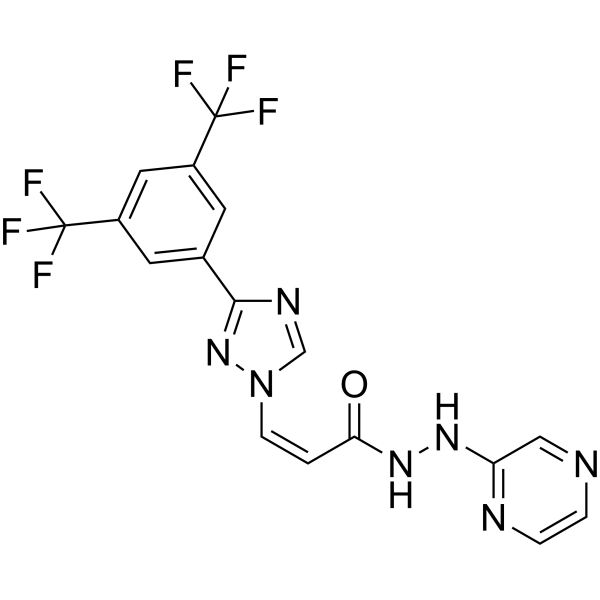 0 ImagesSynonyms: KPT-330
Selinexor (KPT-330) is an analog of KPT-185 (HY-15611). Selinexor is an orally active, selective CRM1 inhibitor that inhibits tumor growth by inducing PANoptosis.
-
Selinexor (Standard)
 0 ImagesSynonyms: KPT-330 (Standard)
Selinexor (Standard) is the analytical standard of Selinexor. This product is intended for research and analytical applications. Selinexor (KPT-330) is an analog of KPT-185 (HY-15611). Selinexor is an orally active, selective CRM1 inhibitor that inhibits tumor growth by inducing PANoptosis.
-
PARP1/EZH2-IN-1
 0 ImagesCat. No.: HY-179386
PARP1/EZH2-IN-1 is a selective PARP1 and EZH2 dual inhibitor. PARP1/EZH2-IN-1 has IC50s of 28 nM, 414 nM and 74 nM for PARP1, PARP2 and EZH2, respectively. PARP1/EZH2-IN-1 inhibits the proliferation and migration of TNBC cells (triple-negative breast Cancer cells). PARP1/EZH2-IN-1 induces PANoptosis (Apoptosis, Pyroptosis and Necroptosis), increases the level of reactive oxygen species (ROS), and activates related inflammatory pathways. PARP1/EZH2-IN-1 can be used in triple-negative breast cancer research.
-
TNI-97
 0 ImagesCat. No.: HY-175030CAS No.: 2790425-52-2
TNI-97 is a selective and orally active HDAC6 inhibitor, with an IC50 of 0.2 nM. TNI-97 potently inhibited TNBC cell MDA-MB-453 growth and clonogenicity. TNI-97 induces PANoptosis including apoptosis, necroptosis and pyroptosis in MDA-MB-453 cells. TNI-97 shows antitumor activity in the mice carrying the MDA-MB-453 xenograft or carrying murine-derived TNBC cell allografts. TNI-97 can be used for the study of triple-negative breast cancer.
-
K103
 0 ImagesCat. No.: HY-117087CAS No.: 1071544-43-8
K103 is an inhibitor discovered from the screen that is an analog of the serotonin antagonist benzazocine. K103 exhibited inhibition of SHIP homologues, labelling it a pan-SHIP1/2 inhibitor, but the molecule had no effect on another 5' inositol phosphatase, OCRL. In line with the "two PIPs hypothesis", the molecule exhibited significant anti-tumour effects against a variety of cell lines, particularly breast cancer cells. Additional studies with K103 revealed that inhibition of SHIP1/2 in multiple myeloma cells resulted in G2/M cell cycle arrest followed by extensive apoptosis via activation of the caspase cascade. K103 fits the commonly used small molecule agent property profile, but while this work was being conducted, it was discovered that K103 caused psychoactive effects in mice, which limited the utility of the molecule in vivo. Therefore, certain synthetic studies were conducted on this tryptamine to identify the features that needed to be present in the molecule to maintain pan-SHIP1/2 inhibition in order to design an inhibitor with favourable pharmacodynamic properties and an improved side effect profile.
-
Apoptosis inducer 36
 0 ImagesCat. No.: HY-168927CAS No.: 2831492-41-0
Apoptosis inducer 36 (Compound 42) exhibits anti-leukemic activity through reduction of leukemia stem cells (LSCs) and induction of differentiation. Apoptosis inducer 36 inhibits the proliferation of AML cells, arrests cell cycle at G1 phase, and induces PANoptosis including apoptosis, pyroptosis and necrosis. Prodrug of apoptosis inducer 36 exhibits orally active antitumor efficacy in mouse model.



