



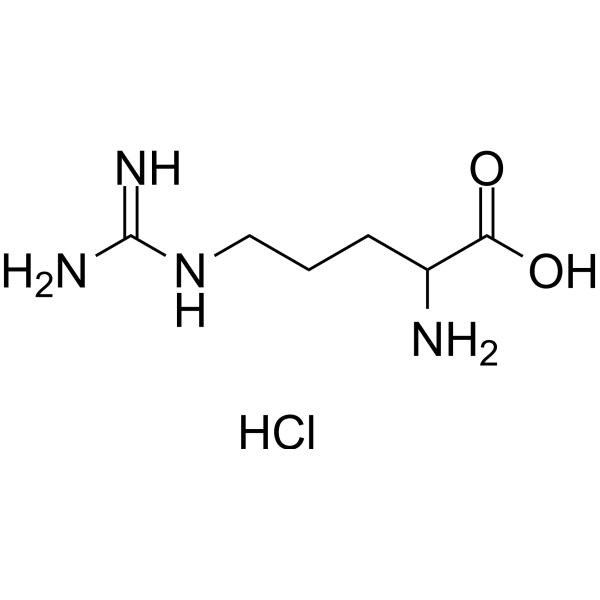
DL-Arginine hydrochloride
Based on 4 publication(s) in Google Scholar
DL-Arginine ((±)-Arginine) hydrochloride is the racemic compound of L-Arginine (HY-N0455) and D-Arginine (HY-W016781). Arginine is an essential amino acid that requires additional supplementation in traumatic or diseased conditions. Arginine is involved in T cell activation, proliferation, and differentiation, and affects the function of immune cells.
Nur für Forschungszwecke. Wir verkaufen nicht an Patienten.
- Reinheit : 98.0%
- CAS. Nr.: 32042-43-6
- Formel: C6H15ClN4O2
- Molecular Weight:210.66
-
Speicherung:
4°C, sealed storage, away from moisture
* In solvent : -80°C, 6 months; -20°C, 1 month (sealed storage, away from moisture)

To place orders, for customer services and technical support, please contact: MedChemExpress USA
Tel: 609-228-6898 E-mail: [email protected] [email protected]


-
 Biologische Aktivität
-
Chemical Information
-
Lösungsmittel & Löslichkeit
- Protokoll
- Reinheit & Dokumentation
- Verweise
-
 Help & FAQs


-
HY-W017018
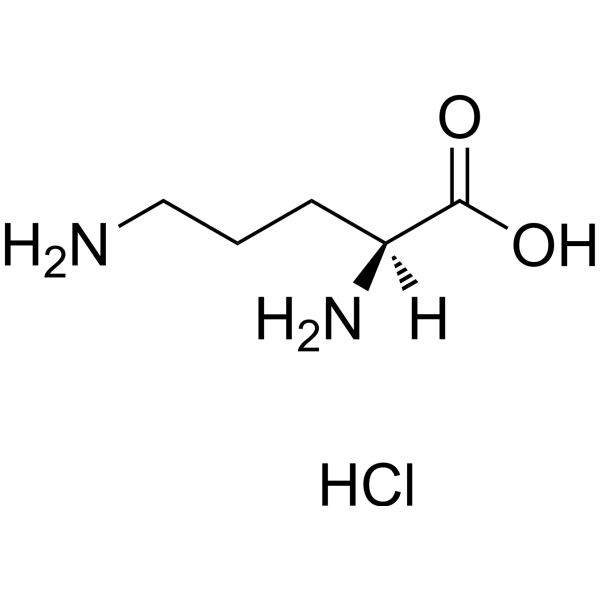
L-Ornithine hydrochlorideCaSR Activator -
HY-W017443
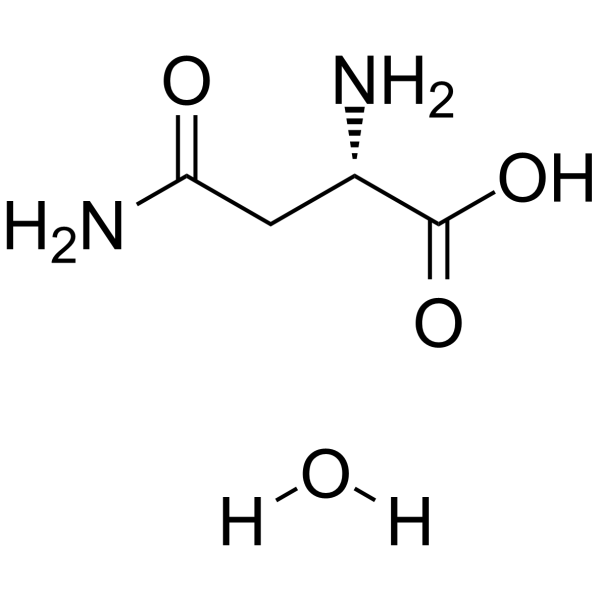
L-Asparagine monohydrateL-Asparaginase Substrate -
HY-W016715
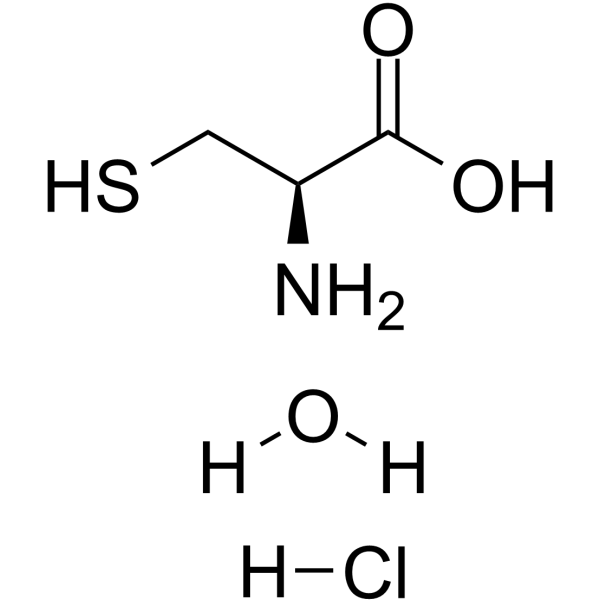
L-Cysteine hydrochloride hydrateEssential Amino Acid -
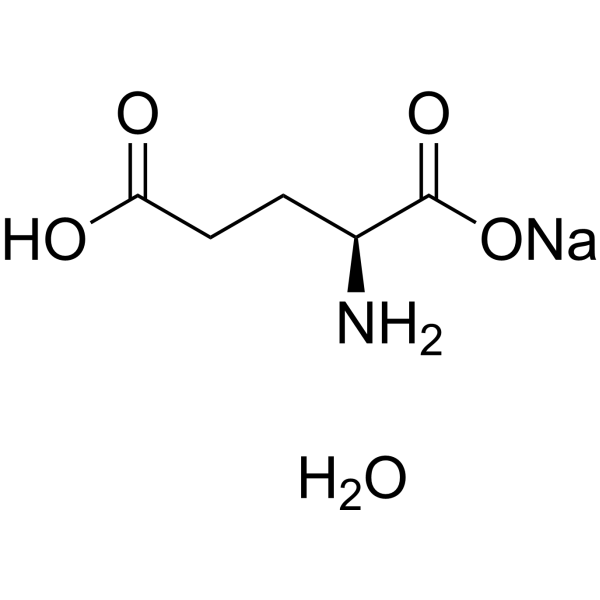
HY-W016145
L-Glutamic acid monosodium hydrateGlutamate Receptors Agonist -
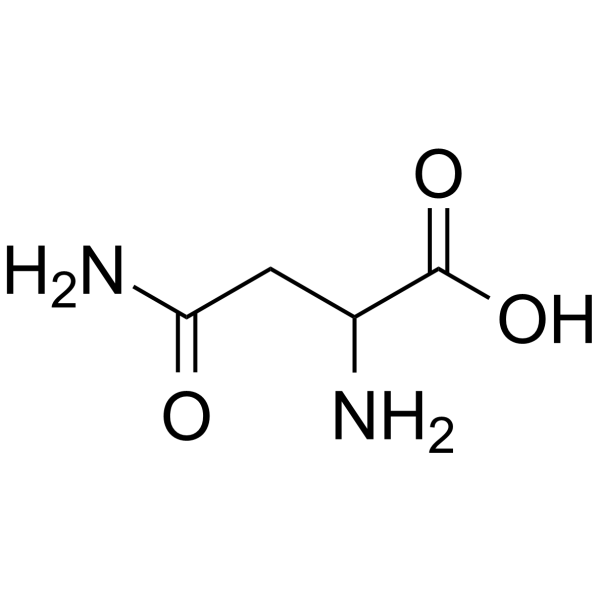
HY-W017442
DL-Asparagine -

HY-W017442R
DL-Asparagine (Standard) -

HY-W017444
D-Asparagine monohydrateBiochemical Reagent -

HY-W016715R
L-Cysteine hydrochloride hydrate (Standard)Amino Acid -

HY-W017443R
L-Asparagine monohydrate (Standard)L-Asparaginase Substrate
Publications Citing Use of MedChemExpress (MCE) DL-Arginine hydrochloride
MoreAlle Endogenous Metabolite Isoform-spezifische Produkte anzeigen
More

Biologische Aktivität
Beschreibung
In Vitro
DL-Arginine hydrochloride can be used as a nitrogen source that added in the culture medium for requirement of cells/bacteria growth[1].
MedChemExpress (MCE) has not independently confirmed the accuracy of these methods. They are for reference only. Further protocols information, click here.


Chemical Information
-
CAS. Nr. 32042-43-6
-
Appearance Solid
-
Molecular Weight 210.66
-
Formel C6H15ClN4O2
-
Color White to off-white
-
Synonyms
(±)-Arginine hydrochloride
-
Versand
Room temperature in continental US; may vary elsewhere.
-
Speicherung
4°C, sealed storage, away from moisture
* In solvent : -80°C, 6 months; -20°C, 1 month (sealed storage, away from moisture)


Publications (4)
-
Journal Impact Factor
-
Most Recent
-
Microbiome
Species-specific enhancement of enterohemorrhagic E. coli pathogenesis mediated by microbiome metabolites. [Abstract]2019 Mar 20;7(1):43. PMID: 30890187 -
Amino Acids
Identification of amino acids metabolomic profiling in human plasma distinguishes lupus nephritis from systemic lupus erythematosus. [Abstract]2024 Sep 18;56(1):56. PMID: 39292313 -
-


Lösungsmittel & Löslichkeit
In Vitro:
H2O : ≥ 100 mg/mL (474.70 mM)
* "≥" means soluble, but saturation unknown.
Please refer to the solubility information to select the appropriate solvent. Once prepared, please aliquot and store the solution to prevent product inactivation from repeated freeze-thaw cycles.
Storage method and period of stock solution: -80°C, 6 months; -20°C, 1 month (sealed storage, away from moisture). When stored at -80°C, please use it within 6 months. When stored at -20°C, please use it within 1 month.
* Note: If you choose water as the stock solution, please dilute it to the working solution, then filter and sterilize it with a 0.22 μm filter before use.
Please refer to the solubility information to select the appropriate solvent. Once prepared, please aliquot and store the solution to prevent product inactivation from repeated freeze-thaw cycles.
Storage method and period of stock solution: -80°C, 6 months; -20°C, 1 month (sealed storage, away from moisture). When stored at -80°C, please use it within 6 months. When stored at -20°C, please use it within 1 month.
* Note: If you choose water as the stock solution, please dilute it to the working solution, then filter and sterilize it with a 0.22 μm filter before use.
Konzentration (Stammlösung) × Volumen (Stammlösung) = Konzentration (Ziellösung) × Volumen (Ziellösung)

Protokoll
-
Research Protocol for Cancer Immunology
Cancer immunology studies how the immune system recognizes, suppresses, edits, or fails to eliminate malignant cells through tumor antigen release, antigen presentation, T-cell priming, immune trafficking, tumor-cell killing, and feedback inhibition in the tumor microenvironment. The cancer-immunity cycle links tumor antigenicity, dendritic-cell priming, CD8+ T-cell infiltration, cytotoxic function, and immune-checkpoint regulation to tumor rejection or immune escape. Immune-checkpoint pathways such as PD-1/PD-L1 and CTLA-4 suppress antitumor T-cell activity and can be therapeutically blocked, but many tumors remain resistant because of poor antigen presentation, weak T-cell infiltration, suppressive myeloid cells, regulatory T cells, and tumor-intrinsic immune-exclusion programs. Unresolved questions include which immune-cell states predict response, how tumor-intrinsic pathways exclude immune cells, how myeloid suppression limits checkpoint blockade, and which combination strategies
-
Cell Viability Determination by MTT Colorimetric Assay
The following protocol uses the MTT colorimetric assay as a classic literature-established method for assessing cell viability/metabolic activity in cultured mammalian cells. MTT[3-(4,5-dimethylthiazol-2-yl)-2,5-diphenyltetrazolium bromide] is reduced by metabolically active cells to a colored formazan product; the amount of formazan is quantified spectrophotometrically and provides an indirect measure of metabolically active viable cells. Importantly, MTT reduction reflects cellular oxidoreductase/metabolic activity rather than an absolute direct count of living cells, so changes in cellular metabolism can alter the signal independently of cell number.


Reinheit & Dokumentation
-
Data Sheet (269 KB)
-
SDS (393 KB)
- English - EN (393 KB)
- Français - FR (393 KB)
- Deutsch - DE (393 KB)
- Norwegian - NO (393 KB)
- Español - ES (393 KB)
- Swedish - SV (393 KB)
- Italian - IT (393 KB)
- Korean - KR (393 KB)
- Portuguese - PT (393 KB)
-
Handling Instructions (2659 KB)
Verweise


Complete Stock Solution Preparation Table
Please refer to the solubility information to select the appropriate solvent. Once prepared, please aliquot and store the solution to prevent product inactivation from repeated freeze-thaw cycles.
Storage method and period of stock solution: -80°C, 6 months; -20°C, 1 month (sealed storage, away from moisture). When stored at -80°C, please use it within 6 months. When stored at -20°C, please use it within 1 month.
| Optional Solvent | Concentration Solvent Mass | 1 mg | 5 mg | 10 mg | 25 mg |
|---|---|---|---|---|---|
| H2O | 1 mM | 4.7470 mL | 23.7349 mL | 47.4699 mL | 118.6746 mL |
| 5 mM | 0.9494 mL | 4.7470 mL | 9.4940 mL | 23.7349 mL | |
| 10 mM | 0.4747 mL | 2.3735 mL | 4.7470 mL | 11.8675 mL | |
| 15 mM | 0.3165 mL | 1.5823 mL | 3.1647 mL | 7.9116 mL | |
| 20 mM | 0.2373 mL | 1.1867 mL | 2.3735 mL | 5.9337 mL | |
| 25 mM | 0.1899 mL | 0.9494 mL | 1.8988 mL | 4.7470 mL | |
| 30 mM | 0.1582 mL | 0.7912 mL | 1.5823 mL | 3.9558 mL | |
| 40 mM | 0.1187 mL | 0.5934 mL | 1.1867 mL | 2.9669 mL | |
| 50 mM | 0.0949 mL | 0.4747 mL | 0.9494 mL | 2.3735 mL | |
| 60 mM | 0.0791 mL | 0.3956 mL | 0.7912 mL | 1.9779 mL | |
| 80 mM | 0.0593 mL | 0.2967 mL | 0.5934 mL | 1.4834 mL | |
| 100 mM | 0.0475 mL | 0.2373 mL | 0.4747 mL | 1.1867 mL |
* Note: If you choose water as the stock solution, please dilute it to the working solution, then filter and sterilize it with a 0.22 μm filter before use.


DL-Arginine hydrochloride Related Classifications
HY-W014375 Related Classifications
 Powered by Bioz