



DL-Arginine
Based on 4 publication(s) in Google Scholar
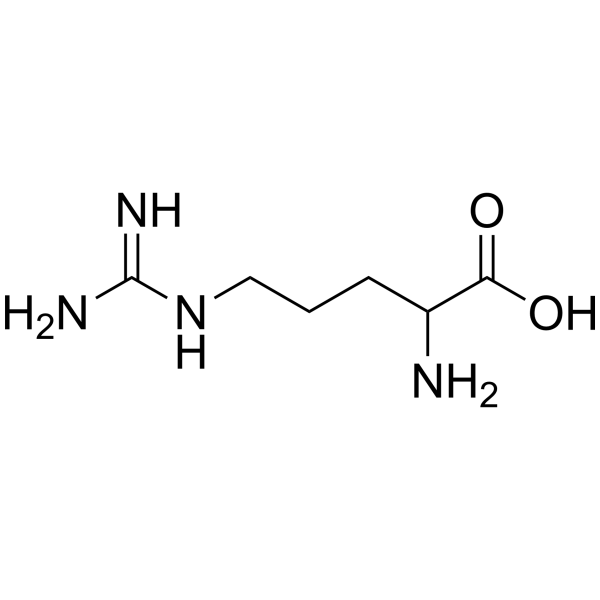
DL-Arginine is the racemic compound of L-Arginine (HY-N0455) and D-Arginine (HY-W016781). Arginine is an essential amino acid that requires additional supplementation in traumatic or diseased conditions. Arginine is involved in T cell activation, proliferation, and differentiation, and affects the function of immune cells.
Nur für Forschungszwecke. Wir verkaufen nicht an Patienten.
- Reinheit : 98.0%
- CAS. Nr.: 7200-25-1
- Formel: C6H14N4O2
- Molecular Weight:174.20
-
Speicherung:Powder -20°C, 3 years , 4°C, 2 years ; In solvent -80°C, 2 years , -20°C, 1 year

To place orders, for customer services and technical support, please contact: MedChemExpress USA
Tel: 609-228-6898 E-mail: [email protected] [email protected]


-
 Biologische Aktivität
-
Chemical Information
-
Lösungsmittel & Löslichkeit
- Protokoll
- Reinheit & Dokumentation
- Verweise
-
 Help & FAQs


-
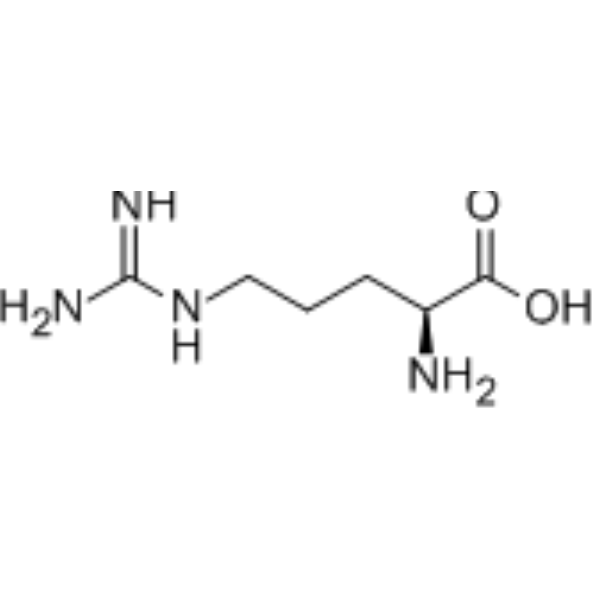
HY-N0455
L-ArginineeNOS Substrate -

HY-N0454R
DL-Arginine (Standard)Amino Acid Derivative -
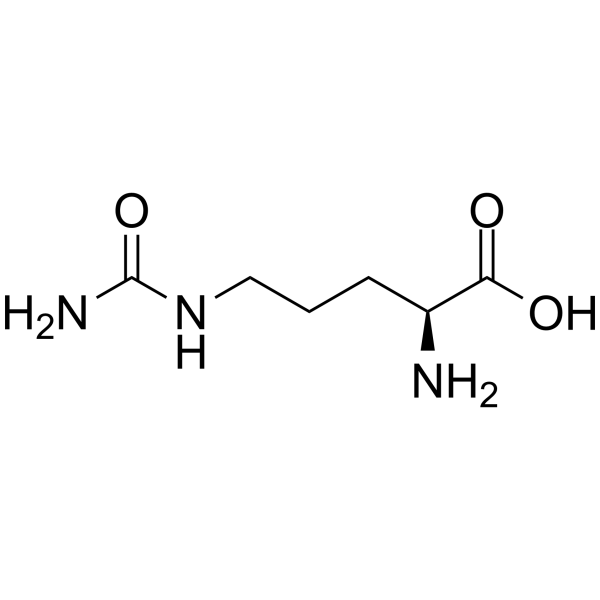
HY-N0391
L-CitrullineEndogenous Metabolite -
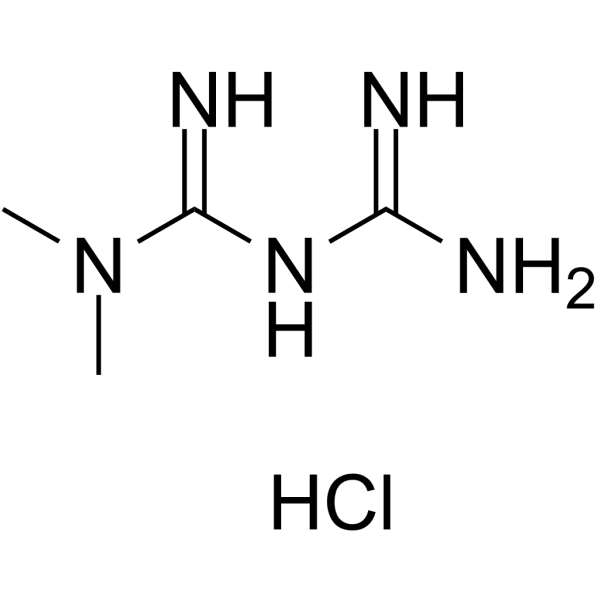
HY-17471A
Metformin hydrochlorideAntihyperglycemic Agent -

HY-N0455R
L-Arginine (Standard)eNOS Substrate -

HY-N0391R
L-Citrulline (Standard)Endogenous Metabolite -
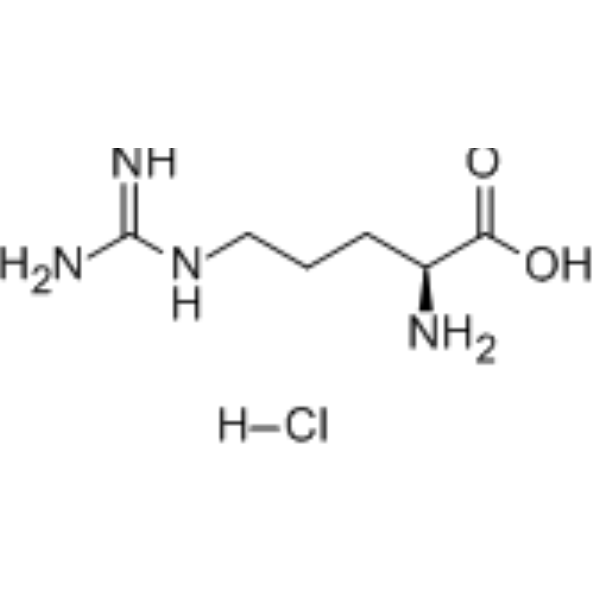
HY-N0455A
L-Arginine hydrochlorideNitrogen Donor -
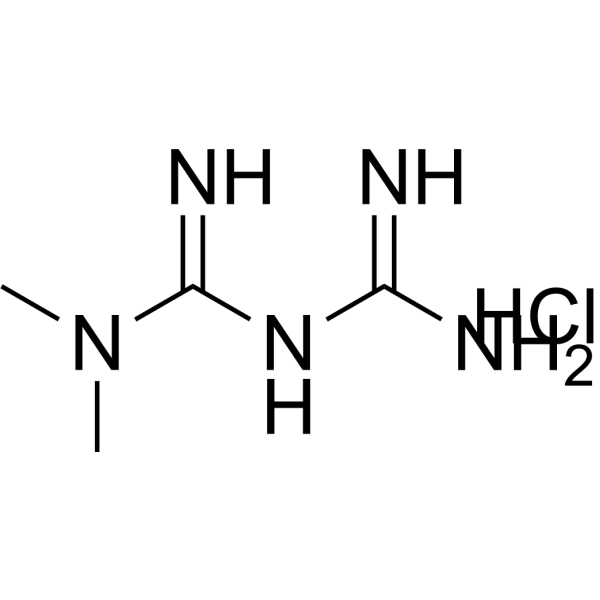
HY-17471AR
Metformin hydrochloride (Standard)Analytical Standard -

HY-N0455AR
L-Arginine hydrochloride (Standard)Nitrogen Donor -
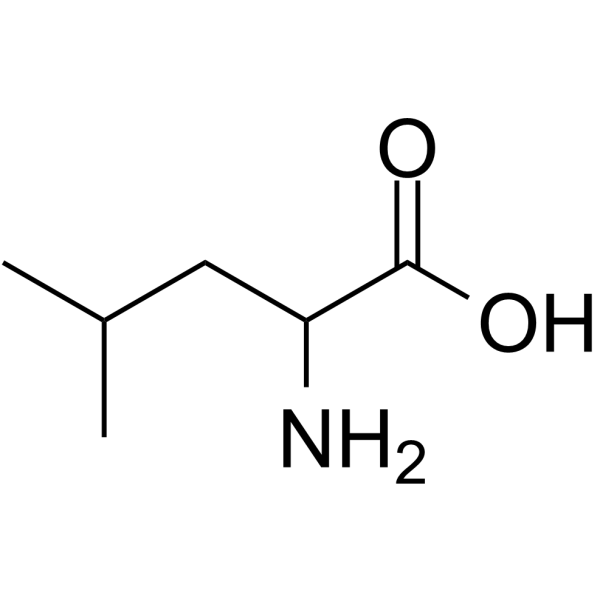
HY-B1674
(±)-LeucineBacterial Inhibitor -

HY-N0391G
L-Citrulline (GMP)Drp1 Inhibitor -

HY-B1674R
(±)-Leucine (Standard)Bacterial Inhibitor
Publications Citing Use of MedChemExpress (MCE) DL-Arginine
MoreAlle Endogenous Metabolite Isoform-spezifische Produkte anzeigen
More

Biologische Aktivität
Beschreibung
In Vitro
DL-Arginine can be used as a nitrogen source that added in the culture medium for requirement of cells/bacteria growth[1].
MedChemExpress (MCE) has not independently confirmed the accuracy of these methods. They are for reference only.


Chemical Information
-
CAS. Nr. 7200-25-1
-
Appearance Solid
-
Molecular Weight 174.20
-
Formel C6H14N4O2
-
Color White to off-white
-
SMILES
NC(CCCNC(N)=N)C(O)=O
-
Synonyms
(±)-Arginine
-
Structure Classification
-
Initial Source
-
Versand
Room temperature in continental US; may vary elsewhere.
-
Speicherung
Powder -20°C 3 years 4°C 2 years In solvent -80°C 2 years -20°C 1 year


Publications (4)
-
Journal Impact Factor
-
Most Recent
-
Microbiome
Species-specific enhancement of enterohemorrhagic E. coli pathogenesis mediated by microbiome metabolites. [Abstract]2019 Mar 20;7(1):43. PMID: 30890187 -
Amino Acids
Identification of amino acids metabolomic profiling in human plasma distinguishes lupus nephritis from systemic lupus erythematosus. [Abstract]2024 Sep 18;56(1):56. PMID: 39292313 -
-


Lösungsmittel & Löslichkeit
In Vitro:
H2O : 125 mg/mL (717.57 mM; Need ultrasonic)
Please refer to the solubility information to select the appropriate solvent. Once prepared, please aliquot and store the solution to prevent product inactivation from repeated freeze-thaw cycles.
Storage method and period of stock solution: -80°C, 2 years; -20°C, 1 year. When stored at -80°C, please use it within 2 years. When stored at -20°C, please use it within 1 year.
* Note: If you choose water as the stock solution, please dilute it to the working solution, then filter and sterilize it with a 0.22 μm filter before use.
Please refer to the solubility information to select the appropriate solvent. Once prepared, please aliquot and store the solution to prevent product inactivation from repeated freeze-thaw cycles.
Storage method and period of stock solution: -80°C, 2 years; -20°C, 1 year. When stored at -80°C, please use it within 2 years. When stored at -20°C, please use it within 1 year.
* Note: If you choose water as the stock solution, please dilute it to the working solution, then filter and sterilize it with a 0.22 μm filter before use.
Konzentration (Stammlösung) × Volumen (Stammlösung) = Konzentration (Ziellösung) × Volumen (Ziellösung)
In Vivo:
For the following dissolution methods, please prepare the working solution directly:
It is recommended to prepare fresh solutions and use them promptly within a short period of time.
The percentages shown for the solvents indicate their volumetric ratio in the final prepared solution. If precipitation or phase separation occurs during preparation, heat and/or sonication can be used to aid dissolution.
Add each solvent one by one: PBS
Solubility: 50 mg/mL (287.03 mM); Clear solution; Need ultrasonic


Reinheit & Dokumentation
-
Data Sheet (268 KB)
-
SDS (393 KB)
- English - EN (393 KB)
- Français - FR (393 KB)
- Deutsch - DE (393 KB)
- Norwegian - NO (393 KB)
- Español - ES (393 KB)
- Swedish - SV (393 KB)
- Italian - IT (393 KB)
- Korean - KR (393 KB)
- Portuguese - PT (393 KB)
-
Handling Instructions (2659 KB)
Verweise


Complete Stock Solution Preparation Table
Please refer to the solubility information to select the appropriate solvent. Once prepared, please aliquot and store the solution to prevent product inactivation from repeated freeze-thaw cycles.
Storage method and period of stock solution: -80°C, 2 years; -20°C, 1 year. When stored at -80°C, please use it within 2 years. When stored at -20°C, please use it within 1 year.
| Optional Solvent | Concentration Solvent Mass | 1 mg | 5 mg | 10 mg | 25 mg |
|---|---|---|---|---|---|
| H2O | 1 mM | 5.7405 mL | 28.7026 mL | 57.4053 mL | 143.5132 mL |
| 5 mM | 1.1481 mL | 5.7405 mL | 11.4811 mL | 28.7026 mL | |
| 10 mM | 0.5741 mL | 2.8703 mL | 5.7405 mL | 14.3513 mL | |
| 15 mM | 0.3827 mL | 1.9135 mL | 3.8270 mL | 9.5675 mL | |
| 20 mM | 0.2870 mL | 1.4351 mL | 2.8703 mL | 7.1757 mL | |
| 25 mM | 0.2296 mL | 1.1481 mL | 2.2962 mL | 5.7405 mL | |
| 30 mM | 0.1914 mL | 0.9568 mL | 1.9135 mL | 4.7838 mL | |
| 40 mM | 0.1435 mL | 0.7176 mL | 1.4351 mL | 3.5878 mL | |
| 50 mM | 0.1148 mL | 0.5741 mL | 1.1481 mL | 2.8703 mL | |
| 60 mM | 0.0957 mL | 0.4784 mL | 0.9568 mL | 2.3919 mL | |
| 80 mM | 0.0718 mL | 0.3588 mL | 0.7176 mL | 1.7939 mL | |
| 100 mM | 0.0574 mL | 0.2870 mL | 0.5741 mL | 1.4351 mL |
* Note: If you choose water as the stock solution, please dilute it to the working solution, then filter and sterilize it with a 0.22 μm filter before use.


DL-Arginine Related Classifications
HY-N0454 Related Classifications
 Powered by Bioz