



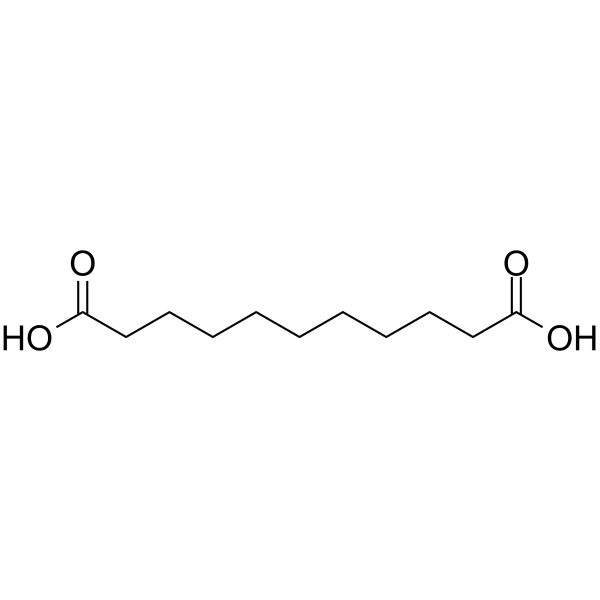
Undecanedioic acid
Based on 2 publication(s) in Google Scholar
Undecanedioic acid is an oral activie nndogenous metabolite. Undecanedioic acid is associated with intercellular matrix macromolecules and specifically with elastin.
For research use only. We do not sell to patients.
- Purity : 98.0%
- CAS No.: 1852-04-6
- Formula: C11H20O4
- Molecular Weight:216.28
-
Storage:
4°C, sealed storage, away from moisture
* In solvent : -80°C, 6 months; -20°C, 1 month (sealed storage, away from moisture)

To place orders, for customer services and technical support, please contact: MedChemExpress USA
Tel: 609-228-6898 E-mail: [email protected] [email protected]


-
 Biological Activity
-
Chemical Information
-
Solvent & Solubility
- Protocols
- Purity & Documentation
- References
-
 Help & FAQs


-
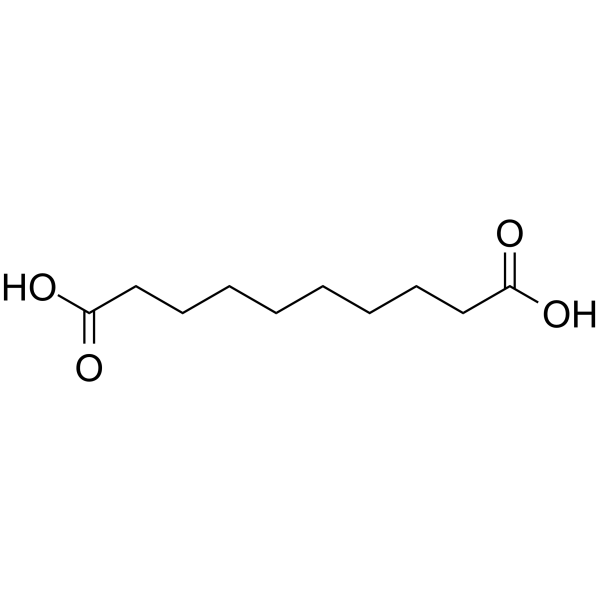
HY-W014787
Decanedioic acidStraight-chain Dicarboxylic Acid -

HY-W014125R
Undecanedioic acid (Standard)Analytical Standard -
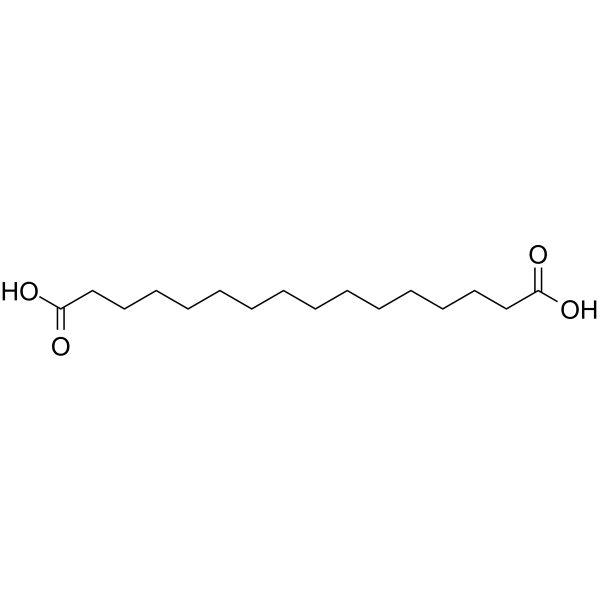
HY-W018161
Hexadecanedioic acidEndogenous Metabolite -
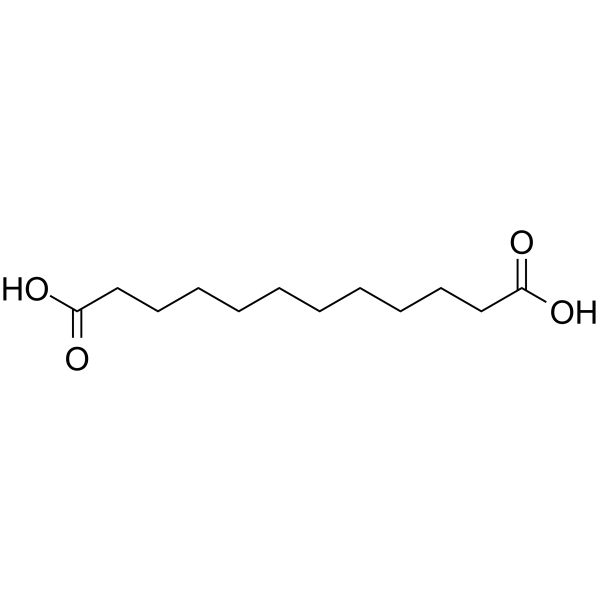
HY-W012241
Dodecanedioic acidEnergy Substrate -
HY-41417
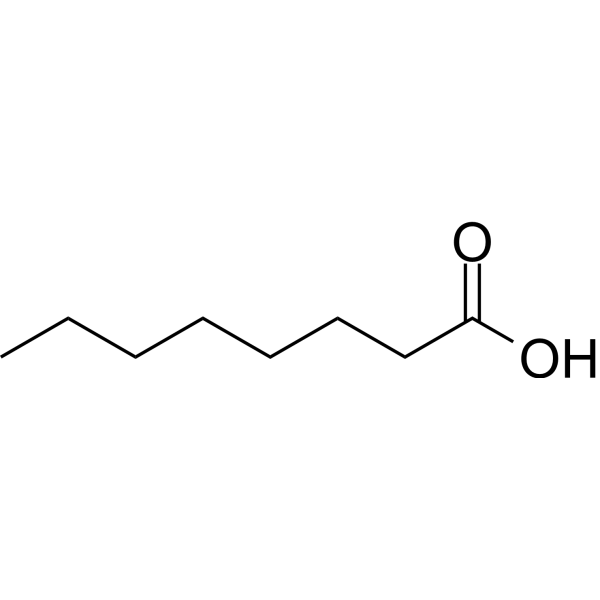
Octanoic acidAntibacterial Agent -

HY-W012241R
Dodecanedioic acid (Standard)Standard of Dodecanedioic acid -
HY-W011819
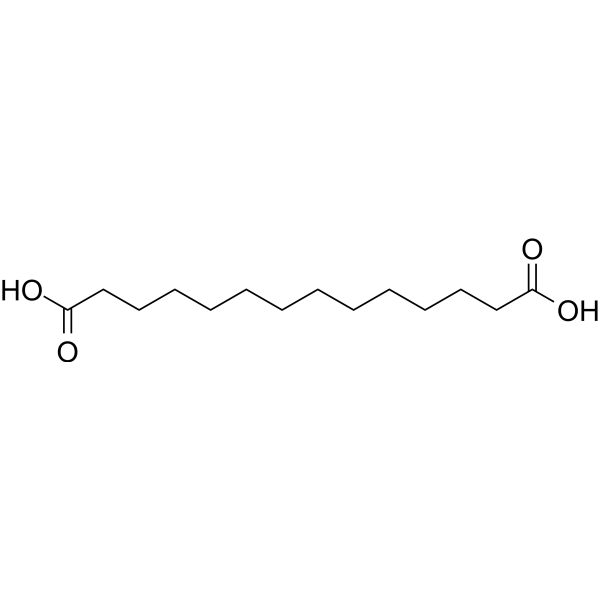
Tetradecanedioic acidEndogenous Metabolite -
HY-Y0367
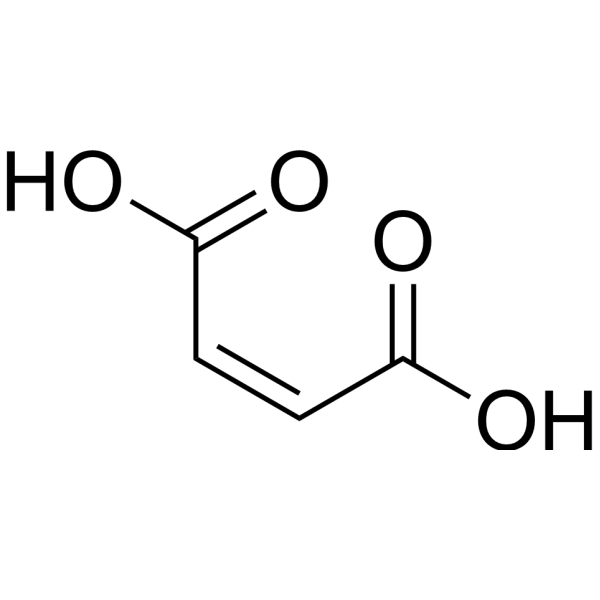
Maleic acid -
HY-B0704
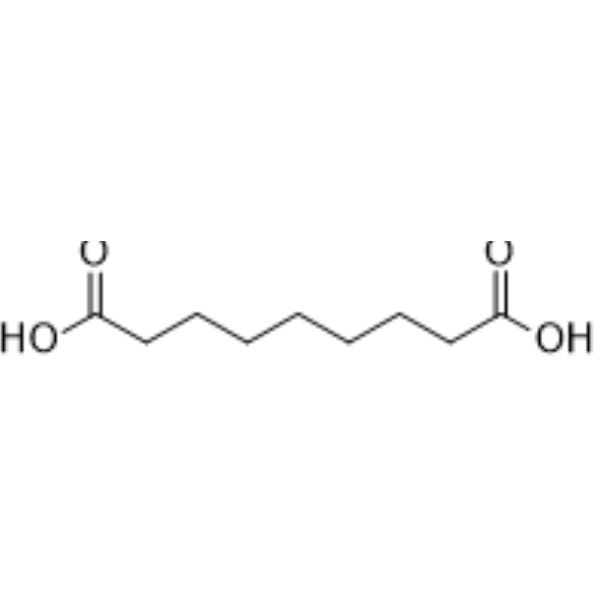
Azelaic acidAnti-inflammatory Agent -
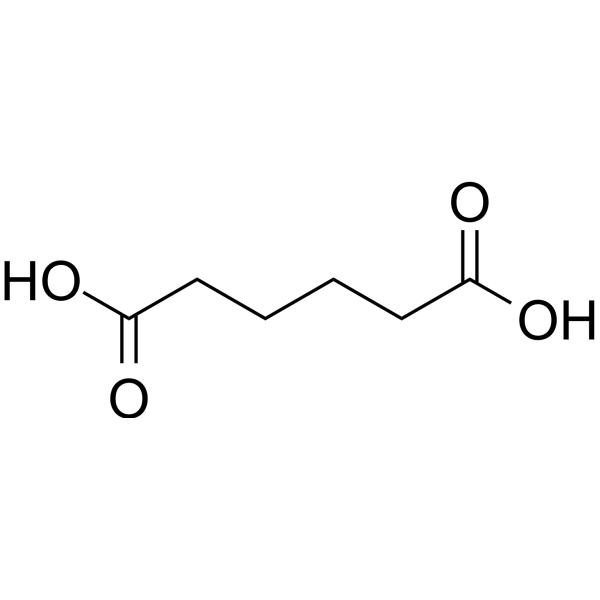
HY-W017522
Adipic acidAnti-HSV Agent -

HY-Y0367R
Maleic acid (Standard) -
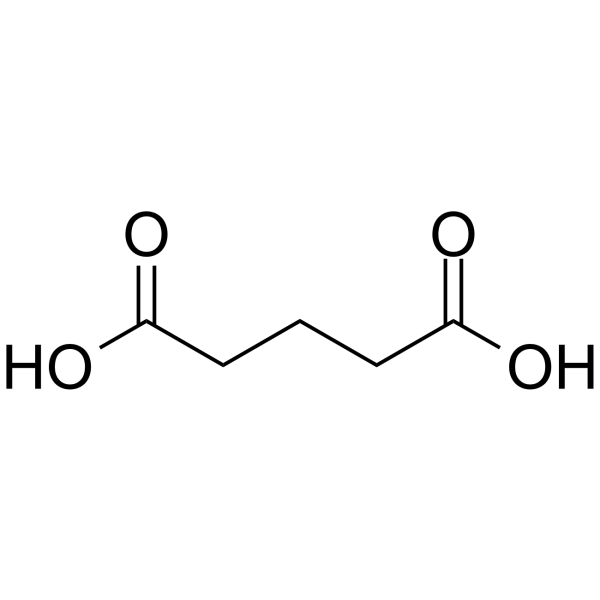
HY-W008820
Glutaric acid
Publications Citing Use of MedChemExpress (MCE) Undecanedioic acid
MoreAll PROTAC Linkers Isoforms
MoreAll Endogenous Metabolite Isoforms
More

Biological Activity
Description
IC50 & Target
[1]|
Human Endogenous Metabolite |
In Vitro
Undecanedioic acid is primarily catabolized by peroxisomes in HEK-293 cells, with mitochondrial fatty acid oxidation playing a minor role in the absence of peroxisomes[2].
MedChemExpress (MCE) has not independently confirmed the accuracy of these methods. They are for reference only. Further protocols information, click here.
In Vivo
MedChemExpress (MCE) has not independently confirmed the accuracy of these methods. They are for reference only.
-
Animal Model:129S1 mice (male, 8 weeks old)[2]
-
Dosage:10% w/w
-
Administration:p.o.; daily; 10 days
-
Result:Markedly increased urinary concentrations of odd-chain dicarboxylic acids (DC11, DC9, DC7, DC5), with DC5 being the most abundant.
Significantly elevated urinary 3-hydroxyundecanedioic acid, 3-hydroxyazelaic acid, 3-hydroxypimelic acid, 2-enoyl-DC7, 3-hydroxyglutaric acid (3OH-DC5), and glutaconic acid.
Showed a large increase in liver DC7 (undetectable in controls) with no change in DC5.
Increased serum DC5-carnitine ~10-fold.
Induced dramatic protein hyperglutarylation in liver and kidney, with statistically significant hyper-glutarylation of 83% of glutarylated peptides (median Log2 fold-change of 9.5, 724-fold) across multiple cellular compartments.
Significantly increased urinary DC3 (malonic acid), representing ~4% of urinary DC5 concentration, while 3OH-DC5 represented ~12% of urinary DC5 concentration.
-
Animal Model:C57BL/6J mice (male, 8 weeks old)[2]
-
Dosage:10% w/w
-
Administration:p.o.; daily; 10 days
-
Result:Showed a pattern of global protein hyperglutarylation in liver lysates strikingly similar to that observed in 129S1 mice fed undecanedioic acid.
Exhibited urinary excretion of DC9 and DC7 equal to that in 129S1 mice, but urinary DC5 excretion was 60% lower than in 129S1 mice.
Showed unchanged urinary excretion of 3OH-DC5 relative to 129S1 mice fed undecanedioic acid.


Chemical Information
-
CAS No. 1852-04-6
-
Appearance Solid
-
Molecular Weight 216.28
-
Formula C11H20O4
-
Color White to off-white
-
SMILES
OC(=O)CCCCCCCCCC(O)=O
-
Structure Classification
-
Initial Source
-
Shipping
Room temperature in continental US; may vary elsewhere.
-
Storage
4°C, sealed storage, away from moisture
* In solvent : -80°C, 6 months; -20°C, 1 month (sealed storage, away from moisture)


Publications (2)
-
Journal Impact Factor
-
Most Recent


Solvent & Solubility
In Vitro:
DMSO : 100 mg/mL (462.36 mM; Need ultrasonic; Hygroscopic DMSO has a significant impact on the solubility of product, please use newly opened DMSO)
Please refer to the solubility information to select the appropriate solvent. Once prepared, please aliquot and store the solution to prevent product inactivation from repeated freeze-thaw cycles.
Storage method and period of stock solution: -80°C, 6 months; -20°C, 1 month (sealed storage, away from moisture). When stored at -80°C, please use it within 6 months. When stored at -20°C, please use it within 1 month.
Please refer to the solubility information to select the appropriate solvent. Once prepared, please aliquot and store the solution to prevent product inactivation from repeated freeze-thaw cycles.
Storage method and period of stock solution: -80°C, 6 months; -20°C, 1 month (sealed storage, away from moisture). When stored at -80°C, please use it within 6 months. When stored at -20°C, please use it within 1 month.
Concentration (start) × Volume (start) = Concentration (final) × Volume (final)
In Vivo:
Select the appropriate dissolution method based on your experimental animal and administration route.
- For the following dissolution methods, please ensure to first prepare a clear stock solution using an In Vitro approach and then sequentially add co-solvents:
- To ensure reliable experimental results, the clarified stock solution can be appropriately stored based on storage conditions. As for the working solution for In Vivo experiments, it is recommended to prepare freshly and use it on the same day.
- The percentages shown for the solvents indicate their volumetric ratio in the final prepared solution. If precipitation or phase separation occurs during preparation, heat and/or sonication can be used to aid dissolution.
Add each solvent one by one: 10% DMSO 90% (20% SBE-β-CD in Saline)
Solubility: ≥ 2.5 mg/mL (11.56 mM); Clear solution
This protocol yields a clear solution of ≥ 2.5 mg/mL (saturation unknown).
Taking 1 mL working solution as an example, add 100 μL DMSO stock solution (25.0 mg/mL) to 900 μL 20% SBE-β-CD in Saline, and mix evenly.
Preparation of 20% SBE-β-CD in Saline (4°C, storage for one week): 2 g SBE-β-CD powder is dissolved in 10 mL Saline, completely dissolve until clear.
In Vivo Dissolution Calculator
Please enter the basic information of animal experiments:
-
-
-
-
Recommended: Prepare an additional quantity of animals to account for potential losses during experiments.
Please enter your animal formula composition:
-
%DMSO +
Recommended: Keep the proportion of DMSO in working solution below 2% if your animal is weak.
-
%+
-
+%Tween-80 + +
-
%Saline +
The co-solvents required include: DMSO, . All of co-solvents are available by MedChemExpress (MCE). , Tween 80. All of co-solvents are available by MedChemExpress (MCE).
Working solution concentration: 0.22 mg/mL
Method for preparing stock solution: mg drug dissolved in μL DMSO. Stock solution concentration: mg/mL. * In solvent : -80°C, 6 months; -20°C, 1 month (sealed storage, away from moisture)
1. Take μL DMSO stock solution;
2. Add μL .
μL , mix evenly;
3. Then add μL Tween 80, mix evenly;
4. Then add μL
Please ensure that the stock solution in the first step is dissolved to a clear state, and add co-solvents in sequence. You can use ultrasonic heating (ultrasonic cleaner, recommended frequency 20-40 kHz), vortexing, etc. to assist dissolution.

Protocols
-
Fibers: Elastic Fiber Staining
Elastic fiber staining is a histochemical technique used to selectively visualize elastin-rich structures such as elastic fibers in connective tissues (e. g. , blood vessels, lung, dermis) based on the affinity of specific dyes or oxidation products for elastin-associated amino acid residues and cross-linked elastic matrix components. Classical methods such as Verhoeff-Van Gieson (VVG), resorcin-fuchsin (Weigert-type stains), or aldehyde fuchsin rely on differential binding of dye complexes to elastic fibers, allowing them to be distinguished from collagen and other extracellular matrix components by contrast staining (typically black or deep purple elastic fibers against red collagen counterstain). These methods are widely used in histopathology to evaluate elastic fiber integrity, fragmentation, or remodeling in vascular diseases, pulmonary pathology, and connective tissue disorders.


Purity & Documentation
-
Data Sheet (272 KB)
-
SDS (394 KB)
- English - EN (394 KB)
- Français - FR (394 KB)
- Deutsch - DE (394 KB)
- Norwegian - NO (394 KB)
- Español - ES (394 KB)
- Swedish - SV (394 KB)
- Italian - IT (394 KB)
- Korean - KR (394 KB)
- Portuguese - PT (394 KB)
-
Handling Instructions (2659 KB)
References
[1]. Han S, et al. Identification of unknown impurity of azelaic acid in liposomal formulation assessed by HPLC-ELSD, GC-FID, and GC-MS. AAPS PharmSciTech. 2014;15(1):111-120. [Content Brief]
[2]. Richert AC, et al. Odd-chain dicarboxylic acid feeding recapitulates the biochemical phenotype of glutaric aciduria type 1 in mice. bioRxiv [Preprint]. 2025 Feb 16:2025.02.13.637994. [Content Brief]
[3]. Dong R, et al. Full composition-wide association study identifies the chemical markers to distinguish different processed camellia oils: Integrating multi-targets with chemometrics. Food Chem. 2025;463(Pt 2):141217. [Content Brief]


Complete Stock Solution Preparation Table
Please refer to the solubility information to select the appropriate solvent. Once prepared, please aliquot and store the solution to prevent product inactivation from repeated freeze-thaw cycles.
Storage method and period of stock solution: -80°C, 6 months; -20°C, 1 month (sealed storage, away from moisture). When stored at -80°C, please use it within 6 months. When stored at -20°C, please use it within 1 month.
| Optional Solvent | Concentration Solvent Mass | 1 mg | 5 mg | 10 mg | 25 mg |
|---|---|---|---|---|---|
| DMSO | 1 mM | 4.6236 mL | 23.1182 mL | 46.2364 mL | 115.5909 mL |
| 5 mM | 0.9247 mL | 4.6236 mL | 9.2473 mL | 23.1182 mL | |
| 10 mM | 0.4624 mL | 2.3118 mL | 4.6236 mL | 11.5591 mL | |
| 15 mM | 0.3082 mL | 1.5412 mL | 3.0824 mL | 7.7061 mL | |
| 20 mM | 0.2312 mL | 1.1559 mL | 2.3118 mL | 5.7795 mL | |
| 25 mM | 0.1849 mL | 0.9247 mL | 1.8495 mL | 4.6236 mL | |
| 30 mM | 0.1541 mL | 0.7706 mL | 1.5412 mL | 3.8530 mL | |
| 40 mM | 0.1156 mL | 0.5780 mL | 1.1559 mL | 2.8898 mL | |
| 50 mM | 0.0925 mL | 0.4624 mL | 0.9247 mL | 2.3118 mL | |
| 60 mM | 0.0771 mL | 0.3853 mL | 0.7706 mL | 1.9265 mL | |
| 80 mM | 0.0578 mL | 0.2890 mL | 0.5780 mL | 1.4449 mL | |
| 100 mM | 0.0462 mL | 0.2312 mL | 0.4624 mL | 1.1559 mL |


Undecanedioic acid Related Classifications
HY-W014125 Related Classifications
 Powered by Bioz