



Estropipate

Based on 1 Customer Validation
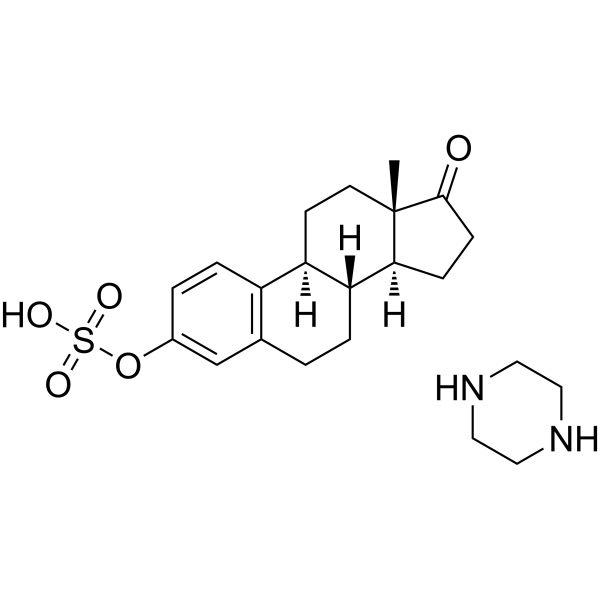
Estropipate (Piperazine estrone sulfate; Estrone sulfate piperazine salt) is an inactive endogenous estrogen that can be converted into Estrone (HY-B0234) and Estradiol (HY-B0141). Estropipate is an orally active estrogen receptor α agonist and a selective OATP1B1 inhibitor. Estropipate inhibits OATP1B1-mediated uptake of statin substrates. Estropipate regulates the estrogen signaling pathway and ameliorates sensory processing and arousal-related behavioral deficits in scn1lab-mutant zebrafish. Estropipate can be used in studies related to autism.
Nos produits utilisent uniquement pour la recherche. Nous ne vendons pas aux patients.
- Pureté : 98.72%
- CAS No.: 7280-37-7
- Formule: C22H32N2O5S
- Masse moléculaire:436.56
-
Stockage:
4°C, sealed storage, away from moisture
* In solvent : -80°C, 6 months; -20°C, 1 month (sealed storage, away from moisture)

To place orders, for customer services and technical support, please contact: MedChemExpress USA
Tel: 609-228-6898 E-mail: [email protected] [email protected]


-
 Activité biologique
-
Chemical Information
-
Solvant et solubilité
- Protocole
- Pureté et documentation
- Références
-
 Help & FAQs


-
HY-B1192
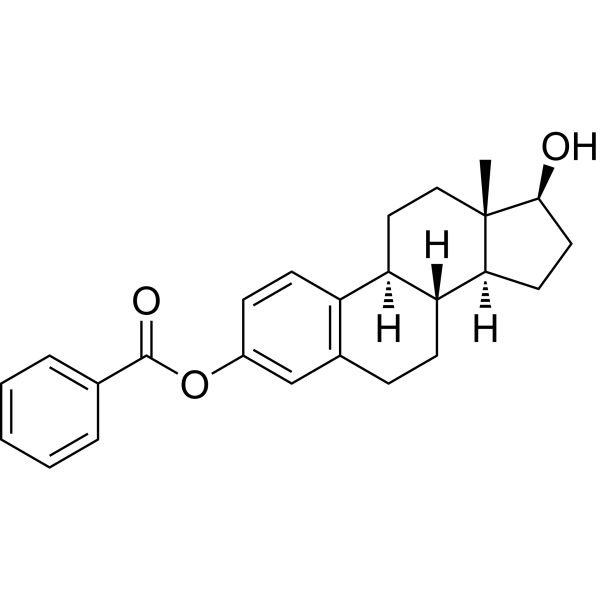
Estradiol benzoateHBx inhibitor -
HY-17386
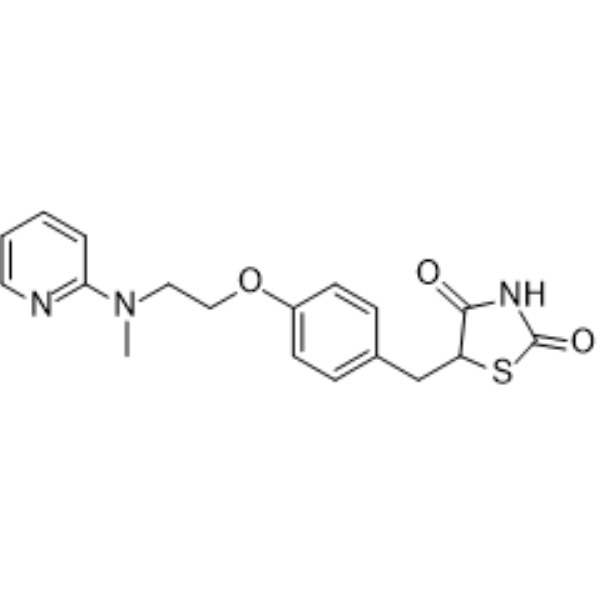
RosiglitazonePPARγ Agonist -
HY-A0012
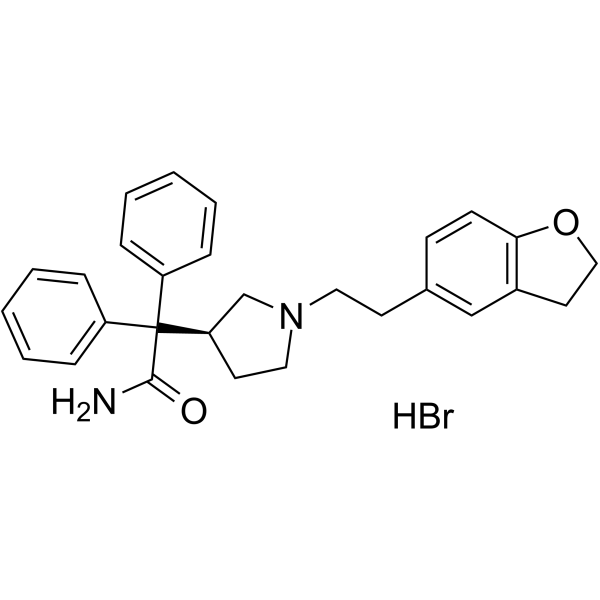
Darifenacin hydrobromideM3 Muscarinic Receptor Antagonist -
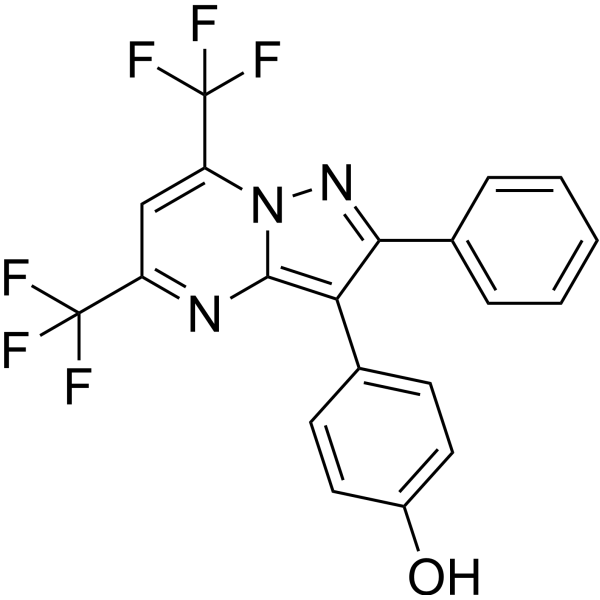
HY-103456
PHTPPERβ Antagonist -
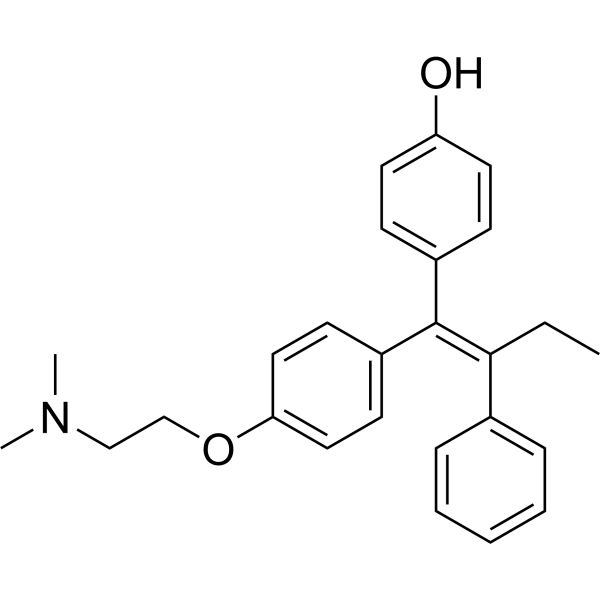
HY-16950
4-HydroxytamoxifenEstrogen Receptor Modulator -
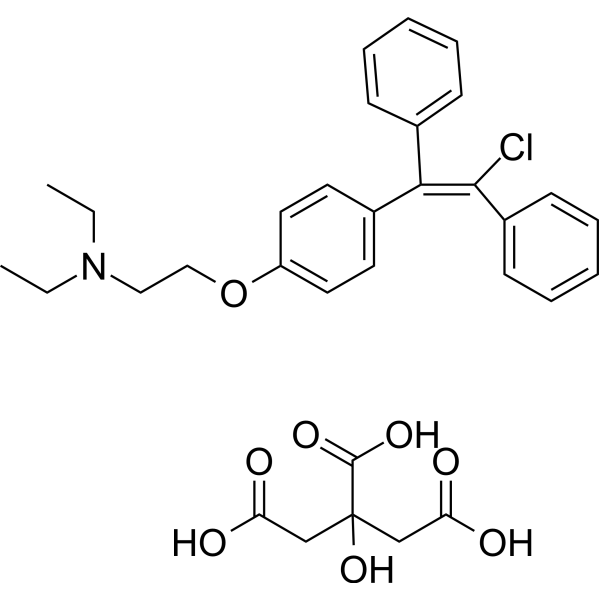
HY-B0463
Clomiphene citrateEstrogen Receptor Modulator -
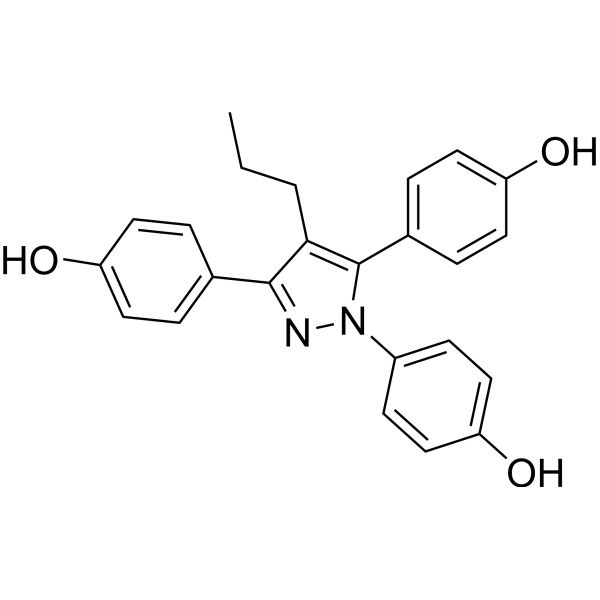
HY-100689
Propyl pyrazole triolERα Agonist -
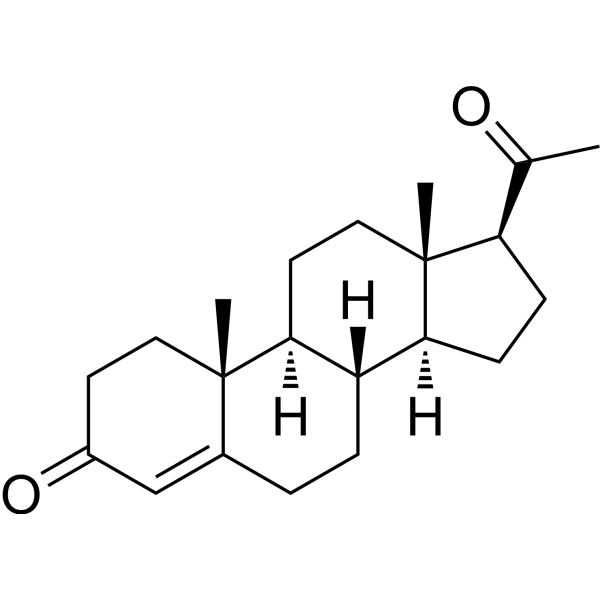
HY-N0437
ProgesteroneEndogenous Metabolite -
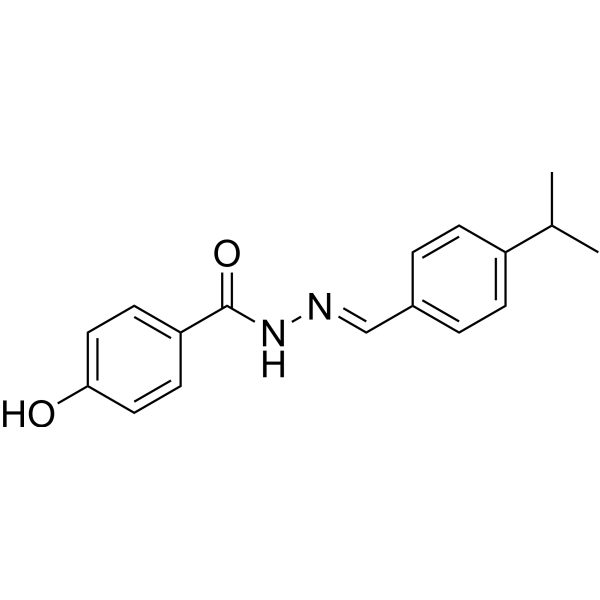
HY-33353
GSK-4716Estrogen Receptor/ERR Agonist -
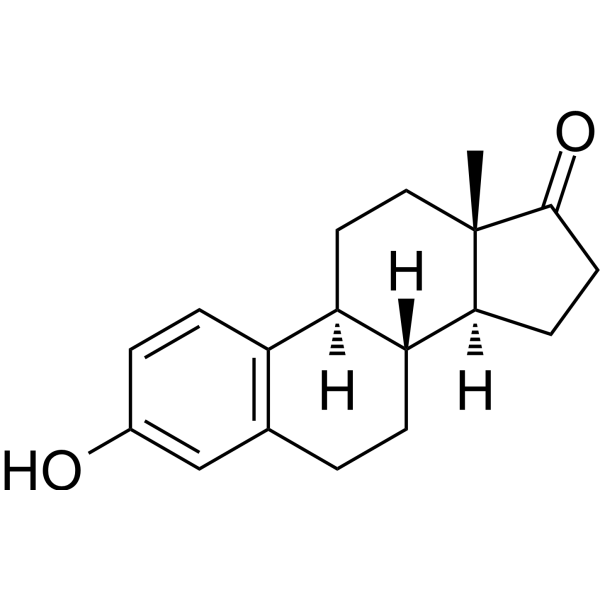
HY-B0234
EstroneEndogenous Metabolite -
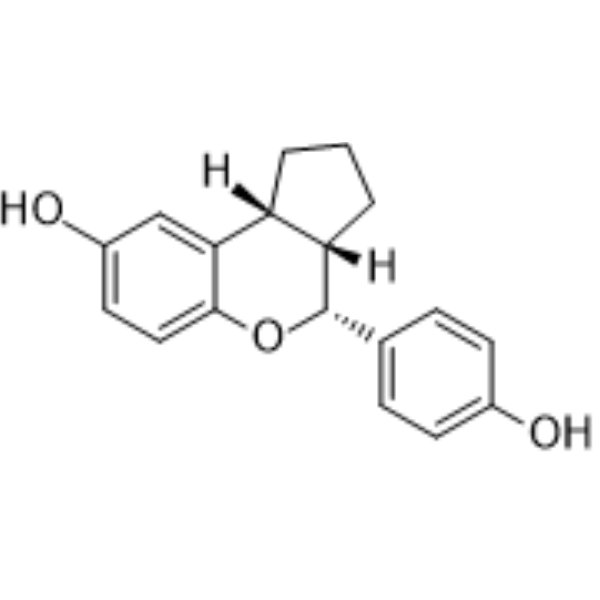
HY-18295
ErteberelEstrogen Receptor/ERR Agonist -
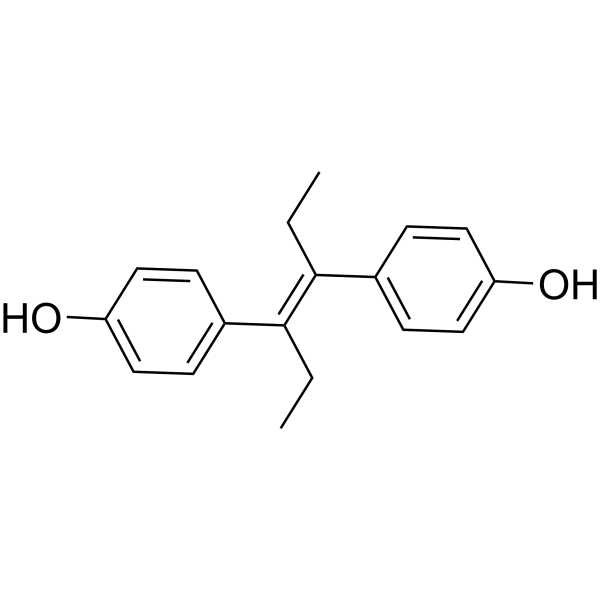
HY-14598
DiethylstilbestrolEstrogen Receptor/ERR Agonist
Voir tous les produits spécifiques à Isoform Endogenous Metabolite
More

Activité biologique
Description
Cellular Effect
|
Cell Line

|
Type | Value | Description | References |
|---|---|---|---|---|
| HEK293 | IC50 |
0.05 μM
|
Inhibition of human OATP1B1-mediated rosuvastatin transport in stably transfected human embryonic kidney 293 cells assessed via substrate accumulation measured by LC-MS/MS after 2-minute incubation.
Inhibition of human OATP1B1-mediated rosuvastatin transport in stably transfected human embryonic kidney 293 cells assessed via substrate accumulation measured by LC-MS/MS after 2-minute incubation.
|
31039308 |
| HEK293 | IC50 |
11.1 μM
|
Inhibition of human OATP1B3-mediated rosuvastatin transport in stably transfected human embryonic kidney 293 cells assessed via substrate accumulation measured by LC-MS/MS after 2-minute incubation.
Inhibition of human OATP1B3-mediated rosuvastatin transport in stably transfected human embryonic kidney 293 cells assessed via substrate accumulation measured by LC-MS/MS after 2-minute incubation.
|
31039308 |
| HEK293 | IC50 |
8.6 μM
|
Inhibition of human OATP2B1-mediated rosuvastatin transport in stably transfected human embryonic kidney 293 cells assessed via substrate accumulation measured by LC-MS/MS after 2-minute incubation.
Inhibition of human OATP2B1-mediated rosuvastatin transport in stably transfected human embryonic kidney 293 cells assessed via substrate accumulation measured by LC-MS/MS after 2-minute incubation.
|
31039308 |
| HEK293 | IC50 |
14.8 μM
|
Inhibition of human NTCP-mediated rosuvastatin transport in stably transfected human embryonic kidney 293 cells assessed via substrate accumulation measured by LC-MS/MS after 2-minute incubation.
Inhibition of human NTCP-mediated rosuvastatin transport in stably transfected human embryonic kidney 293 cells assessed via substrate accumulation measured by LC-MS/MS after 2-minute incubation.
|
31039308 |
| HEK293 | IC50 |
53.8 μM
|
Inhibition of human OAT2-mediated [3H]penciclovir transport in stably transfected human embryonic kidney 293 cells assessed via substrate accumulation measured by liquid scintillation counting after 2-minute incubation.
Inhibition of human OAT2-mediated [3H]penciclovir transport in stably transfected human embryonic kidney 293 cells assessed via substrate accumulation measured by liquid scintillation counting after 2-minute incubation.
|
31039308 |
| HEK293 | IC50 |
64.0 μM
|
Inhibition of human OCT1-mediated [14C]metformin transport in stably transfected human embryonic kidney 293 cells assessed via substrate accumulation measured by liquid scintillation counting after 2-minute incubation.
Inhibition of human OCT1-mediated [14C]metformin transport in stably transfected human embryonic kidney 293 cells assessed via substrate accumulation measured by liquid scintillation counting after 2-minute incubation.
|
31039308 |
| HEK293 | IC50 |
20.5 μM
|
Inhibition of cynomolgus monkey NTCP-mediated rosuvastatin transport in stably transfected human embryonic kidney 293 cells assessed via substrate accumulation measured by LC-MS/MS after 2-minute incubation.
Inhibition of cynomolgus monkey NTCP-mediated rosuvastatin transport in stably transfected human embryonic kidney 293 cells assessed via substrate accumulation measured by LC-MS/MS after 2-minute incubation.
|
31039308 |
In Vitro
Estropipate (1-100 μM; 0.25-5 minutes) selectively inhibits OATP1B1-mediated uptake of statins into human and cynomolgus monkey hepatocytes at a concentration of 1 μM, an effect that accounts for 44%-64% of the total hepatic uptake clearance of Rosuvastatin, Pitavastatin (HY-B0144A), and dehydrated Pravastatin; in contrast, Estropipate at 100 μM inhibits uptake mediated by all of OATP1B1, OATP1B3, OATP2B1, and NTCP[2].
MedChemExpress (MCE) has not independently confirmed the accuracy of these methods. They are for reference only.
In Vivo
Estropipate (EPP) (0.3-6 mg/kg; p.o.; single administration; 1 hour prior to Rosuvastatin administration) dose-dependently increases the systemic exposure of Rosuvastatin in cynomolgus monkeys, and its mechanism of action is the selective inhibition of OATP1B1-mediated hepatic uptake[2].
MedChemExpress (MCE) has not independently confirmed the accuracy of these methods. They are for reference only.
-
Animal Model:Tübingen long-fin/Tüpfel long-fin (TLTLF); Tübingen/AB; scn1labΔ44/Δ44 (mutant line; larvae, 5-7 days post fertilization)[1]
-
Dosage:10 μM
-
Administration:water exposure; continuous; 5 to 7 days post fertilization
-
Result:Rescued 12 out of 18 behavioral parameters that were significantly different in scn1lab mutants compared to control fish at baseline.
Significantly suppressed increased daytime rest bouts in scn1lab mutants, restoring this parameter toward control levels.
Did not exhibit significant rescue of dyrk1a mutant behavioral phenotypes relative to control treatments.
-
Animal Model:Cynomolgus monkeys (male, 6.2-7.1 kg body weight)[2]
-
Dosage:0.3 mg/kg; 6 mg/kg
-
Administration:p.o.; single dose; 1 hour prior to rosuvastatin
-
Result:Increased Rosuvastatin maximum plasma concentration (Cmax) by 1.32-fold and area under the plasma concentration-time curve from time 0 to infinity (AUC0-inf) by 1.28-fold compared to rosuvastatin alone at 0.3 mg/kg.
Increased Rosuvastatin Cmax by 3.43-fold and AUC0-inf by 2.71-fold compared to rosuvastatin alone at 6 mg/kg.


Chemical Information
-
CAS No. 7280-37-7
-
Appearance Solid
-
Masse moléculaire 436.56
-
Formule C22H32N2O5S
-
Color White to off-white
-
SMILES
C[C@]1([C@](CC2)([H])[C@]3([H])CCC4=C(C=CC(OS(=O)(O)=O)=C4)[C@@]3([H])CC1)C2=O.N5CCNCC5
-
Synonyms
Piperazine estrone sulfate; Estrone sulfate piperazine salt
-
Structure Classification
-
Initial Source
-
Livraison
Room temperature in continental US; may vary elsewhere.
-
Stockage
4°C, sealed storage, away from moisture
* In solvent : -80°C, 6 months; -20°C, 1 month (sealed storage, away from moisture)


Solvant et solubilité
In Vitro:
DMSO : 110 mg/mL (251.97 mM; Need ultrasonic; Hygroscopic DMSO has a significant impact on the solubility of product, please use newly opened DMSO)
Please refer to the solubility information to select the appropriate solvent. Once prepared, please aliquot and store the solution to prevent product inactivation from repeated freeze-thaw cycles.
Storage method and period of stock solution: -80°C, 6 months; -20°C, 1 month (sealed storage, away from moisture). When stored at -80°C, please use it within 6 months. When stored at -20°C, please use it within 1 month.
Please refer to the solubility information to select the appropriate solvent. Once prepared, please aliquot and store the solution to prevent product inactivation from repeated freeze-thaw cycles.
Storage method and period of stock solution: -80°C, 6 months; -20°C, 1 month (sealed storage, away from moisture). When stored at -80°C, please use it within 6 months. When stored at -20°C, please use it within 1 month.
Concentration (start) × Volume (start) = Concentration (final) × Volume (final)
In Vivo:
Select the appropriate dissolution method based on your experimental animal and administration route.
- For the following dissolution methods, please ensure to first prepare a clear stock solution using an In Vitro approach and then sequentially add co-solvents:
- To ensure reliable experimental results, the clarified stock solution can be appropriately stored based on storage conditions. As for the working solution for In Vivo experiments, it is recommended to prepare freshly and use it on the same day.
- The percentages shown for the solvents indicate their volumetric ratio in the final prepared solution. If precipitation or phase separation occurs during preparation, heat and/or sonication can be used to aid dissolution.
Add each solvent one by one: 10% DMSO 40% PEG300 5% Tween-80 45% Saline
Solubility: ≥ 2.75 mg/mL (6.30 mM); Clear solution
This protocol yields a clear solution of ≥ 2.75 mg/mL (saturation unknown).
Taking 1 mL working solution as an example, add 100 μL DMSO stock solution (27.5 mg/mL) to 400 μL PEG300, and mix evenly; then add 50 μL Tween-80 and mix evenly; then add 450 μL Saline to adjust the volume to 1 mL.
Preparation of Saline: Dissolve 0.9 g sodium chloride in ddH₂O and dilute to 100 mL to obtain a clear Saline solution.
Add each solvent one by one: 10% DMSO 90% (20% SBE-β-CD in Saline)
Solubility: ≥ 2.75 mg/mL (6.30 mM); Clear solution
This protocol yields a clear solution of ≥ 2.75 mg/mL (saturation unknown).
Taking 1 mL working solution as an example, add 100 μL DMSO stock solution (27.5 mg/mL) to 900 μL 20% SBE-β-CD in Saline, and mix evenly.
Preparation of 20% SBE-β-CD in Saline (4°C, storage for one week): 2 g SBE-β-CD powder is dissolved in 10 mL Saline, completely dissolve until clear.
In Vivo Dissolution Calculator
Please enter the basic information of animal experiments:
-
-
-
-
Recommended: Prepare an additional quantity of animals to account for potential losses during experiments.
Please enter your animal formula composition:
-
%DMSO +
Recommended: Keep the proportion of DMSO in working solution below 2% if your animal is weak.
-
%+
-
+%Tween-80 + +
-
%Saline +
The co-solvents required include: DMSO, . All of co-solvents are available by MedChemExpress (MCE). , Tween 80. All of co-solvents are available by MedChemExpress (MCE).
Working solution concentration: 0.22 mg/mL
Method for preparing stock solution: mg drug dissolved in μL DMSO. Stock solution concentration: mg/mL. * In solvent : -80°C, 6 months; -20°C, 1 month (sealed storage, away from moisture)
1. Take μL DMSO stock solution;
2. Add μL .
μL , mix evenly;
3. Then add μL Tween 80, mix evenly;
4. Then add μL
Please ensure that the stock solution in the first step is dissolved to a clear state, and add co-solvents in sequence. You can use ultrasonic heating (ultrasonic cleaner, recommended frequency 20-40 kHz), vortexing, etc. to assist dissolution.


Pureté et documentation
-
Fiche technique (306 KB)
-
SDS (557 KB)
- English - EN (557 KB)
- Français - FR (557 KB)
- Deutsch - DE (557 KB)
- Norwegian - NO (557 KB)
- Español - ES (557 KB)
- Swedish - SV (557 KB)
- Italian - IT (557 KB)
- Korean - KR (557 KB)
- Portuguese - PT (557 KB)
-
Instruction de manipulation (2659 KB)
Références


Complete Stock Solution Preparation Table
Please refer to the solubility information to select the appropriate solvent. Once prepared, please aliquot and store the solution to prevent product inactivation from repeated freeze-thaw cycles.
Storage method and period of stock solution: -80°C, 6 months; -20°C, 1 month (sealed storage, away from moisture). When stored at -80°C, please use it within 6 months. When stored at -20°C, please use it within 1 month.
| Optional Solvent | Concentration Solvent Mass | 1 mg | 5 mg | 10 mg | 25 mg |
|---|---|---|---|---|---|
| DMSO | 1 mM | 2.2906 mL | 11.4532 mL | 22.9064 mL | 57.2659 mL |
| 5 mM | 0.4581 mL | 2.2906 mL | 4.5813 mL | 11.4532 mL | |
| 10 mM | 0.2291 mL | 1.1453 mL | 2.2906 mL | 5.7266 mL | |
| 15 mM | 0.1527 mL | 0.7635 mL | 1.5271 mL | 3.8177 mL | |
| 20 mM | 0.1145 mL | 0.5727 mL | 1.1453 mL | 2.8633 mL | |
| 25 mM | 0.0916 mL | 0.4581 mL | 0.9163 mL | 2.2906 mL | |
| 30 mM | 0.0764 mL | 0.3818 mL | 0.7635 mL | 1.9089 mL | |
| 40 mM | 0.0573 mL | 0.2863 mL | 0.5727 mL | 1.4316 mL | |
| 50 mM | 0.0458 mL | 0.2291 mL | 0.4581 mL | 1.1453 mL | |
| 60 mM | 0.0382 mL | 0.1909 mL | 0.3818 mL | 0.9544 mL | |
| 80 mM | 0.0286 mL | 0.1432 mL | 0.2863 mL | 0.7158 mL | |
| 100 mM | 0.0229 mL | 0.1145 mL | 0.2291 mL | 0.5727 mL |


Estropipate Related Classifications
HY-B1361 Related Classifications
 Powered by Bioz
Keywords