



ACAT2
ACAT2 (sterol O-acyltransferase 2, SOAT2) is an endoplasmic reticulum membrane enzyme that catalyzes the esterification of cholesterol with long-chain fatty acyl-CoA, generating cholesteryl esters that support intracellular cholesterol storage and lipoprotein assembly[1][2]. Mechanistically, ACAT2 maintains cholesterol homeostasis by channeling free cholesterol into cholesteryl ester pools that are subsequently incorporated into chylomicrons and apoB-containing lipoproteins in intestinal and hepatic tissues[2][3]. Therefore, ACAT2 is closely linked to dietary cholesterol absorption, hepatic cholesterol esterification, and the production of atherogenic lipoproteins in metabolic disease models[2][4]. In disease settings, genetic or tissue-specific suppression of ACAT2 reduces hepatic cholesteryl ester accumulation, hypercholesterolemia, and atherosclerotic burden, supporting its relevance in cardiovascular and lipid metabolism research[4]. Compared with the related isoform ACAT1 (SOAT1), which is broadly expressed across tissues, ACAT2 shows predominant expression in hepatocytes and intestinal cells and exhibits a more specialized role in lipoprotein-associated cholesterol ester metabolism[1][3]. For experimental applications, several ACAT2-selective inhibitors, including pyripyropene A derivatives, have been used to decrease cholesterol esterification and attenuate atherosclerotic phenotypes in mouse models, providing pharmacological tools for investigating cholesterol transport pathways and therapeutic target validation[5].
Références:
- [1]. Long T, et al. Structural enzymology of cholesterol biosynthesis and storage. Curr Opin Struct Biol. 2022 Jun;74:102369. [Content Brief]
- [2]. Nguyen TM, et al. Cholesterol esterification by ACAT2 is essential for efficient intestinal cholesterol absorption: evidence from thoracic lymph duct cannulation. J Lipid Res. 2012 Jan;53(1):95-104. [Content Brief]
- [3]. Parini P, et al. ACAT2 and human hepatic cholesterol metabolism: identification of important gender-related differences in normolipidemic, non-obese Chinese patients. Atherosclerosis. 2009 Nov;207(1):266-71. [Content Brief]
- [4]. Rudel LL, et al. ACAT2 is a target for treatment of coronary heart disease associated with hypercholesterolemia. Arterioscler Thromb Vasc Biol. 2005 Jun;25(6):1112-8. [Content Brief]
- [5]. Ohshiro T. Isoform-specific inhibitors of ACATs: recent advances and promising developments. Future Med Chem. 2011 Dec;3(16):2039-61.
All Product Categories
-
ACAT2 Produits associés (8)
Produits associés (8)

-
Avasimibe
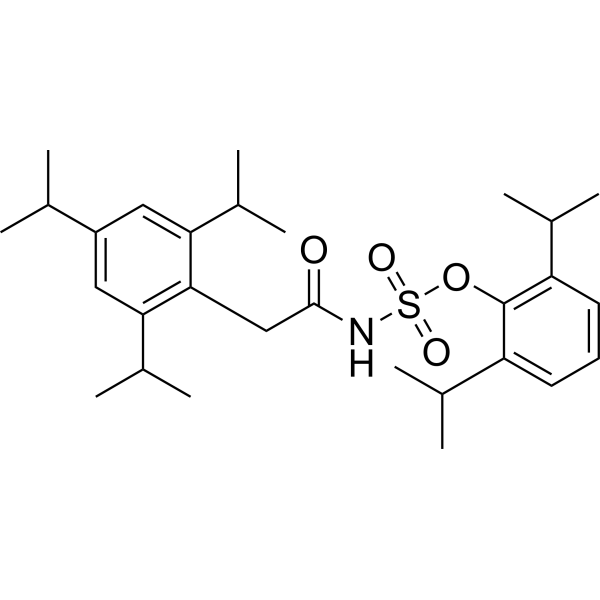 0 ImagesSynonyms: CI-1011; PD-148515Avasimibe (CI-1011; PD-148515) is an orally active acyl coenzyme A-cholesterol acyltransferase (ACAT; also called SOAT)) inhibitor with IC50s of 24 and 9.2 µM for ACAT1 and ACAT2, respectively. Avasimibe can be used for the research of prostate cancer.
-
K-604 dihydrochloride
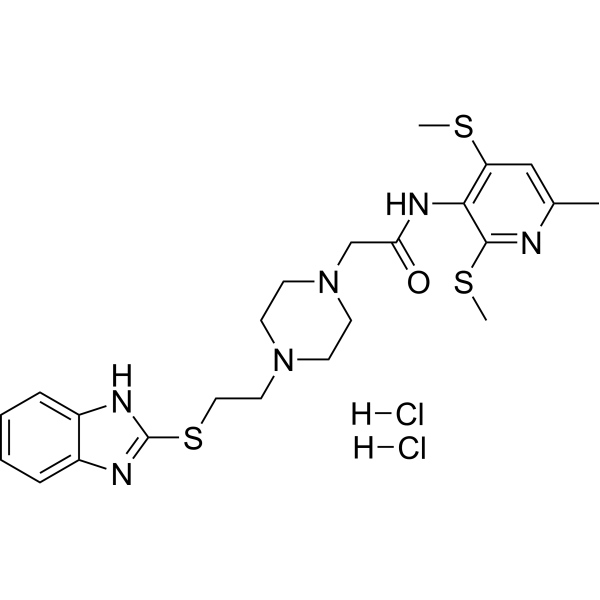 0 ImagesK-604 dihydrochloride is a potent and selective acyl-CoA:cholesterol acyltransferase 1 (ACAT-1) inhibitor with an IC50 of 0.45±0.06 μM.
-
Nevanimibe hydrochloride
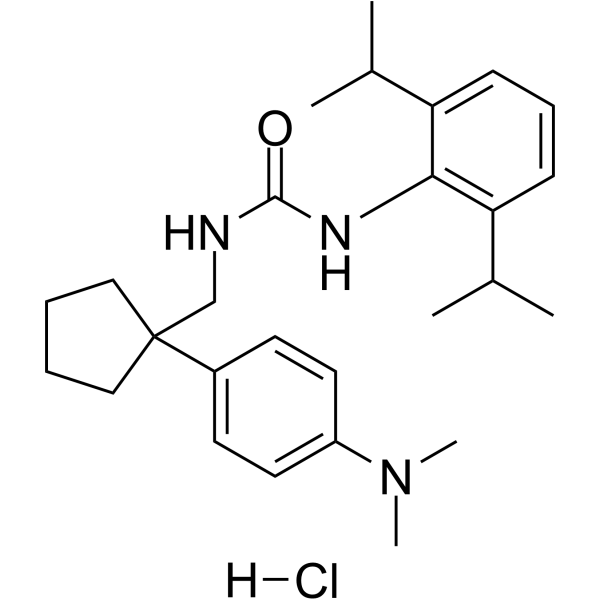 0 ImagesSynonyms: PD-132301 hydrochloride; ATR101 hydrochlorideNevanimibe hydrochloride (PD-132301 hydrochloride) is an orally active and selective acyl-coenzyme A:cholesterol O-acyltransferase 1 (ACAT1) inhibitor with an EC50 of 9 nM. Nevanimibe hydrochloride inhibits ACAT2 with an EC50 of 368 nM. Nevanimibe hydrochloride induces cell apoptosis and has the potential for adrenocortical cancer.
-
Pactimibe
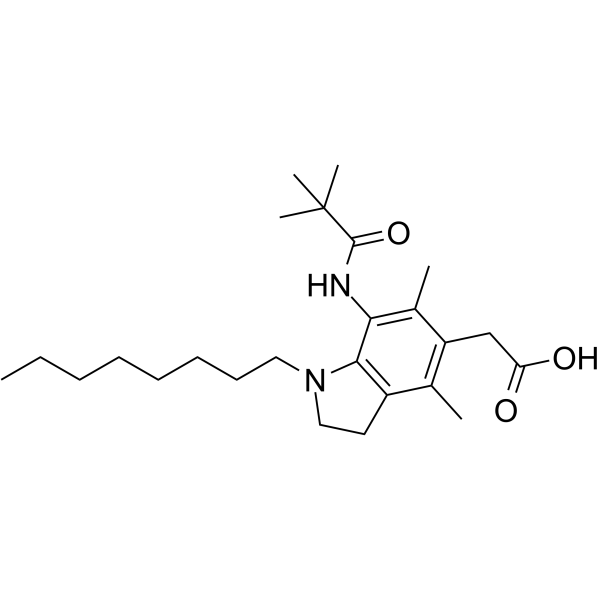 0 ImagesSynonyms: CS-505 free basePactimibe (CS-505 free base) is a dual ACAT1/2 inhibitor with IC50s of 4.9 μM and 3.0 μM, respectively. Pactimibe (CS-505 free base) inhibits ACAT with IC50s of 2.0 μM, 2.7 μM, 4.7 μM in the liver, macrophages and THP-1 cells, respectively. Pactimibe (CS-505 free base) noncompetitively inhibits oleoyl-CoA with a Ki value of 5.6 μM. Moreover, Pactimibe (CS-505 free base) obviously inhibits cholesteryl ester formation with an IC50 of 6.7 μM. Pactimibe (CS-505 free base) possesses anti-atherosclerotic potential with lowering plasma cholesterol activity.
-
Nevanimibe
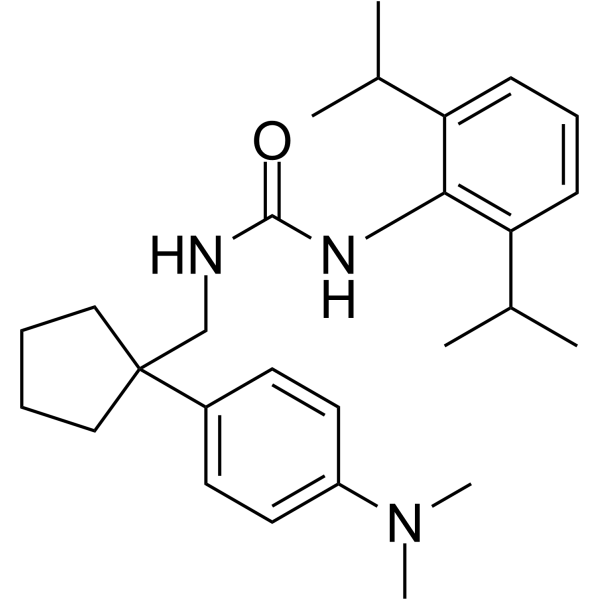 0 ImagesSynonyms: PD-132301; ATR-101
-
Pactimibe sulfate
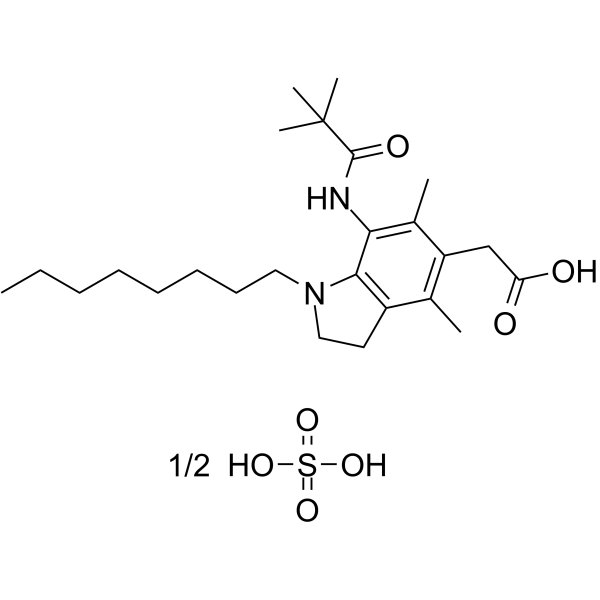 0 ImagesSynonyms: CS-505Pactimibe sulfate (CS-505) is a dual ACAT1/2 inhibitor with IC50s of 4.9 μM and 3.0 μM, respectively. Pactimibe sulfate (CS-505) inhibits ACAT with IC50s of 2.0 μM, 2.7 μM, 4.7 μM in the liver, macrophages and THP-1 cells, respectively. Pactimibe sulfate (CS-505) noncompetitively inhibits oleoyl-CoA with a Ki value of 5.6 μM. Moreover, Pactimibe sulfate (CS-505) obviously inhibits cholesteryl ester formation with an IC50 of 6.7 μM. Pactimibe sulfate (CS-505) possesses anti-atherosclerotic potential with lowering plasma cholesterol activity.
-
Esculeogenin A
 0 ImagesCat. No.: HY-N18066CAS No.: 854381-37-6Esculeogenin A is the sapogenol of tomato saponin Esculeoside A (HY-N18067). Esculeogenin A is an orally active hepatoprotective, hypolipidemic, and antioxidant agent. Esculeogenin A regulates molecular targets like PPARα, SREBP1, Nrf2, NF-κB, ACAT1/ACAT2 to promote hepatic fatty acid oxidation, suppress de novo lipogenesis, enhance antioxidant defense, and inhibit inflammation. Esculeogenin A improves liver function, alleviates hyperlipidemia, and inhibits hepatic steatosis and foam cell formation, preventing nonalcoholic fatty liver disease in high-fat-diet-fed rats and reducing atherosclerotic lesions in apoE-deficient mice. Esculeogenin A can be used for the research of nonalcoholic fatty liver disease, atherosclerosis, and hyperlipidemia.
-
Avasimibe sodium
 0 ImagesCat. No.: HY-13215ACAS No.: 166518-61-2Synonyms: CI-1011 sodium; PD-148515 sodiumAvasimibe sodium (CI-1011 sodium; PD-148515 sodium) is an orally active acyl coenzyme A-cholesterol acyltransferase (ACAT; also called SOAT)) inhibitor with IC50s of 24 and 9.2 µM for ACAT1 and ACAT2, respectively. Avasimibe sodium can be used for the research of prostate cancer.



