



AC1903
Based on 1 publication(s) in Google Scholar
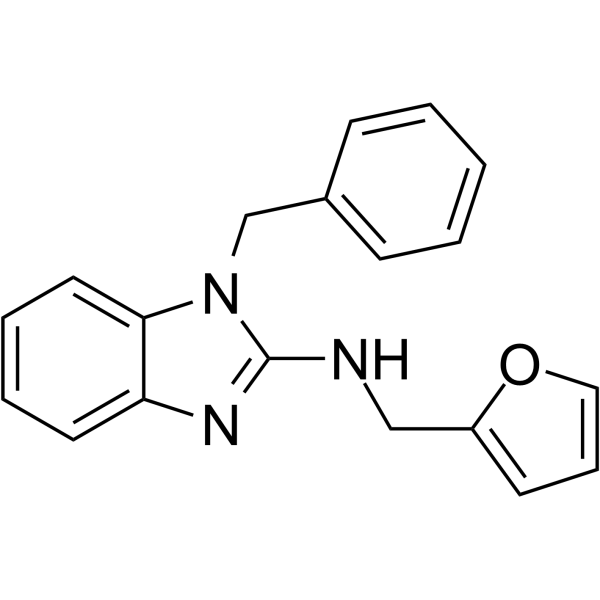
AC1903 is a specific and selective inhibitor of TRPC5 and has podocyte-protective properties. AC1903 does no effects on TRPC4 or TRPC6 currents and shows no off-target effects in kinase profiling assays. AC1903 suppresses severe proteinuria and prevents podocyte loss in focal segmental glomerulosclerosis (FSGS) rat model.
Nos produits utilisent uniquement pour la recherche. Nous ne vendons pas aux patients.
- Pureté : 99.69%
- CAS No.: 831234-13-0
- Formule: C19H17N3O
- Masse moléculaire:303.36
-
Stockage:Powder -20°C, 3 years , 4°C, 2 years ; In solvent -80°C, 2 years , -20°C, 1 year

To place orders, for customer services and technical support, please contact: MedChemExpress USA
Tel: 609-228-6898 E-mail: [email protected] [email protected]


-
 Activité biologique
-
Chemical Information
-
Solvant et solubilité
- Protocole
- Pureté et documentation
- Références
-
 Help & FAQs


-
HY-12949
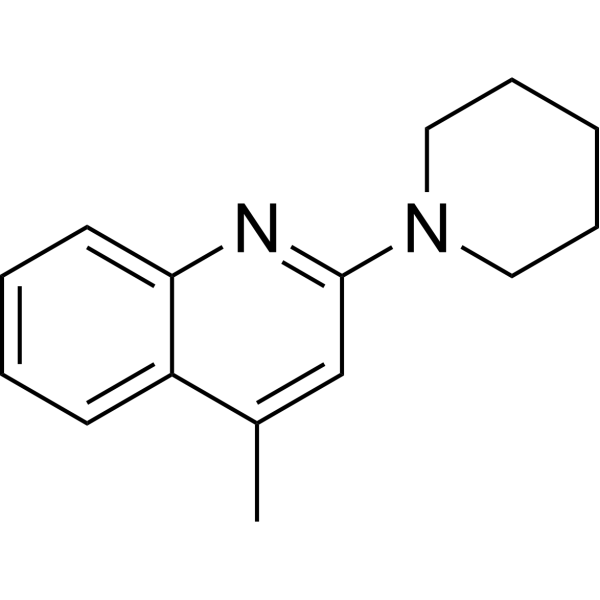
ML204TRPC4/TRPC5 Channel Inhibitor -
HY-19975
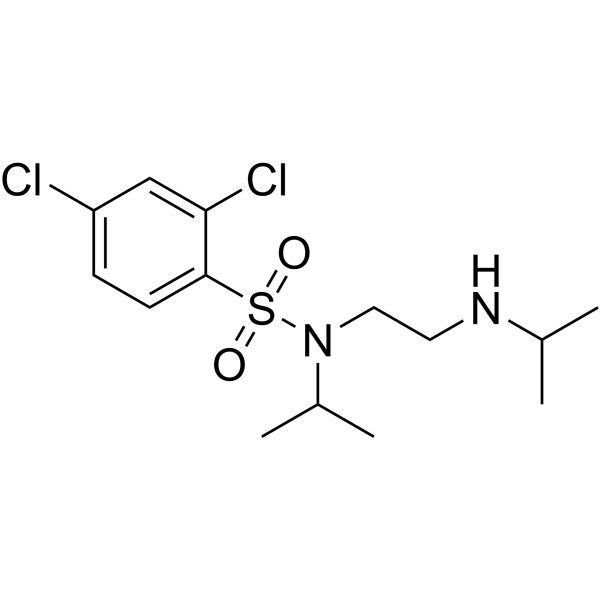
RN-1734TRP Channel Antagonist -
HY-15699
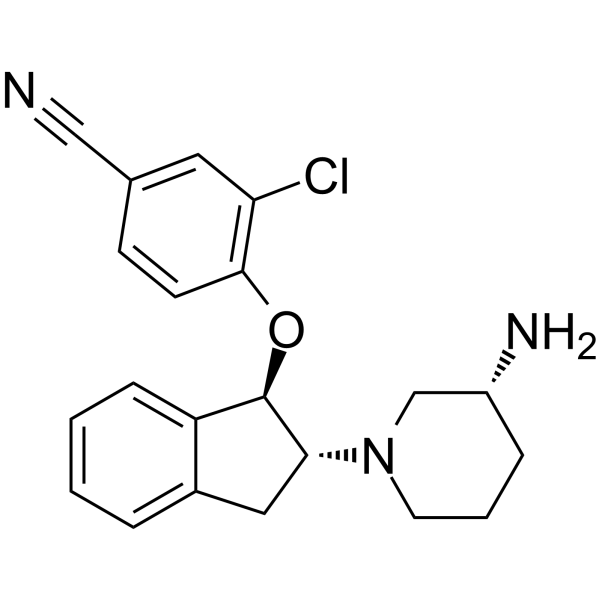
SAR7334TRPC6 Inhibitor -
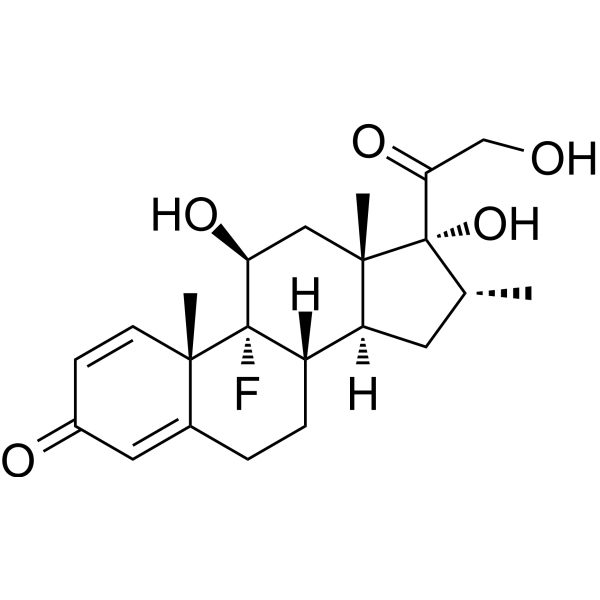
HY-14648
DexamethasoneGR Agonist -
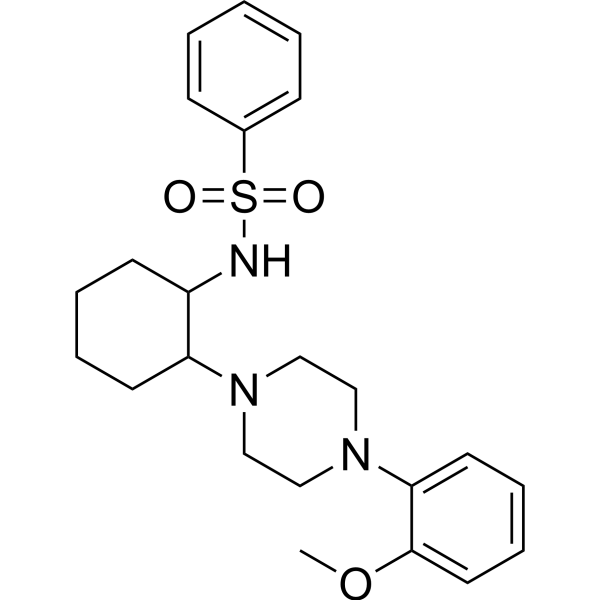
HY-139426
ML-SI3TRPML Modulator -
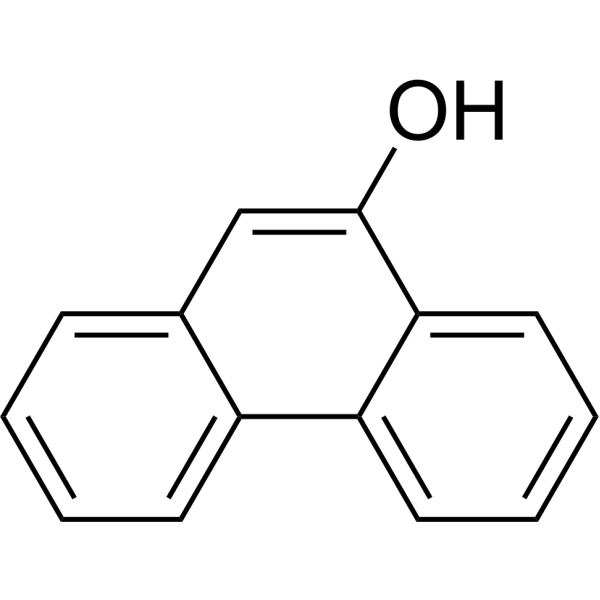
HY-108457
9-PhenanthrolTRPM4 Inhibitor -
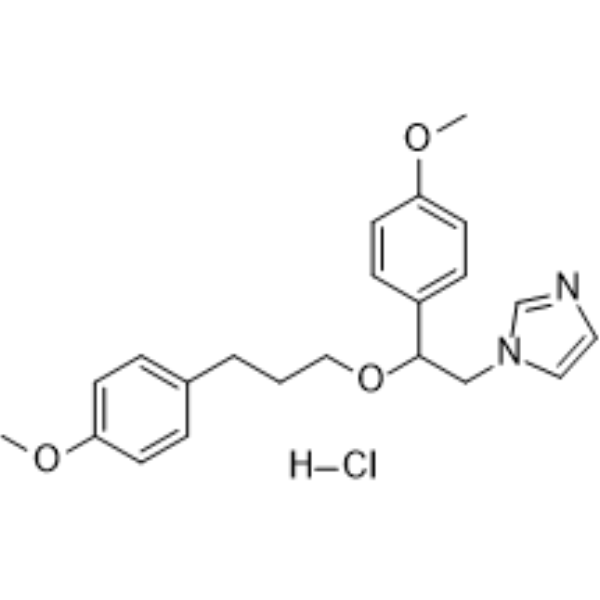
HY-100001
SKF-96365 (hydrochloride)TRPC Channel Antagonist, SOCE Inhibitor -
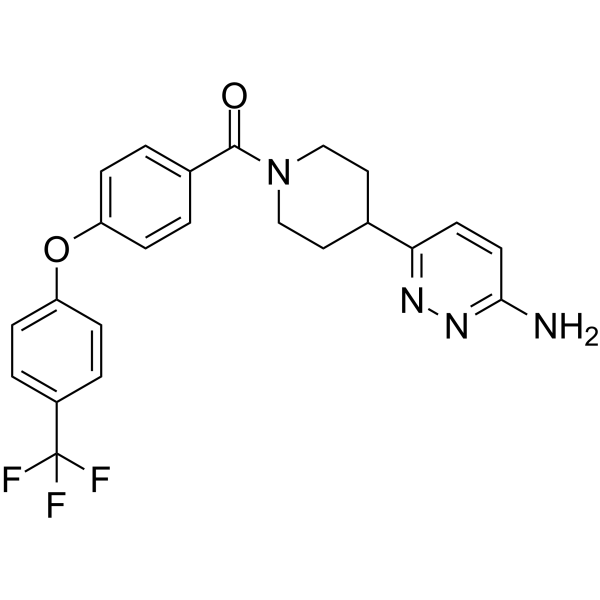
HY-111925
BI-749327TRPC6 Antagonist -
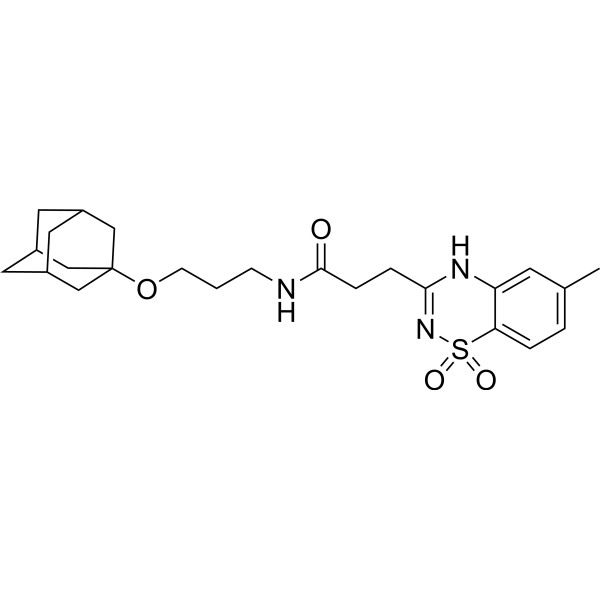
HY-128205
BTDTRPC5 Activator -
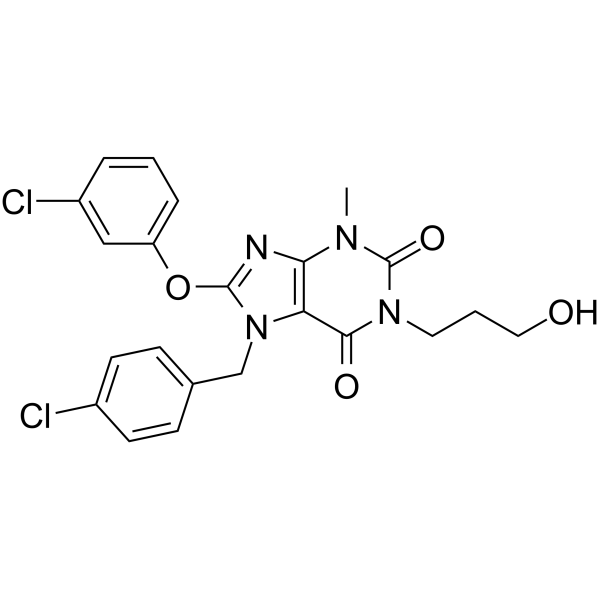
HY-112302
HC-070TRPC4/TRPC5 Antagonist -
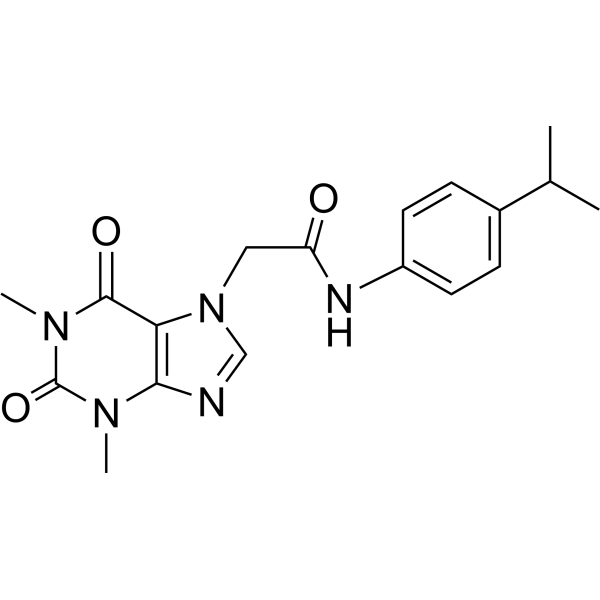
HY-15064
HC-030031TRP Channel Inhibitor -
HY-12504
Pyr6SOCE Inhibitor
Publications Citing Use of MedChemExpress (MCE) AC1903
More

Activité biologique
Description
IC50 & Target
IC50: 14.7 μM (TRPC5 current IN HEK-293 cells)[1]
In Vitro
TRPC5 is a Ca2+ permeable nonselective cation channel highly expressed in brain and kidney.AC1903 (0-100 μM) blocks riluzole-activated TRPC5 whole-cell current, but fails to block carbachol (CCh)-induced TRPC4 and OAG-induced TRPC6 currents, even at high micromolar concentrations in Patch-clamp electrophysiology experiments. The ICIC50 values of ML204 (HY-12949) (IC50=13.6 μM) and AC1903 (IC50=14.7 μM) are nearly equipotent in human embryonic kidney 293 (HEK-293) cells expressing TRPC5[1]. AC1903 (30 μM) inhibits angiotensin II-induced production of reactive oxygen species (ROS) in wild-type podocytes and podocytes expressing a mutant angiotensin II type 1 (AT1) receptor that cannot be inactivated and endocytosed[1].AC1903 (30 μM) blocks caAT1R-induced ROS generation. Increased podocyte cell death within 36 hours of caAT1R expression is observed, but AC1903 protects podocyte cells from cell death[1].
MedChemExpress (MCE) has not independently confirmed the accuracy of these methods. They are for reference only.
-
Cell Line:Podocyte cells
-
Concentration:30 µM
-
Incubation Time:36 hours
-
Result:Rescued podocyte cell death.
In Vivo
MedChemExpress (MCE) has not independently confirmed the accuracy of these methods. They are for reference only.
-
Animal Model:Hypertension-induced focal segmental glomerulosclerosis (FSGS) model in Dahl salt-sensitive rats[1]
-
Dosage:50 mg/kg
-
Administration:Intraperitoneal injection; 50 mg/kg; twice per day; 7 days
-
Result:Inhibited the progression of proteinuric kidney disease by preserving podocytes.
-
Animal Model:6-week-old Dahl S rats received 2% NaCl for 1 week with severe, progressive proteinuric disease[1]
-
Dosage:50 mg/kg
-
Administration:Intraperitoneal injection; 50 mg/kg; twice per day; initiated on day 7 and treated for 1 week until day 14
-
Result:Decreased the rate of proteinuria when administered at the beginning of a high-salt diet and prevents progression when administered one week following initiation of a high-salt diet.


Chemical Information
-
CAS No. 831234-13-0
-
Appearance Solid
-
Masse moléculaire 303.36
-
Formule C19H17N3O
-
Color Off-white to light yellow
-
SMILES
C1(NCC2=CC=CO2)=NC3=CC=CC=C3N1CC4=CC=CC=C4
-
Livraison
Room temperature in continental US; may vary elsewhere.
-
Stockage
Powder -20°C 3 years 4°C 2 years In solvent -80°C 2 years -20°C 1 year


Publications (1)
-
Journal Impact Factor
-
Most Recent
-
Int J Mol Sci
2023 Jul 20;24(14):11689. PMID: 37511448


Solvant et solubilité
In Vitro:
DMSO : 100 mg/mL (329.64 mM; Need ultrasonic; Hygroscopic DMSO has a significant impact on the solubility of product, please use newly opened DMSO)
Please refer to the solubility information to select the appropriate solvent. Once prepared, please aliquot and store the solution to prevent product inactivation from repeated freeze-thaw cycles.
Storage method and period of stock solution: -80°C, 2 years; -20°C, 1 year. When stored at -80°C, please use it within 2 years. When stored at -20°C, please use it within 1 year.
Please refer to the solubility information to select the appropriate solvent. Once prepared, please aliquot and store the solution to prevent product inactivation from repeated freeze-thaw cycles.
Storage method and period of stock solution: -80°C, 2 years; -20°C, 1 year. When stored at -80°C, please use it within 2 years. When stored at -20°C, please use it within 1 year.
Concentration (start) × Volume (start) = Concentration (final) × Volume (final)
In Vivo:
Select the appropriate dissolution method based on your experimental animal and administration route.
- For the following dissolution methods, please ensure to first prepare a clear stock solution using an In Vitro approach and then sequentially add co-solvents:
- To ensure reliable experimental results, the clarified stock solution can be appropriately stored based on storage conditions. As for the working solution for In Vivo experiments, it is recommended to prepare freshly and use it on the same day.
- The percentages shown for the solvents indicate their volumetric ratio in the final prepared solution. If precipitation or phase separation occurs during preparation, heat and/or sonication can be used to aid dissolution.
Add each solvent one by one: 10% DMSO 40% PEG300 5% Tween-80 45% Saline
Solubility: ≥ 2.5 mg/mL (8.24 mM); Clear solution
This protocol yields a clear solution of ≥ 2.5 mg/mL (saturation unknown).
Taking 1 mL working solution as an example, add 100 μL DMSO stock solution (25.0 mg/mL) to 400 μL PEG300, and mix evenly; then add 50 μL Tween-80 and mix evenly; then add 450 μL Saline to adjust the volume to 1 mL.
Preparation of Saline: Dissolve 0.9 g sodium chloride in ddH₂O and dilute to 100 mL to obtain a clear Saline solution.
In Vivo Dissolution Calculator
Please enter the basic information of animal experiments:
-
-
-
-
Recommended: Prepare an additional quantity of animals to account for potential losses during experiments.
Please enter your animal formula composition:
-
%DMSO +
Recommended: Keep the proportion of DMSO in working solution below 2% if your animal is weak.
-
%+
-
+%Tween-80 + +
-
%Saline +
The co-solvents required include: DMSO, . All of co-solvents are available by MedChemExpress (MCE). , Tween 80. All of co-solvents are available by MedChemExpress (MCE).
Working solution concentration: 0.22 mg/mL
Method for preparing stock solution: mg drug dissolved in μL DMSO. Stock solution concentration: mg/mL.
1. Take μL DMSO stock solution;
2. Add μL .
μL , mix evenly;
3. Then add μL Tween 80, mix evenly;
4. Then add μL
Please ensure that the stock solution in the first step is dissolved to a clear state, and add co-solvents in sequence. You can use ultrasonic heating (ultrasonic cleaner, recommended frequency 20-40 kHz), vortexing, etc. to assist dissolution.


Pureté et documentation
-
Fiche technique (281 KB)
-
SDS (396 KB)
- English - EN (396 KB)
- Français - FR (396 KB)
- Deutsch - DE (396 KB)
- Norwegian - NO (396 KB)
- Español - ES (396 KB)
- Swedish - SV (396 KB)
- Italian - IT (396 KB)
- Korean - KR (396 KB)
- Portuguese - PT (396 KB)
-
Instruction de manipulation (2659 KB)
Références


Complete Stock Solution Preparation Table
Please refer to the solubility information to select the appropriate solvent. Once prepared, please aliquot and store the solution to prevent product inactivation from repeated freeze-thaw cycles.
Storage method and period of stock solution: -80°C, 2 years; -20°C, 1 year. When stored at -80°C, please use it within 2 years. When stored at -20°C, please use it within 1 year.
| Optional Solvent | Concentration Solvent Mass | 1 mg | 5 mg | 10 mg | 25 mg |
|---|---|---|---|---|---|
| DMSO | 1 mM | 3.2964 mL | 16.4821 mL | 32.9641 mL | 82.4103 mL |
| 5 mM | 0.6593 mL | 3.2964 mL | 6.5928 mL | 16.4821 mL | |
| 10 mM | 0.3296 mL | 1.6482 mL | 3.2964 mL | 8.2410 mL | |
| 15 mM | 0.2198 mL | 1.0988 mL | 2.1976 mL | 5.4940 mL | |
| 20 mM | 0.1648 mL | 0.8241 mL | 1.6482 mL | 4.1205 mL | |
| 25 mM | 0.1319 mL | 0.6593 mL | 1.3186 mL | 3.2964 mL | |
| 30 mM | 0.1099 mL | 0.5494 mL | 1.0988 mL | 2.7470 mL | |
| 40 mM | 0.0824 mL | 0.4121 mL | 0.8241 mL | 2.0603 mL | |
| 50 mM | 0.0659 mL | 0.3296 mL | 0.6593 mL | 1.6482 mL | |
| 60 mM | 0.0549 mL | 0.2747 mL | 0.5494 mL | 1.3735 mL | |
| 80 mM | 0.0412 mL | 0.2060 mL | 0.4121 mL | 1.0301 mL | |
| 100 mM | 0.0330 mL | 0.1648 mL | 0.3296 mL | 0.8241 mL |


AC1903 Related Classifications
HY-122051 Related Classifications
 Powered by Bioz