



Flavonol
Based on 2 publication(s) in Google Scholar
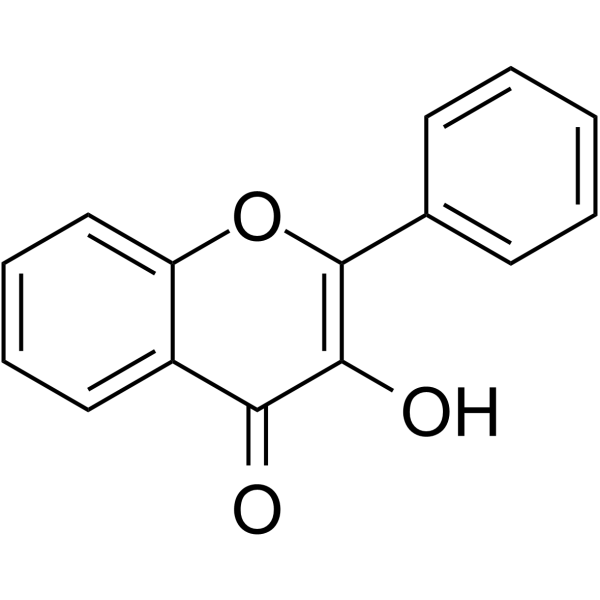
Flavonol is a cholinesterase (ChE) inhibitor, with an IC50 value of 120 μM and a Ki value of 74 μM. Flavonol has antioxidant, free radical-scavenging, antibacterial properties, and immune modulation functions. Flavonol inhibits the PriA helicase of Staphylococcus aureus. Flavonol can suppress the production of NO in LPS-activated RAW 264.7 cells by inhibiting the expression of the iNOS enzyme. Flavonol shows protective and analgesic effects in mice through various neuronal pathways. Flavonol can be used in research related to tumors and atherosclerosis diseases.
Nos produits utilisent uniquement pour la recherche. Nous ne vendons pas aux patients.
- Pureté : 99.86%
- CAS No.: 577-85-5
- Formule: C15H10O3
- Masse moléculaire:238.24
-
Stockage:
4°C, protect from light
* In solvent : -80°C, 6 months; -20°C, 1 month (protect from light)

To place orders, for customer services and technical support, please contact: MedChemExpress USA
Tel: 609-228-6898 E-mail: [email protected] [email protected]


-
 Activité biologique
-
Chemical Information
-
Solvant et solubilité
- Protocole
- Pureté et documentation
- Références
-
 Help & FAQs


-
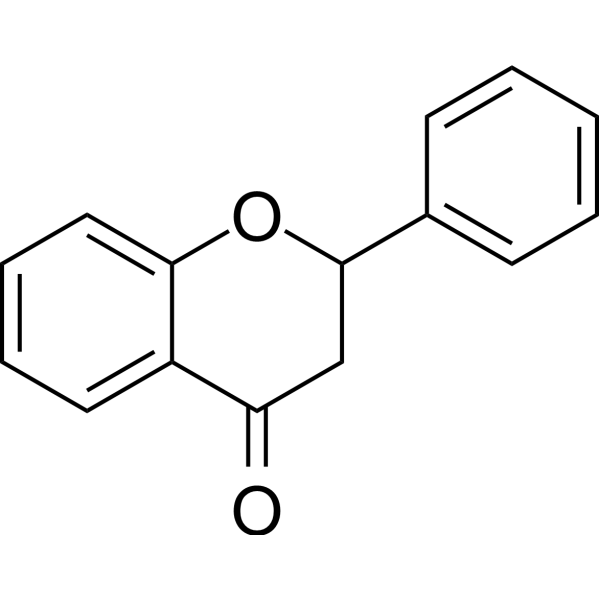
HY-N7128
FlavanoneFlavones -
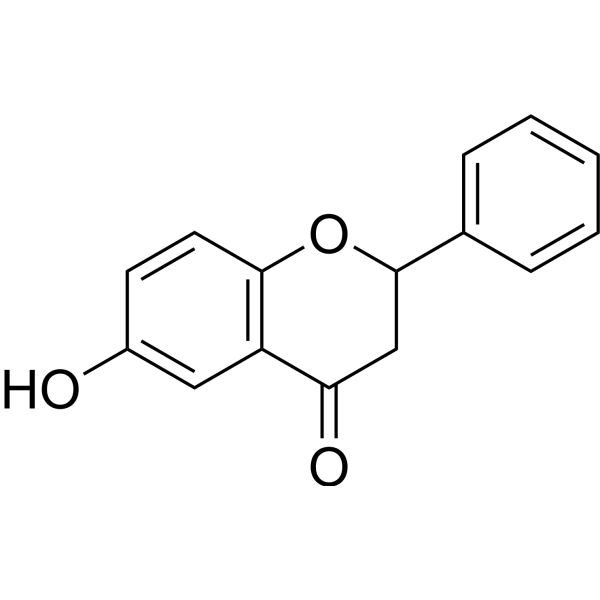
HY-W028263
6-HydroxyflavanoneNatural Product -

HY-107825R
Flavonol (Standard)ChE Inhibitor -
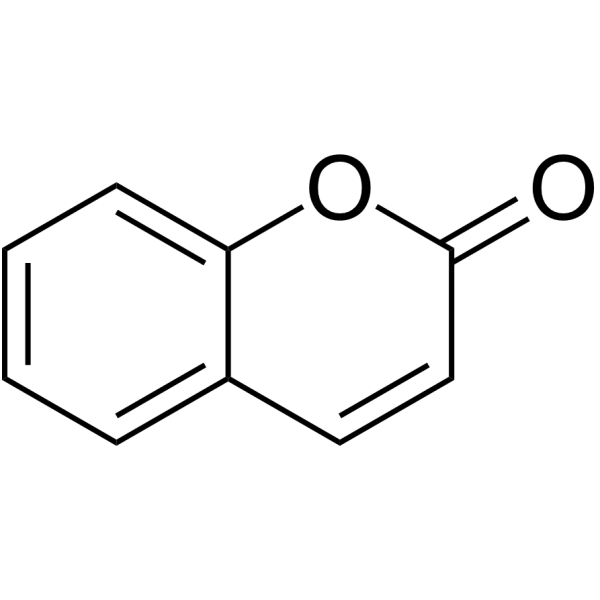
HY-N0709
CoumarinAnti-inflammatory Agent -
HY-12075
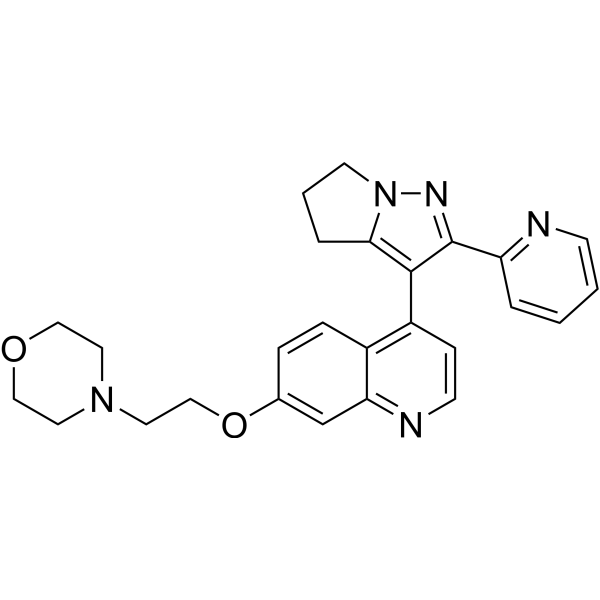
LY2109761TGF-βR I/II Inhibitor -
HY-N0285
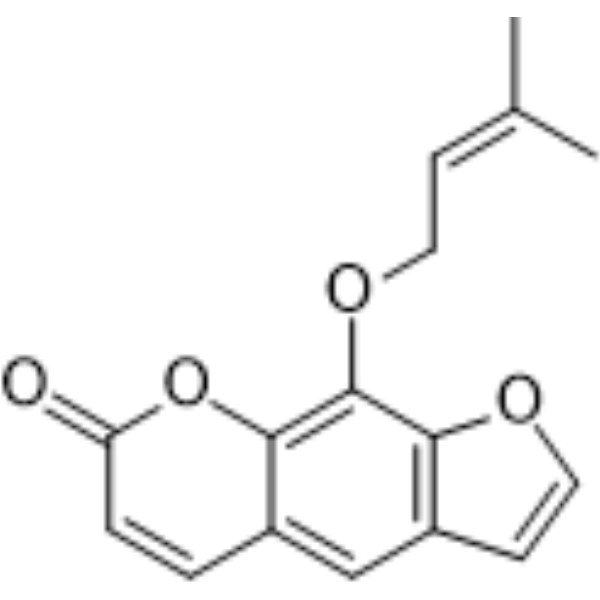
ImperatorinCholinesterase (ChE) Inhibitor -

HY-N0709R
Coumarin (Standard)Anti-inflammatory Agent -

HY-N0285R
Imperatorin (Standard)Cholinesterase (ChE) Inhibitor -
HY-N1881
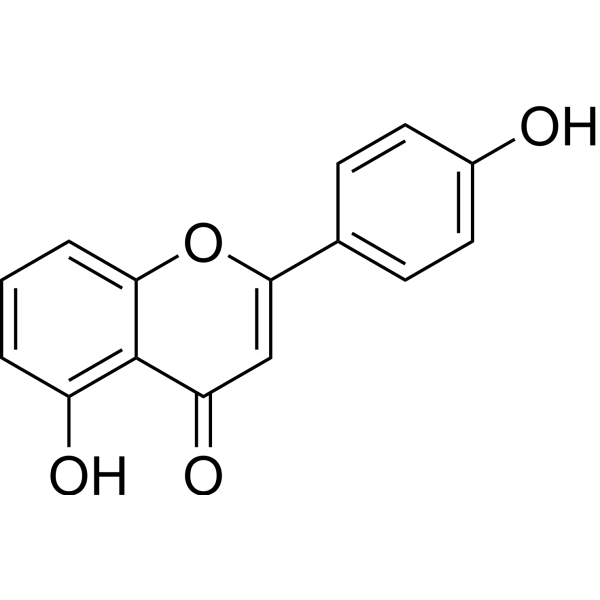
4',5-DihydroxyflavoneColA Inhibitor -
HY-D0036
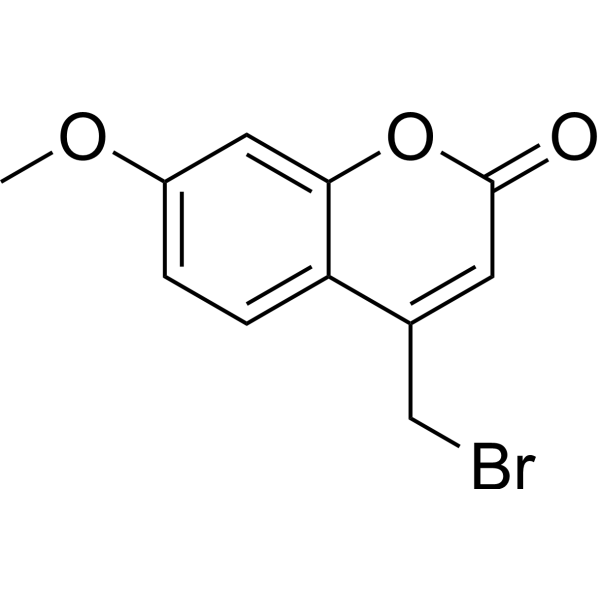
Br-MmcFluorescent Label -

HY-138545
4-Hydroxy-6-methylcoumarinNatural Product -

HY-12075R
LY2109761 (Standard)TGF-βR I/II Inhibitor
Publications Citing Use of MedChemExpress (MCE) Flavonol
MoreVoir tous les produits spécifiques à Isoform Endogenous Metabolite
More

Activité biologique
Description
IC50 & Target
IC50: 120 μM (ChE)[2].
Cellular Effect
|
Cell Line

|
Type | Value | Description | References |
|---|---|---|---|---|
| Caco-2 | IC50 |
42.1 μM
Compound: 25
|
Cytotoxicity in human Caco2 cells after 72 hrs by MTT assay
Cytotoxicity in human Caco2 cells after 72 hrs by MTT assay
|
[PMID: 28793973] |
| CWR22R | IC50 |
14.9 μM
Compound: Flavonol
|
Antiproliferative activity against human 22Rv1 cells incubated up to 144 hrs by Coulter particle count and size analyzer
Antiproliferative activity against human 22Rv1 cells incubated up to 144 hrs by Coulter particle count and size analyzer
|
[PMID: 22789812] |
| H9 | EC50 |
13 μM
Compound: 13
|
Antiviral activity against HIV1 3B infected in human H9 cells assessed as inhibition of viral replication after 3 days by p24 antigen capture assay
Antiviral activity against HIV1 3B infected in human H9 cells assessed as inhibition of viral replication after 3 days by p24 antigen capture assay
|
[PMID: 8158164] |
| H9 | IC50 |
17 μM
Compound: 13
|
Cytotoxicity against human H9 cells after 3 days
Cytotoxicity against human H9 cells after 3 days
|
[PMID: 8158164] |
| KB | ED50 |
0.2 μg/mL
Compound: NSC-57653
|
Cytotoxicity against human KB cells
Cytotoxicity against human KB cells
|
[PMID: 469554] |
In Vitro
Flavonol (10-100 μM, 20 h) can inhibit LPS activated RAW 264.7 cells from producing NO by suppressing iNOS enzyme expression, thereby contributing to its anti-inflammatory and immunomodulatory activities[3].
MedChemExpress (MCE) has not independently confirmed the accuracy of these methods. They are for reference only.
-
Cell Line:RAW 264.7 cell
-
Concentration:10-100 μM
-
Incubation Time:20 h
-
Result:Inhibited the protein expression level of iNOS enzyme.
In Vivo
MedChemExpress (MCE) has not independently confirmed the accuracy of these methods. They are for reference only.
-
Animal Model:Inbred male Swiss albino mouse model induced by acetic acid induced abdominal contractions, formalin induced pain sensation, and hot tail soaking test[4].
-
Dosage:25, 50, 100, 200 mg/kg
-
Administration:Subcutaneous injection (s.c.); 30 min before the testing procedure
-
Result:Resulted in a significant reduction in the number of abdominal constrictions in the acetic acid test, a significant inhibition of the paw-licking/biting response time in both the phases of formalin nociception and also a significant increase in mean reaction time in the hot water tail immersion test.


Chemical Information
-
CAS No. 577-85-5
-
Appearance Solid
-
Masse moléculaire 238.24
-
Formule C15H10O3
-
Color White to light brown
-
SMILES
O=C1C(O)=C(C2=CC=CC=C2)OC3=CC=CC=C13
-
Structure Classification
-
Initial Source
-
Livraison
Room temperature in continental US; may vary elsewhere.
-
Stockage
4°C, protect from light
* In solvent : -80°C, 6 months; -20°C, 1 month (protect from light)


Publications (2)
-
Journal Impact Factor
-
Most Recent
-
Food Chem
Effects of sun drying combined with baking processes on the flavor quality of Chongqing Tuocha raw tea. [Abstract]2025 Dec 30:497:146992. PMID: 41285060 -
Food Chem
Flavonoid-mediated metabolic underpinning quality variation in red bud-sport pear mutants. [Abstract]2025 Oct 15:489:144992. PMID: 40466530


Solvant et solubilité
In Vitro:
DMSO : 33.33 mg/mL (139.90 mM; Need ultrasonic; Hygroscopic DMSO has a significant impact on the solubility of product, please use newly opened DMSO)
Please refer to the solubility information to select the appropriate solvent. Once prepared, please aliquot and store the solution to prevent product inactivation from repeated freeze-thaw cycles.
Storage method and period of stock solution: -80°C, 6 months; -20°C, 1 month (protect from light). When stored at -80°C, please use it within 6 months. When stored at -20°C, please use it within 1 month.
Please refer to the solubility information to select the appropriate solvent. Once prepared, please aliquot and store the solution to prevent product inactivation from repeated freeze-thaw cycles.
Storage method and period of stock solution: -80°C, 6 months; -20°C, 1 month (protect from light). When stored at -80°C, please use it within 6 months. When stored at -20°C, please use it within 1 month.
Concentration (start) × Volume (start) = Concentration (final) × Volume (final)
In Vivo:
Select the appropriate dissolution method based on your experimental animal and administration route.
- For the following dissolution methods, please ensure to first prepare a clear stock solution using an In Vitro approach and then sequentially add co-solvents:
- To ensure reliable experimental results, the clarified stock solution can be appropriately stored based on storage conditions. As for the working solution for In Vivo experiments, it is recommended to prepare freshly and use it on the same day.
- The percentages shown for the solvents indicate their volumetric ratio in the final prepared solution. If precipitation or phase separation occurs during preparation, heat and/or sonication can be used to aid dissolution.
Add each solvent one by one: 10% DMSO 40% PEG300 5% Tween-80 45% Saline
Solubility: 2.5 mg/mL (10.49 mM); Suspended solution; Need ultrasonic
This protocol yields a suspended solution of 2.5 mg/mL. Suspended solution can be used for oral and intraperitoneal injection.
Taking 1 mL working solution as an example, add 100 μL DMSO stock solution (25.0 mg/mL) to 400 μL PEG300, and mix evenly; then add 50 μL Tween-80 and mix evenly; then add 450 μL Saline to adjust the volume to 1 mL.
Preparation of Saline: Dissolve 0.9 g sodium chloride in ddH₂O and dilute to 100 mL to obtain a clear Saline solution.
Add each solvent one by one: 10% DMSO 90% (20% SBE-β-CD in Saline)
Solubility: 2.5 mg/mL (10.49 mM); Suspended solution; Need ultrasonic
This protocol yields a suspended solution of 2.5 mg/mL. Suspended solution can be used for oral and intraperitoneal injection.
Taking 1 mL working solution as an example, add 100 μL DMSO stock solution (25.0 mg/mL) to 900 μL 20% SBE-β-CD in Saline, and mix evenly.
Preparation of 20% SBE-β-CD in Saline (4°C, storage for one week): 2 g SBE-β-CD powder is dissolved in 10 mL Saline, completely dissolve until clear.
In Vivo Dissolution Calculator
Please enter the basic information of animal experiments:
-
-
-
-
Recommended: Prepare an additional quantity of animals to account for potential losses during experiments.
Please enter your animal formula composition:
-
%DMSO +
Recommended: Keep the proportion of DMSO in working solution below 2% if your animal is weak.
-
%+
-
+%Tween-80 + +
-
%Saline +
The co-solvents required include: DMSO, . All of co-solvents are available by MedChemExpress (MCE). , Tween 80. All of co-solvents are available by MedChemExpress (MCE).
Working solution concentration: 0.22 mg/mL
Method for preparing stock solution: mg drug dissolved in μL DMSO. Stock solution concentration: mg/mL. * In solvent : -80°C, 6 months; -20°C, 1 month (protect from light)
1. Take μL DMSO stock solution;
2. Add μL .
μL , mix evenly;
3. Then add μL Tween 80, mix evenly;
4. Then add μL
Please ensure that the stock solution in the first step is dissolved to a clear state, and add co-solvents in sequence. You can use ultrasonic heating (ultrasonic cleaner, recommended frequency 20-40 kHz), vortexing, etc. to assist dissolution.


Pureté et documentation
-
Fiche technique (293 KB)
-
SDS (394 KB)
- English - EN (394 KB)
- Français - FR (394 KB)
- Deutsch - DE (394 KB)
- Norwegian - NO (394 KB)
- Español - ES (394 KB)
- Swedish - SV (394 KB)
- Italian - IT (394 KB)
- Korean - KR (394 KB)
- Portuguese - PT (394 KB)
-
Instruction de manipulation (2659 KB)
Références
[1]. Huang YH, et al. Inhibition of Staphylococcus aureus PriA Helicase by Flavonol Kaempferol. Protein J. 2015 Jun;34(3):169-72. [Content Brief]
[2]. Guo AJ, et al. Galangin, a flavonol derived from Rhizoma Alpiniae Officinarum, inhibits acetylcholinesterase activity in vitro. Chem Biol Interact. 2010 Sep 6;187(1-3):246-8. [Content Brief]
[3]. Kim HK, et al. Effects of naturally occurring flavonoids on nitric oxide production in the macrophage cell line RAW 264.7 and their structure-activity relationships. Biochem Pharmacol. 1999 Sep 1;58(5):759-65. [Content Brief]
[4]. Sayeli V, et al. Antinociceptive effect of flavonol and a few structurally related dimethoxy flavonols in mice. Inflammopharmacology. 2019 Dec;27(6):1155-1167. [Content Brief]
[5]. Phie J, et al. Flavonols reduce aortic atherosclerosis lesion area in apolipoprotein E deficient mice: A systematic review and meta-analysis. PLoS One. 2017 Jul 25;12(7):e0181832. [Content Brief]


Complete Stock Solution Preparation Table
Please refer to the solubility information to select the appropriate solvent. Once prepared, please aliquot and store the solution to prevent product inactivation from repeated freeze-thaw cycles.
Storage method and period of stock solution: -80°C, 6 months; -20°C, 1 month (protect from light). When stored at -80°C, please use it within 6 months. When stored at -20°C, please use it within 1 month.
| Optional Solvent | Concentration Solvent Mass | 1 mg | 5 mg | 10 mg | 25 mg |
|---|---|---|---|---|---|
| DMSO | 1 mM | 4.1974 mL | 20.9872 mL | 41.9745 mL | 104.9362 mL |
| 5 mM | 0.8395 mL | 4.1974 mL | 8.3949 mL | 20.9872 mL | |
| 10 mM | 0.4197 mL | 2.0987 mL | 4.1974 mL | 10.4936 mL | |
| 15 mM | 0.2798 mL | 1.3991 mL | 2.7983 mL | 6.9957 mL | |
| 20 mM | 0.2099 mL | 1.0494 mL | 2.0987 mL | 5.2468 mL | |
| 25 mM | 0.1679 mL | 0.8395 mL | 1.6790 mL | 4.1974 mL | |
| 30 mM | 0.1399 mL | 0.6996 mL | 1.3991 mL | 3.4979 mL | |
| 40 mM | 0.1049 mL | 0.5247 mL | 1.0494 mL | 2.6234 mL | |
| 50 mM | 0.0839 mL | 0.4197 mL | 0.8395 mL | 2.0987 mL | |
| 60 mM | 0.0700 mL | 0.3498 mL | 0.6996 mL | 1.7489 mL | |
| 80 mM | 0.0525 mL | 0.2623 mL | 0.5247 mL | 1.3117 mL | |
| 100 mM | 0.0420 mL | 0.2099 mL | 0.4197 mL | 1.0494 mL |


Flavonol Related Classifications
HY-107825 Related Classifications
 Powered by Bioz