



1963-36-6
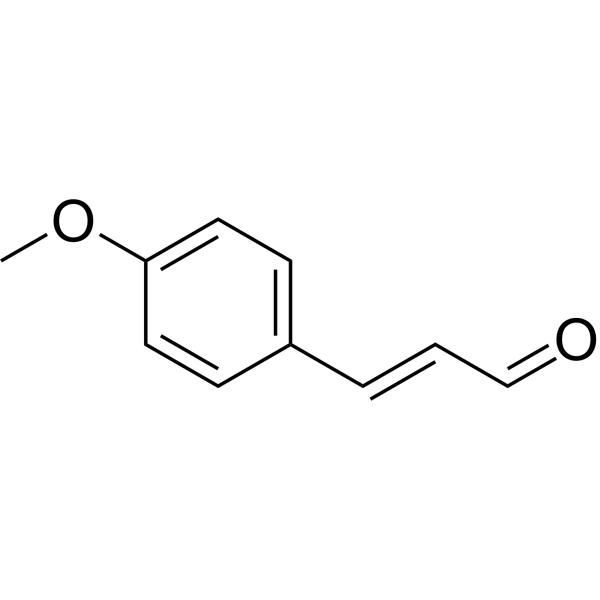
Chemical Structure
4-Methoxycinnamaldehyde
Synonym(s): p-Methoxycinnamaldehyde
- CAS. Nr.: 1963-36-6
- Formula:C10H10O2
- Molecular Weight:162.19
IUPAC Name: (E)-3-(4-methoxyphenyl)acrylaldehyde
InChIKey: AXCXHFKZHDEKTP-NSCUHMNNSA-N
SMILES: O=C/C=C/C1=CC=C(OC)C=C1
Biological Activity: 4-Methoxycinnamaldehyde (p-Methoxycinnamaldehyde) is an active ingredient isolated from Agastache rugosa, possessing anti-respiratory syncytial virus (RSV) and antifungal activities. 4-Methoxycinnamaldehyde directly interferes with the adsorption and internalization of RSV by host cells in an interferon pathway-independent manner to block viral entry; it disrupts the energy metabolism of Penicillium digitatum by damaging the integrity of its mycelial cell membrane and inhibiting reducing sugar synthesis. 4-Methoxycinnamaldehyde can be used in research on RSV infection and citrus green mold[1][2][3].
| Art. -Nr. | Produktname | Reinheit | Beschreibung | Pricing | |||||||||||||||||||
|---|---|---|---|---|---|---|---|---|---|---|---|---|---|---|---|---|---|---|---|---|---|---|---|
|
|
4-Methoxycinnamaldehyde | 99.89% | 4-Methoxycinnamaldehyde (p-Methoxycinnamaldehyde) is an active ingredient isolated from Agastache rugosa, possessing anti-respiratory syncytial virus (RSV) and antifungal activities. 4-Methoxycinnamaldehyde directly interferes with the adsorption and internalization of RSV by host cells in an interferon pathway-independent manner to block viral entry; it disrupts the energy metabolism of Penicillium digitatum by damaging the integrity of its mycelial cell membrane and inhibiting reducing sugar synthesis. 4-Methoxycinnamaldehyde can be used in research on RSV infection and citrus green mold. | ||||||||||||||||||||
|
loading...
/
|
|||||||||||||||||||||||
|
|
4-Methoxycinnamaldehyde (Standard) | ≥98% | 4-Methoxycinnamaldehyde (p-Methoxycinnamaldehyde) Standard is the analytical standard of 4-Methoxycinnamaldehyde (HY-W013605A). This product is intended for research and analytical applications. 4-Methoxycinnamaldehyde (p-Methoxycinnamaldehyde) is an active ingredient isolated from Agastache rugosa, possessing anti-respiratory syncytial virus (RSV) and antifungal activities. 4-Methoxycinnamaldehyde directly interferes with the adsorption and internalization of RSV by host cells in an interferon pathway-independent manner to block viral entry; it disrupts the energy metabolism of Penicillium digitatum by damaging the integrity of its mycelial cell membrane and inhibiting reducing sugar synthesis. 4-Methoxycinnamaldehyde can be used in research on RSV infection and citrus green mold. | ||||||||||||||||||||
|
loading...
/
|
|||||||||||||||||||||||
-
Similarity Score 1.00
 HY-W013605(E)-4-Methoxycinnamaldehyde
-
Similarity Score 0.87
 HY-W046353A(E)-2-Methoxycinnamaldehyde
-
Similarity Score 0.87
 HY-W046353R2-Methoxycinnamaldehyde (Standard)
-
Similarity Score 0.87
 HY-Y0740R4-Methoxybenzaldehyde (Standard)
-
Similarity Score 0.86
 HY-W1060183trans-p-Coumaraldehyde
-
Similarity Score 0.85
 HY-33015A4-Chlorocinnamaldehyde
-
Similarity Score 0.85
 HY-W014352trans-4-Bromocinnamaldehyde
-
Similarity Score 0.85
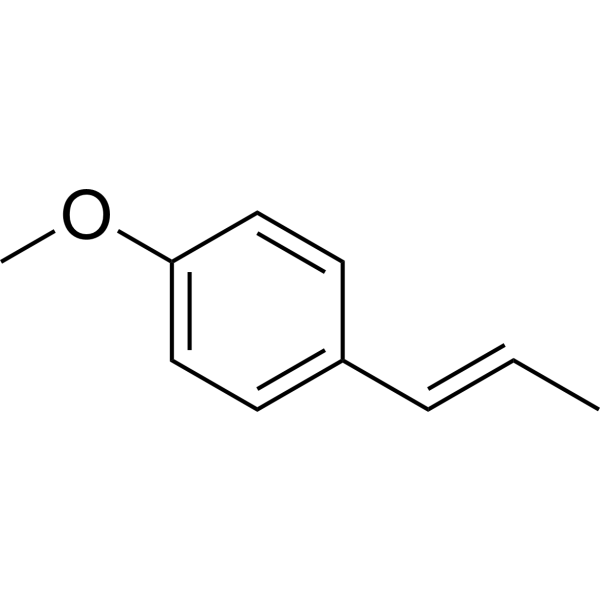 HY-B0900Anethole
-
Similarity Score 0.85
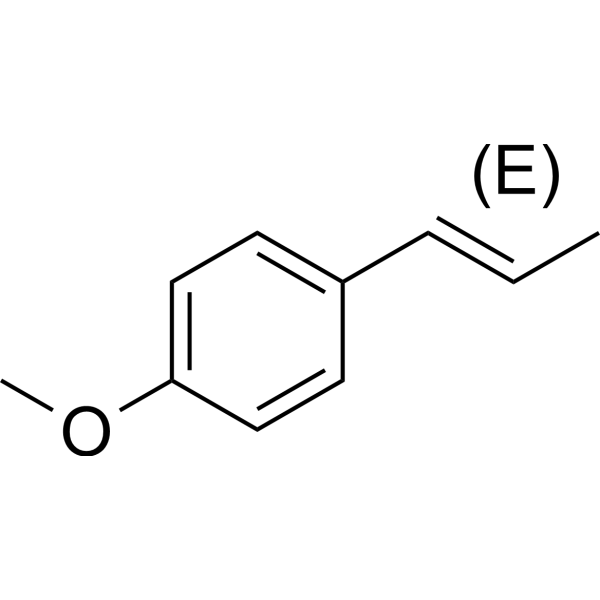 HY-N0367Trans-Anethole
-

Explore the MedChemAI to find more analogs


References
- [1]. Wang KC, et al. 4-Methoxycinnamaldehyde inhibited human respiratory syncytial virus in a human larynx carcinoma cell line. Phytomedicine : international journal of phytotherapy and phytopharmacology. 2009 Sep;16(9):882-6. [Content Brief]
- [2]. Gan Z, et al. Synthesis and antifungal activities of cinnamaldehyde derivatives against Penicillium digitatum causing citrus green mold. J Food Qual. 2020;2020:8898692.
- [3]. Huang H, et al. Development of the reverse genetics system for viral hemorrhagic septicemia virus genotype IVa and its application in antiviral compound screening. Virol Sin. 2026 Feb;41(1):107-118. [Content Brief]



