



2260669-86-9
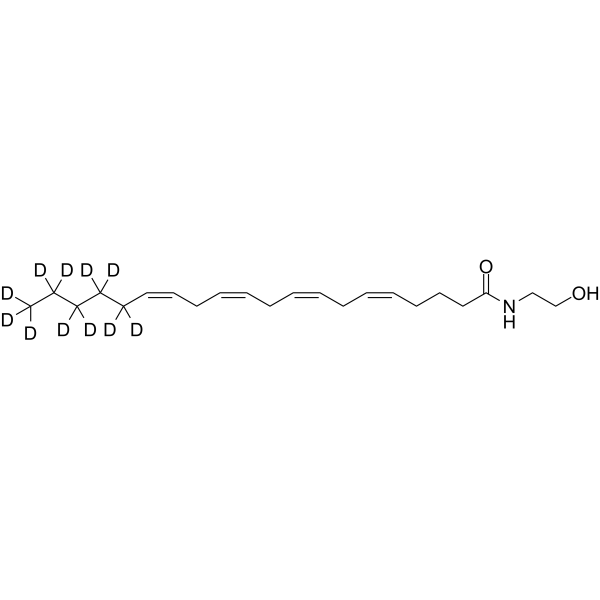
Chemical Structure
Anandamide-d11
Synonym(s): AEA-d11
- CAS No.: 2260669-86-9
- Formula:C22H26D11NO2
- Molecular Weight:358.60
IUPAC Name: sodium 2,3-dihydroxypropyl ((R)-2-hydroxy-3-(pentadecanoyloxy)propyl-1,1,2,3,3-d5) phosphate
InChIKey: LGEQQWMQCRIYKG-MBZQHBQHSA-N
SMILES: [2H]C([2H])([2H])C([2H])([2H])C([2H])([2H])C([2H])([2H])C([2H])([2H])/C=C\C/C=C\C/C=C\C/C=C\CCCC(NCCO)=O
Biological Activity:
Anandamide-d11 is deuterium labeled Anandamide. Anandamide is an immune modulator in the central nervous system acts via not only cannabinoid receptors (CB1 and CB2) but also other targets (e.g., GPR18/GPR55)[1][2].
The product specifications provided below refer solely to the active content of Anandamide-d11.
| Cat. No. | Product Name | Purity | Description | Pricing | |||||||||||||||||||
|---|---|---|---|---|---|---|---|---|---|---|---|---|---|---|---|---|---|---|---|---|---|---|---|
|
|
Anandamide-d11 | 99% | Anandamide-d11 is deuterium labeled Anandamide. Anandamide is an immune modulator in the central nervous system acts via not only cannabinoid receptors (CB1 and CB2) but also other targets (e.g., GPR18/GPR55). The product specifications provided below refer solely to the active content of Anandamide-d11. |
||||||||||||||||||||
|
loading...
/
|
|||||||||||||||||||||||
|
|
Anandamide-d4 | 99.94% | Anandamide-d4 (AEA-d4) is the deuterium labeled Anandamide. | ||||||||||||||||||||
|
loading...
/
|
|||||||||||||||||||||||
|
|
Anandamide-15N | 99.78% | Anandamide-15N (AEA-15N) is the 15N-labeled Anandamide (HY-10863). Anandamide is an endocannabinoid. Anandamide modulates both neuronal and immune functions through two protein-coupled cannabinoid receptors (CB1 and CB2). Anandamide can activate numerous other receptors like PPARS, TRPV1, and GPR18/GPR55. Anandamide also has potential anti-fungal and anti-inflammatory activities. Anandamide can be used for the research of Alzheimer’s disease (AD) and ulcerative colitis. | ||||||||||||||||||||
|
loading...
/
|
|||||||||||||||||||||||
|
|
Anandamide-d8 | 99.90% | Anandamide-d8 is a deuterated labeled Anandamide. Anandamide is an endocannabinoid. Anandamide modulates both neuronal and immune functions through two protein-coupled cannabinoid receptors (CB1 and CB2). Anandamide can activate numerous other receptors like PPARS, TRPV1, and GPR18/GPR55. Anandamide also has potential anti-fungal and anti-inflammatory activities. Anandamide can be used for the research of Alzheimer’s disease (AD) and ulcerative colitis. The product specifications provided below refer solely to the active content of Anandamide-d8. |
||||||||||||||||||||
|
loading...
/
|
|||||||||||||||||||||||
|
|
Anandamide | 99.57% | Anandamide is an endocannabinoid. Anandamide modulates both neuronal and immune functions through two protein-coupled cannabinoid receptors (CB1 and CB2). Anandamide can activate numerous other receptors like PPARS, TRPV1, and GPR18/GPR55. Anandamide also has potential anti-fungal and anti-inflammatory activities. Anandamide can be used for the research of Alzheimer’s disease (AD) and ulcerative colitis. | ||||||||||||||||||||
|
loading...
/
|
|||||||||||||||||||||||
-
Similarity Score 1.00
 HY-N16008C20:4 Anandamide (AEA)
-
Similarity Score 0.92
 HY-110016Docosatetraenylethanolamide
-
Similarity Score 0.92
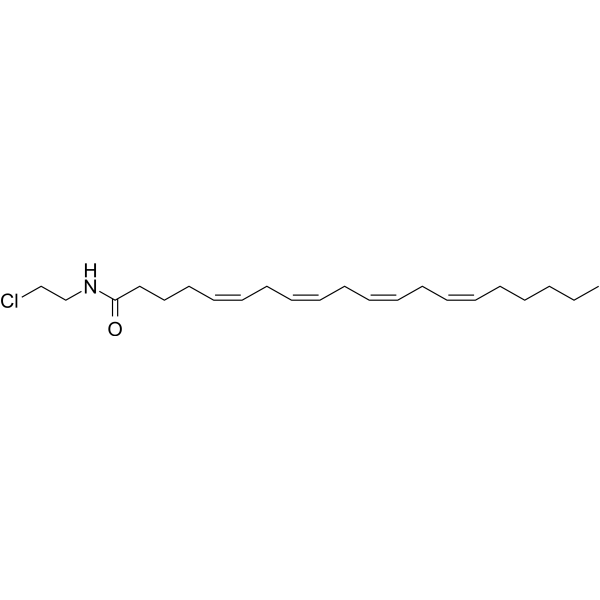 HY-110004ACEA
-
Similarity Score 0.92
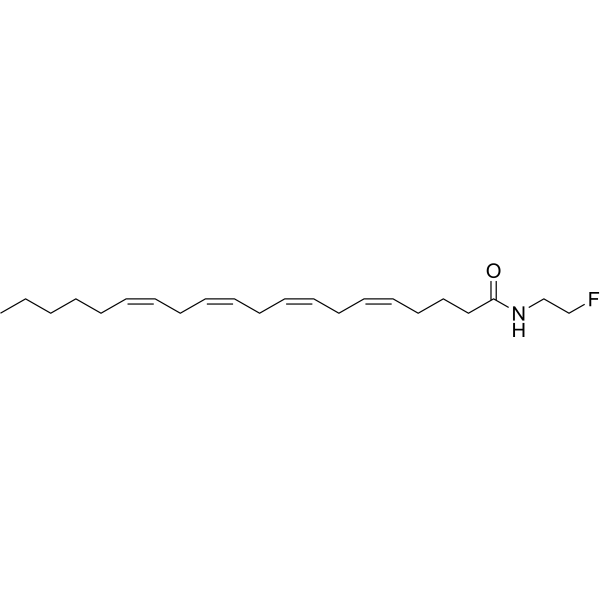 HY-134224Arachidonoyl 2'-fluoroethylamide
-
Similarity Score 0.90
 HY-11351620-HETE Ethanolamide
-
Similarity Score 0.89
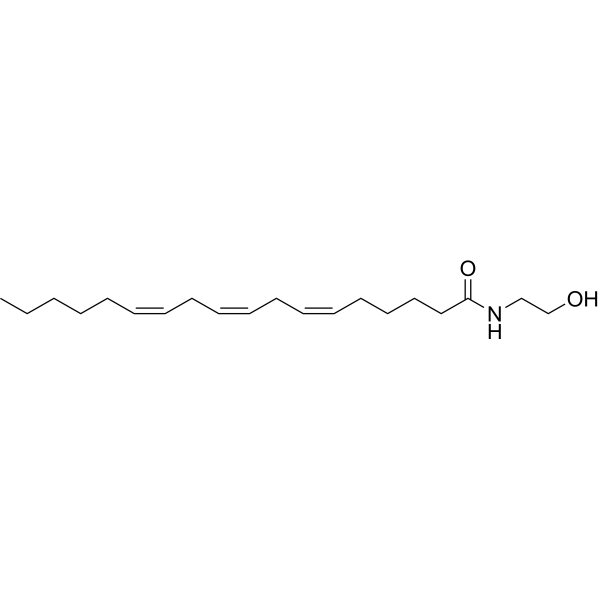 HY-162298γ-Linolenoyl monoethanolamide
-
Similarity Score 0.89
 HY-103332SN-Arachidonylglycine-d8
-
Similarity Score 0.88
 HY-119352S-2 Methanandamide
-
Similarity Score 0.88
 HY-123594R-2 Methanandamide
-

Explore the MedChemAI to find more analogs


References
- [1]. Malek N, et al. Anandamide, Acting via CB2 Receptors, Alleviates LPS-Induced Neuroinflammation in Rat Primary Microglial Cultures. Neural Plast. 2015;2015:130639. [Content Brief]
- [2]. Troy-Fioramonti S, et al. Acute activation of cannabinoid receptors by Anandamide reduces gastrointestinal motility and improves postprandial glycemia in mice. Diabetes. 2015 Mar;64(3):808-18. [Content Brief]



