



Benzyl alcohol
Based on 3 publication(s) in Google Scholar
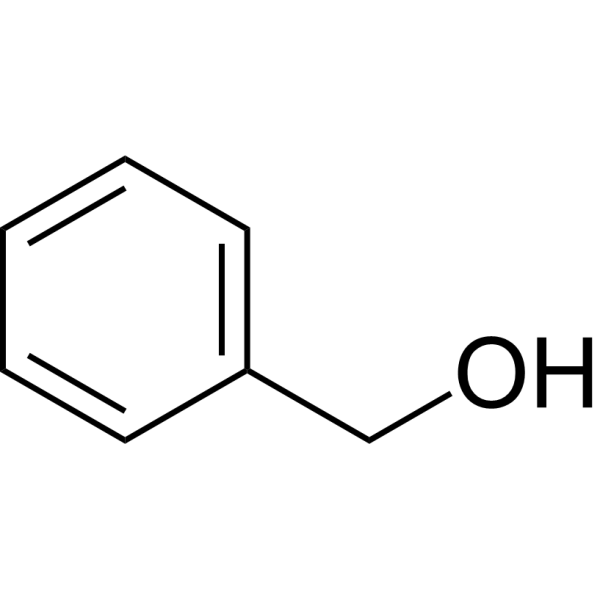
Benzyl alcohol is an aromatic alcohol, a colorless liquid with a mild aromatic odor. Benzyl alcohol is an inhibitor of P450 enzyme. Benzyl alcohol mediated Toll-Like Receptor 4 to reduce the inflammatory response of liver injury in mice.
Nur für Forschungszwecke. Wir verkaufen nicht an Patienten.
- Reinheit: 99.99%
- CAS. Nr.: 100-51-6
- Formel: C7H8O
- Molecular Weight:108.14
-
Speicherung:
Store at room temperature 3 years.
In solvent -80°C, 2 years , -20°C, 1 year

To place orders, for customer services and technical support, please contact: MedChemExpress USA
Tel: 609-228-6898 E-mail: [email protected] [email protected]


-
 Biologische Aktivität
-
Chemical Information
-
Lösungsmittel & Löslichkeit
- Reinheit & Dokumentation
- Verweise
-
 Help & FAQs


-
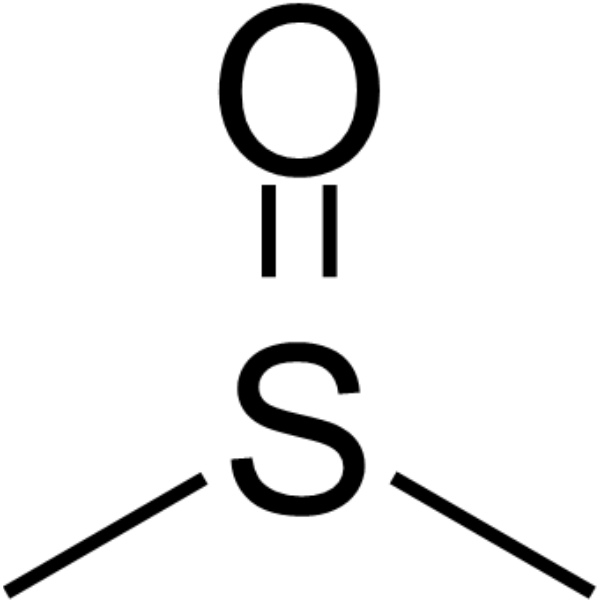
HY-Y0320
Dimethyl sulfoxide, meets analytical specification of Ch.P.
-
HY-Y1891
Tween 80
-
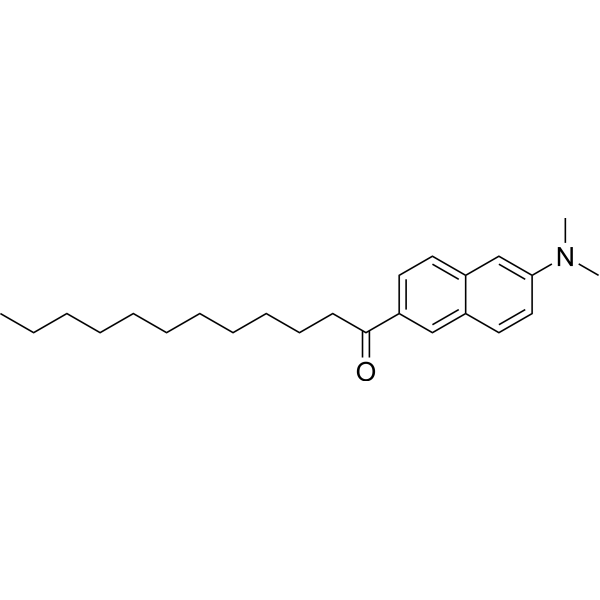
HY-D0080
Laurdan
-
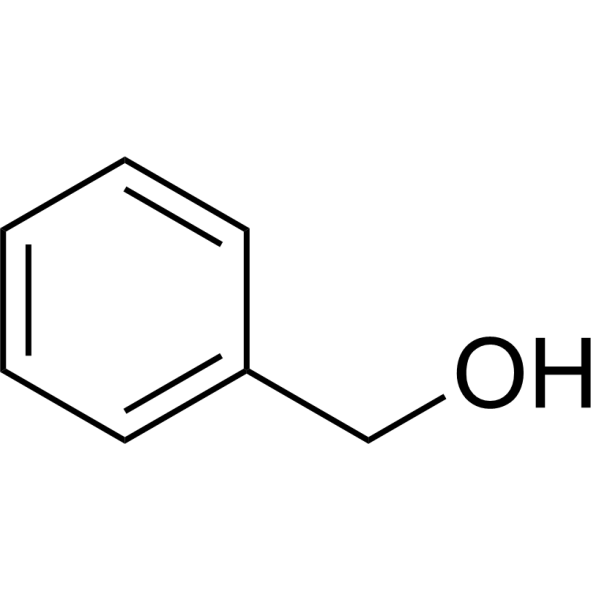
HY-B0892R
Benzyl alcohol (Standard)
-
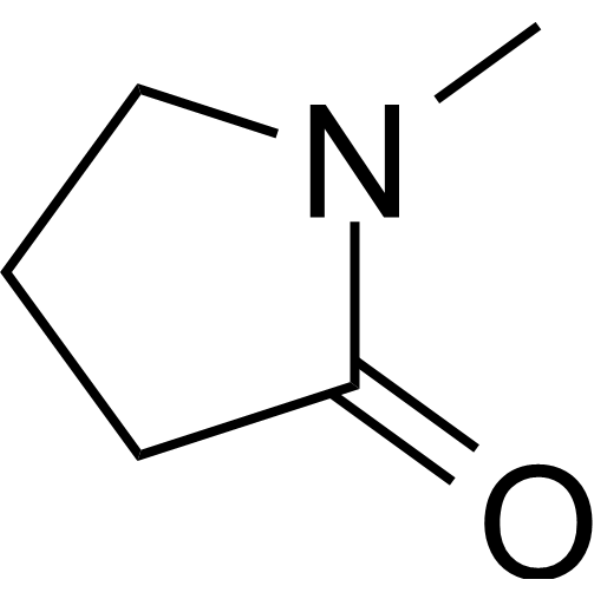
HY-Y1275
N-Methylpyrrolidone
-
HY-Y0703
Sodium carboxymethyl cellulose (Viscosity:800-1200 mPa.s)
-
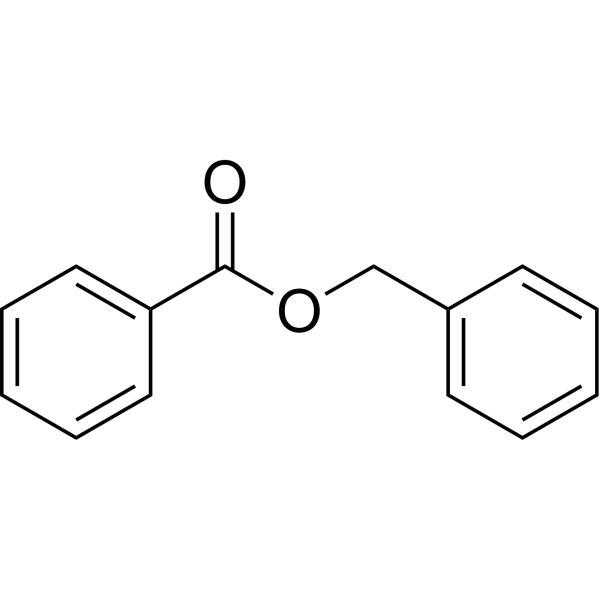
HY-B0935
Benzyl benzoate
-
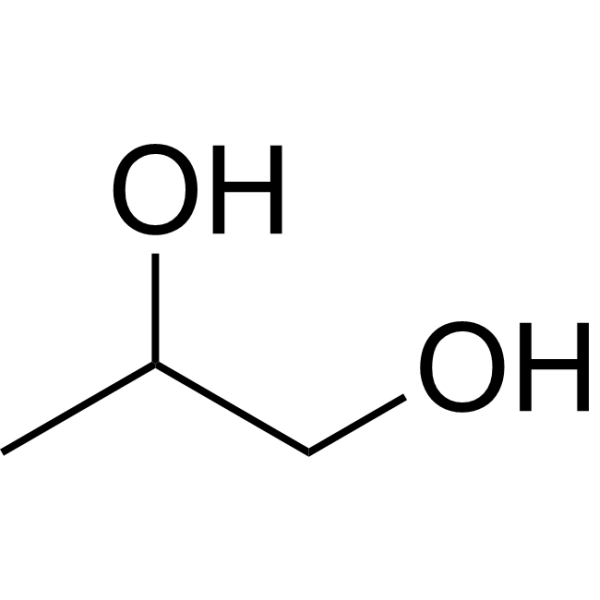
HY-Y0921
(±)-1,2-Propanediol
-
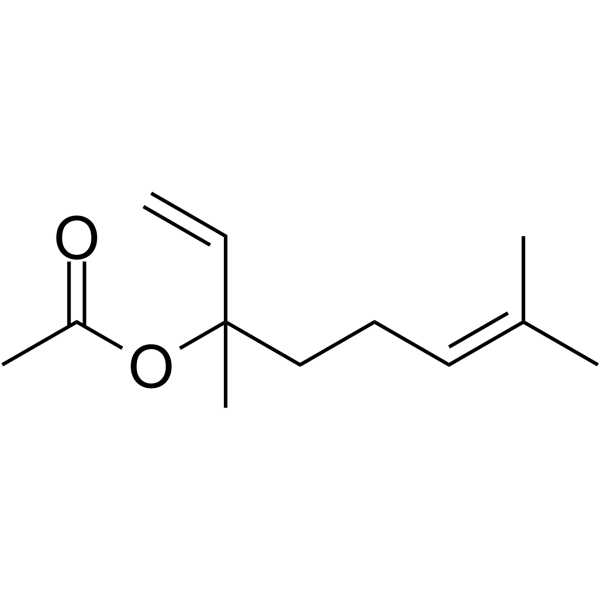
HY-N6948
Linalyl acetate
-
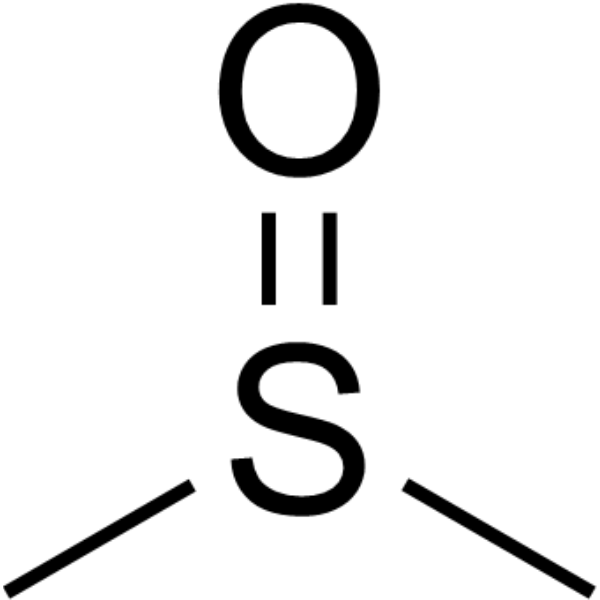
HY-Y0320C
Dimethyl sulfoxide
-

HY-Y0320D
Dimethyl sulfoxide, cryoprotectant vitrification agent
Publications Citing Use of MedChemExpress (MCE) Benzyl alcohol
More

Biologische Aktivität
|
Microbial Metabolite |
Benzyl alcohol (10-80 mM) regulates cyclic AMP synthesis in MDCK cells by increasing the membrane fluidity of intact renal epithelial cells[1].
Benzyl alcohol (0-46 mM, 48 h) inhibits the hepatotoxicity of APAP by inhibiting cytochrome P450 enzyme activity in the primary liver of mice[2].
MedChemExpress (MCE) has not independently confirmed the accuracy of these methods. They are for reference only.
Benzyl alcohol (270 mg/kg, intraperitoneal injection, 3-24 h) decreases inflammasome activation in a TLR4-dependent manner[3].
MedChemExpress (MCE) has not independently confirmed the accuracy of these methods. They are for reference only.
-
Animal Model:APAP-induced liver injury model in mice[2]
-
Dosage:270 mg/kg
-
Administration:i.p.
-
Result:Attenuated the increase in ALT activities and reduced areas of necrosis at both 6 h and 24 h.
Reduced APAP metabolic activation and parameters of oxidant stress.
Reduced APAP-induced mitochondrial dysfunction.
| NCT Number | Sponsor | Condition | Start Date |
Phase

|
|---|---|---|---|---|
| NCT01329991 | Plexxikon| | 2011-05 | PHASE1 |


Chemical Information
-
CAS. Nr. 100-51-6
-
Appearance Liquid (Density: 1.045 g/cm3)
-
Molecular Weight 108.14
-
Formel C7H8O
-
Color Colorless to light yellow
-
SMILES
OCC1=CC=CC=C1
-
Synonyms
Benzenemethanol
-
Structure Classification
-
Initial Source
the white-rot fungi
-
Versand
Room temperature in continental US; may vary elsewhere.
-
Speicherung
Store at room temperature 3 years
In solvent -80°C 2 years -20°C 1 year


Publications (3)
-
Journal Impact Factor
-
Most Recent
-
Chem Sci
N-heterocyclic carbenes as clickable molecular anchors for electrochemical surface functionalization of metals and glassy carbon. [Abstract]2025 Oct 3. PMID: 41050571 -
Turk J Med Sci
2025 Feb 19;55(2):509-517. PMID: 40342326 -


Lösungsmittel & Löslichkeit
DMSO : 100 mg/mL (924.73 mM; Need ultrasonic; Hygroscopic DMSO has a significant impact on the solubility of product, please use newly opened DMSO)
H2O : 100 mg/mL (924.73 mM; Need ultrasonic)
Please refer to the solubility information to select the appropriate solvent. Once prepared, please aliquot and store the solution to prevent product inactivation from repeated freeze-thaw cycles.
Storage method and period of stock solution: -80°C, 2 years; -20°C, 1 year. When stored at -80°C, please use it within 2 years. When stored at -20°C, please use it within 1 year.
* Note: If you choose water as the stock solution, please dilute it to the working solution, then filter and sterilize it with a 0.22 μm filter before use.
Please refer to the solubility information to select the appropriate solvent. Once prepared, please aliquot and store the solution to prevent product inactivation from repeated freeze-thaw cycles.
Storage method and period of stock solution: -80°C, 2 years; -20°C, 1 year. When stored at -80°C, please use it within 2 years. When stored at -20°C, please use it within 1 year.
* Note: If you choose water as the stock solution, please dilute it to the working solution, then filter and sterilize it with a 0.22 μm filter before use.
Konzentration (Stammlösung) × Volumen (Stammlösung) = Konzentration (Ziellösung) × Volumen (Ziellösung)
Select the appropriate dissolution method based on your experimental animal and administration route.
- For the following dissolution methods, please ensure to first prepare a clear stock solution using an In Vitro approach and then sequentially add co-solvents:
- To ensure reliable experimental results, the clarified stock solution can be appropriately stored based on storage conditions. As for the working solution for In Vivo experiments, it is recommended to prepare freshly and use it on the same day.
- The percentages shown for the solvents indicate their volumetric ratio in the final prepared solution. If precipitation or phase separation occurs during preparation, heat and/or sonication can be used to aid dissolution.
Add each solvent one by one: 10% DMSO 40% PEG300 5% Tween-80 45% Saline
Solubility: ≥ 2.5 mg/mL (23.12 mM); Clear solution
This protocol yields a clear solution of ≥ 2.5 mg/mL (saturation unknown).
Taking 1 mL working solution as an example, add 100 μL DMSO stock solution (25.0 mg/mL) to 400 μL PEG300, and mix evenly; then add 50 μL Tween-80 and mix evenly; then add 450 μL Saline to adjust the volume to 1 mL.
Preparation of Saline: Dissolve 0.9 g sodium chloride in ddH₂O and dilute to 100 mL to obtain a clear Saline solution.
Add each solvent one by one: 10% DMSO 90% (20% SBE-β-CD in Saline)
Solubility: ≥ 2.5 mg/mL (23.12 mM); Clear solution
This protocol yields a clear solution of ≥ 2.5 mg/mL (saturation unknown).
Taking 1 mL working solution as an example, add 100 μL DMSO stock solution (25.0 mg/mL) to 900 μL 20% SBE-β-CD in Saline, and mix evenly.
Preparation of 20% SBE-β-CD in Saline (4°C, storage for one week): 2 g SBE-β-CD powder is dissolved in 10 mL Saline, completely dissolve until clear.
For the following dissolution methods, please prepare the working solution directly:
It is recommended to prepare fresh solutions and use them promptly within a short period of time.
The percentages shown for the solvents indicate their volumetric ratio in the final prepared solution. If precipitation or phase separation occurs during preparation, heat and/or sonication can be used to aid dissolution.
Add each solvent one by one: PBS
Solubility: 33.33 mg/mL (308.21 mM); Clear solution; Need ultrasonic
Please enter the basic information of animal experiments:
-
-
-
-
Recommended: Prepare an additional quantity of animals to account for potential losses during experiments.
Working solution concentration: 0.22 mg/mL
This product has good water solubility, please refer to the measured solubility data in water/PBS/Saline for details.


Reinheit & Dokumentation
-
Data Sheet (274 KB)
-
SDS (396 KB)
- English - EN (396 KB)
- Français - FR (396 KB)
- Deutsch - DE (396 KB)
- Norwegian - NO (396 KB)
- Español - ES (396 KB)
- Swedish - SV (396 KB)
- Italian - IT (396 KB)
- Korean - KR (396 KB)
- Portuguese - PT (396 KB)
-
Handling Instructions (2659 KB)
Verweise
[1]. Friedlander G, et al. Benzyl alcohol increases membrane fluidity and modulates cyclic AMP synthesis in intact renal epithelial cells. Biochim Biophys Acta. 1987 Oct 2;903(2):341-8. [Content Brief]
[2]. Du K, et al. Benzyl alcohol protects against acetaminophen hepatotoxicity by inhibiting cytochrome P450 enzymes but causes mitochondrial dysfunction and cell death at higher doses. Food Chem Toxicol. 2015 Dec;86:253-61. [Content Brief]
[3]. Cai C, et al. Benzyl alcohol attenuates acetaminophen-induced acute liver injury in a Toll-like receptor-4-dependent pattern in mice. Hepatology. 2014 Sep;60(3):990-1002. [Content Brief]


Complete Stock Solution Preparation Table
Please refer to the solubility information to select the appropriate solvent. Once prepared, please aliquot and store the solution to prevent product inactivation from repeated freeze-thaw cycles.
Storage method and period of stock solution: -80°C, 2 years; -20°C, 1 year. When stored at -80°C, please use it within 2 years. When stored at -20°C, please use it within 1 year.
| Optional Solvent | Concentration Solvent Mass | 1 mg | 5 mg | 10 mg | 25 mg |
|---|---|---|---|---|---|
| DMSO / H2O | 1 mM | 9.2473 mL | 46.2364 mL | 92.4727 mL | 231.1818 mL |
| 5 mM | 1.8495 mL | 9.2473 mL | 18.4945 mL | 46.2364 mL | |
| 10 mM | 0.9247 mL | 4.6236 mL | 9.2473 mL | 23.1182 mL | |
| 15 mM | 0.6165 mL | 3.0824 mL | 6.1648 mL | 15.4121 mL | |
| 20 mM | 0.4624 mL | 2.3118 mL | 4.6236 mL | 11.5591 mL | |
| 25 mM | 0.3699 mL | 1.8495 mL | 3.6989 mL | 9.2473 mL | |
| 30 mM | 0.3082 mL | 1.5412 mL | 3.0824 mL | 7.7061 mL | |
| 40 mM | 0.2312 mL | 1.1559 mL | 2.3118 mL | 5.7795 mL | |
| 50 mM | 0.1849 mL | 0.9247 mL | 1.8495 mL | 4.6236 mL | |
| 60 mM | 0.1541 mL | 0.7706 mL | 1.5412 mL | 3.8530 mL | |
| 80 mM | 0.1156 mL | 0.5780 mL | 1.1559 mL | 2.8898 mL | |
| 100 mM | 0.0925 mL | 0.4624 mL | 0.9247 mL | 2.3118 mL |
* Note: If you choose water as the stock solution, please dilute it to the working solution, then filter and sterilize it with a 0.22 μm filter before use.


Benzyl alcohol Related Classifications
HY-B0892 Related Classifications
 Powered by Bioz