



CCPA (Standard)
CCPA (2-Chloro-N6-cyclopentyladenosine (Standard)) is the analytical standard of CCPA (HY-103185). This product is intended for research and analytical applications. CCPA (2-Chloro-N6-cyclopentyladenosine) a highly selective A1 adenosine receptors agonist with a Ki of 0.4 nM. CCPA inhibits adenylate cyclase with an IC50 of 33 nM. CCPA exhibits anti-seizure and cardiacprotective activity. CCPA can be used for the research of seizure and myocardial infarction.
Nur für Forschungszwecke. Wir verkaufen nicht an Patienten.
- CAS. Nr.: 37739-05-2
- Formel: C15H20ClN5O4
- Molecular Weight:369.80
-
Speicherung:
Please store the product under the recommended conditions in the Certificate of Analysis.


To place orders, for customer services and technical support, please contact: MedChemExpress USA
Tel: 609-228-6898 E-mail: [email protected] [email protected]


-
 Product Information
-
Chemical Information
- Reinheit & Dokumentation
-
 Help & FAQs


-
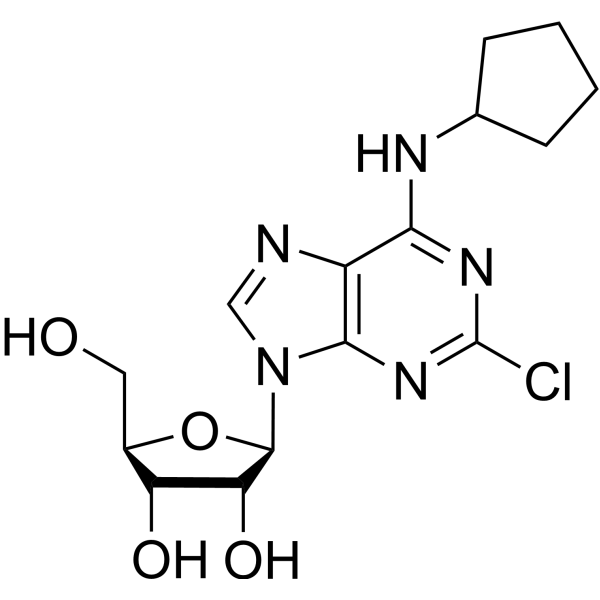
HY-103185
CCPAA1 Adenosine Receptor Agonist -
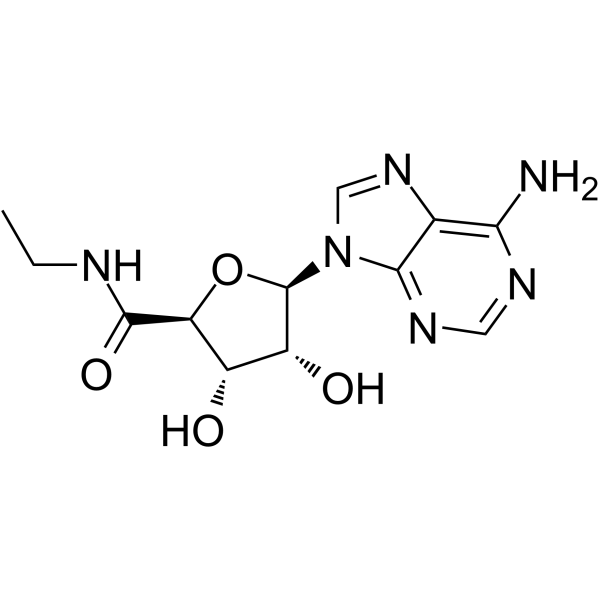
HY-103173
5'-N-EthylcarboxamidoadenosineAdenosine Receptor Agonist -
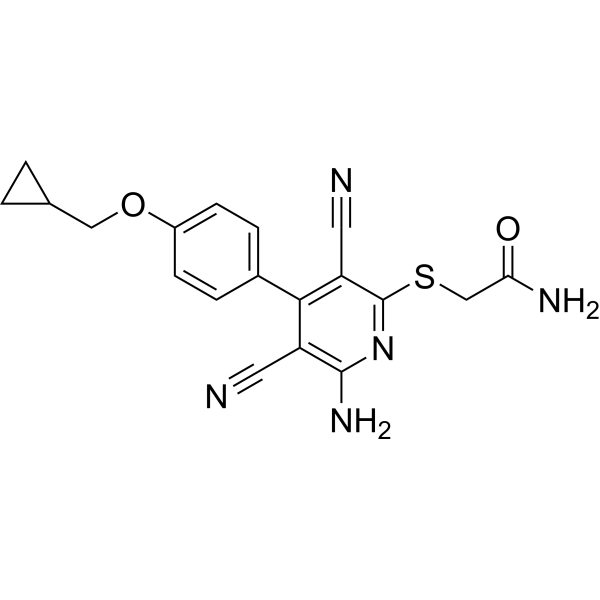
HY-103171
BAY 60-6583A2B Receptor Agonist -
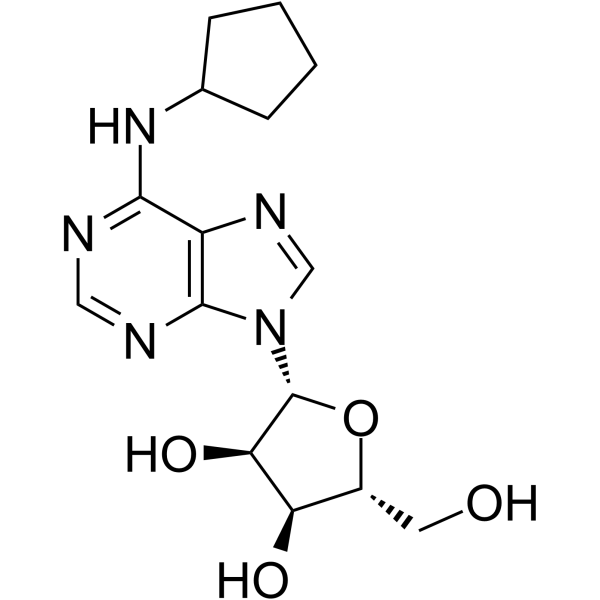
HY-103181
N6-CyclopentyladenosineAdenosine A1 Receptor Agonist -
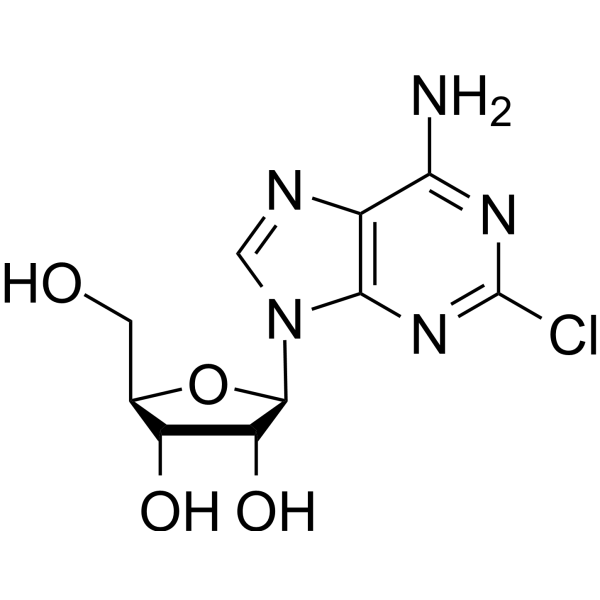
HY-W008344
2-ChloroadenosineAdenosine Analogue -
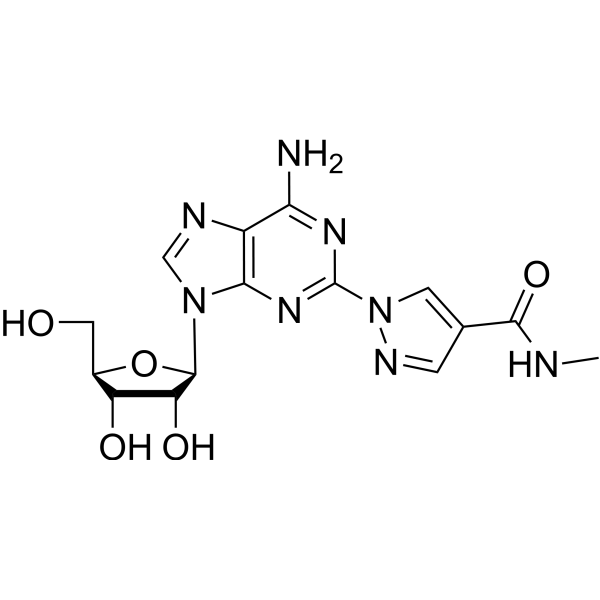
HY-A0168
RegadenosonVasodilator/A2A Adenosine Receptor Agonist -
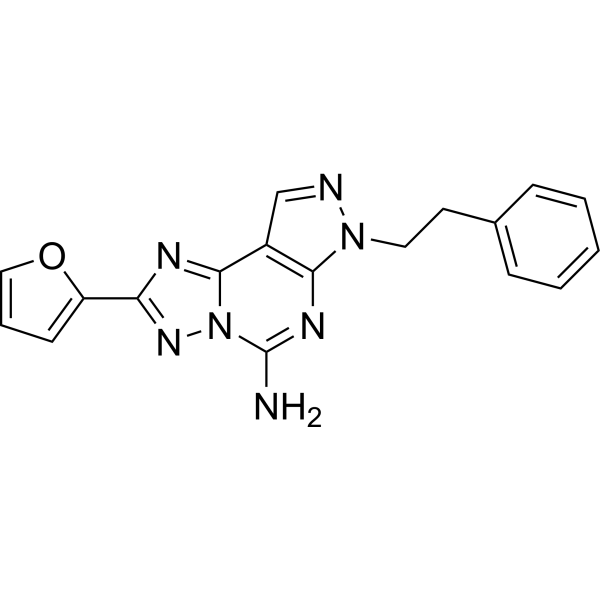
HY-19533
SCH 58261A2A Receptor Antagonist -
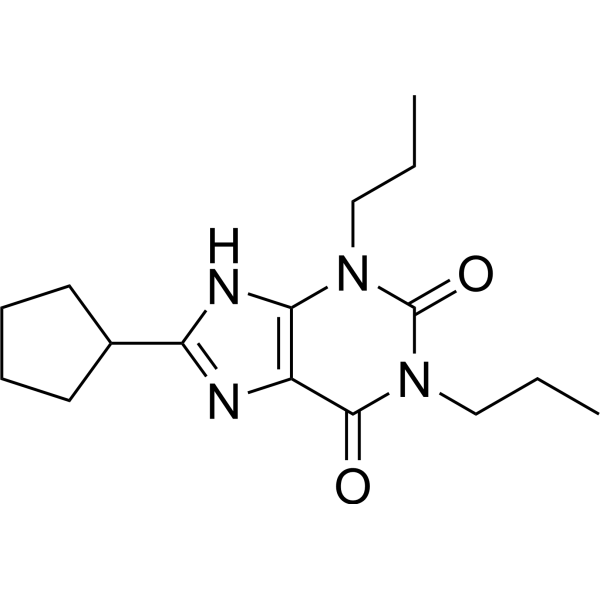
HY-100937
DPCPXA1 Receptor Antagonist -
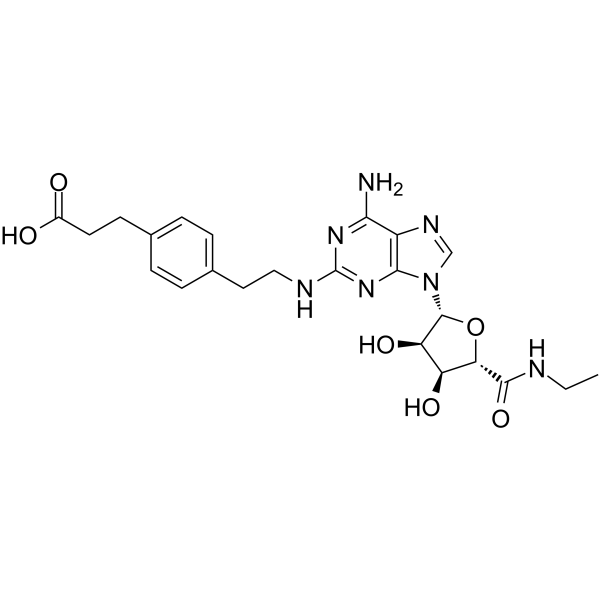
HY-13201
CGS 21680 -
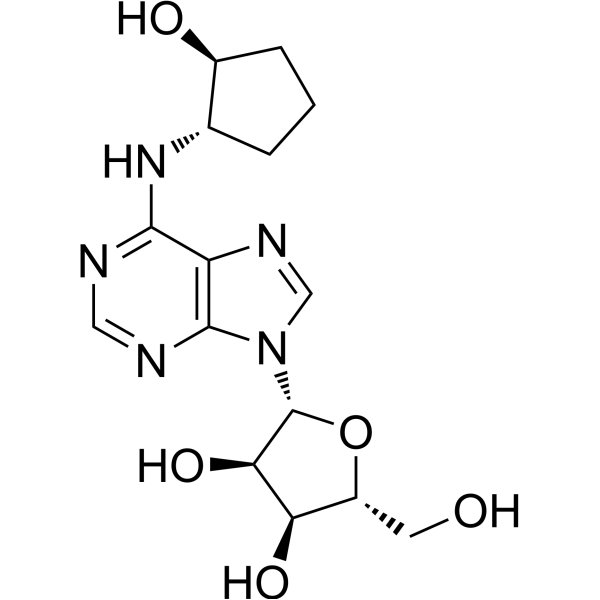
HY-18978
GR79236Adenosine A1 Receptor Agonist -
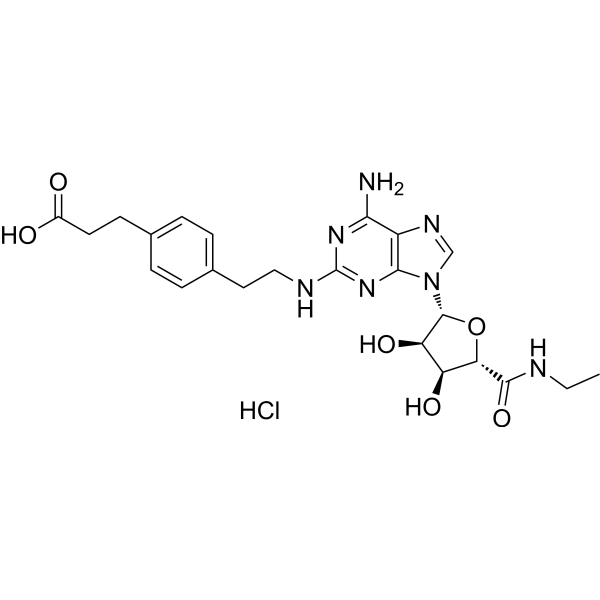
HY-13201A
CGS 21680 HydrochlorideAdenosine A2A Receptor Agonist -
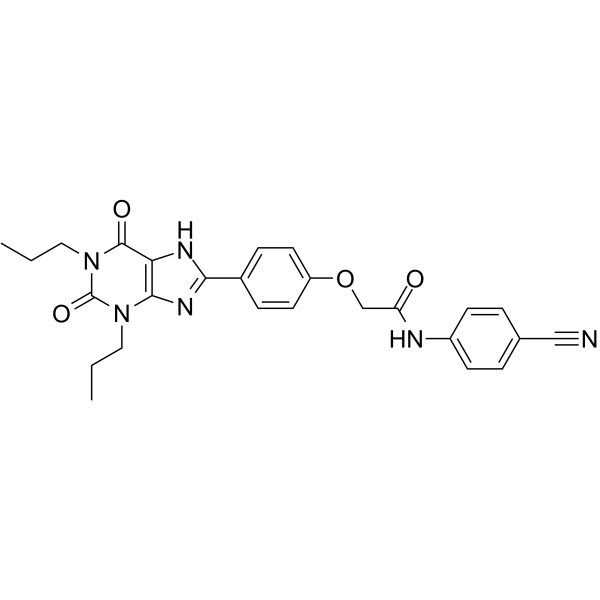
HY-14121
MRS 1754A2B Antagonist


Product Information
Information
Anwendung
The compound is the grade of analytical standard, which is the reference standard supplied assay. It is commonly used in qualitative, quantitative and methodological research experiments in HPLC, GC and MS.


Chemical Information
-
CAS. Nr. 37739-05-2
-
Molecular Weight 369.80
-
Formel C15H20ClN5O4
-
SMILES
ClC(N=C1NC2CCCC2)=NC3=C1N=CN3[C@H]4[C@H](O)[C@H](O)[C@@H](CO)O4
-
Synonyms
2-Chloro-N6-cyclopentyladenosine (Standard)
-
Versand
Room temperature in continental US; may vary elsewhere.
-
Speicherung
Please store the product under the recommended conditions in the Certificate of Analysis.


Reinheit & Dokumentation
Verweise
[1]. Czuczwar S J. 2-Chloro-N 6-cyclopentyladenosine enhances the anticonvulsant action of carbamazepine in the mouse maximal electroshock-induced seizure model A[J]. Pharmacological reports, 2005, 57(787): 787-794. [Content Brief]
[2]. Tsuchida A, et al. Pretreatment with the adenosine A1 selective agonist, 2-chloro-N6-cyclopentyladenosine (CCPA), causes a sustained limitation of infarct size in rabbits[J]. Cardiovascular research, 1993, 27(4): 652-656. [Content Brief]
[3]. Lohse MJ, et al. 2-Chloro-N6-cyclopentyladenosine: a highly selective agonist at A1 adenosine receptors. Naunyn Schmiedebergs Arch Pharmacol. 1988;337(6):687-689. [Content Brief]

Calculators
Konzentration (Stammlösung) × Volumen (Stammlösung) = Konzentration (Ziellösung) × Volumen (Ziellösung)


CCPA (Standard) Related Classifications
HY-103185R Related Classifications
 Powered by Bioz