



MPP+ iodide
Based on 39 publication(s) in Google Scholar
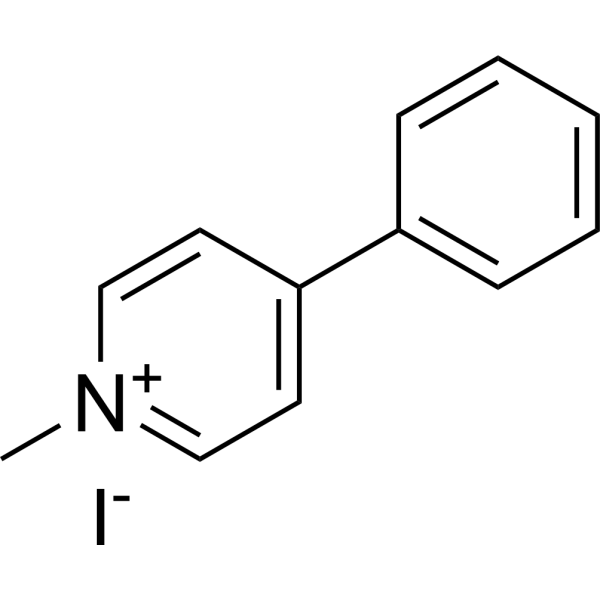
MPP+ iodide, a toxic metabolite of the neurotoxin MPTP, causes symptom of Parkinson's disease in animal models by selectively destroying dopaminergic neurons in substantia nigra. MPP+ iodide is taken up by the dopamine transporter into dopaminergic neurons where it exerts its neurotoxic action on mitochondria by affecting complex I of the respiratory chain. MPP+ iodide is also a high affinity substrate for the serotonin transporter (SERT).
Nur für Forschungszwecke. Wir verkaufen nicht an Patienten.
- Reinheit : 99.96%
- CAS. Nr.: 36913-39-0
- Formel: C12H12IN
- Molecular Weight:297.14
-
Speicherung:
4°C, sealed storage, away from moisture and light
* In solvent : -80°C, 6 months; -20°C, 1 month (sealed storage, away from moisture and light)

To place orders, for customer services and technical support, please contact: MedChemExpress USA
Tel: 609-228-6898 E-mail: [email protected] [email protected]


-
 Biologische Aktivität
-
Chemical Information
-
Lösungsmittel & Löslichkeit
- Protokoll
- Reinheit & Dokumentation
- Verweise
-
 Help & FAQs


-
HY-B1756
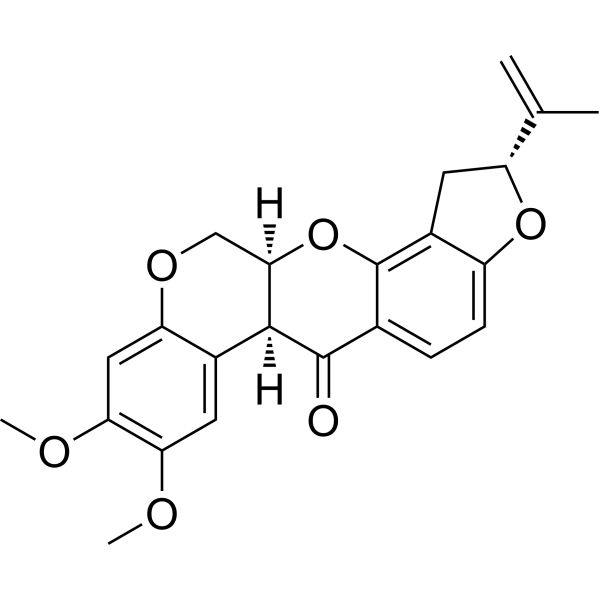
RotenoneMitochondrial Complex I Inhibitor -
HY-15608
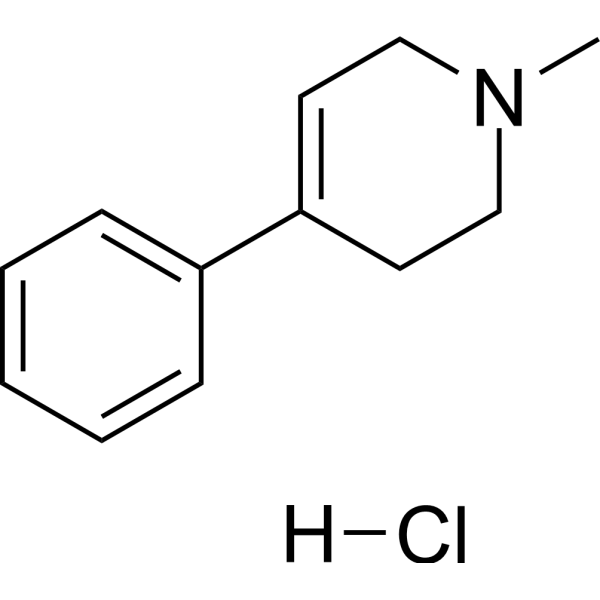
MPTP hydrochlorideDopaminergic Neurotoxin -
HY-B1081A
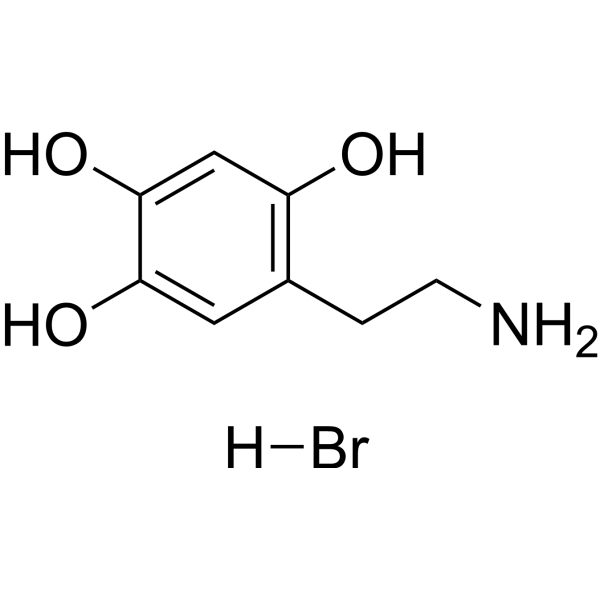
Oxidopamine hydrobromideNeurotoxin -
HY-14649
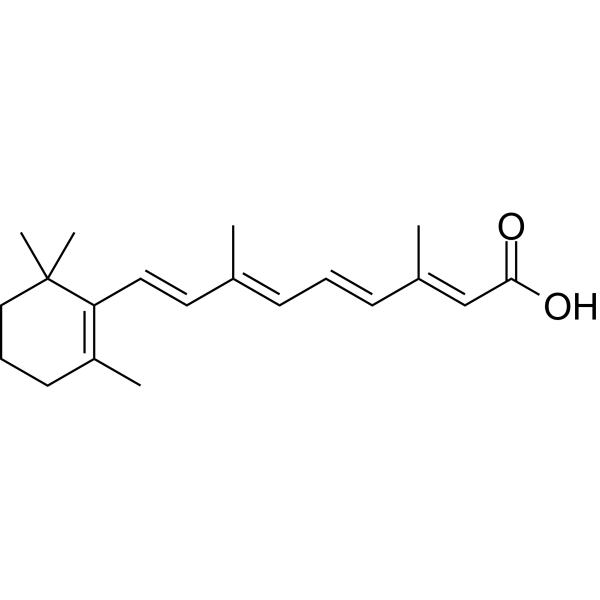
Retinoic acidRAR Agonist -

HY-W114750
MPTPDopaminergic Neurotoxin -
HY-13259
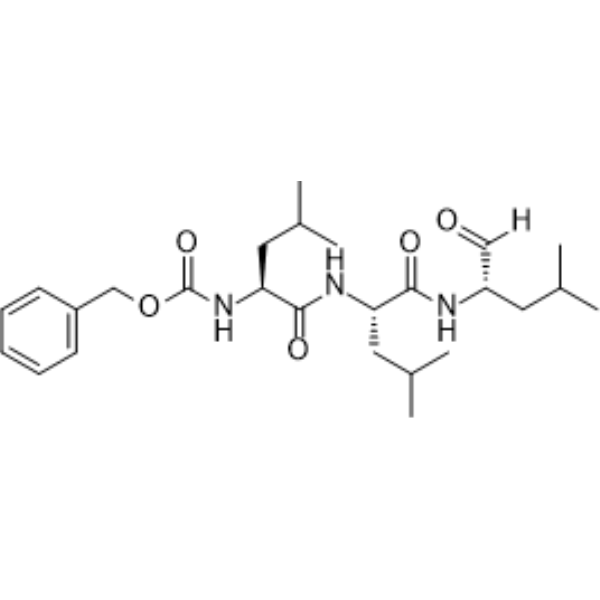
MG-132Proteasome Inhibitor -
HY-18739
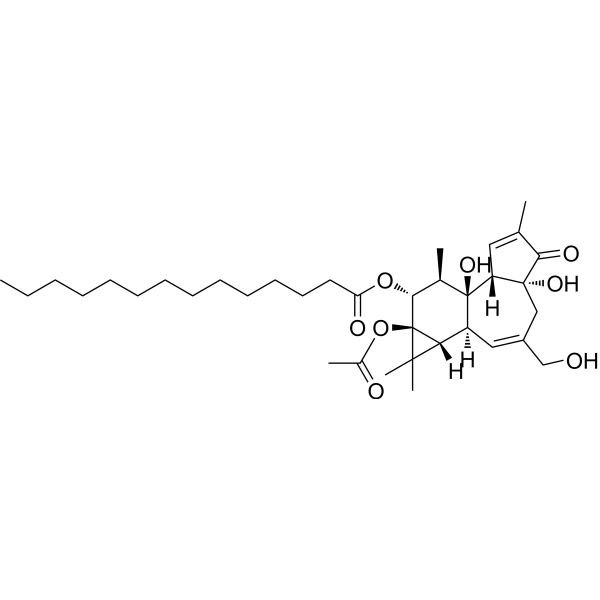
Phorbol 12-myristate 13-acetatePKC Activator -
HY-B1081
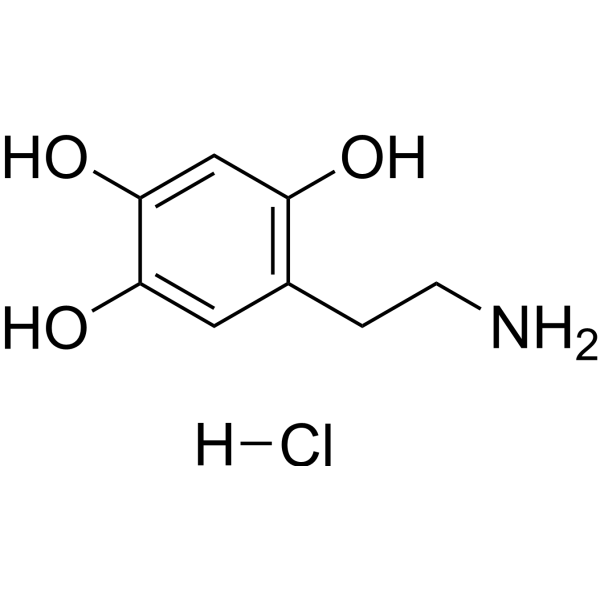
Oxidopamine hydrochlorideNeurotoxin -
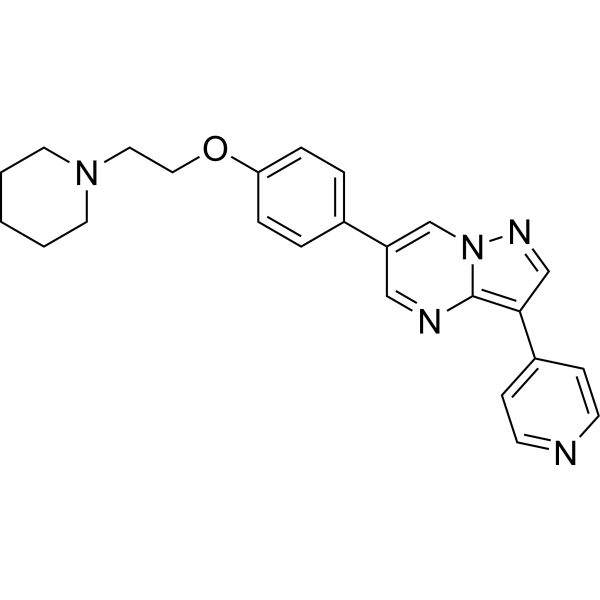
HY-13418A
DorsomorphinAMPK Inhibitor -
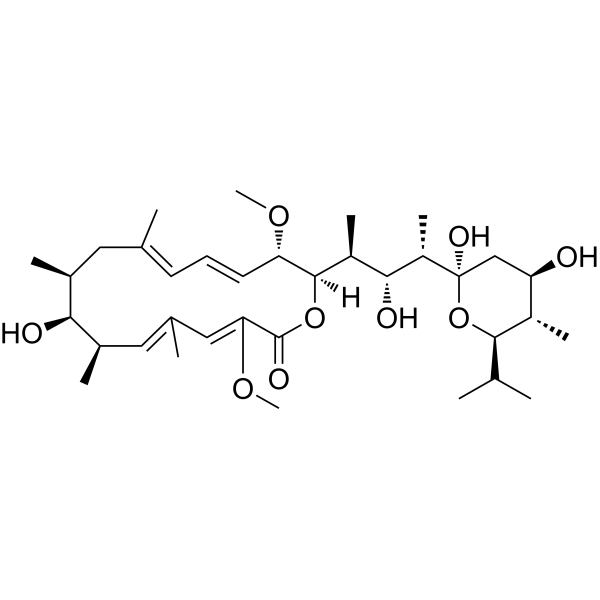
HY-100558
Bafilomycin A1V-ATPase Inhibitor -
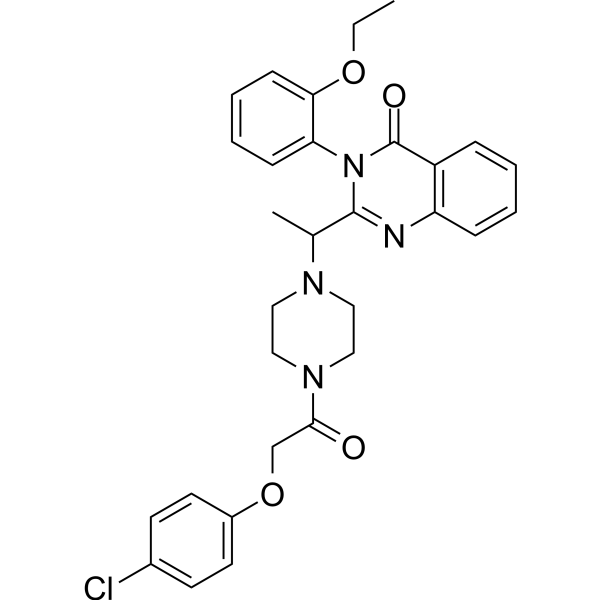
HY-15763
ErastinFerroptosis Inducer -

HY-P0035
Insulin (human)Recombinant Human Insulin
Publications Citing Use of MedChemExpress (MCE) MPP+ iodide
More- Nature. 2024 May;629(8010):235-243. [Abstract]
- J Nanobiotechnology. 2024 Nov 10;22(1):690. [Abstract]
- Adv Sci (Weinh). 2026 Apr;13(19):e16502. [Abstract]
- Biomaterials. 2026 Jun 1:335:124350. [Abstract]
- Research (Wash D C). 2026 Sep 9:9:1416.
- ACS Sens. 2026 Mar 27;11(3):1891-1907. [Abstract]
- Cell Death Discov. 2025 Jul 29;11(1):351. [Abstract]
- Cell Death Discov. 2022 May 20;8(1):267. [Abstract]
- Int J Biol Macromol. 2026 Feb;343(Pt 2):150185. [Abstract]
- Int J Nanomedicine. 2025 Apr 13:20:4627-4644. [Abstract]
- Int J Nanomedicine. 2024 Oct 15:19:10401-10414. [Abstract]
- Int J Biol Macromol. 2024 Aug 26;279(Pt 1):134952. [Abstract]
- Int J Mol Med. 2025 Jun;55(6):85. [Abstract]
- Cell Mol Neurobiol. 2025 May 29;45(1):53. [Abstract]
- J Med Chem. 2023 Jan 26;66(2):1273-1300. [Abstract]
- Redox Rep. 2026 Dec 31;31(1):2668238. [Abstract]
- Neurosci Bull. 2025 Nov 18. [Abstract]
- J Ethnopharmacol. 2024 May 10:325:117857. [Abstract]
- CNS Neurosci Ther. 2023 Apr;29(4):1012-1023. [Abstract]
- Int Immunopharmacol. 2024 Sep 5;142(Pt A):113087. [Abstract]
- ACS Omega. 2025 Sep 16;10(38):44447-44460. [Abstract]
- Exp Gerontol. 2024 Sep:194:112484. [Abstract]
- Exp Neurol. 2025 Jul:389:115232. [Abstract]
- Neuropharmacology. 2026 Jul 1:292:110950. [Abstract]
- Metabolites. 2025 Dec 4;15(12):781. [Abstract]
- ACS Chem Neurosci. 2025 Mar 5;16(5):968-980. [Abstract]
- Neurochem Res. 2023 Jul;48(7):2129-2137. [Abstract]
- Metab Brain Dis. 2026 Feb 5;41(1):28. [Abstract]
- Metab Brain Dis. 2026 Jan 20;41(1):22. [Abstract]
- Appl Biochem Biotechnol. 2026 Aug 12.
- Neuroscience. 2025 Sep 26:587:108-122. [Abstract]
- Psychopharmacology. 2023 Sep;240(9):1947-1961. [Abstract]
- Mol Biol Rep. 2026 Apr 2;53(1):578. [Abstract]
- Chin J Integr Med. 2025 Mar 25. [Abstract]
- Chem Biodivers. 2026 Mar;23(3):e02053. [Abstract]
- PeerJ. 2026 Mar 26:14:e20994. [Abstract]
- Ann Hum Biol. 2026 Dec;53(1):2661601. [Abstract]
- Res Sq. 2024 Sep 30.
- Research Square Preprint. 2023 Jul 7.
 Customer Validation & Images

-
Cell Imaging/Staining
-
Apoptosis Analysis
-
Flow Cytometry
-
Cell Proliferation/Viability Assay
-
Cell Imaging/Staining


Biologische Aktivität
Beschreibung
Cellular Effect
|
Cell Line

|
Type | Value | Description | References |
|---|---|---|---|---|
| HEK293 | EC50 |
199 μM
Compound: MPP+
|
Inhibition of the Organic Cation Transporter 3 (OCT3, SLC22A3) as assessed by a phenotypic impedance-based assay detecting changes in cell morphology by MPP+ uptake in HEK-293 JumpIN-SLC22A3 cells
Inhibition of the Organic Cation Transporter 3 (OCT3, SLC22A3) as assessed by a phenotypic impedance-based assay detecting changes in cell morphology by MPP+ uptake in HEK-293 JumpIN-SLC22A3 cells
|
[PMID: 35163125] |
| HEK293 | EC50 |
199 μM
Compound: MPP+
|
Inhibition of the Organic Cation Transporter 3 (OCT3, SLC22A3) as assessed by a phenotypic impedance-based assay detecting changes in cell morphology by MPP+ uptake in HEK-293 JumpIN-SLC22A3 cells (PubChem AID: 1745861)
Inhibition of the Organic Cation Transporter 3 (OCT3, SLC22A3) as assessed by a phenotypic impedance-based assay detecting changes in cell morphology by MPP+ uptake in HEK-293 JumpIN-SLC22A3 cells (PubChem AID: 1745861)
|
[PMID: 35163125] |
In Vitro
MPP+ (1-3 mM; 24 hours) remarkably decreases the viability of cells[1].
MPP+ also inhibits the activity of nicotinamide adenosine dinucleotide (NADH)-linked respiration in mitochondrial preparations and impairs aerobic glycolysis, leading to the present belief that the inhibition of NADH-linked cell respiration may constitute the final molecular mechanism of MPP+ neurotoxicity[3].
MedChemExpress (MCE) has not independently confirmed the accuracy of these methods. They are for reference only.
-
Cell Line:SH-SY5Y cells
-
Concentration:1, 2, 3 mM
-
Incubation Time:24 hours
-
Result:SH-SY5Y cells were treated with MPP+, mimicking the progress of dopaminergic neurons loss in PD; Reduced cell viability in both dose-dependent (1, 2, 3 mM for 24 h) and time dependent (1 mM) manner.


Chemical Information
-
CAS. Nr. 36913-39-0
-
Appearance Solid
-
Molecular Weight 297.14
-
Formel C12H12IN
-
Color Light yellow to orange
-
SMILES
C[N+]1=CC=C(C2=CC=CC=C2)C=C1.[I-]
-
Versand
Room temperature in continental US; may vary elsewhere.
-
Speicherung
4°C, sealed storage, away from moisture and light
* In solvent : -80°C, 6 months; -20°C, 1 month (sealed storage, away from moisture and light)


Publications (39)
-
Journal Impact Factor
-
Most Recent
-
Nature
2024 May;629(8010):235-243. PMID: 38499039 -
J Nanobiotechnology
Genetically modified E. Coli secreting melanin (E.melanin) activates the astrocytic PSAP-GPR37L1 pathway and mitigates the pathogenesis of Parkinson's disease. [Abstract]2024 Nov 10;22(1):690. PMID: 39523310
MPP+ iodide purchased from MedChemExpress. Usage Cited in: J Nanobiotechnology. 2024 Nov 10;22(1):690. [Abstract]
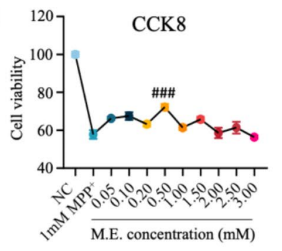
CCK8 assay of SH-SY5Y cells treated with MPP+ (MPP+ iodide, 1 mM; 24 h) and purified melanin.
MPP+ iodide purchased from MedChemExpress. Usage Cited in: J Nanobiotechnology. 2024 Nov 10;22(1):690. [Abstract]
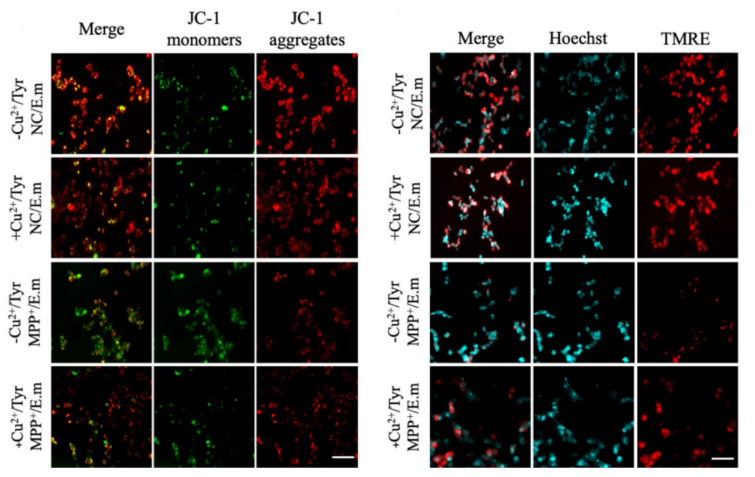
Typical JC-1 staining (Left) and TMRE staining (Right) of MPP+- (MPP+ iodide, 1 mM , 12 h) treated SH-SY5Y cells that were co-cultured with E. coli with distinct pretreatments.
-
Adv Sci (Weinh)
Neuroprotective Effects of Time-Restricted Feeding Combined With Different Protein Sources in MPTP-Induced Parkinson's Disease Mice Model and Its Modulatory Impact on Gut Microbiota Metabolism. [Abstract]2026 Apr;13(19):e16502. PMID: 41588858 -
Biomaterials
Nasal microenvironment self-responsive herbal hydrogel alleviates Parkinsonian pathology via the inhibition of α-synuclein liquid-liquid phase separation. [Abstract]2026 Jun 1:335:124350. PMID: 42247926 -
-
ACS Sens
A Sensitive Green-Red FRET Sensor for Calpain-1 Utilizing Heterodimeric Fluorescent Proteins from Distinct Evolutionary Origins. [Abstract]2026 Mar 27;11(3):1891-1907. PMID: 41837894 -
Cell Death Discov
Mitochondrial dysfunction-mediated metabolic remodeling of TCA cycle promotes Parkinson's disease through inhibition of H3K4me3 demethylation. [Abstract]2025 Jul 29;11(1):351. PMID: 40730642
MPP+ iodide purchased from MedChemExpress. Usage Cited in: Cell Death Discov. 2025 Jul 29;11(1):351. [Abstract]
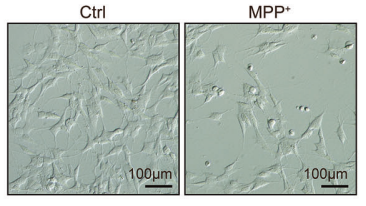
SH-SY5Y cells were treated for 24 h with 1 μM MPP (MPP+ iodide). Bright field images of cells in the PD cell model.
MPP+ iodide purchased from MedChemExpress. Usage Cited in: Cell Death Discov. 2025 Jul 29;11(1):351. [Abstract]
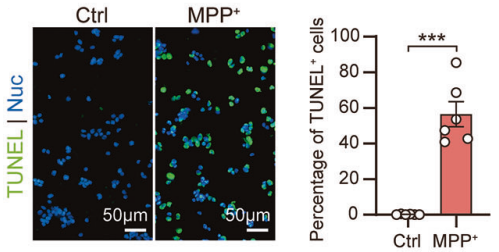
SH-SY5Y cells were treated for 24 h with 1 μM MPP (MPP+ iodide). Representative images (left) and ratios (right) of TUNEL+ cells in PD cell model.
MPP+ iodide purchased from MedChemExpress. Usage Cited in: Cell Death Discov. 2025 Jul 29;11(1):351. [Abstract]
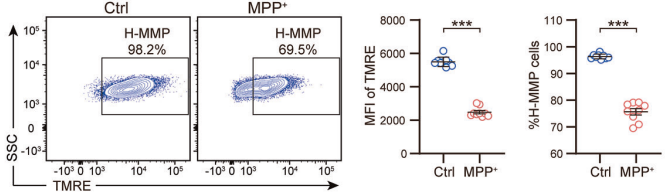
SH-SY5Y cells were treated for 24 h with 1 μM MPP (MPP+ iodide). Representative images of flow cytometric analysis of MMP in PD cell model (left), median fluorescence intensity (MFI; middle), and the proportion of high MMP (H-MMP) to total cell number (right).
-
Cell Death Discov
Regulation of BDNF transcription by Nrf2 and MeCP2 ameliorates MPTP-induced neurotoxicity. [Abstract]2022 May 20;8(1):267. PMID: 35595779 -
Int J Biol Macromol
Zinc-α₂-glycoprotein overexpression attenuates gasdermin D-mediated pyroptosis in dopaminergic neurons by suppressing reactive oxygen species/mitogen-activated protein kinase signaling. [Abstract]2026 Feb;343(Pt 2):150185. PMID: 41520969 -
Int J Nanomedicine
Extracellular Vesicles Derived from FGF2-Primed Astrocytes Against Mitochondrial and Synaptic Toxicities in Parkinson's Disease. [Abstract]2025 Apr 13:20:4627-4644. PMID: 40248029 -
Int J Nanomedicine
Exenatide-Modified Deferoxamine-Based Nanoparticles Ameliorates Neurological Deficits in Parkinson's Disease Mice. [Abstract]2024 Oct 15:19:10401-10414. PMID: 39430307 -
Int J Biol Macromol
Schisandra chinensis (Turcz.) Baill neutral polysaccharides alleviate Parkinson's disease via effectively activating MCL-1 expression regulation of autophagy signaling. [Abstract]2024 Aug 26;279(Pt 1):134952. PMID: 39197630 -
Int J Mol Med
Ceftriaxone affects ferroptosis and alleviates glial cell activation in Parkinson's disease. [Abstract]2025 Jun;55(6):85. PMID: 40183389 -
Cell Mol Neurobiol
Endoplasmic Reticulum Stress Inhibition Promotes Mitophagy via Miro1 Reduction to Rescue Mitochondrial Dysfunction and Protect Dopamine Neurons in Parkinson's Disease. [Abstract]2025 May 29;45(1):53. PMID: 40439946 -
J Med Chem
Discovery of Novel Indazole Chemotypes as Isoform-Selective JNK3 Inhibitors for the Treatment of Parkinson's Disease. [Abstract]2023 Jan 26;66(2):1273-1300. PMID: 36649216 -
Redox Rep
Uric acid alleviates the inflammatory response in LPS-induced BV2 cells and MPTP-induced PD mice by resisting ferroptosis through the Nrf2 signalling pathway. [Abstract]2026 Dec 31;31(1):2668238. PMID: 42241031 -
Neurosci Bull
Agomelatine Targets Aquaporin-4 Polarization to Rescue Glymphatic Dysfunction in Parkinson's Disease. [Abstract]2025 Nov 18. PMID: 41251938 -
J Ethnopharmacol
Mechanistic study of the anti-excitatory amino acid toxicity of Bushen Zhichan decoction for Parkinson's disease based on the transcriptional regulation of EAAT1 by YY1. [Abstract]2024 May 10:325:117857. PMID: 38350506 -
CNS Neurosci Ther
Artemisinin exerts a protective effect in the MPTP mouse model of Parkinson's disease by inhibiting microglial activation via the TLR4/Myd88/NF-KB pathway. [Abstract]2023 Apr;29(4):1012-1023. PMID: 36691817 -
Int Immunopharmacol
NR1H4 ameliorates Parkinson's disease via inhibiting astrocyte activation and neuroinflammation in a CEBPβ/NF-κB dependent manner. [Abstract]2024 Sep 5;142(Pt A):113087. PMID: 39241522 -
ACS Omega
Elucidating the Neuroprotective Mechanism of Geissoschizine Methyl Ether against Parkinson's Disease: Inhibition of Ferroptosis Pathway via Network Pharmacology and In Vitro Validation. [Abstract]2025 Sep 16;10(38):44447-44460. PMID: 41048757 -
Exp Gerontol
Overexpression of solute carrier family 6 member 12 promotes cell injury in Parkinson's disease via MAPK signaling pathway. [Abstract]2024 Sep:194:112484. PMID: 38871234 -
Exp Neurol
Narirutin reduces microglia-mediated neuroinflammation by inhibiting the JAK2/STAT3 pathway in MPP+/MPTP-induced Parkinson's disease models. [Abstract]2025 Jul:389:115232. PMID: 40169108 -
Neuropharmacology
Novel mechanism of hypidone hydrochloride (YL-0919) in Parkinson's disease: inhibiting neuronal ferroptosis by targeting the Sigma1R-PI3K-AKT-ACSL4 axis. [Abstract]2026 Jul 1:292:110950. PMID: 41887568 -
Metabolites
Multi-Omics Analysis Reveals Distinct Lipid Remodelling and Mitochondrial Stress in SH-SY5Y Cells Modelling Parkinson's Disease. [Abstract]2025 Dec 4;15(12):781. PMID: 41441023 -
ACS Chem Neurosci
Corilagin Attenuates Neuronal Apoptosis and Ferroptosis of Parkinson's Disease through Regulating the TLR4/Src/NOX2 Signaling Pathway. [Abstract]2025 Mar 5;16(5):968-980. PMID: 39950827 -
Neurochem Res
The Study of Overexpression of Peroxiredoxin-2 Reduces MPP+-Induced Toxicity in the Cell Model of Parkinson's Disease. [Abstract]2023 Jul;48(7):2129-2137. PMID: 36808393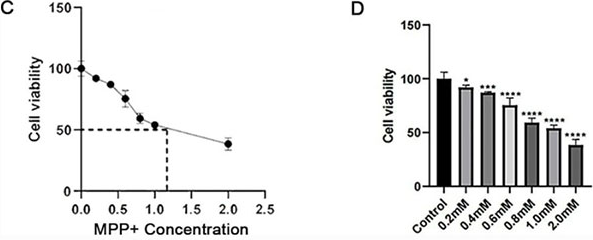
MPP+ iodide purchased from MedChemExpress. Usage Cited in: Neurochem Res. 2023 Jul;48(7):2129-2137. [Abstract]
MPP+ iodide (MPP+; 0, 0.2, 0.4, 0.6, 0.8, 1, 2 mM; 48 h) decreases viability of SH-SY5Y cells (Fig D). At a concentration of 0.6 mM, MPP+ iodide decreases the cell viability by 25%. Moreover, the IC50 value of MPP+ iodide on SH-SY5Y cells is 1.233 mM (Fig C).
MPP+ iodide purchased from MedChemExpress. Usage Cited in: Neurochem Res. 2023 Jul;48(7):2129-2137. [Abstract]
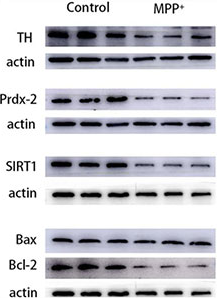
MPP+ iodide (MPP+; 1.2 mM; 48 h) decreases TH, Prdx-2, SIRT1 protein levels and increases the ratio of Bax / Bcl-2, in SH-SY5Y cells.
-
Metab Brain Dis
Exploring the therapeutic potential of the gut microbiota metabolite 3‑indolepropionic acid in parkinson's disease: a network pharmacology, molecular docking and cell viability study. [Abstract]2026 Feb 5;41(1):28. PMID: 41642359 -
Metab Brain Dis
Neuroprotective effect of sinomenine on parkinson's disease through NLRP3/Caspase-1/GSDMD pathway-mediated pyroptosis inhibition. [Abstract]2026 Jan 20;41(1):22. PMID: 41557055 -
-
Neuroscience
Activin A protects against lipopolysaccharide/TNF-α induced damage of dopaminergic neurons both in vivo and in vitro by regulating mitochondrial fusion. [Abstract]2025 Sep 26:587:108-122. PMID: 41016503 -
Psychopharmacology
18β-glycyrrhetinic acid ameliorates MPTP-induced neurotoxicity in mice through activation of microglial anti-inflammatory phenotype. [Abstract]2023 Sep;240(9):1947-1961. PMID: 37436491 -
Mol Biol Rep
2026 Apr 2;53(1):578. PMID: 41925956 -
Chin J Integr Med
Effect of Bushen Huoxue Granule on Clearance of Pathological α-Synuclein in MPP+-Induced PC12 Cells. [Abstract]2025 Mar 25. PMID: 40131610 -
Chem Biodivers
Rhein-Emodin Combination Activates UQCRC1 to Attenuate MPP+-Induced Ferroptosis in Dopaminergic Neurons. [Abstract]2026 Mar;23(3):e02053. PMID: 41838561 -
PeerJ
Identification of the mitochondria-related gene IRF7 shared by physical exercise and Parkinson's disease and exploration of its potential molecular mechanisms. [Abstract]2026 Mar 26:14:e20994. PMID: 41913932 -
Ann Hum Biol
Machine learning combined with WGCNA reveals potential calcium uptake-associated biomarkers in Parkinson's disease. [Abstract]2026 Dec;53(1):2661601. PMID: 42126032 -
-


Lösungsmittel & Löslichkeit
In Vitro:
H2O : 100 mg/mL (336.54 mM; Need ultrasonic)
DMSO : 100 mg/mL (336.54 mM; Need ultrasonic; Hygroscopic DMSO has a significant impact on the solubility of product, please use newly opened DMSO)
Please refer to the solubility information to select the appropriate solvent. Once prepared, please aliquot and store the solution to prevent product inactivation from repeated freeze-thaw cycles.
Storage method and period of stock solution: -80°C, 6 months; -20°C, 1 month (sealed storage, away from moisture and light). When stored at -80°C, please use it within 6 months. When stored at -20°C, please use it within 1 month.
* Note: If you choose water as the stock solution, please dilute it to the working solution, then filter and sterilize it with a 0.22 μm filter before use.
Please refer to the solubility information to select the appropriate solvent. Once prepared, please aliquot and store the solution to prevent product inactivation from repeated freeze-thaw cycles.
Storage method and period of stock solution: -80°C, 6 months; -20°C, 1 month (sealed storage, away from moisture and light). When stored at -80°C, please use it within 6 months. When stored at -20°C, please use it within 1 month.
* Note: If you choose water as the stock solution, please dilute it to the working solution, then filter and sterilize it with a 0.22 μm filter before use.
Konzentration (Stammlösung) × Volumen (Stammlösung) = Konzentration (Ziellösung) × Volumen (Ziellösung)
In Vivo:
Select the appropriate dissolution method based on your experimental animal and administration route.
- For the following dissolution methods, please ensure to first prepare a clear stock solution using an In Vitro approach and then sequentially add co-solvents:
- To ensure reliable experimental results, the clarified stock solution can be appropriately stored based on storage conditions. As for the working solution for In Vivo experiments, it is recommended to prepare freshly and use it on the same day.
- The percentages shown for the solvents indicate their volumetric ratio in the final prepared solution. If precipitation or phase separation occurs during preparation, heat and/or sonication can be used to aid dissolution.
Add each solvent one by one: 10% DMSO 40% PEG300 5% Tween-80 45% Saline
Solubility: ≥ 2.08 mg/mL (7.00 mM); Clear solution
This protocol yields a clear solution of ≥ 2.08 mg/mL (saturation unknown).
Taking 1 mL working solution as an example, add 100 μL DMSO stock solution (20.8 mg/mL) to 400 μL PEG300, and mix evenly; then add 50 μL Tween-80 and mix evenly; then add 450 μL Saline to adjust the volume to 1 mL.
Preparation of Saline: Dissolve 0.9 g sodium chloride in ddH₂O and dilute to 100 mL to obtain a clear Saline solution.
Add each solvent one by one: 10% DMSO 90% (20% SBE-β-CD in Saline)
Solubility: ≥ 2.08 mg/mL (7.00 mM); Clear solution
This protocol yields a clear solution of ≥ 2.08 mg/mL (saturation unknown).
Taking 1 mL working solution as an example, add 100 μL DMSO stock solution (20.8 mg/mL) to 900 μL 20% SBE-β-CD in Saline, and mix evenly.
Preparation of 20% SBE-β-CD in Saline (4°C, storage for one week): 2 g SBE-β-CD powder is dissolved in 10 mL Saline, completely dissolve until clear.
For the following dissolution methods, please prepare the working solution directly:
It is recommended to prepare fresh solutions and use them promptly within a short period of time.
The percentages shown for the solvents indicate their volumetric ratio in the final prepared solution. If precipitation or phase separation occurs during preparation, heat and/or sonication can be used to aid dissolution.
Add each solvent one by one: PBS
Solubility: 100 mg/mL (336.54 mM); Clear solution; Need ultrasonic
In Vivo Dissolution Calculator
Please enter the basic information of animal experiments:
-
-
-
-
Recommended: Prepare an additional quantity of animals to account for potential losses during experiments.
Working solution concentration: 0.22 mg/mL
This product has good water solubility, please refer to the measured solubility data in water/PBS/Saline for details.


Reinheit & Dokumentation
-
Data Sheet (276 KB)
-
SDS (480 KB)
- English - EN (480 KB)
- Français - FR (480 KB)
- Deutsch - DE (480 KB)
- Norwegian - NO (480 KB)
- Español - ES (480 KB)
- Swedish - SV (480 KB)
- Italian - IT (480 KB)
- Korean - KR (480 KB)
- Portuguese - PT (480 KB)
-
Handling Instructions (2659 KB)
Verweise
[1]. Zhao M, et al. Mitochondrial calcium dysfunction contributes to autophagic cell death induced by MPP+ via AMPK pathway. Biochem Biophys Res Commun. 2019;509(2):390-394. [Content Brief]
[2]. Martí Y, et al. Methyl-4-phenylpyridinium (MPP+) differentially affects monoamine release and re-uptake in murine embryonic stem cell-derived dopaminergic and serotonergic neurons. Mol Cell Neurosci. 2017;83:37-45. [Content Brief]
[3]. Charlton CG. 1-Methyl-4-phenylpyridinium (MPP+) but not 1-methyl-4-phenyl-1,2,3,6- tetrahydropyridine (MPTP) serves as methyl donor for dopamine: a possible mechanism of action. J Geriatr Psychiatry Neurol. 1992;5(2):114-118. [Content Brief]


Complete Stock Solution Preparation Table
Please refer to the solubility information to select the appropriate solvent. Once prepared, please aliquot and store the solution to prevent product inactivation from repeated freeze-thaw cycles.
Storage method and period of stock solution: -80°C, 6 months; -20°C, 1 month (sealed storage, away from moisture and light). When stored at -80°C, please use it within 6 months. When stored at -20°C, please use it within 1 month.
| Optional Solvent | Concentration Solvent Mass | 1 mg | 5 mg | 10 mg | 25 mg |
|---|---|---|---|---|---|
| H2O / DMSO | 1 mM | 3.3654 mL | 16.8271 mL | 33.6542 mL | 84.1354 mL |
| 5 mM | 0.6731 mL | 3.3654 mL | 6.7308 mL | 16.8271 mL | |
| 10 mM | 0.3365 mL | 1.6827 mL | 3.3654 mL | 8.4135 mL | |
| 15 mM | 0.2244 mL | 1.1218 mL | 2.2436 mL | 5.6090 mL | |
| 20 mM | 0.1683 mL | 0.8414 mL | 1.6827 mL | 4.2068 mL | |
| 25 mM | 0.1346 mL | 0.6731 mL | 1.3462 mL | 3.3654 mL | |
| 30 mM | 0.1122 mL | 0.5609 mL | 1.1218 mL | 2.8045 mL | |
| 40 mM | 0.0841 mL | 0.4207 mL | 0.8414 mL | 2.1034 mL | |
| 50 mM | 0.0673 mL | 0.3365 mL | 0.6731 mL | 1.6827 mL | |
| 60 mM | 0.0561 mL | 0.2805 mL | 0.5609 mL | 1.4023 mL | |
| 80 mM | 0.0421 mL | 0.2103 mL | 0.4207 mL | 1.0517 mL | |
| 100 mM | 0.0337 mL | 0.1683 mL | 0.3365 mL | 0.8414 mL |
* Note: If you choose water as the stock solution, please dilute it to the working solution, then filter and sterilize it with a 0.22 μm filter before use.


MPP+ iodide Related Classifications
HY-W008719 Related Classifications
 Powered by Bioz