



AST 487
Based on 5 publication(s) in Google Scholar
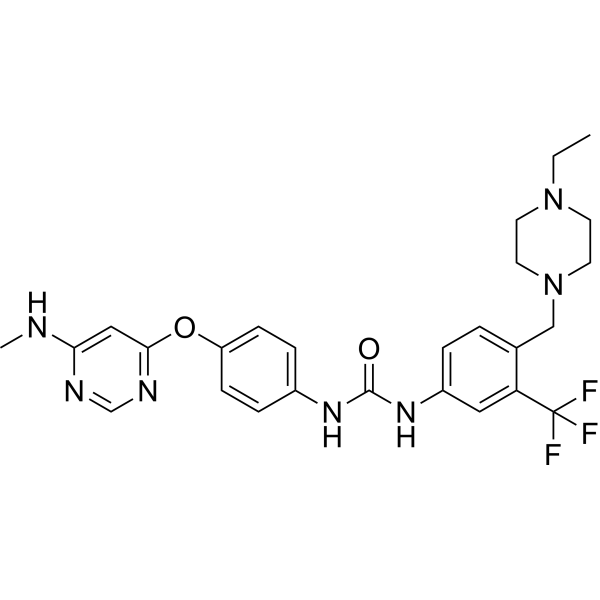
AST 487 is a RET kinase inhibitor with IC50 of 880 nM, inhibits RET autophosphorylation and activation of downstream effectors, also inhibits Flt-3 with IC50 of 520 nM.
Nos produits utilisent uniquement pour la recherche. Nous ne vendons pas aux patients.
- Pureté : 98.90%
- CAS No.: 630124-46-8
- Formule: C26H30F3N7O2
- Masse moléculaire:529.56
-
Stockage:Powder -20°C, 3 years , 4°C, 2 years ; In solvent -80°C, 2 years , -20°C, 1 year

To place orders, for customer services and technical support, please contact: MedChemExpress USA
Tel: 609-228-6898 E-mail: [email protected] [email protected]


-
 Activité biologique
-
Chemical Information
-
Solvant et solubilité
- Protocole
- Pureté et documentation
- Références
-
 Help & FAQs


-
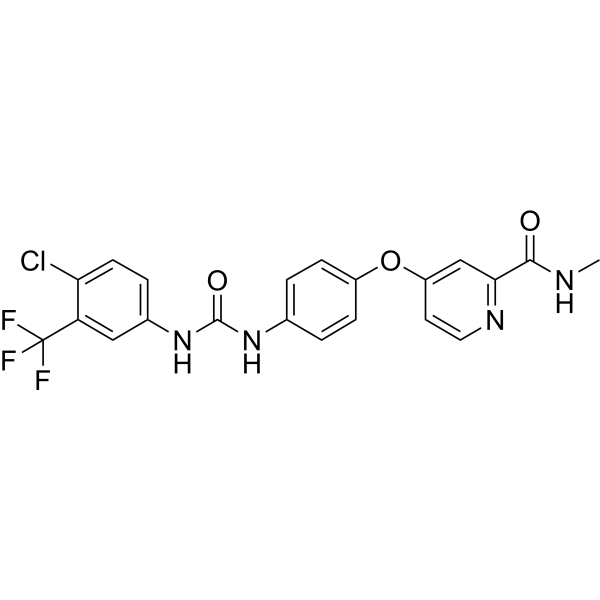
HY-10201
SorafenibMultikinase Inhibitor -
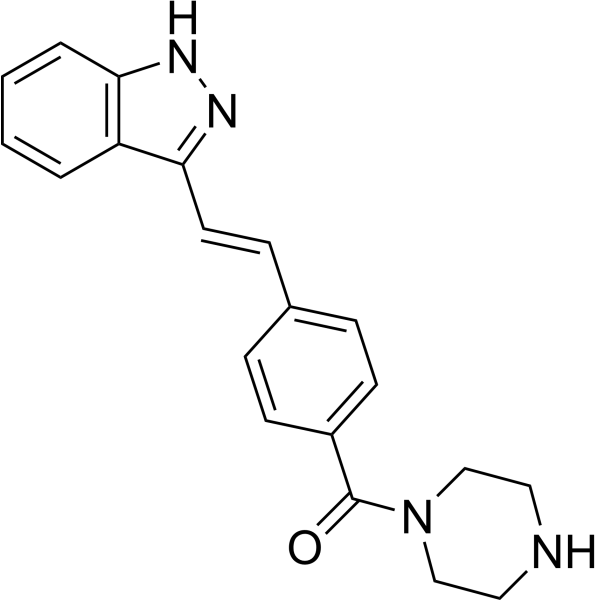
HY-10339
KW-2449Multi-Kinase Inhibitor -
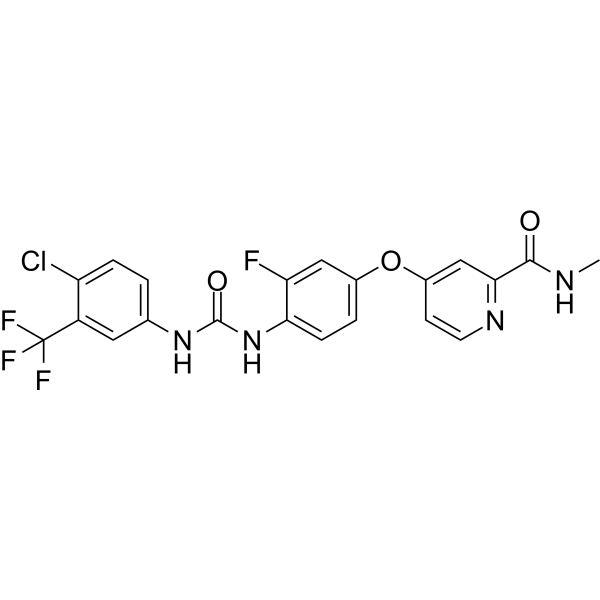
HY-10331
RegorafenibMulti-kinase Inhibitor -
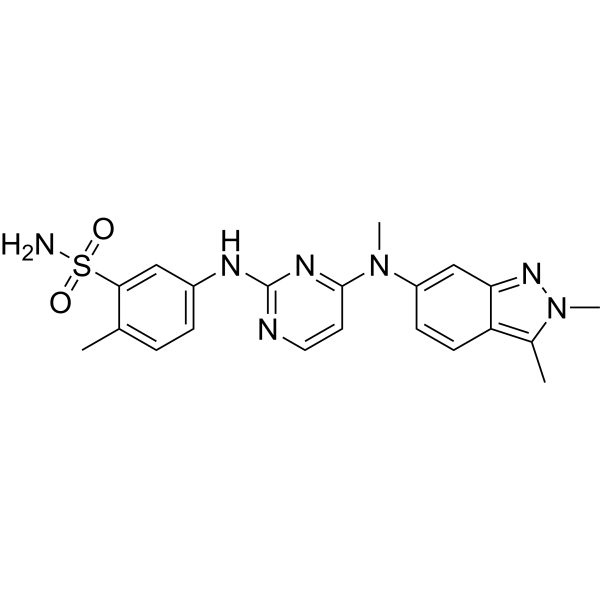
HY-10208
PazopanibVEGFR Inhibitor -
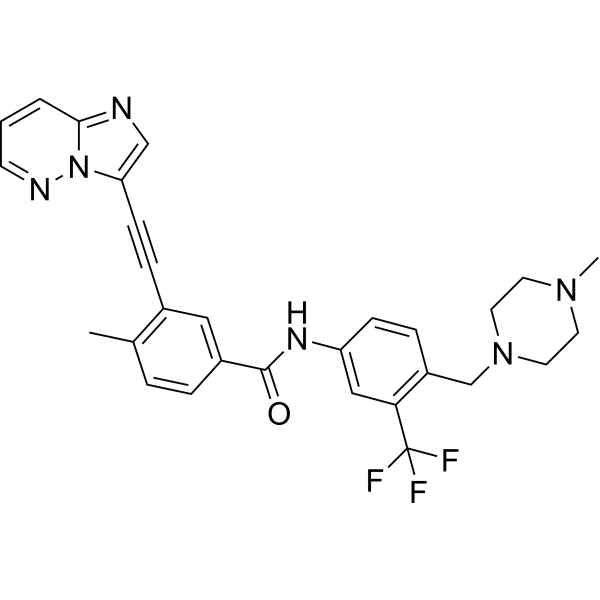
HY-12047
PonatinibMulti-targeted Kinase Inhibitor -
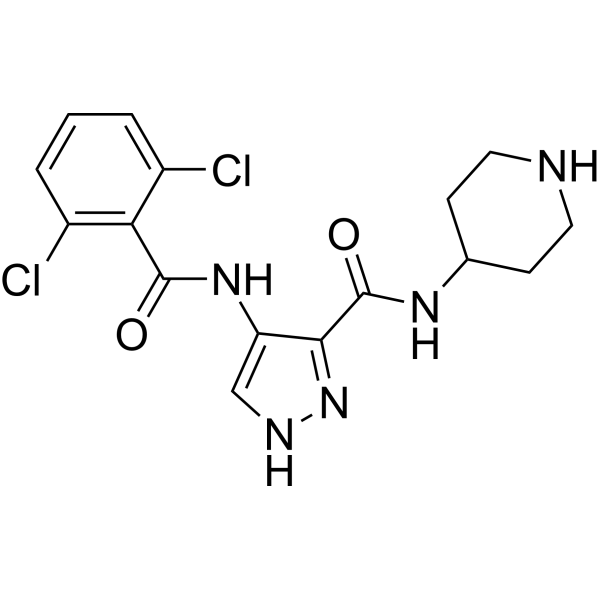
HY-50940
AT7519CDK Inhibitor -
HY-10256
Adezmapimodp38 MAPK Inhibitor -
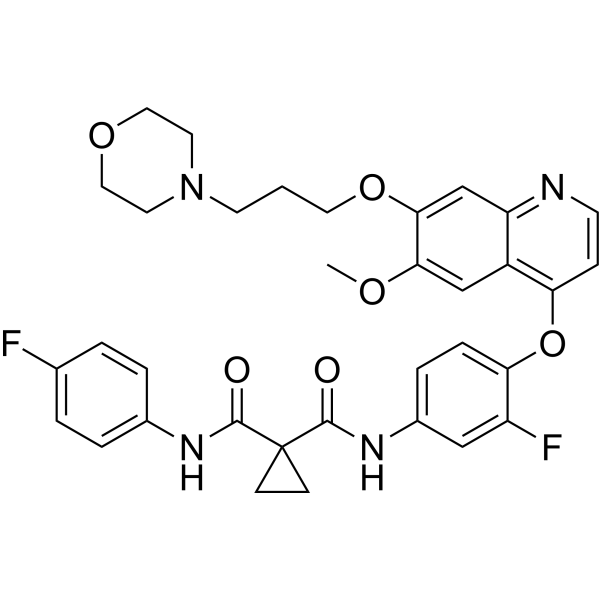
HY-10338
ForetinibMET/VEGFR2/KDR Inhibitor -
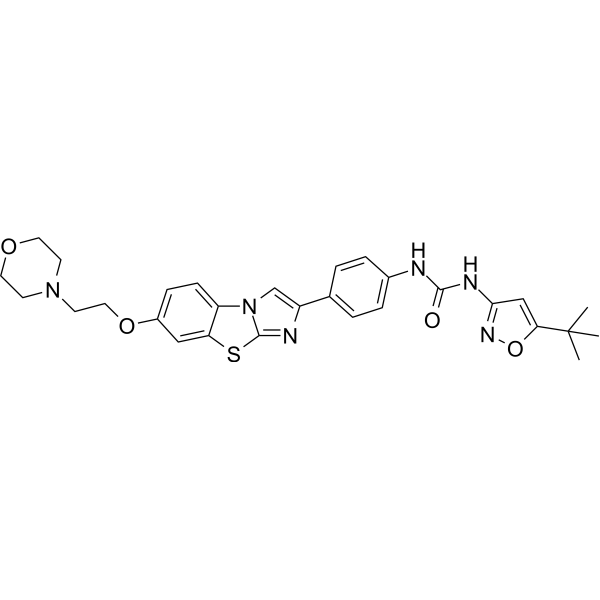
HY-13001
QuizartinibFLT3 Inhibitor -
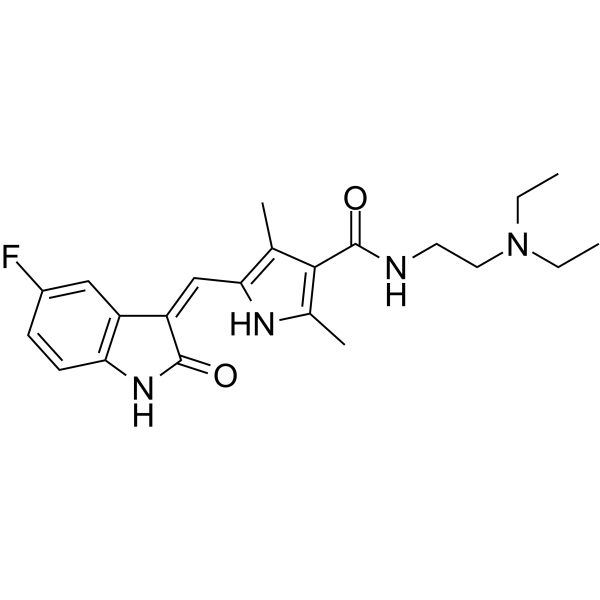
HY-10255A
SunitinibMulti-targeted RTK Inhibitor -
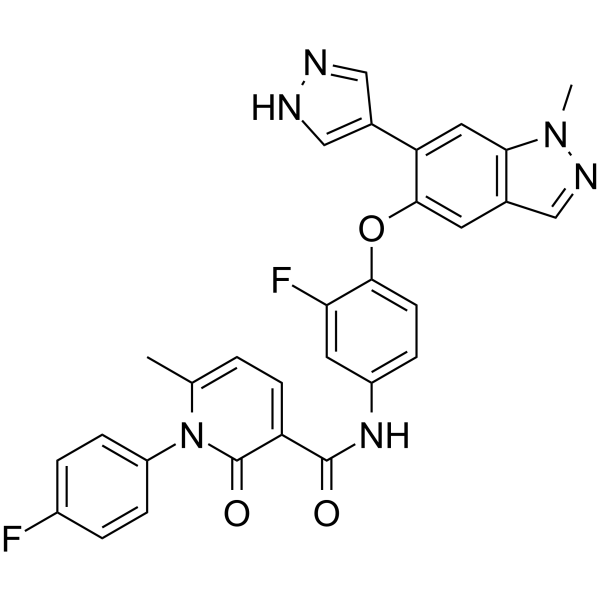
HY-15514
Merestinibc-Met Inhibitor -
HY-12333
DenfivontinibFLT3 Inhibitor
Publications Citing Use of MedChemExpress (MCE) AST 487
More Customer Validation & Images

-
WB
Voir tous les produits spécifiques à Isoform VEGFR
More

Activité biologique
Description
IC50 & Target
IC50: 880 nM (RET), 170 nM (KDR), 790 nM (Flt-4), 500 nM (c-Kit), 520 nM (Flt-3), 20 nM (Abl)[1]
In Vitro
A number of other kinases are also similarly inhibited by AST 487 (NVP-AST487) in the in vitro kinase assays, including KDR (IC50=170 nM), Flt-4 (IC50=790 nM), Flt-3 (IC50=520 nM), c-Kit (IC50=500 nM), and c-Abl (IC50=20 nM). AST 487 potently inhibits the growth of human thyroid cancer cell lines with activating mutations of RET but not of lines without RET mutations. Both GDNF/GFRα1 and persephin-induced calcitonin mRNA are markedly inhibited by coincubation with 100 nM of AST 487 in MTC-M cells[1]. AST 487 is a novel, mutant FLT3 inhibitor. AST 487 is tested in biochemical assays for inhibition of Flt-3 kinase activity. The Ki is determined to be 0.12 μM. Besides Flt-3, NVP-AST487 inhibits RET, KDR, c-Kit, and c-Abl kinase with IC50 values below 1 μM. Treatment of FLT3-ITD-Ba/F3 cells and D835Y-Ba/F3 cells with AST 487 potently inhibits cellular proliferation (IC50<5 nM). AST 487 treatment of FLT3-ITD-Ba/F3 cells with 0.01 μM AST 487 results in complete cell killing compare with approximately 50% killing of AML patient samples at the same concentration[2].
MedChemExpress (MCE) has not independently confirmed the accuracy of these methods. They are for reference only.
In Vivo
MedChemExpress (MCE) has not independently confirmed the accuracy of these methods. They are for reference only.


Chemical Information
-
CAS No. 630124-46-8
-
Appearance Solid
-
Masse moléculaire 529.56
-
Formule C26H30F3N7O2
-
Color White to off-white
-
SMILES
O=C(NC1=CC=C(OC2=NC=NC(NC)=C2)C=C1)NC3=CC=C(CN4CCN(CC)CC4)C(C(F)(F)F)=C3
-
Synonyms
NVP-AST 487
-
Livraison
Room temperature in continental US; may vary elsewhere.
-
Stockage
Powder -20°C 3 years 4°C 2 years In solvent -80°C 2 years -20°C 1 year


Publications (5)
-
Journal Impact Factor
-
Most Recent
-
Cell Res
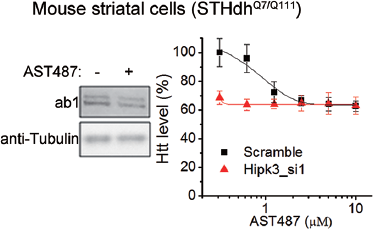
Suppression of MAPK11 or HIPK3 reduces mutant Huntingtin levels in Huntington's disease models. [Abstract]2017 Dec;27(12):1441-1465. PMID: 29151587
AST 487 purchased from MedChemExpress. Usage Cited in: Cell Res. 2017 Dec;27(12):1441-1465. [Abstract]
AST487 effectively lowers mHTT levels, and this effect is mitigated by knocking down HIPK3, confirming that AST487 reduces mHTT levels via inhibiting HIPK3.
-
ACS Chem Biol
A Chemical Probe Strategy for Interrogating Inhibitor Selectivity Across the MEK Kinase Family. [Abstract]2017 May 19;12(5):1245-1256. PMID: 28263556 -
PLoS One
A novel small molecule screening assay using normal human chondrocytes toward osteoarthritis drug discovery. [Abstract]2024 Nov 1;19(11):e0308647. PMID: 39485774 -
Protein Expr Purif
Refolding and purification of cGMP-grade recombinant human neurturin from Escherichia coli inclusion bodies. [Abstract]2020 Apr:168:105552. PMID: 31866372 -


Solvant et solubilité
In Vitro:
DMSO : ≥ 100 mg/mL (188.84 mM; Hygroscopic DMSO has a significant impact on the solubility of product, please use newly opened DMSO)
* "≥" means soluble, but saturation unknown.
Please refer to the solubility information to select the appropriate solvent. Once prepared, please aliquot and store the solution to prevent product inactivation from repeated freeze-thaw cycles.
Storage method and period of stock solution: -80°C, 2 years; -20°C, 1 year. When stored at -80°C, please use it within 2 years. When stored at -20°C, please use it within 1 year.
Please refer to the solubility information to select the appropriate solvent. Once prepared, please aliquot and store the solution to prevent product inactivation from repeated freeze-thaw cycles.
Storage method and period of stock solution: -80°C, 2 years; -20°C, 1 year. When stored at -80°C, please use it within 2 years. When stored at -20°C, please use it within 1 year.
Concentration (start) × Volume (start) = Concentration (final) × Volume (final)
In Vivo:
Select the appropriate dissolution method based on your experimental animal and administration route.
- For the following dissolution methods, please ensure to first prepare a clear stock solution using an In Vitro approach and then sequentially add co-solvents:
- To ensure reliable experimental results, the clarified stock solution can be appropriately stored based on storage conditions. As for the working solution for In Vivo experiments, it is recommended to prepare freshly and use it on the same day.
- The percentages shown for the solvents indicate their volumetric ratio in the final prepared solution. If precipitation or phase separation occurs during preparation, heat and/or sonication can be used to aid dissolution.
Add each solvent one by one: 10% DMSO 40% PEG300 5% Tween-80 45% Saline
Solubility: ≥ 2.5 mg/mL (4.72 mM); Clear solution
This protocol yields a clear solution of ≥ 2.5 mg/mL (saturation unknown).
Taking 1 mL working solution as an example, add 100 μL DMSO stock solution (25.0 mg/mL) to 400 μL PEG300, and mix evenly; then add 50 μL Tween-80 and mix evenly; then add 450 μL Saline to adjust the volume to 1 mL.
Preparation of Saline: Dissolve 0.9 g sodium chloride in ddH₂O and dilute to 100 mL to obtain a clear Saline solution.
Add each solvent one by one: 10% DMSO 90% (20% SBE-β-CD in Saline)
Solubility: ≥ 2.5 mg/mL (4.72 mM); Clear solution
This protocol yields a clear solution of ≥ 2.5 mg/mL (saturation unknown).
Taking 1 mL working solution as an example, add 100 μL DMSO stock solution (25.0 mg/mL) to 900 μL 20% SBE-β-CD in Saline, and mix evenly.
Preparation of 20% SBE-β-CD in Saline (4°C, storage for one week): 2 g SBE-β-CD powder is dissolved in 10 mL Saline, completely dissolve until clear.
In Vivo Dissolution Calculator
Please enter the basic information of animal experiments:
-
-
-
-
Recommended: Prepare an additional quantity of animals to account for potential losses during experiments.
Please enter your animal formula composition:
-
%DMSO +
Recommended: Keep the proportion of DMSO in working solution below 2% if your animal is weak.
-
%+
-
+%Tween-80 + +
-
%Saline +
The co-solvents required include: DMSO, . All of co-solvents are available by MedChemExpress (MCE). , Tween 80. All of co-solvents are available by MedChemExpress (MCE).
Working solution concentration: 0.22 mg/mL
Method for preparing stock solution: mg drug dissolved in μL DMSO. Stock solution concentration: mg/mL.
1. Take μL DMSO stock solution;
2. Add μL .
μL , mix evenly;
3. Then add μL Tween 80, mix evenly;
4. Then add μL
Please ensure that the stock solution in the first step is dissolved to a clear state, and add co-solvents in sequence. You can use ultrasonic heating (ultrasonic cleaner, recommended frequency 20-40 kHz), vortexing, etc. to assist dissolution.


Pureté et documentation
-
Fiche technique (280 KB)
-
SDS (393 KB)
- English - EN (393 KB)
- Français - FR (393 KB)
- Deutsch - DE (393 KB)
- Norwegian - NO (393 KB)
- Español - ES (393 KB)
- Swedish - SV (393 KB)
- Italian - IT (393 KB)
- Korean - KR (393 KB)
- Portuguese - PT (393 KB)
-
Instruction de manipulation (2659 KB)
Références
[1]. Akeno-Stuart N, et al. The RET Kinase Inhibitor NVP-AST487 Blocks Growth and Calcitonin Gene Expression through Distinct Mechanisms in Medullary Thyroid Cancer Cells. Cancer Res. 2007 Jul 15;67(14):6956-64. [Content Brief]
[2]. Weisberg E, et al. Antileukemic effects of the novel, mutant FLT3 inhibitor NVP-AST487: effects on PKC412-sensitive and -resistant FLT3-expressing cells. Blood. 2008 Dec 15;112(13):5161-70. [Content Brief]


Complete Stock Solution Preparation Table
Please refer to the solubility information to select the appropriate solvent. Once prepared, please aliquot and store the solution to prevent product inactivation from repeated freeze-thaw cycles.
Storage method and period of stock solution: -80°C, 2 years; -20°C, 1 year. When stored at -80°C, please use it within 2 years. When stored at -20°C, please use it within 1 year.
| Optional Solvent | Concentration Solvent Mass | 1 mg | 5 mg | 10 mg | 25 mg |
|---|---|---|---|---|---|
| DMSO | 1 mM | 1.8884 mL | 9.4418 mL | 18.8836 mL | 47.2090 mL |
| 5 mM | 0.3777 mL | 1.8884 mL | 3.7767 mL | 9.4418 mL | |
| 10 mM | 0.1888 mL | 0.9442 mL | 1.8884 mL | 4.7209 mL | |
| 15 mM | 0.1259 mL | 0.6295 mL | 1.2589 mL | 3.1473 mL | |
| 20 mM | 0.0944 mL | 0.4721 mL | 0.9442 mL | 2.3605 mL | |
| 25 mM | 0.0755 mL | 0.3777 mL | 0.7553 mL | 1.8884 mL | |
| 30 mM | 0.0629 mL | 0.3147 mL | 0.6295 mL | 1.5736 mL | |
| 40 mM | 0.0472 mL | 0.2360 mL | 0.4721 mL | 1.1802 mL | |
| 50 mM | 0.0378 mL | 0.1888 mL | 0.3777 mL | 0.9442 mL | |
| 60 mM | 0.0315 mL | 0.1574 mL | 0.3147 mL | 0.7868 mL | |
| 80 mM | 0.0236 mL | 0.1180 mL | 0.2360 mL | 0.5901 mL | |
| 100 mM | 0.0189 mL | 0.0944 mL | 0.1888 mL | 0.4721 mL |


AST 487 Related Classifications
HY-15002 Related Classifications
 Powered by Bioz