



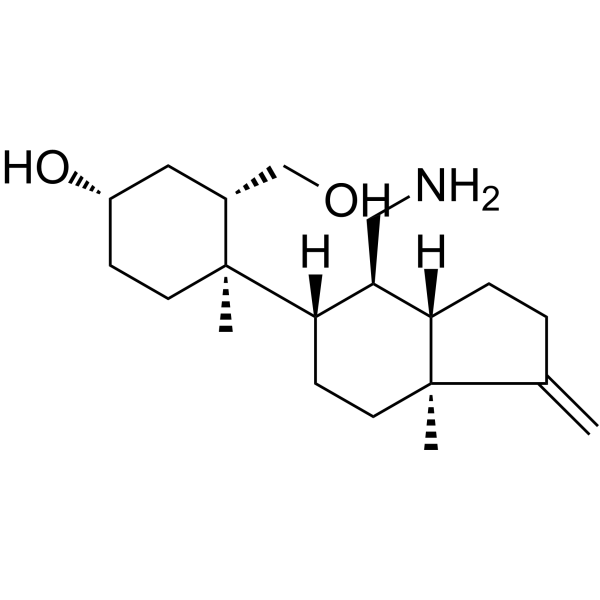
Rosiptor
Based on 3 publication(s) in Google Scholar
Rosiptor (AQX-1125) is a selective and orally active phosphatase SHIP1 activator with anti-inflammatory effects. Rosiptor (AQX-1125) inhibits Akt phosphorylation, inflammatory mediator production and leukocyte chemotaxis in vitro.
Nos produits utilisent uniquement pour la recherche. Nous ne vendons pas aux patients.
- Pureté : 99.73%
- CAS No.: 782487-28-9
- Formule: C20H35NO2
- Masse moléculaire:321.50
-
Stockage:Powder -20°C, 3 years , 4°C, 2 years ; In solvent -80°C, 2 years , -20°C, 1 year

To place orders, for customer services and technical support, please contact: MedChemExpress USA
Tel: 609-228-6898 E-mail: [email protected] [email protected]


-
 Activité biologique
-
Chemical Information
-
Solvant et solubilité
- Protocole
- Pureté et documentation
- Références
-
 Help & FAQs


-
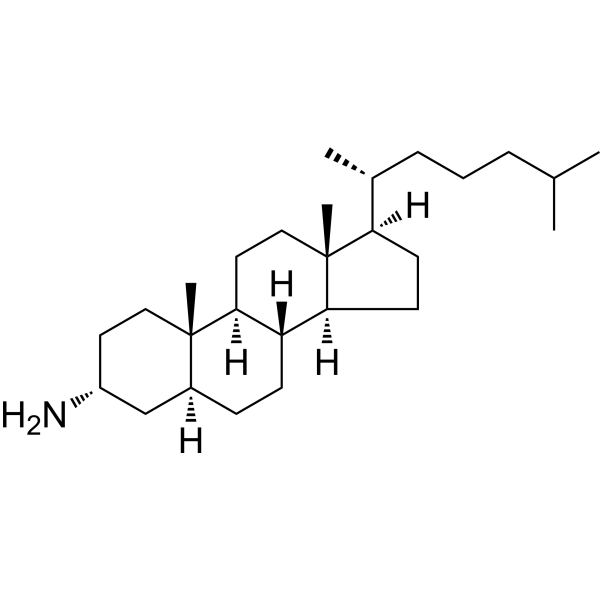
HY-19776
3α-AminocholestanePhosphatase Inhibitor -
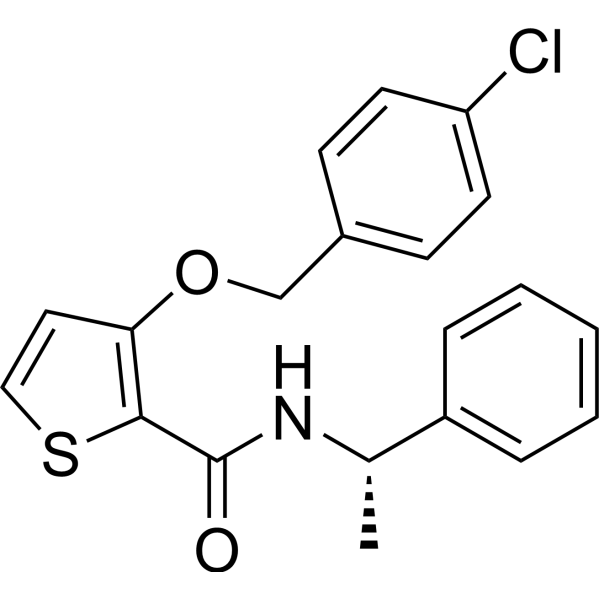
HY-18686
AS1949490SHIP2 Phosphatase Inhibitor -
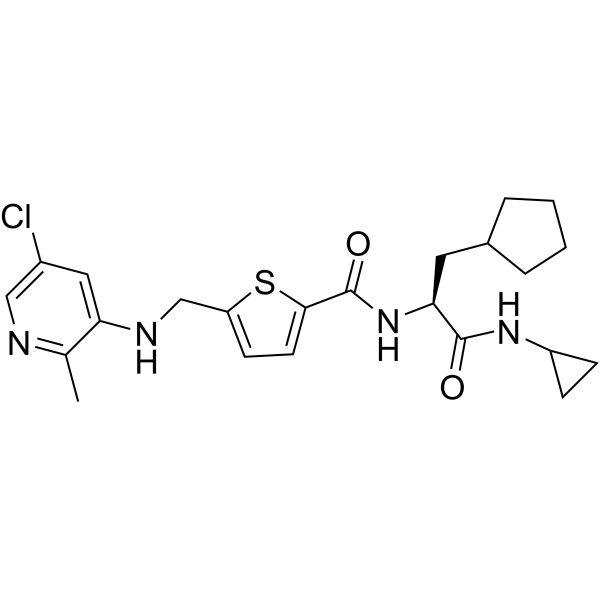
HY-15832
GSK 2830371Wip1 Phosphatase Inhibitor -
HY-15969
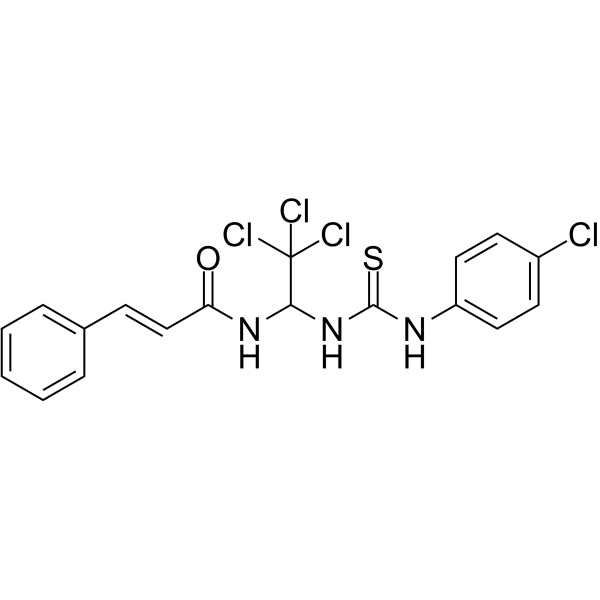
Sal003eIF2α Phophatase Inhibitor -
HY-100388
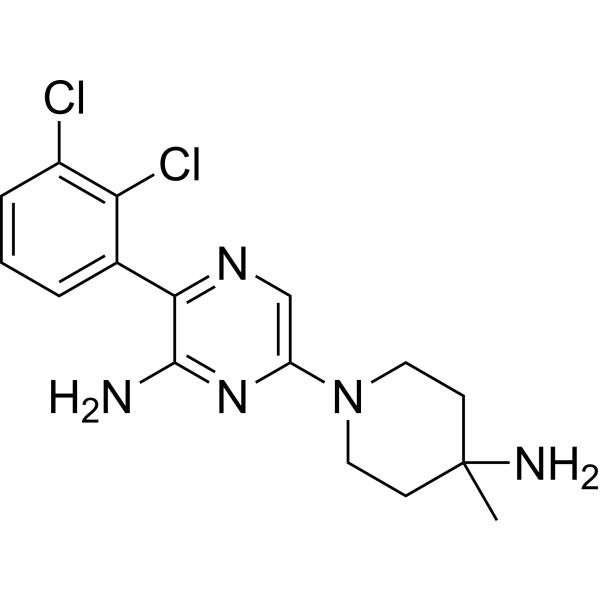
SHP099SHP2 Inhibitor -
HY-D0852
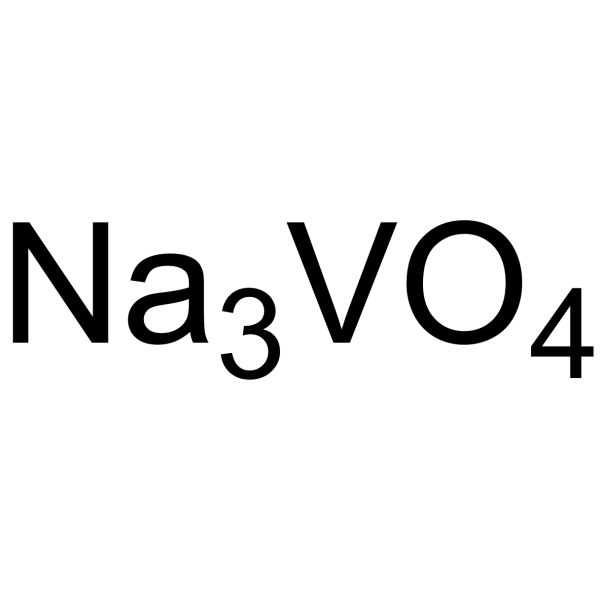
Sodium orthovanadateProtein Tyrosine/Alkaline Phosphatase Inhibitor -
HY-18983
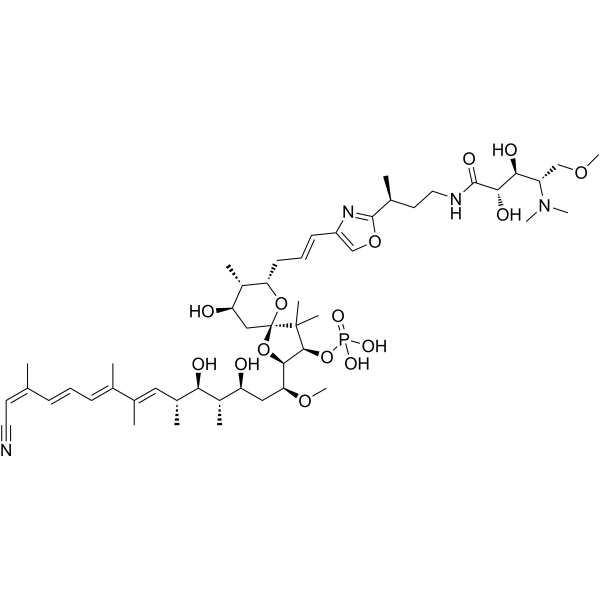
Calyculin APhosphatase Inhibitor -
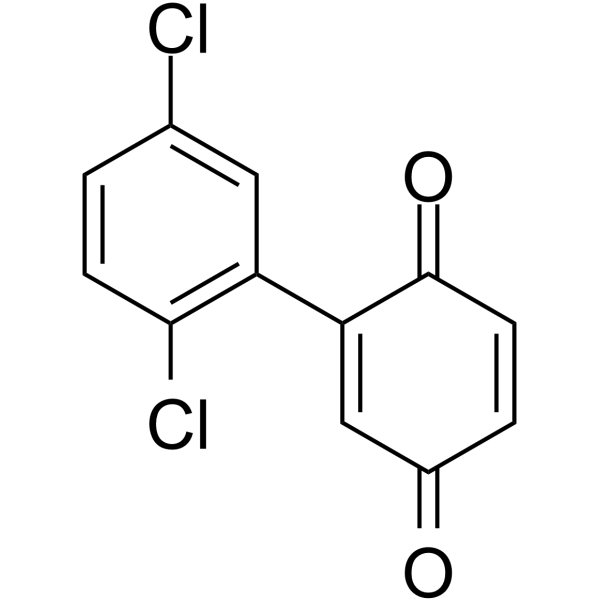
HY-100463
TPI-1SHP-1 Inhibitor -
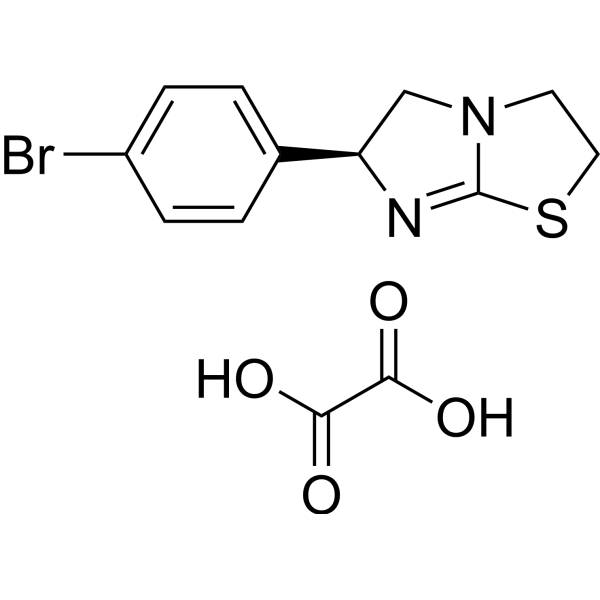
HY-19695
(-)-p-Bromotetramisole oxalateAlkaline Phosphatase Inhibitor -
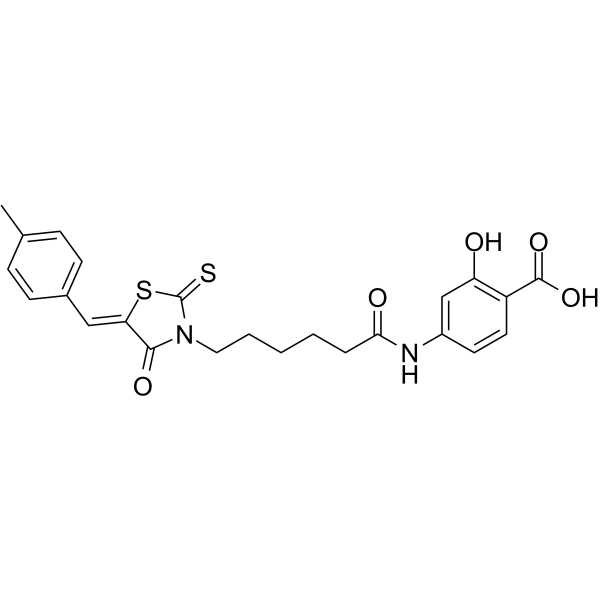
HY-101510
F1063-0967DUSP26 Inhibitor -
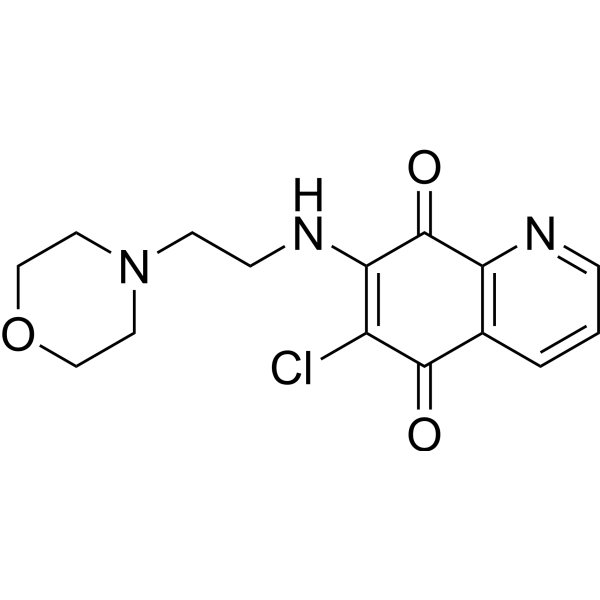
HY-100034
NSC 663284Cdc25 Inhibitor
Publications Citing Use of MedChemExpress (MCE) Rosiptor
More

Activité biologique
Description
IC50 & Target
SHIP1[1]
In Vitro
Rosiptor (0.1-10 μM; 30 minutes) inhibits Akt activation in MOLT-4, but not in Jurkat cells[1].
MedChemExpress (MCE) has not independently confirmed the accuracy of these methods. They are for reference only.
-
Cell Line:MOLT-4 cells and SHIP1-deficient Jurkat cells (IGF-1 stimulation)
-
Concentration:0.1, 1, 10 μM
-
Incubation Time:30 minutes
-
Result:Induced a concentration-dependent decrease in Akt phosphorylation in MOLT-4 cells, while it failed to affect Akt phosphorylation in Jurkat cells.
In Vivo
Rosiptor (10 mg/kg; p.o.) has the Cmax value of 0.830 μM and the t1/2 value of 5.2 hours. AQX-1125 also exhibits >80% oral bioavailability[1].
MedChemExpress (MCE) has not independently confirmed the accuracy of these methods. They are for reference only.
-
Animal Model:6-8 weeks old male CD-1 mice[1]
-
Dosage:3, 10, 30 mg/kg
-
Administration:p.o.; daily for 3 days
-
Result:Significantly reduced the total number of BAL leukocytes in NSC-125066-challenged mice, up to a maximum of 60% at 7 days and 63% at 21 days at 30 mg/kg; Reduced MPO activity by 54% at Day 7 and by 74% at Day 21 at 30 mg/kg.
-
Animal Model:Male Sprague-Dawley rats[1]
-
Dosage:10 mg/kg (Pharmacokinetic Study)
-
Administration:Oral administration
-
Result:The Cmax value is 0.830 μM and the t1/2 value is 5.2 hours.
- Kinase activity and phosphorylation assays
- Western Blot
- Cell migration
- Zigmond Chamber Chemotaxis Assay
- Under-Agarose Cell Migration Assay
- Transwell/Boyden Chamber Migration Assay
- Research Protocol for Inflammation-related Diseases
- Protocol for Kinase activity and phosphorylation assays
- Dunn/Insall Chamber Chemotaxis Assay
Essai clinique
| NCT Number | Sponsor | Condition | Start Date |
Phase

|
|---|---|---|---|---|
| NCT01329991 | Plexxikon| | 2011-05 | PHASE1 |


Chemical Information
-
CAS No. 782487-28-9
-
Appearance Solid
-
Masse moléculaire 321.50
-
Formule C20H35NO2
-
Color White to off-white
-
SMILES
C[C@@]([C@H]1CO)(CC[C@H](O)C1)[C@](CC[C@@]2(C)[C@@]3([H])CCC2=C)([H])[C@H]3CN
-
Synonyms
AQX-1125
-
Livraison
Room temperature in continental US; may vary elsewhere.
-
Stockage
Powder -20°C 3 years 4°C 2 years In solvent -80°C 2 years -20°C 1 year


Publications (3)
-
Journal Impact Factor
-
Most Recent
-
Front Cell Dev Biol
SHIP1 Activator AQX-1125 Regulates Osteogenesis and Osteoclastogenesis Through PI3K/Akt and NF-κb Signaling. [Abstract]2022 Apr 4;10:826023. PMID: 35445030 -
Antiviral Res
SHIP-1 affects herpetic simplex keratitis prognosis by mediating CD4+ T lymphocytes migration through PI3K signaling and transcription factor KLF2 in the cornea. [Abstract]2022 Nov:207:105424. PMID: 36155071 -
Cell Biol Int
Effective inhibition of miR-330/SHIP1/NF-κB signaling pathway via miR-330 sponge repolarizes microglia differentiation. [Abstract]2021 Apr;45(4):785-794. PMID: 33325083


Solvant et solubilité
In Vitro:
DMSO : 150 mg/mL (466.56 mM; Need ultrasonic and warming; Hygroscopic DMSO has a significant impact on the solubility of product, please use newly opened DMSO)
Please refer to the solubility information to select the appropriate solvent. Once prepared, please aliquot and store the solution to prevent product inactivation from repeated freeze-thaw cycles.
Storage method and period of stock solution: -80°C, 2 years; -20°C, 1 year. When stored at -80°C, please use it within 2 years. When stored at -20°C, please use it within 1 year.
Please refer to the solubility information to select the appropriate solvent. Once prepared, please aliquot and store the solution to prevent product inactivation from repeated freeze-thaw cycles.
Storage method and period of stock solution: -80°C, 2 years; -20°C, 1 year. When stored at -80°C, please use it within 2 years. When stored at -20°C, please use it within 1 year.
Concentration (start) × Volume (start) = Concentration (final) × Volume (final)


Pureté et documentation
-
Fiche technique (276 KB)
-
SDS (252 KB)
- English - EN (252 KB)
- Français - FR (252 KB)
- Deutsch - DE (252 KB)
- Norwegian - NO (252 KB)
- Español - ES (252 KB)
- Swedish - SV (252 KB)
- Italian - IT (252 KB)
- Korean - KR (252 KB)
- Portuguese - PT (252 KB)
-
Instruction de manipulation (2659 KB)
Références
[1]. Stenton GR, et al. Characterization of AQX-1125, a small-molecule SHIP1 activator: Part 1. Effects on inflammatory cell activation and chemotaxis in vitro and pharmacokinetic characterization in vivo. Br J Pharmacol. 2013 Mar;168(6):1506-18. [Content Brief]
[2]. Cross J, et al. AQX-1125, small molecule SHIP1 activator inhibits NSC-125066-induced pulmonary fibrosis. Br J Pharmacol. 2017 Sep;174(18):3045-3057. [Content Brief]


Complete Stock Solution Preparation Table
Please refer to the solubility information to select the appropriate solvent. Once prepared, please aliquot and store the solution to prevent product inactivation from repeated freeze-thaw cycles.
Storage method and period of stock solution: -80°C, 2 years; -20°C, 1 year. When stored at -80°C, please use it within 2 years. When stored at -20°C, please use it within 1 year.
| Optional Solvent | Concentration Solvent Mass | 1 mg | 5 mg | 10 mg | 25 mg |
|---|---|---|---|---|---|
| DMSO | 1 mM | 3.1104 mL | 15.5521 mL | 31.1042 mL | 77.7605 mL |
| 5 mM | 0.6221 mL | 3.1104 mL | 6.2208 mL | 15.5521 mL | |
| 10 mM | 0.3110 mL | 1.5552 mL | 3.1104 mL | 7.7760 mL | |
| 15 mM | 0.2074 mL | 1.0368 mL | 2.0736 mL | 5.1840 mL | |
| 20 mM | 0.1555 mL | 0.7776 mL | 1.5552 mL | 3.8880 mL | |
| 25 mM | 0.1244 mL | 0.6221 mL | 1.2442 mL | 3.1104 mL | |
| 30 mM | 0.1037 mL | 0.5184 mL | 1.0368 mL | 2.5920 mL | |
| 40 mM | 0.0778 mL | 0.3888 mL | 0.7776 mL | 1.9440 mL | |
| 50 mM | 0.0622 mL | 0.3110 mL | 0.6221 mL | 1.5552 mL | |
| 60 mM | 0.0518 mL | 0.2592 mL | 0.5184 mL | 1.2960 mL | |
| 80 mM | 0.0389 mL | 0.1944 mL | 0.3888 mL | 0.9720 mL | |
| 100 mM | 0.0311 mL | 0.1555 mL | 0.3110 mL | 0.7776 mL |


Rosiptor Related Classifications
HY-109011 Related Classifications
 Powered by Bioz