



Tafluprost
Based on 1 publication(s) in Google Scholar
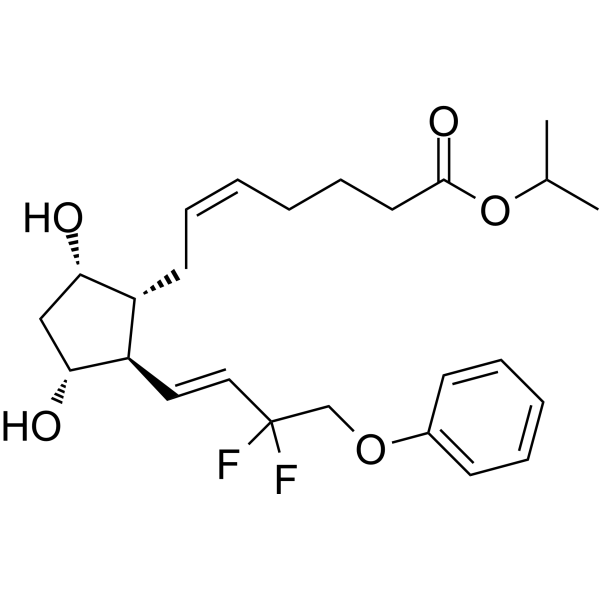
Tafluprost (AFP-168) is an anti-glaucoma prostaglandin (PG) analog. Tafluprost can inhibit the apoptosis of retinal ganglion cells (RGCs) and rat RGCs cells. Tafluprost promotes axon regeneration by regulating Zn2+-mTORpathway, inhibits intracellular lipid accumulation in human preorbital adipocytes. Tafluprost can be used in the study of optic nerve injury in glaucoma.
Nos produits utilisent uniquement pour la recherche. Nous ne vendons pas aux patients.
- Pureté : 99.69%
- CAS No.: 209860-87-7
- Formule: C25H34F2O5
- Masse moléculaire:452.53
-
Stockage:Pure form -20°C, 3 years , 4°C, 2 years ; In solvent -80°C, 6 months , -20°C, 1 month

To place orders, for customer services and technical support, please contact: MedChemExpress USA
Tel: 609-228-6898 E-mail: [email protected] [email protected]


-
 Activité biologique
-
Chemical Information
-
Solvant et solubilité
- Protocole
- Pureté et documentation
- Références
-
 Help & FAQs


-
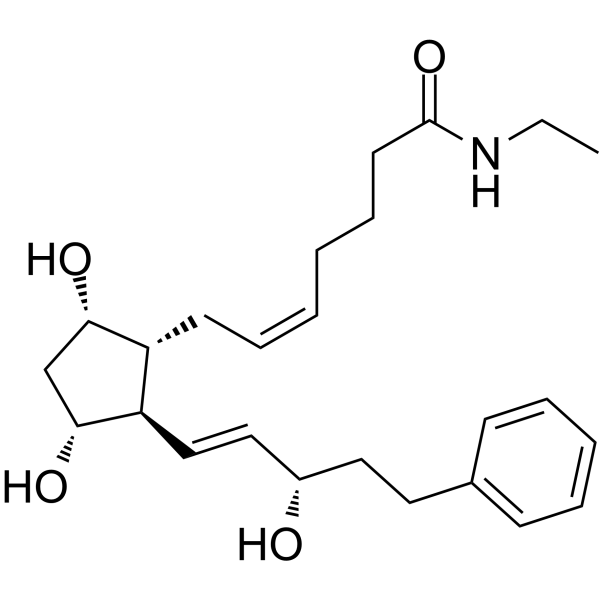
HY-B0191
BimatoprostProstaglandin Analog -
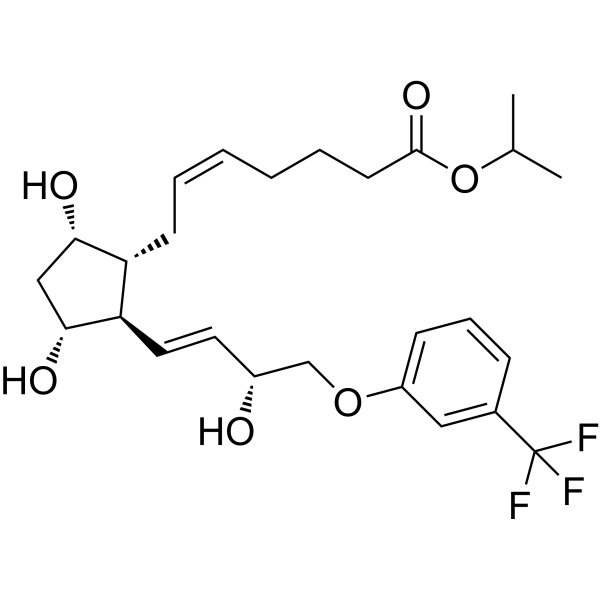
HY-B0584
TravoprostFP Prostaglandin Receptor Agonist -
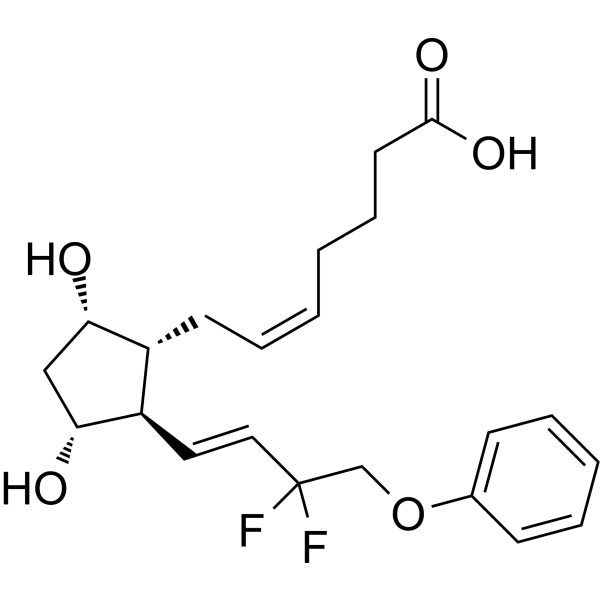
HY-B0601
Tafluprost acidFP Receptor Agonist -
HY-108560
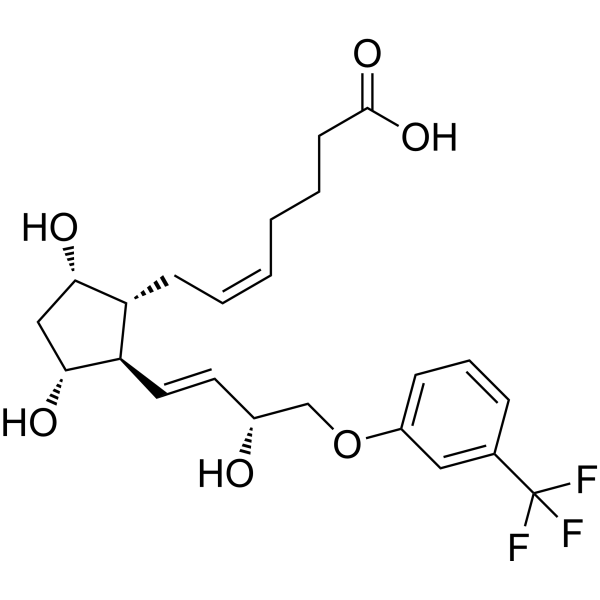
(+)-FluprostenolPTGER2 Agonist -

HY-125774
Bimatoprost acidProstaglandin FP Receptor Agonist -
HY-B0577
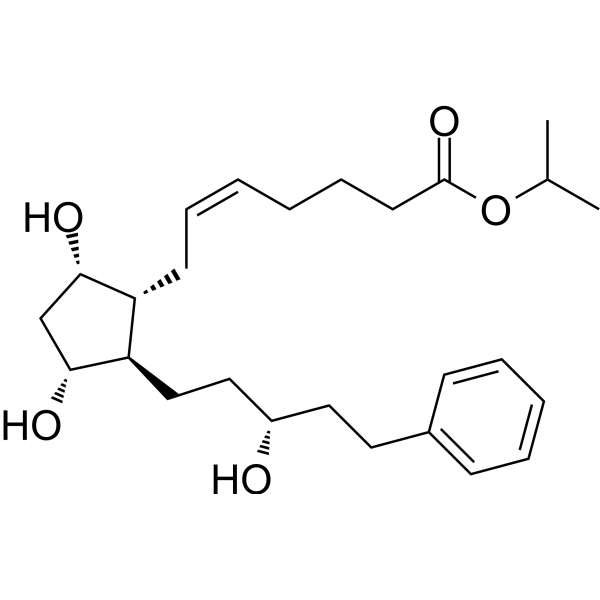
LatanoprostProstaglandin Receptor Agonist -
HY-17380
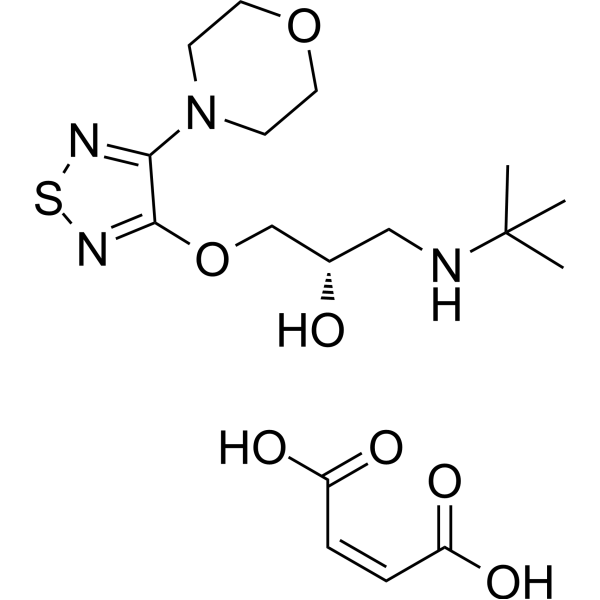
(S)-Timolol maleateβ-Adrenoceptor Blocker -
HY-B0131
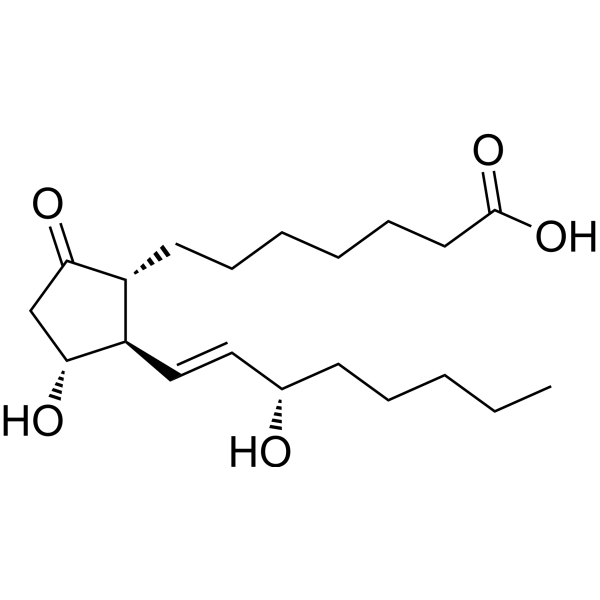
Prostaglandin E1Vasodilator -
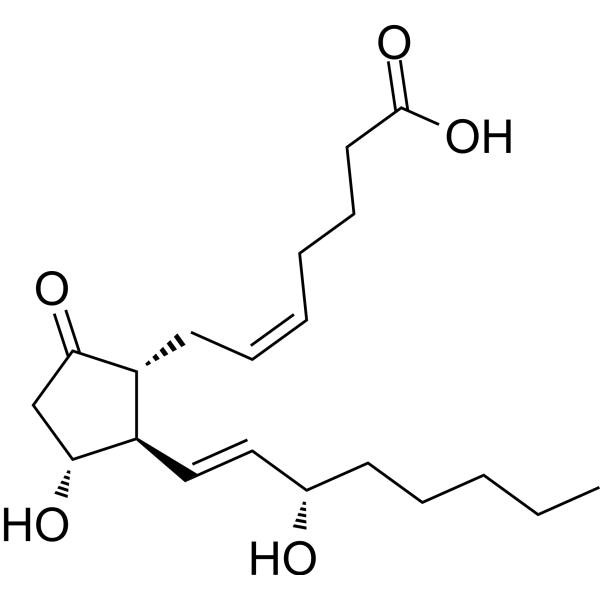
HY-101952
Prostaglandin E2Prostaglandin Receptor Agonist -

HY-B0600R
Tafluprost (Standard)Prostaglandin Receptor Agonist -
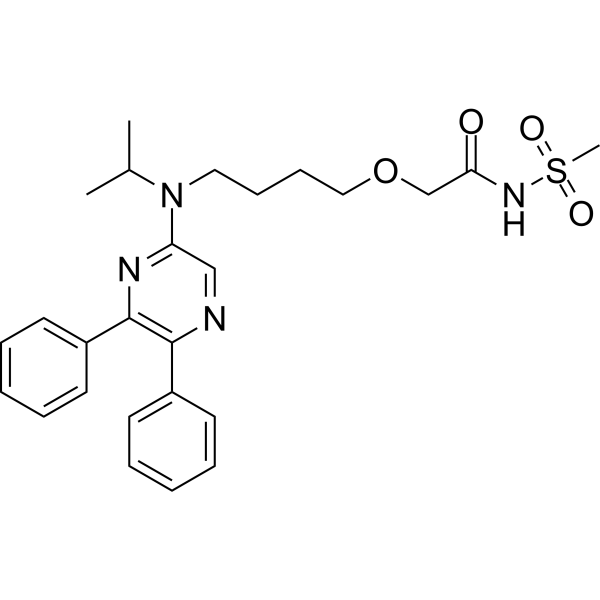
HY-14870
SelexipagProstaglandin Receptor Agonist -
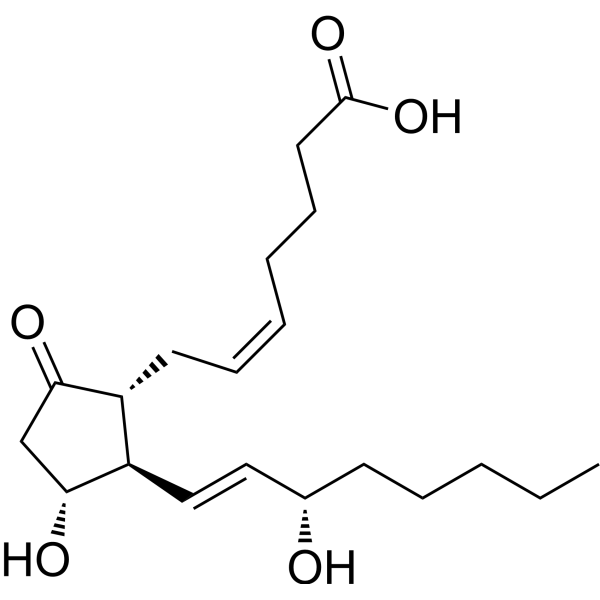
HY-101952R
Prostaglandin E2 (Standard)
Publications Citing Use of MedChemExpress (MCE) Tafluprost
More

Activité biologique
Description
In Vitro
Tafluprost (3 μM, 48 h) decreases the number of apoptosis in RGC-5 cells[1].
Tafluprost (0.1-100 μM, 48 h) enhances cell viability in RGC-5 cells in a dose-dependent manner[2].
MedChemExpress (MCE) has not independently confirmed the accuracy of these methods. They are for reference only. Further protocols information, click here.
-
Cell Line:RGC
-
Concentration:0.1, 1, 3, 10, 100 μM
-
Incubation Time:48 h
-
Result:Enhanced the viability of these cells in a dose-dependent fashion, with an optimal concentration of 3μM.
Increased the relative fluorescence intensity (RFI).
In Vivo
MedChemExpress (MCE) has not independently confirmed the accuracy of these methods. They are for reference only.
-
Animal Model:Male Sprague rat model[2]
-
Dosage:0.0015%
-
Administration:Via eye drops
-
Result:Increased the number of RGCs and reduced the number of TUNEL-positive cells.
-
Animal Model:Prostaglandin receptor deletion C57BL/6 mice model[3]
-
Dosage:3 μL (0.0015% Tafluprost)
-
Administration:Instillation; Single dose
-
Result:Reduced IOP in WT, EP1KO, EP2KO, EP3KO and FPKO mice, and the average IOP reduction rates were 25.8(2.1)%, 26.3(0.8)%, 24.2(1.4)%, 16.5(1.7)% and 20.9(1.5)%, respectively. (The decrease of IOP in EP3KO and FPKO mice was less than that in WT mice.)
Essai clinique
| NCT Number | Sponsor | Condition | Start Date |
Phase

|
|---|---|---|---|---|
| NCT01329991 | Plexxikon| | 2011-05 | PHASE1 |


Chemical Information
-
CAS No. 209860-87-7
-
Appearance Liquid (Density: 1.186 g/cm3)
-
Masse moléculaire 452.53
-
Formule C25H34F2O5
-
Color Colorless to light yellow
-
SMILES
O=C(OC(C)C)CCC/C=C\C[C@@H]1[C@@H](/C=C/C(F)(F)COC2=CC=CC=C2)[C@H](O)C[C@@H]1O
-
Synonyms
AFP-168; MK2452
-
Livraison
Room temperature in continental US; may vary elsewhere.
-
Stockage
Pure form -20°C 3 years 4°C 2 years In solvent -80°C 6 months -20°C 1 month


Publications (1)
-
Journal Impact Factor
-
Most Recent


Solvant et solubilité
In Vitro:
DMSO : ≥ 250 mg/mL (552.45 mM; Hygroscopic DMSO has a significant impact on the solubility of product, please use newly opened DMSO)
* "≥" means soluble, but saturation unknown.
Please refer to the solubility information to select the appropriate solvent. Once prepared, please aliquot and store the solution to prevent product inactivation from repeated freeze-thaw cycles.
Storage method and period of stock solution: -80°C, 6 months; -20°C, 1 month. When stored at -80°C, please use it within 6 months. When stored at -20°C, please use it within 1 month.
Please refer to the solubility information to select the appropriate solvent. Once prepared, please aliquot and store the solution to prevent product inactivation from repeated freeze-thaw cycles.
Storage method and period of stock solution: -80°C, 6 months; -20°C, 1 month. When stored at -80°C, please use it within 6 months. When stored at -20°C, please use it within 1 month.
Concentration (start) × Volume (start) = Concentration (final) × Volume (final)
In Vivo:
Select the appropriate dissolution method based on your experimental animal and administration route.
- For the following dissolution methods, please ensure to first prepare a clear stock solution using an In Vitro approach and then sequentially add co-solvents:
- To ensure reliable experimental results, the clarified stock solution can be appropriately stored based on storage conditions. As for the working solution for In Vivo experiments, it is recommended to prepare freshly and use it on the same day.
- The percentages shown for the solvents indicate their volumetric ratio in the final prepared solution. If precipitation or phase separation occurs during preparation, heat and/or sonication can be used to aid dissolution.
Add each solvent one by one: 10% DMSO 40% PEG300 5% Tween-80 45% Saline
Solubility: ≥ 2.25 mg/mL (4.97 mM); Clear solution
This protocol yields a clear solution of ≥ 2.25 mg/mL (saturation unknown).
Taking 1 mL working solution as an example, add 100 μL DMSO stock solution (22.5 mg/mL) to 400 μL PEG300, and mix evenly; then add 50 μL Tween-80 and mix evenly; then add 450 μL Saline to adjust the volume to 1 mL.
Preparation of Saline: Dissolve 0.9 g sodium chloride in ddH₂O and dilute to 100 mL to obtain a clear Saline solution.
Add each solvent one by one: 10% DMSO 90% (20% SBE-β-CD in Saline)
Solubility: ≥ 2.25 mg/mL (4.97 mM); Clear solution
This protocol yields a clear solution of ≥ 2.25 mg/mL (saturation unknown).
Taking 1 mL working solution as an example, add 100 μL DMSO stock solution (22.5 mg/mL) to 900 μL 20% SBE-β-CD in Saline, and mix evenly.
Preparation of 20% SBE-β-CD in Saline (4°C, storage for one week): 2 g SBE-β-CD powder is dissolved in 10 mL Saline, completely dissolve until clear.
In Vivo Dissolution Calculator
Please enter the basic information of animal experiments:
-
-
-
-
Recommended: Prepare an additional quantity of animals to account for potential losses during experiments.
Please enter your animal formula composition:
-
%DMSO +
Recommended: Keep the proportion of DMSO in working solution below 2% if your animal is weak.
-
%+
-
+%Tween-80 + +
-
%Saline +
The co-solvents required include: DMSO, . All of co-solvents are available by MedChemExpress (MCE). , Tween 80. All of co-solvents are available by MedChemExpress (MCE).
Working solution concentration: 0.22 mg/mL
Method for preparing stock solution: mg drug dissolved in μL DMSO. Stock solution concentration: mg/mL.
1. Take μL DMSO stock solution;
2. Add μL .
μL , mix evenly;
3. Then add μL Tween 80, mix evenly;
4. Then add μL
Please ensure that the stock solution in the first step is dissolved to a clear state, and add co-solvents in sequence. You can use ultrasonic heating (ultrasonic cleaner, recommended frequency 20-40 kHz), vortexing, etc. to assist dissolution.

Protocole
-
3T3-L1 preadipocyte-to-adipocyte differentiation
3T3-L1 preadipocytes are induced to differentiate after growth arrest using adipogenic media containing insulin, dexamethasone, and IBMX; differentiation is assessed by lipid-droplet accumulation, triglyceride increase, Oil Red O staining, and adipocyte-marker induction such as PPARγ and C/EBPα.
-
Apoptosis
Apoptosis, also called programmed cell death, is generally characterized by distinct morphological characteristics.
-
TUNEL staining for apoptotic DNA fragmentation
TUNEL staining detects DNA strand breaks by using terminal deoxynucleotidyl transferase to add labeled nucleotides to exposed 3′-OH DNA termini, generating either microscopic staining in fixed cells or tissue sections, or fluorescence/cytometric signal in cell suspensions. TUNEL positivity reflects DNA fragmentation but should not be interpreted alone as definitive apoptosis, because TUNEL can also label necrotic, autolytic, mechanically damaged, or DNA-repair-associated DNA breaks.
-
Annexin V plus membrane-impermeant dye apoptosis staining
Annexin V-based apoptosis assays rely on the detection of phosphatidylserine (PS) externalization from the inner leaflet of the plasma membrane to the outer leaflet, an early biochemical hallmark of apoptosis. Fluorescently labeled Annexin V binds PS in a calcium-dependent manner, enabling identification of early apoptotic cells by flow cytometry or fluorescence microscopy. When combined with a membrane-impermeant DNA-binding dye (e. g. , propidium iodide), this approach allows discrimination between viable (Annexin V−/dye−), early apoptotic (Annexin V+/dye−), and late apoptotic or necrotic (Annexin V+/dye+) cell populations by assessing membrane integrity and PS exposure.
-
Large-size fat particle sorting
Large-size fat particle sorting is widely used to isolate cells up to 200 μm in diameter. Single-cell flow sorting will allow greater insight into adipocyte heterogeneity by identifying gene expression, protein composition, and metabolic signatures at the single-cell level.
-
Apoptosis Solutions
Apoptosis is a regulated, generally non-lytic cell-death pathway that removes unwanted, damaged, infected, or abnormal cells through coordinated morphological changes, caspase activation, DNA fragmentation, and membrane remodeling. The intrinsic apoptosis pathway is controlled mainly by mitochondrial outer membrane permeabilization, BCL-2 family proteins, cytochrome c release, apoptosome formation, caspase-9 activation, and downstream executioner caspase-3/7 activation. The extrinsic apoptosis pathway is initiated by death receptors such as Fas, TNFR, and TRAIL receptors, which recruit adaptor proteins and activate caspase-8 before engaging executioner caspases or mitochondrial amplification through BID cleavage. Apoptosis is linked to many phenotypes, including cancer cell killing, tissue homeostasis, immune regulation, neurodegeneration, infection response, and treatment-induced cytotoxicity; unresolved questions include how apoptosis interacts with necroptosis, pyroptosis, ferroptos
-
Lipid Droplets: Oil Red O/Sudan Dye Lipid Staining
Lipid droplets are intracellular organelles with a neutral-lipid core that stores triacylglycerols and sterol esters, and Oil Red O or Sudan dyes detect these hydrophobic lipid deposits by partitioning into retained lipids in fresh or frozen specimens. Oil Red O stains neutral triglycerides and lipids in frozen tissue sections or air-dried cytologic preparations, while Sudan Black B has also been used as a histochemical fat stain for lipid-rich tissue structures.


Pureté et documentation
-
Fiche technique (280 KB)
-
SDS (396 KB)
- English - EN (396 KB)
- Français - FR (396 KB)
- Deutsch - DE (396 KB)
- Norwegian - NO (396 KB)
- Español - ES (396 KB)
- Swedish - SV (396 KB)
- Italian - IT (396 KB)
- Korean - KR (396 KB)
- Portuguese - PT (396 KB)
-
Instruction de manipulation (2659 KB)
Références
[1]. Kuwayama, Y. and A. Nomura, Prospective observational post-marketing study of tafluprost for glaucoma and ocular hypertension: short-term efficacy and safety. Adv Ther, 2014. 31(4): p. 461-71. [Content Brief]
[2]. Kanamori A, et al. Tafluprost protects rat retinal ganglion cells from apoptosis in vitro and in vivo. Graefes Arch Clin Exp Ophthalmol. 2009 Oct;247(10):1353-60. [Content Brief]
[3]. Ota T, et al. The IOP-lowering effects and mechanism of action of tafluprost in prostanoid receptor-deficient mice. Br J Ophthalmol. 2007 May;91(5):673-6. [Content Brief]
[4]. Kumagami, T., et al., Comparison of corneal safety and intraocular pressure-lowering effect of tafluprost ophthalmic solution with other prostaglandin ophthalmic solutions. J Ocul Pharmacol Ther, 2014. 30(4): p. 340-5. [Content Brief]
[5]. Inoue, K., A. Tanaka, and G. Tomita, Effects of tafluprost treatment for 3 years in patients with normal-tension glaucoma. Clin Ophthalmol, 2013. 7: p. 1411-6. [Content Brief]


Complete Stock Solution Preparation Table
Please refer to the solubility information to select the appropriate solvent. Once prepared, please aliquot and store the solution to prevent product inactivation from repeated freeze-thaw cycles.
Storage method and period of stock solution: -80°C, 6 months; -20°C, 1 month. When stored at -80°C, please use it within 6 months. When stored at -20°C, please use it within 1 month.
| Optional Solvent | Concentration Solvent Mass | 1 mg | 5 mg | 10 mg | 25 mg |
|---|---|---|---|---|---|
| DMSO | 1 mM | 2.2098 mL | 11.0490 mL | 22.0980 mL | 55.2450 mL |
| 5 mM | 0.4420 mL | 2.2098 mL | 4.4196 mL | 11.0490 mL | |
| 10 mM | 0.2210 mL | 1.1049 mL | 2.2098 mL | 5.5245 mL | |
| 15 mM | 0.1473 mL | 0.7366 mL | 1.4732 mL | 3.6830 mL | |
| 20 mM | 0.1105 mL | 0.5524 mL | 1.1049 mL | 2.7622 mL | |
| 25 mM | 0.0884 mL | 0.4420 mL | 0.8839 mL | 2.2098 mL | |
| 30 mM | 0.0737 mL | 0.3683 mL | 0.7366 mL | 1.8415 mL | |
| 40 mM | 0.0552 mL | 0.2762 mL | 0.5524 mL | 1.3811 mL | |
| 50 mM | 0.0442 mL | 0.2210 mL | 0.4420 mL | 1.1049 mL | |
| 60 mM | 0.0368 mL | 0.1841 mL | 0.3683 mL | 0.9207 mL | |
| 80 mM | 0.0276 mL | 0.1381 mL | 0.2762 mL | 0.6906 mL | |
| 100 mM | 0.0221 mL | 0.1105 mL | 0.2210 mL | 0.5524 mL |


Tafluprost Related Classifications
HY-B0600 Related Classifications
 Powered by Bioz