



Chitin, from shrimp shells (powder)

Based on 1 Customer Validation
Chitin, from shrimp shells (powder) is a long-chain polymer of N-acetylglucosamine with β-(1-4) linkages. Chitin, from shrimp shells (powder) is found in the exoskeleton of crabs. Chitin, from shrimp shells (powder) inhibits the activation of NF-κB p65, alters the translocation of NF-κB p65 to the nucleus, and interacts with the cell wall of Candida species. Chitin, from shrimp shells (powder) exerts antifungal and anti-inflammatory effects. Chitin, from shrimp shells (powder) can be used in the research of gastric ulcer and candidiasis.
For research use only. We do not sell to patients.
- CAS No.: 1398-61-4
-
Storage:
4°C, sealed storage, away from moisture
* In solvent : -80°C, 6 months; -20°C, 1 month (sealed storage, away from moisture)


To place orders, for customer services and technical support, please contact: MedChemExpress USA
Tel: 609-228-6898 E-mail: [email protected] [email protected]


-
 Biological Activity
-
Chemical Information
- Protocols
- Purity & Documentation
- References
-
 Help & FAQs


-
HY-126389
Chitin, from crab carapace (powder),biomedical research gradeBiochemical Assay Reagent -

HY-126389B
Chitin, from shrimp shells (chitinase substrate)Chitinase Substrate -

HY-126389C
Chitin, from crab carapaceChitin -
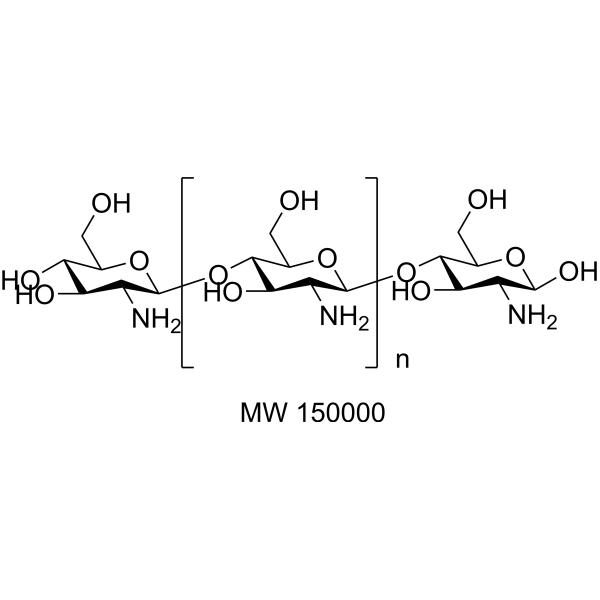
HY-B2144A
Chitosan (MW 150000) (≥85% deacetylated)Bacterial Inhibitor -
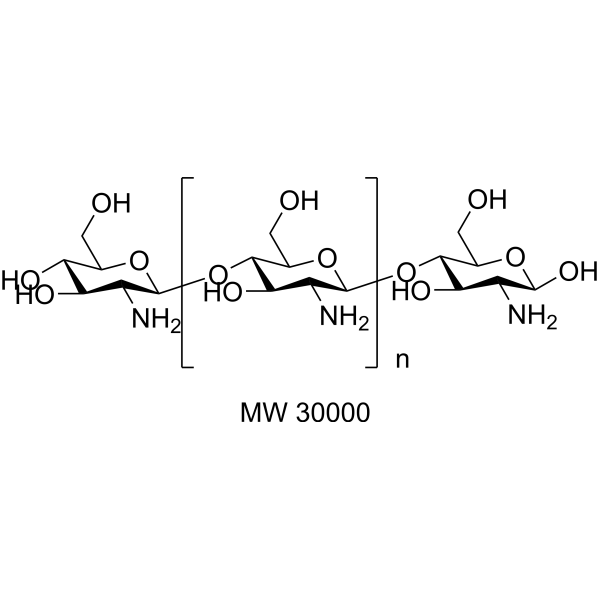
HY-B2144B
Chitosan (MW 30000) (≥85% deacetylated)Bacterial Inhibitor -

HY-B2144K
Chitosan (≥85% deacetylated, viscosity>90 mPa.s, MW 15000)Polysaccharid -
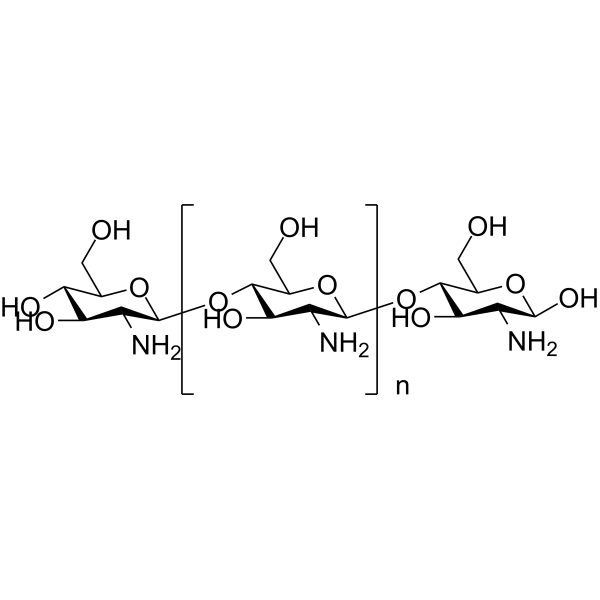
HY-B2144E
Chitosan (≥90% deacetylated, Low viscosity,<200mPa.s)Biochemical Assay Reagent -
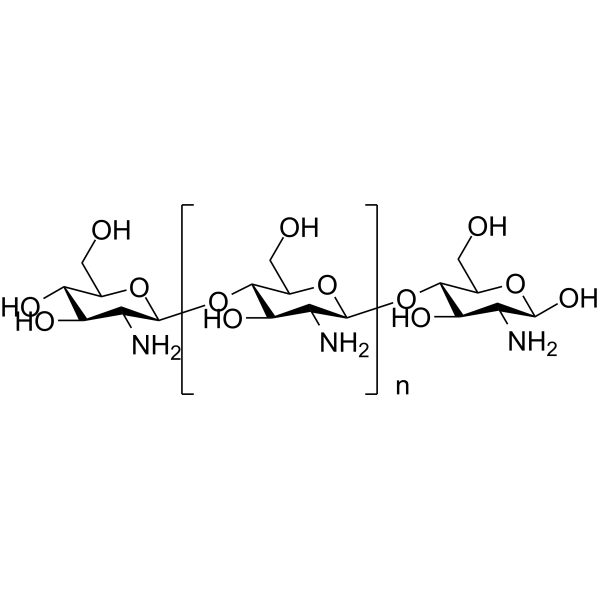
HY-B2144F
Chitosan (≥80% deacetylated, Medium viscosity,200-400mPa.s)Biochemical Assay Reagent -
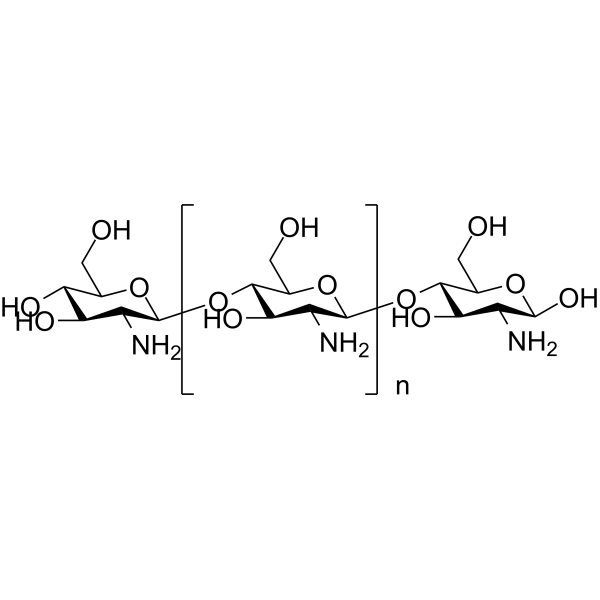
HY-B2144C
Chitosan (≥95% deacetylated,viscosity 100-200 mPa.s)Biochemical Assay Reagent -

HY-B2144J
Chitosan (≥90% deacetylated,viscosity 650-700 mPa.s)Biochemical Assay Reagent -

HY-B2144I
Chitosan (≥90% deacetylated,viscosity 10 mPa.s)Biochemical Assay Reagent -

HY-B2144N
Chitosan (≥98% deacetylated,mushroom)PEG Derivative
All Endogenous Metabolite Isoforms
More

Biological Activity
Description
In Vitro
Chitin, from shrimp shells (powder) shows antifungal activity against 20 clinical isolates of Candida spp.[1].
MedChemExpress (MCE) has not independently confirmed the accuracy of these methods. They are for reference only. Further protocols information, click here.
In Vivo
MedChemExpress (MCE) has not independently confirmed the accuracy of these methods. They are for reference only.
-
Animal Model:Male Wistar rats (10-12 weeks old, 190-210 g) with Ethanol-induced gastric ulcer[2]
-
Dosage:150, 300, 600 mg/kg
-
Administration:13 days
-
Result:Decreased necrotic cells and fat degeneration, and increased normal cells in gastric mucosa.


Chemical Information
-
CAS No. 1398-61-4
-
Appearance Powder
-
SMILES
[Chitin, from shrimp shells (powder)]
-
Shipping
Room temperature in continental US; may vary elsewhere.
-
Storage
4°C, sealed storage, away from moisture
* In solvent : -80°C, 6 months; -20°C, 1 month (sealed storage, away from moisture)

Protocols
-
Research Protocol for Inflammation-related Diseases
The NLRP3 inflammasome is a cytosolic innate immune signaling platform that integrates priming signals and danger-signal activation to promote caspase-1 activation, maturation of IL-1β and IL-18, and gasdermin D-mediated pyroptotic cell death. The core experimental logic is to determine whether inflammatory disease phenotypes are driven by increased NLRP3 expression, ASC-containing inflammasome assembly, caspase-1 cleavage, GSDMD cleavage, and extracellular release of IL-1β/IL-18 rather than by nonspecific cell injury alone. The pathway is strongly linked to inflammation-related disease phenotypes because monosodium urate crystals activate NALP3/NLRP3 inflammasome signaling in gout-like crystal inflammation, cholesterol crystals activate NLRP3 inflammasomes in atherogenesis models, and DSS-induced intestinal inflammation has been reported to involve NLRP3 inflammasome activity. However, experimental colitis studies also show context-dependent protective effects of NLRP3 inflammasome co


Purity & Documentation
References
[1]. Bernabé P, et al. Chilean crab (Aegla cholchol) as a new source of chitin and chitosan with antifungal properties against Candida spp. Int J Biol Macromol. 2020 Apr 15;149:962-975. [Content Brief]
[2]. Amelia R, et al. Chitin Extracted from the Shell of Blue Swimming Crabs (Portunus pelagicus Linn.) Inhibits NF-kappaB p65 in Ethanol-Induced Gastric Ulcerative Wistar Rats. Mar Drugs. 2023 Sep 12;21(9):488. [Content Brief]

Calculators
Concentration (start) × Volume (start) = Concentration (final) × Volume (final)


Chitin, from shrimp shells (powder) Related Classifications
HY-126389A Related Classifications
 Powered by Bioz