



HGF Protein, Human (CHO)
Based on 6 publication(s) in Google Scholar
Human hepatocyte growth factor (HGF) is a natural ligand of Met tyrosine kinase receptor, mediating cell proliferation, migration and anti-apoptosis by binding to Met receptor. HGF protein can promote the regeneration of liver and kidney cells, regulate extracellular matrix metabolism (inhibit TGF-β, promote MMP-2), and is used in the study of acute and chronic kidney disease, liver fibrosis and other diseases. HGF Protein, Human (CHO) is a recombinant human HGF protein expressed by CHO cells with tag-free.
- Species: Human
- Source: CHO
-
Storage:Stored at -20°C for 2 years from date of receipt. After reconstitution, it is stable at 4°C for 1 week or -20°C for longer (with carrier protein). It is recommended to freeze aliquots at -20°C or -80°C for extended storage.


To place orders, for customer services and technical support, please contact: MedChemExpress USA
Tel: 609-228-6898 E-mail: [email protected] [email protected]


-
 Biological Activity
-
Technical Parameters
-
Product Properties
- Documentation
- References
- Help & FAQs


-

HY-P7109
EGF Protein, Human -
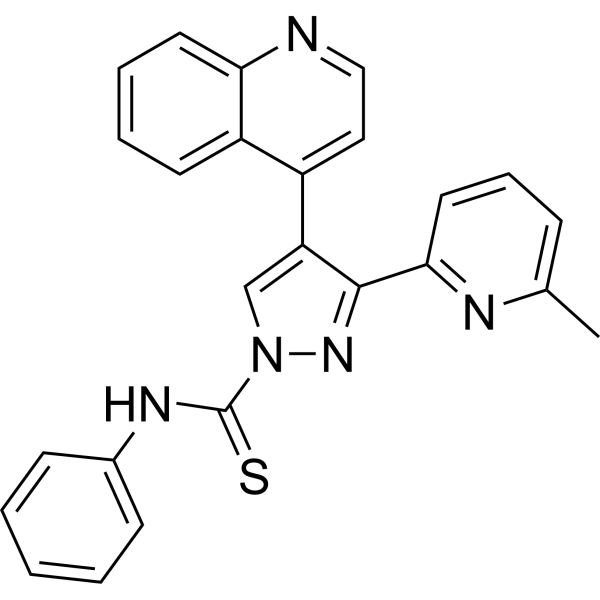
HY-10432
A 83-01ALK4/5/7 Inhibitor -
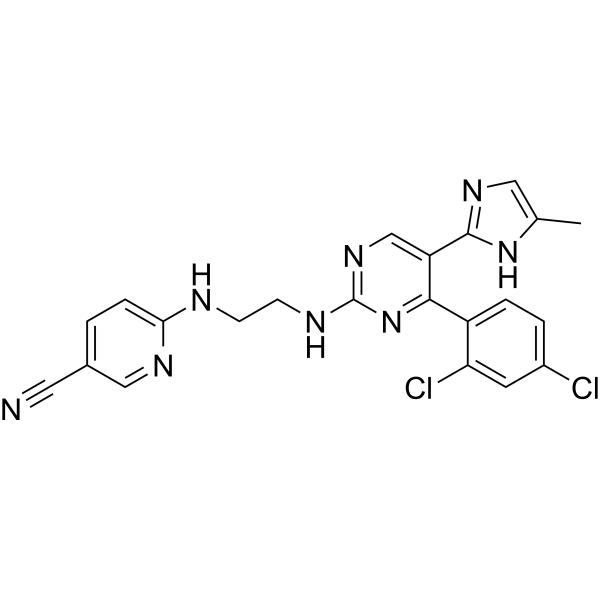
HY-10182
LaduviglusibGSK-3 Inhibitor -
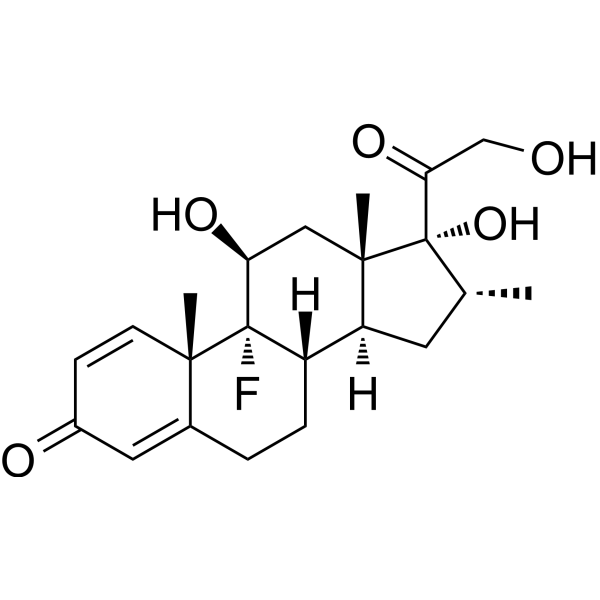
HY-14648
DexamethasoneGR Agonist -
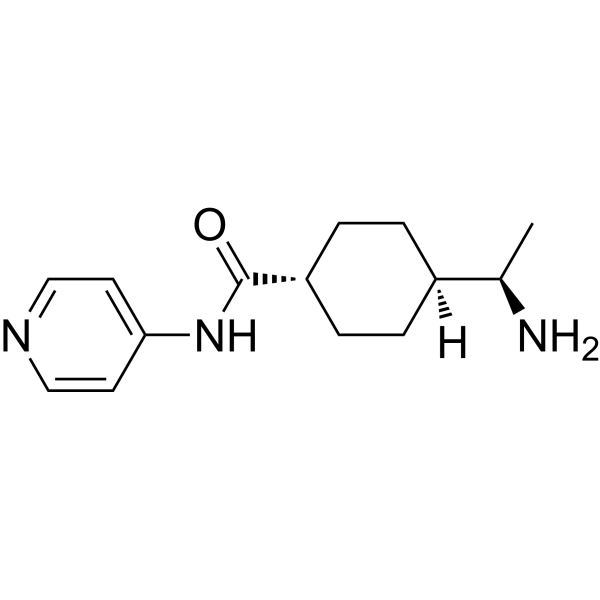
HY-10071
Y-27632ROCK Inhibitor -
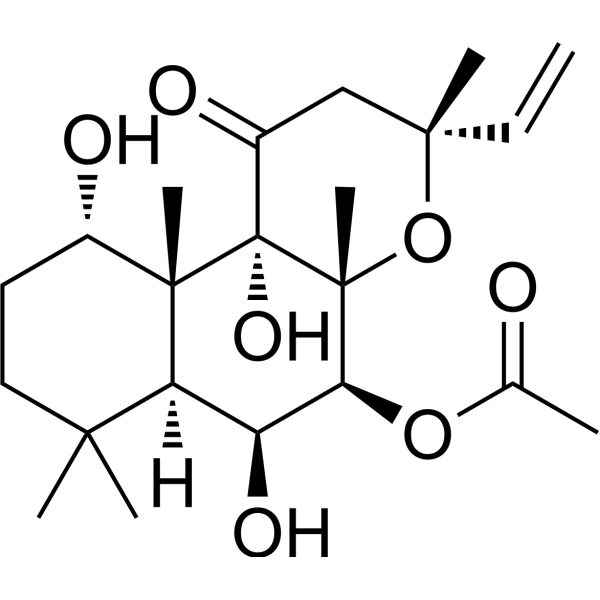
HY-15371
ForskolinAdenylate Cyclase Activator -
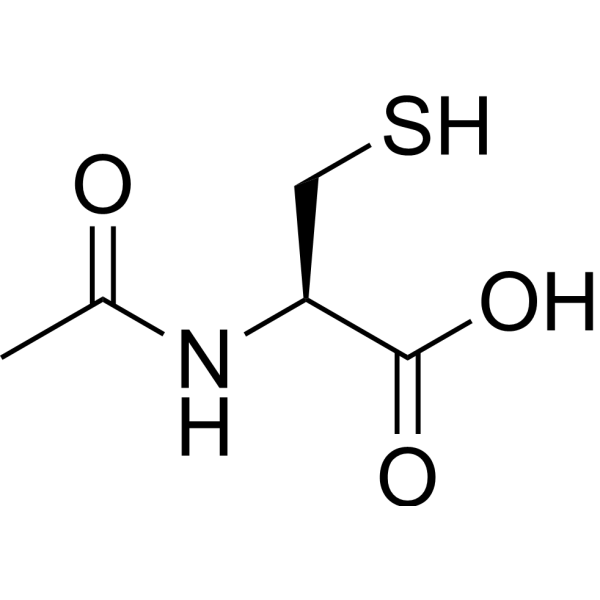
HY-B0215
AcetylcysteineMucolytic Agent -
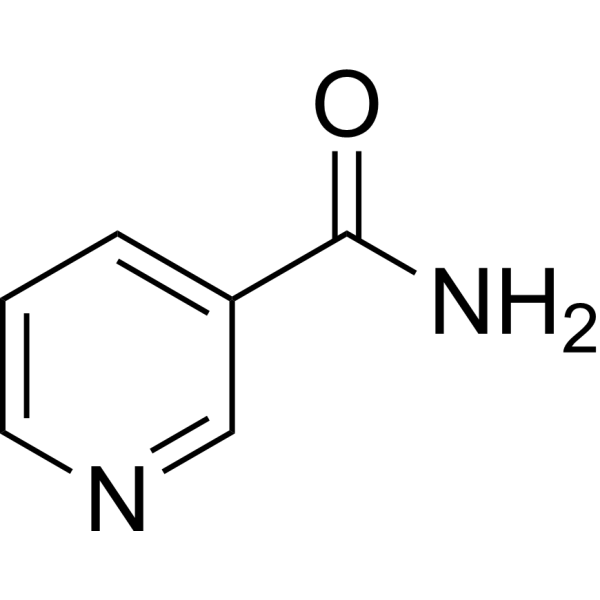
HY-B0150
NicotinamideSIRT Inhibitor -
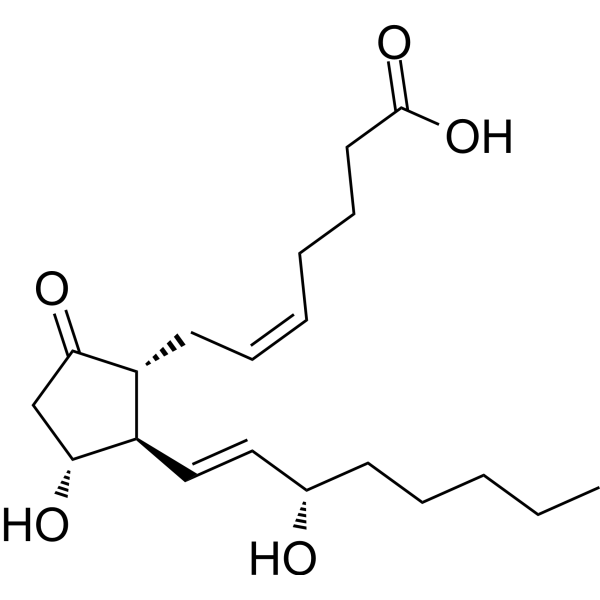
HY-101952
Prostaglandin E2Prostaglandin Receptor Agonist -
HY-P7004
FGF basic/bFGF Protein, Human (146a.a) -
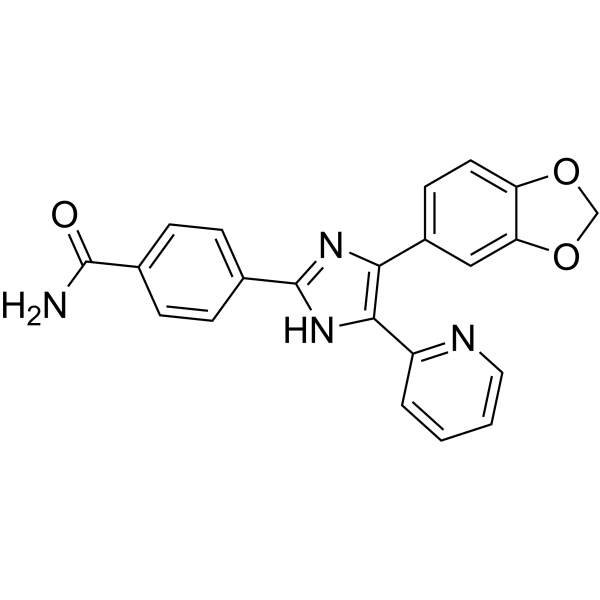
HY-10431
SB-431542TGF-β Receptor Kinase Inhibitor -
HY-P70311
Activin A Protein, Human/Mouse/Rat (HEK293)


Biological Activity
Description
Human hepatocyte growth factor (HGF) is a natural ligand of Met tyrosine kinase receptor, mediating cell proliferation, migration and anti-apoptosis by binding to Met receptor. HGF protein can promote the regeneration of liver and kidney cells, regulate extracellular matrix metabolism (inhibit TGF-β, promote MMP-2), and is used in the study of acute and chronic kidney disease, liver fibrosis and other diseases. HGF Protein, Human (CHO) is a recombinant human HGF protein expressed by CHO cells with tag-free.
Background
1. Characteristics of HGF protein
Human hepatocyte growth factor (HGF) is a heterodimeric protein formed by disulfide bonds between α chain and β chain, belonging to the growth factor family. Its α chain contains a hairpin domain and four kringle domains, and the β chain contains a serine protease-like domain, but lacks protease activity. HGF is a natural ligand for Met tyrosine kinase receptor, and the kringle domain in its structure is essential for receptor binding. In addition, there is a 5-amino-acid deletion type variant of HGF protein, and its biological activity may be changed due to structural differences.
HGF activates downstream signaling pathways by binding to Met receptors, mediating cell proliferation, migration, morphogenesis (such as tubulogenesis) and anti-apoptotic effects. HGF can promote the regeneration of various tissue cells such as hepatocytes and kidney cells, regulate extracellular matrix (ECM) metabolism (such as inhibiting collagen deposition and promoting MMP-2 expression), and exert anti-fibrotic effects by inhibiting the production of transforming growth factor TGF-β.
HGF relies on high affinity binding of Met receptors upstream (KD value 20-30 pM), and activates signaling molecules downstream including STAT3, ERK1/2, etc., thereby regulating cell cycle and gene expression. In addition, HGF binds to heparan sulfate proteoglycans (HSPGs) as an extracellular reservoir to regulate their biological activity.
2. Application of HGF protein
HGF can be used in the study of acute kidney injury (AKI), chronic kidney disease (CKD) and diabetic nephropathy. It can inhibit the increase of blood urea nitrogen (BUN) in kidney disease models, reduce tubular damage and glomerular sclerosis, and renal damage does not affect its pharmacokinetics. HGF also promotes liver regeneration (such as acute liver failure and liver fibrosis), and can enhance liver repair and improve liver function when combined with bone marrow mononuclear cells (BMMCs). HGF also alleviates glomerular and liver tissue fibrosis by inhibiting excessive deposition of TGF-β and ECM; it promotes cell migration and differentiation, and exerts anti-fibrotic activity. In clinical studies, recombinant human HGF protein has entered Phase I clinical trials for fulminant hepatitis.
Verified Bioactivity
1.The ED50 is <10 ng/mL as measured by 4MBr5 cells, corresponding to a specific activity of >1 × 10⁵ units/mg.
2.Measured by its ability to induce IL-11 secretion by Saos-2 human osteosarcoma cells. The ED50 for this effect is <5.34 ng/mL, corresponding to a specific activity is >1.87×10⁵ U/mg.
MCE Validation Data
-
Purity - SDS-PAGE
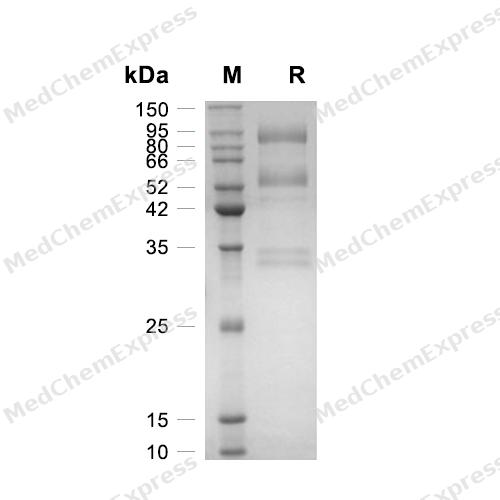
Purity - SDS-PAGE
-
Bioactivity - Cell-Based Assay
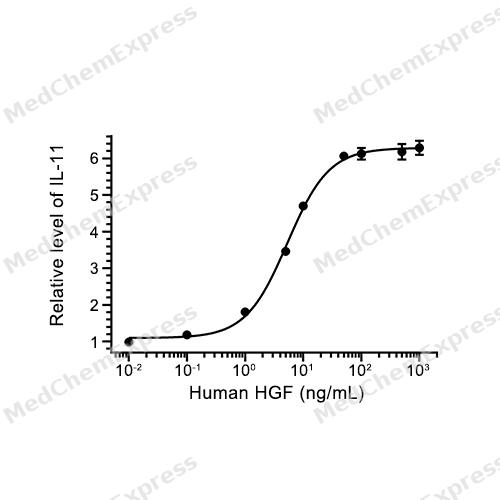
Bioactivity - Cell-Based Assay


Publications (6)
-
Journal Impact Factor
-
Most Recent
-
Sci Bull
Genetically engineered MSCs overexpressing hepatocyte growth factor for the treatment of human refractory wounds. [Abstract]2025 Nov 25:S2095-9273(25)01198-3. PMID: 41381331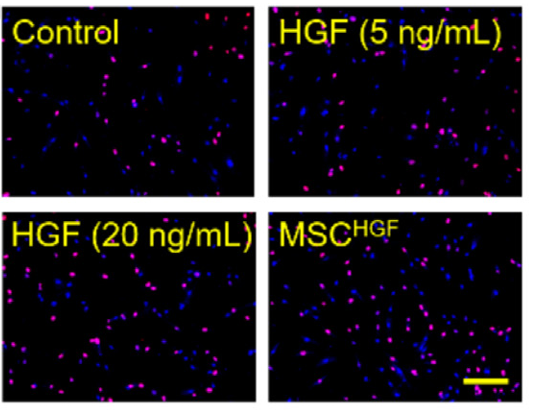
HGF Protein, Human (CHO) purchased from MedChemExpress. Usage Cited in: Sci Bull. 2025 Nov 25:S2095-9273(25)01198-3. [Abstract]
HGF (5 and 20 ng/mL, 48 h) enhanced proliferation in MSCs.
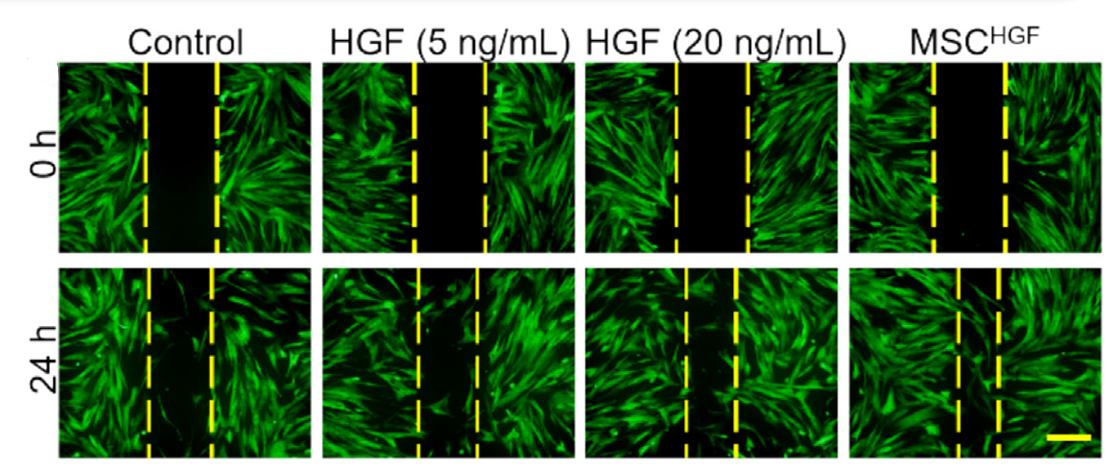
HGF Protein, Human (CHO) purchased from MedChemExpress. Usage Cited in: Sci Bull. 2025 Nov 25:S2095-9273(25)01198-3. [Abstract]
HGF (5 and 20 ng/mL, 48 h) increased cell-migratory capability in MSCs.
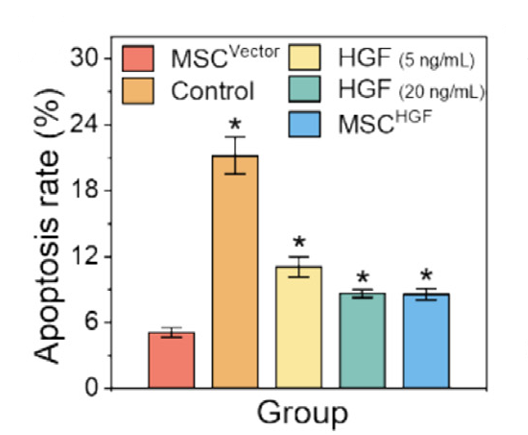
HGF Protein, Human (CHO) purchased from MedChemExpress. Usage Cited in: Sci Bull. 2025 Nov 25:S2095-9273(25)01198-3. [Abstract]
HGF (5 and 20 ng/mL, 48 h) inhibited oxidative-stress-induced apoptosis in MSCs.
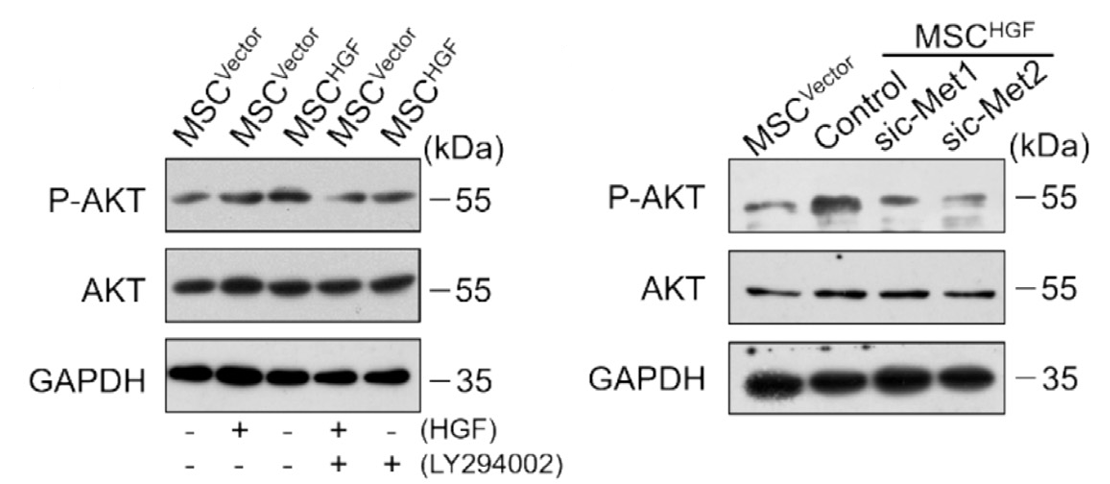
HGF Protein, Human (CHO) purchased from MedChemExpress. Usage Cited in: Sci Bull. 2025 Nov 25:S2095-9273(25)01198-3. [Abstract]
HGF (48 h) increased the protein expression of p-AKT in MSCs.
-
Biofabrication
Highly reproducible and cost-effective one-pot organoid differentiation using a novel platform based on PF-127 triggered spheroid assembly. [Abstract]2023 Aug 21;15(4). PMID: 37552975 -
Drug Des Devel Ther
2020 Sep 3:14:3567-3575. PMID: 32943844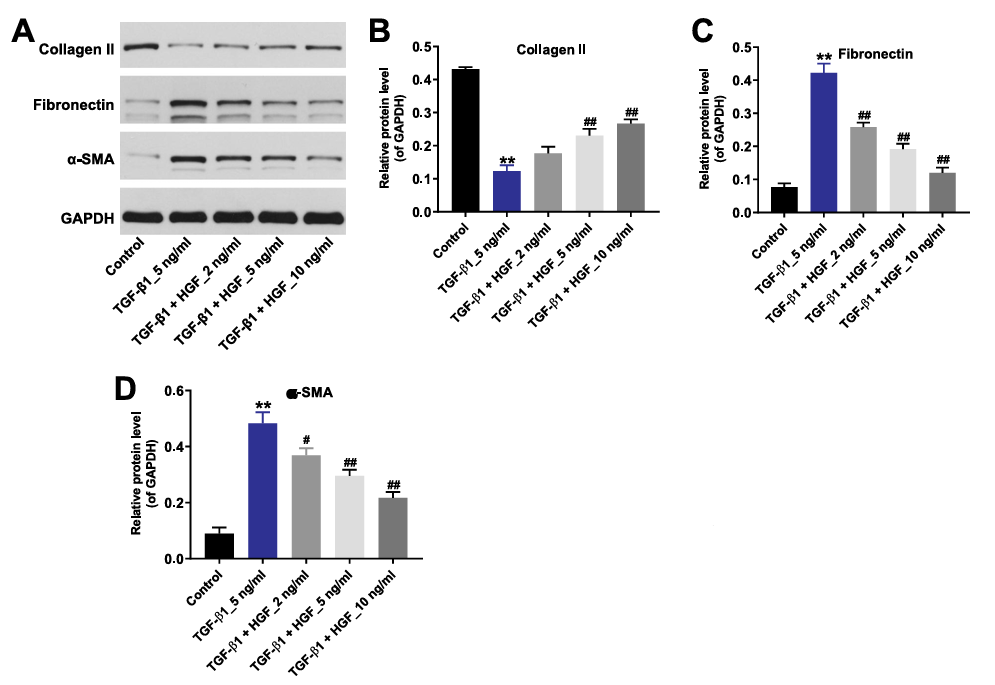
HGF Protein, Human (CHO) purchased from MedChemExpress. Usage Cited in: Drug Des Devel Ther. 2020 Sep 3:14:3567-3575. [Abstract]
HGF (2, 5, or 10 ng/mL, 48 h) dose-dependently activated collagen II and suppressed protein levels of fibronectin and αSMA in HK2 cells after 5ng/mL TGFβ1 treatment.
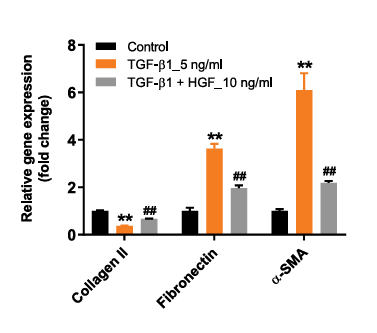
HGF Protein, Human (CHO) purchased from MedChemExpress. Usage Cited in: Drug Des Devel Ther. 2020 Sep 3:14:3567-3575. [Abstract]
HGF (5 or 10 ng/mL, 48 h) dose-dependently activated collagen II and suppressed mRNA levels of fibronectin and αSMA in HK2 cells after 5ng/mL TGFβ1 treatment.
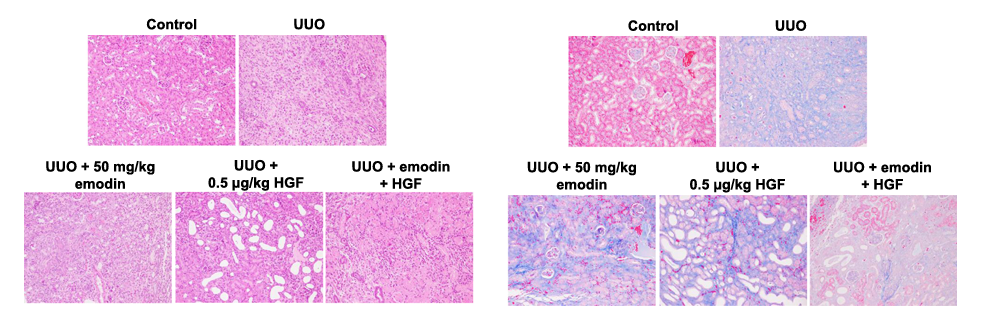
HGF Protein, Human (CHO) purchased from MedChemExpress. Usage Cited in: Drug Des Devel Ther. 2020 Sep 3:14:3567-3575. [Abstract]
HGF (0.5 μg/kg/day, intravenous injection, 3 weeks) showed an antifibrotic effect in unilateral ureteral obstruction mice.
-
Med Oncol
Activation of the HGF/c-MET axis promotes lenvatinib resistance in hepatocellular carcinoma cells with high c-MET expression. [Abstract]2020 Mar 12;37(4):24. PMID: 32166604 -
Bioorg Med Chem
Discovery of N-(4-(pyridin-4-yloxy)phenyl)-1,2-dihydropyridine-3-carboxamide derivatives as potential type II c-Met inhibitors. [Abstract]2025 Sep 17:131:118394. PMID: 40975897 -
bioRxiv
2025 Jun 19:2025.06.15.659815. PMID: 40667248


Technical Parameters
-
Species Human
-
Source CHO
-
Tag Tag Free
-
Accession
P14210-1 (Q32-S728)
-
Molecular Construction
-
N-term
-
HGF (Q32-S728)
Accession # P14210-1 -
C-term
-
-
Protein Length
Full Length of Isoform-1
-
Synonyms
HGF; Hepatocyte Growth Factor (Hepapoietin A; Scatter Factor); Prev. DFNB39; Lung Fibroblast-Derived Mitogen; HPTA; Hepatopoietin-A; SF; Scatter Factor; F-TCF; Deafness, Autosomal Recessive 39; HGFB; Hepatopoietin A; Hepatocyte Growth Factor; Fibroblast-D
-
AA Sequence
QRKRRNTIHEFKKSAKTTLIKIDPALKIKTKKVNTADQCANRCTRNKGLPFTCKAFVFDKARKQCLWFPFNSMSSGVKKEFGHEFDLYENKDYIRNCIIGKGRSYKGTVSITKSGIKCQPWSSMIPHEHSFLPSSYRGKDLQENYCRNPRGEEGGPWCFTSNPEVRYEVCDIPQCSEVECMTCNGESYRGLMDHTESGKICQRWDHQTPHRHKFLPERYPDKGFDDNYCRNPDGQPRPWCYTLDPHTRWEYCAIKTCADNTMNDTDVPLETTECIQGQGEGYRGTVNTIWNGIPCQRWDSQYPHEHDMTPENFKCKDLRENYCRNPDGSESPWCFTTDPNIRVGYCSQIPNCDMSHGQDCYRGNGKNYMGNLSQTRSGLTCSMWDKNMEDLHRHIFWEPDASKLNENYCRNPDDDAHGPWCYTGNPLIPWDYCPISRCEGDTTPTIVNLDHPVISCAKTKQLRVVNGIPTRTNIGWMVSLRYRNKHICGGSLIKESWVLTARQCFPSRDLKDYEAWLGIHDVHGRGDEKCKQVLNVSQLVYGPEGSDLVLMKLARPAVLDDFVSTIDLPNYGCTIPEKTSCSVYGWGYTGLINYDGLLRVAHLYIMGNEKCSQHHRGKVTLNESEICAGAEKIGSGPCEGDYGGPLVCEQHKMRMVLGVIVPGRGCAIPNRPGIFVRVAYYAKWIHKIILTYKVPQS
-
Predicted Molecular Mass
79.7 kDa
-
Molecular Weight
Approximately 88-90 kDa (single chain) & 59-61 kDa (alpha chain) & 30-34 kDa (beta chain), based on SDS-PAGE under reducing conditions.
-
Glycosylation
Yes
-
Purity
≥ 95%, as determined by reducing SDS-PAGE.


Product Properties
Lyophilized powder
1.Lyophilized from a 0.22 μm filtered solution of PBS.
2.Lyophilized from a 0.22 μm filtered solution of PBS, 8% trehalose, pH 7.4.
Please refer to the lot-specific COA for specific buffer information.
<0.2 EU/μg, determined by LAL method.
It is not recommended to reconstitute to a concentration less than 100 μg/mL in ddH2O. For long term storage it is recommended to add a carrier protein (0.1% BSA, 5% HSA, 10% FBS or 5% Trehalose).
Stored at -20°C for 2 years from date of receipt. After reconstitution, it is stable at 4°C for 1 week or -20°C for longer (with carrier protein). It is recommended to freeze aliquots at -20°C or -80°C for extended storage.
Room temperature in continental US; may vary elsewhere.


Documentation
-
Data Sheet (270 KB)
-
SDS (254 KB)
- English - EN (254 KB)
- Français - FR (254 KB)
- Deutsch - DE (254 KB)
- Norwegian - NO (254 KB)
- Español - ES (254 KB)
- Swedish - SV (254 KB)
- Italian - IT (254 KB)
- Korean - KR (254 KB)
- Portuguese - PT (254 KB)
-
Handling Instructions (2659 KB)


References
[1]. Adachi E, et al. Pharmacokinetics and pharmacodynamics following intravenous administration of recombinant human hepatocyte growth factor in rats with renal injury. Pharmacology. 2014;94(3-4):190-7. [Content Brief]
[2]. Esposito C, et al. Hepatocyte growth factor (HGF) modulates matrix turnover in human glomeruli. Kidney Int. 2005 Jun;67(6):2143-50. [Content Brief]
[3]. Jin SZ, et al. Hepatocyte growth factor promotes liver regeneration induced by transfusion of bone marrow mononuclear cells in a murine acute liver failure model. J Hepatobiliary Pancreat Sci. 2011 May;18(3):397-405. [Content Brief]
[4]. Mizuno S, et al. Suppressions of chronic glomerular injuries and TGF-beta 1 production by HGF in attenuation of murine diabetic nephropathy. Am J Physiol Renal Physiol. 2004 Jan;286(1):F134-43. [Content Brief]
[5]. Ueno S, et al. Exogenous hepatocyte growth factor markedly stimulates liver regeneration following portal branch ligation in dogs. Cancer Chemother Pharmacol. 1996;38(3):233-7. [Content Brief]

Calculators
Concentration (start) × Volume (start) = Concentration (final) × Volume (final)


 Powered by Bioz

