



D-Tyrosine-d4

Based on 1 Customer Validation
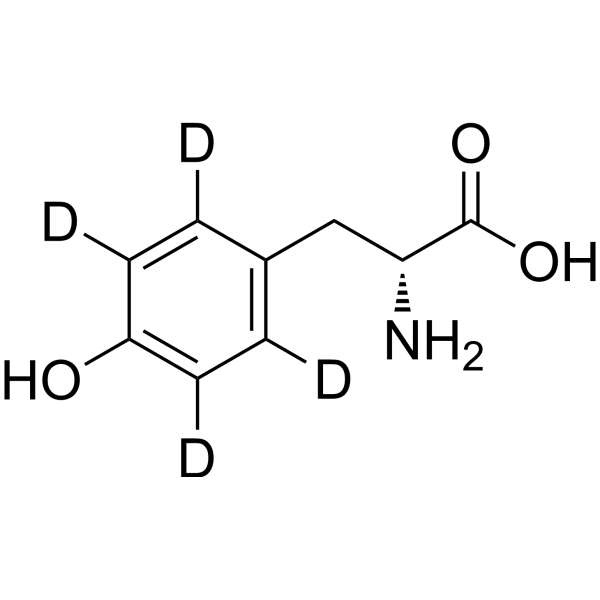
D-Tyrosine-d4 is the deuterium labeled D-Tyrosine (HY-Y0444). D-Tyrosine is the D-isomer of tyrosine. D-Tyrosine negatively regulates melanin synthesis by inhibiting tyrosinase activity. D-Tyrosine inhibits biofilm formation and trigger the self-dispersal of biofilms without suppressing bacterial growth.
Nos produits utilisent uniquement pour la recherche. Nous ne vendons pas aux patients.
- Pureté : 99.0%
- CAS No.: 944386-47-4
- Formule: C9H7D4NO3
- Masse moléculaire:185.21
-
Stockage:Powder -20°C, 3 years , 4°C, 2 years ; In solvent -80°C, 6 months , -20°C, 1 month

To place orders, for customer services and technical support, please contact: MedChemExpress USA
Tel: 609-228-6898 E-mail: [email protected] [email protected]


-
 Activité biologique
-
Chemical Information
-
Solvant et solubilité
- Protocole
- Pureté et documentation
- Références
-
 Help & FAQs


-
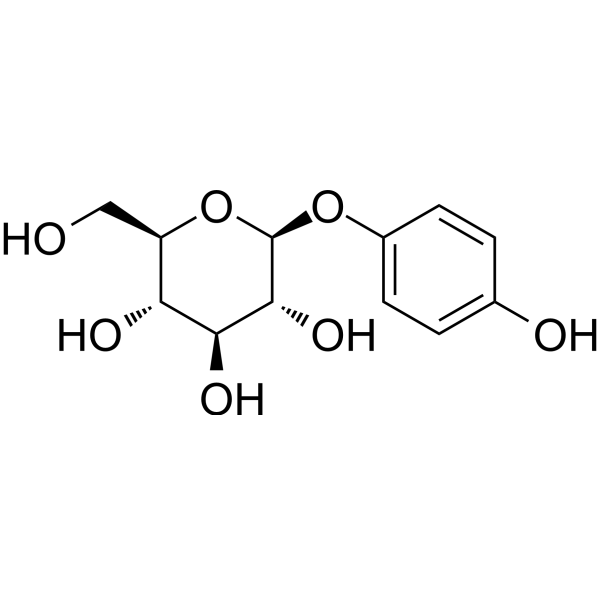
HY-N0192
ArbutinEndogenous Metabolite -
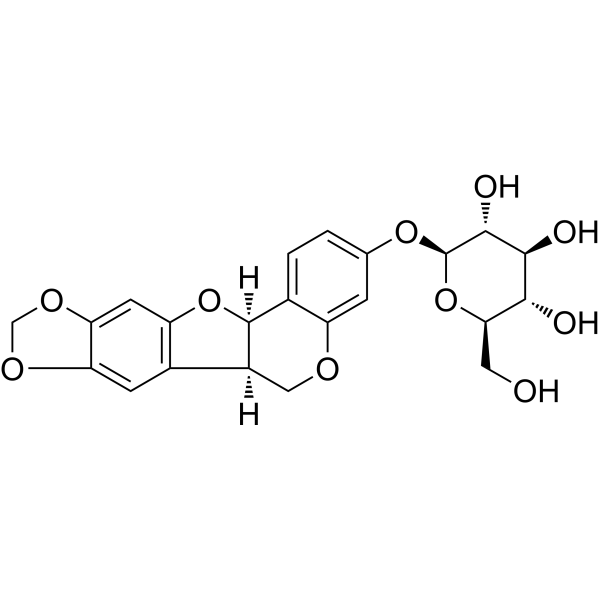
HY-N0616
TrifolirhizinPterocarpan Flavonoid -
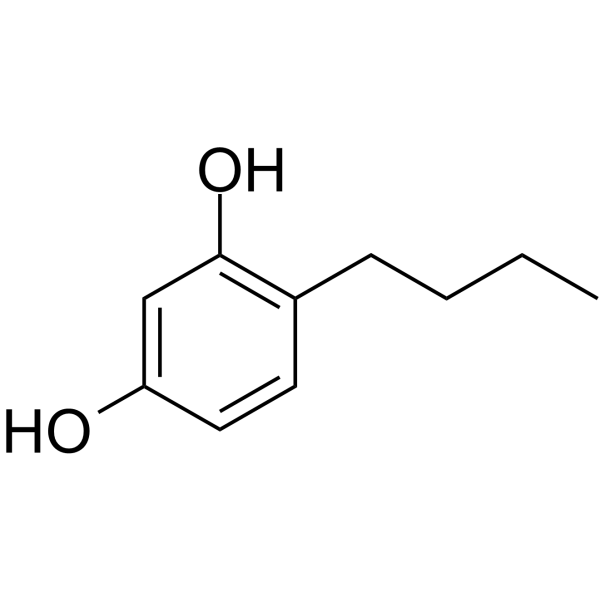
HY-107369
4-ButylresorcinolTyrosinase Inhibitor -

HY-N0192R
Arbutin (Standard)Endogenous Metabolite -
HY-W003607
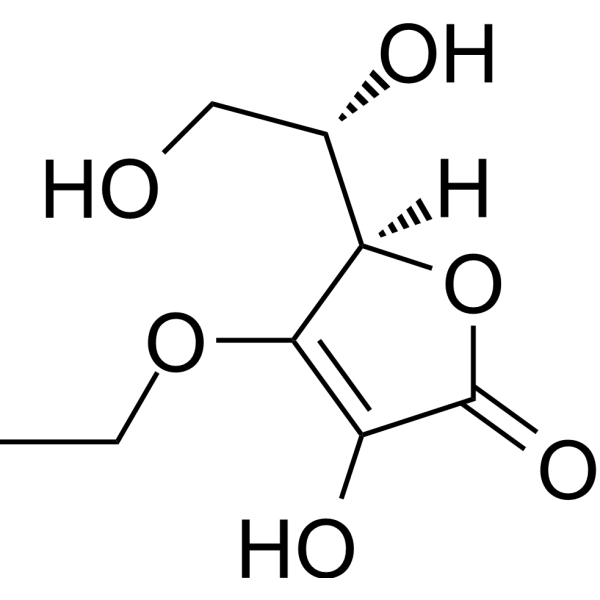
3-O-Ethyl-L-ascorbic acidVitamin C Derivative -
HY-N1775
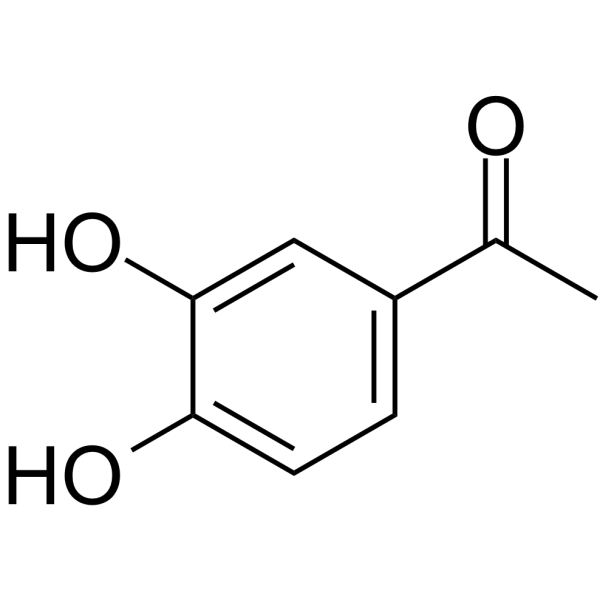
3',4'-DihydroxyacetophenonePhenolic Compound -
HY-N3266
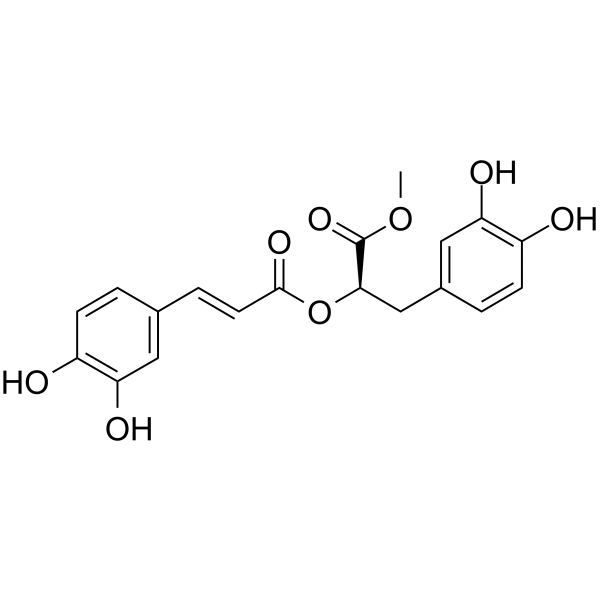
Methyl rosmarinateHydroxycinnamic Acid -
HY-N3518
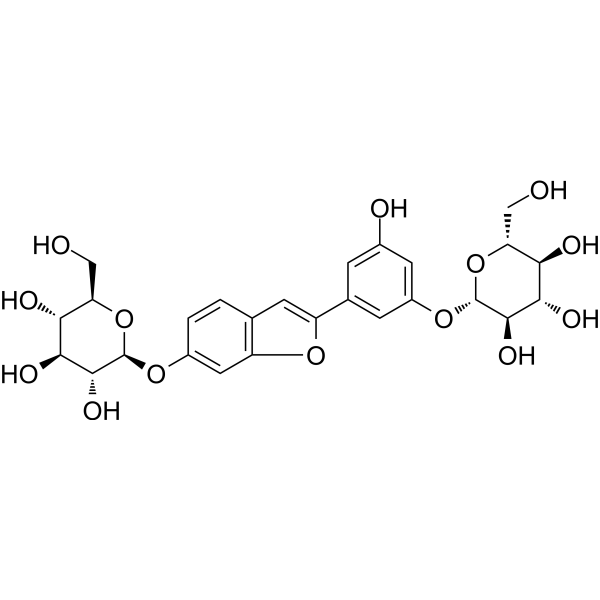
Mulberroside FTyrosinase Inhibitor -
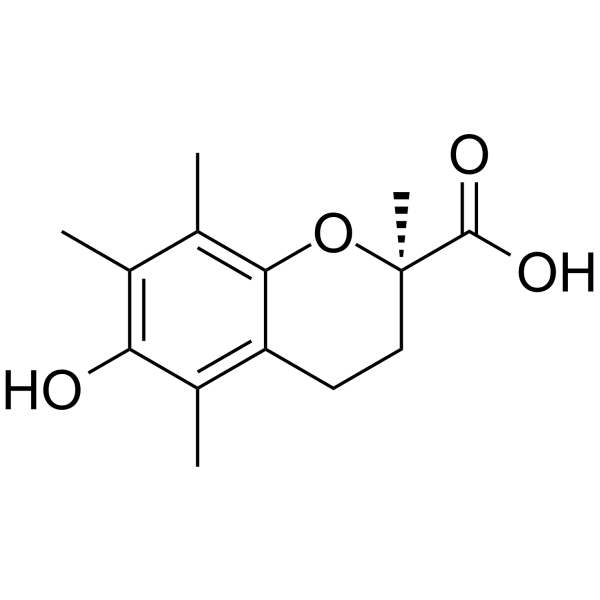
HY-101445A
(R)-TroloxTyrosinase Inhibitor -
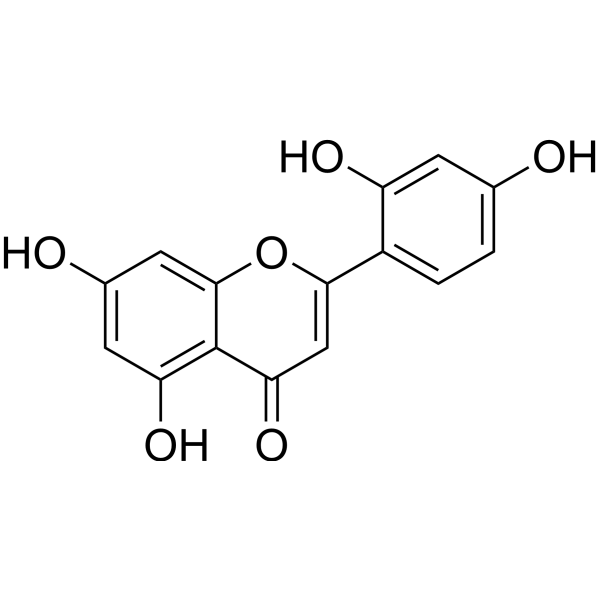
HY-N10503
NorartocarpetinTyrosinase Inhibitor -
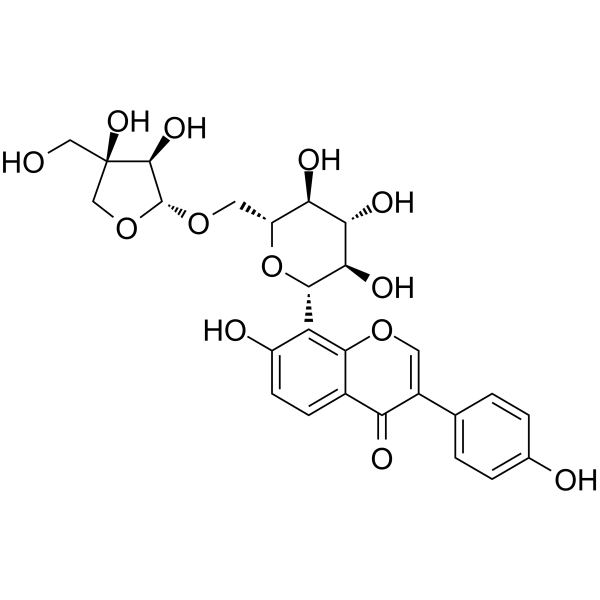
HY-N2134
MirificinTyrosinase Inhibitor -
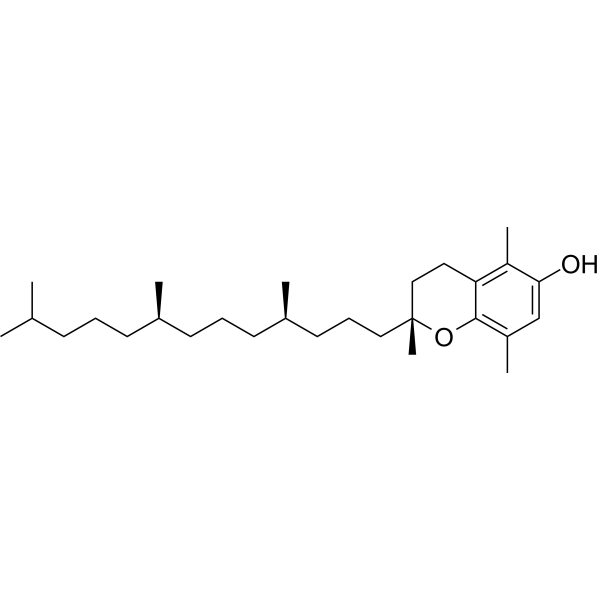
HY-113068
(rel)-β-Tocopherolβ-Tocopherol Isomer


Activité biologique
Description
In Vitro
Stable heavy isotopes of hydrogen, carbon, and other elements have been incorporated into drug molecules, largely as tracers for quantitation during the drug development process. Deuteration has gained attention because of its potential to affect the pharmacokinetic and metabolic profiles of drugs[1].
MedChemExpress (MCE) has not independently confirmed the accuracy of these methods. They are for reference only.
Application
1. This compound can be used as a tracer
2. This compound can be used as an internal standard for quantitative analysis by NMR, GC-MS, or LC-MS.


Chemical Information
-
CAS No. 944386-47-4
-
Unlabeled CAS 556-02-5
-
Appearance Solid
-
Masse moléculaire 185.21
-
Formule C9H7D4NO3
-
Color White to off-white
-
SMILES
OC([C@H](N)CC1=C([2H])C([2H])=C(C([2H])=C1[2H])O)=O
-
Livraison
Room temperature in continental US; may vary elsewhere.
-
Stockage
Powder -20°C 3 years 4°C 2 years In solvent -80°C 6 months -20°C 1 month


Solvant et solubilité
In Vitro:
DMSO : 1 mg/mL (5.40 mM; ultrasonic and warming and heat to 60°C; Hygroscopic DMSO has a significant impact on the solubility of product, please use newly opened DMSO)
H2O : 0.1 mg/mL (0.54 mM; ultrasonic and warming and heat to 60°C)
Please refer to the solubility information to select the appropriate solvent. Once prepared, please aliquot and store the solution to prevent product inactivation from repeated freeze-thaw cycles.
Storage method and period of stock solution: -80°C, 6 months; -20°C, 1 month. When stored at -80°C, please use it within 6 months. When stored at -20°C, please use it within 1 month.
* Note: If you choose water as the stock solution, please dilute it to the working solution, then filter and sterilize it with a 0.22 μm filter before use.
Please refer to the solubility information to select the appropriate solvent. Once prepared, please aliquot and store the solution to prevent product inactivation from repeated freeze-thaw cycles.
Storage method and period of stock solution: -80°C, 6 months; -20°C, 1 month. When stored at -80°C, please use it within 6 months. When stored at -20°C, please use it within 1 month.
* Note: If you choose water as the stock solution, please dilute it to the working solution, then filter and sterilize it with a 0.22 μm filter before use.
Concentration (start) × Volume (start) = Concentration (final) × Volume (final)


Pureté et documentation
-
Fiche technique (273 KB)
-
SDS (251 KB)
- English - EN (251 KB)
- Français - FR (251 KB)
- Deutsch - DE (251 KB)
- Norwegian - NO (251 KB)
- Español - ES (251 KB)
- Swedish - SV (251 KB)
- Italian - IT (251 KB)
- Korean - KR (251 KB)
- Portuguese - PT (251 KB)
-
Instruction de manipulation (2659 KB)
Références
[1]. Russak EM, et al. Impact of Deuterium Substitution on the Pharmacokinetics of Pharmaceuticals. Ann Pharmacother. 2019;53(2):211-216. [Content Brief]
[2]. Jisu Park, et al. D-tyrosine Negatively Regulates Melanin Synthesis by Competitively Inhibiting Tyrosinase Activity. Pigment Cell Melanoma Res. 2018 May;31(3):374-383. [Content Brief]
[3]. Cong Yu, et al. Inhibition of Biofilm Formation by D-tyrosine: Effect of Bacterial Type and D-tyrosine Concentration. Water Res. 2016 Apr 1;92:173-9. [Content Brief]


Complete Stock Solution Preparation Table
Please refer to the solubility information to select the appropriate solvent. Once prepared, please aliquot and store the solution to prevent product inactivation from repeated freeze-thaw cycles.
Storage method and period of stock solution: -80°C, 6 months; -20°C, 1 month. When stored at -80°C, please use it within 6 months. When stored at -20°C, please use it within 1 month.
| Optional Solvent | Concentration Solvent Mass | 1 mg | 5 mg | 10 mg | 25 mg |
|---|---|---|---|---|---|
| DMSO | 1 mM | 5.3993 mL | 26.9964 mL | 53.9928 mL | 134.9819 mL |
| 5 mM | 1.0799 mL | 5.3993 mL | 10.7986 mL | 26.9964 mL |
* Note: If you choose water as the stock solution, please dilute it to the working solution, then filter and sterilize it with a 0.22 μm filter before use.


D-Tyrosine-d4 Related Classifications
HY-Y0444S1 Related Classifications
 Powered by Bioz