



HP210

Based on 1 Customer Validation
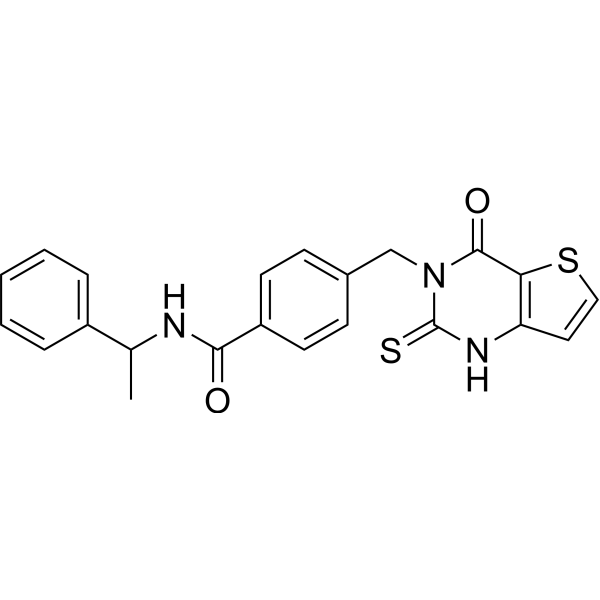
HP210 is a selective glucocorticoid receptor modulator (SGRM). HP210 can inhibit the mRNA expression of IL-1β and IL-6. HP210 has the potential to study inflammation-related diseases.
For research use only. We do not sell to patients.
- Purity : 98.96%
- CAS No.: 728039-52-9
- Formula: C22H19N3O2S2
- Molecular Weight:421.54
-
Storage:Powder -20°C, 3 years ; In solvent -80°C, 6 months , -20°C, 1 month

To place orders, for customer services and technical support, please contact: MedChemExpress USA
Tel: 609-228-6898 E-mail: [email protected] [email protected]


-
 Biological Activity
-
Chemical Information
-
Solvent & Solubility
- Protocols
- Purity & Documentation
- References
-
 Help & FAQs


-
HY-13580
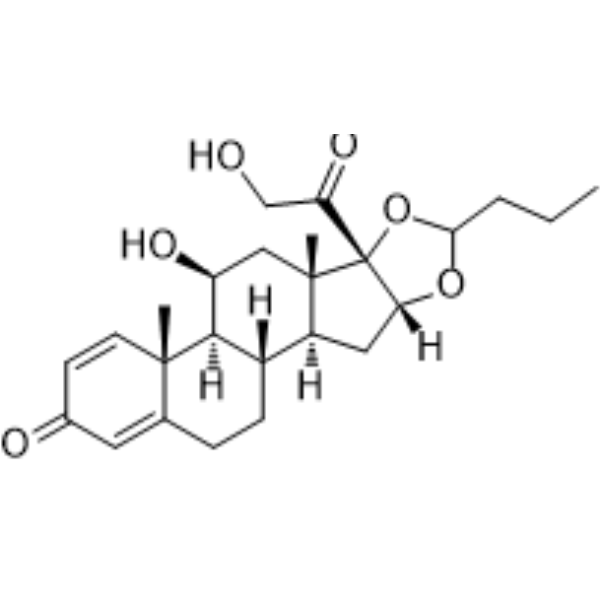
BudesonideGlucocorticoid Receptor Agonist -
HY-B0636
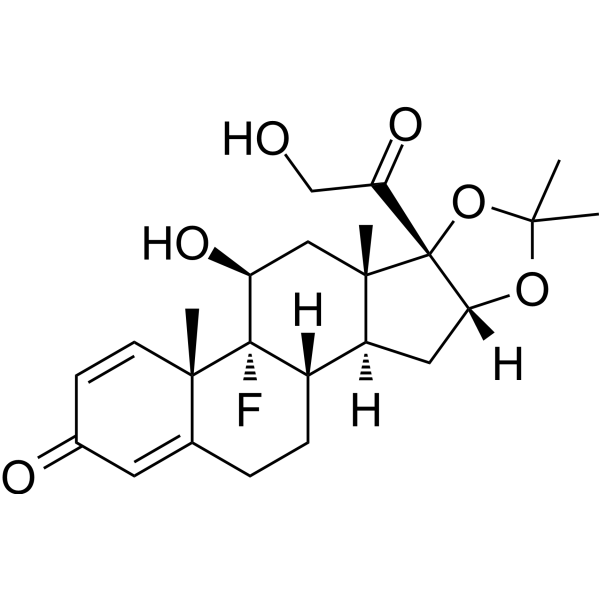
Triamcinolone acetonideAnti-Inflammatory Agent -
HY-B1402
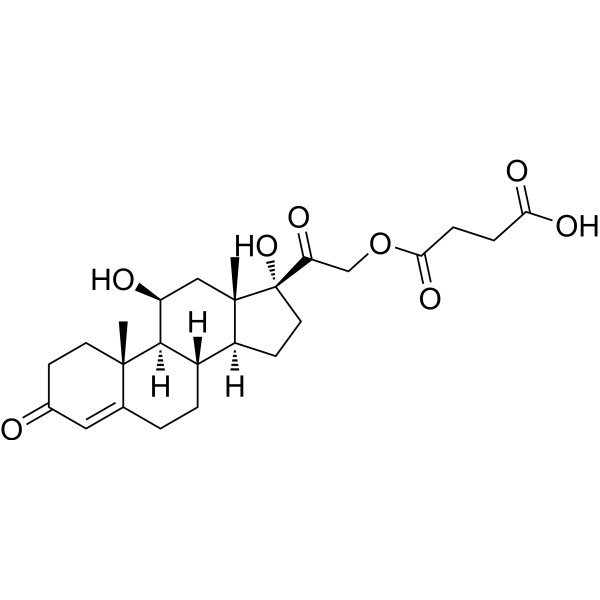
Hydrocortisone hemisuccinateAnti-inflammatory Agent -
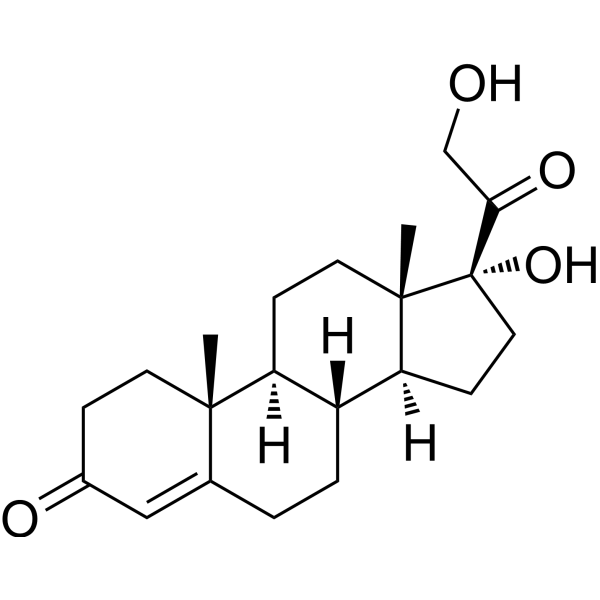
HY-77839
CortodoxoneGlucocorticoid Steroid Hormone -
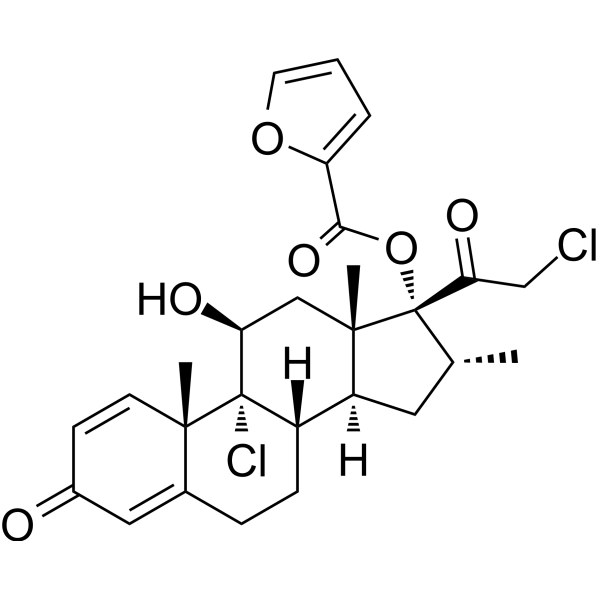
HY-13693
Mometasone furoateGlucocorticoid Receptor Agonist -
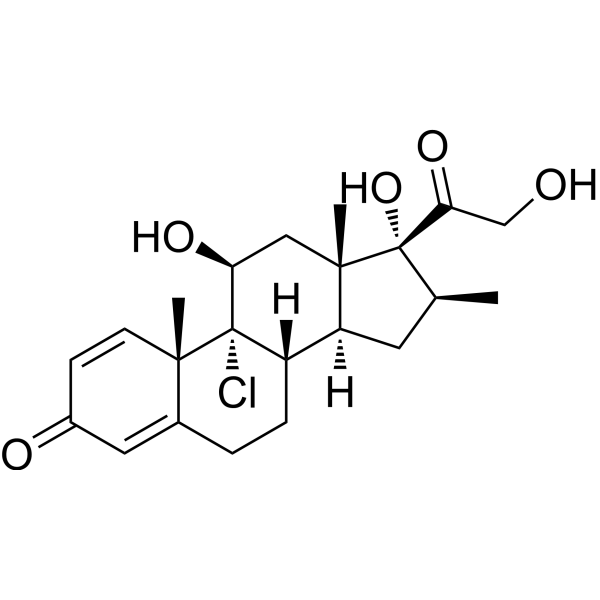
HY-B1540
BeclometasoneGlucocorticoid Receptor Agonist -
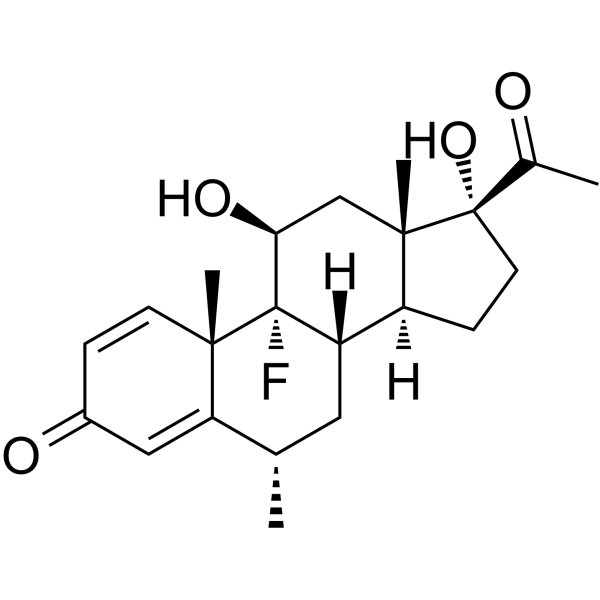
HY-B1893
FluorometholoneGlucocorticoid Receptor Agonist -
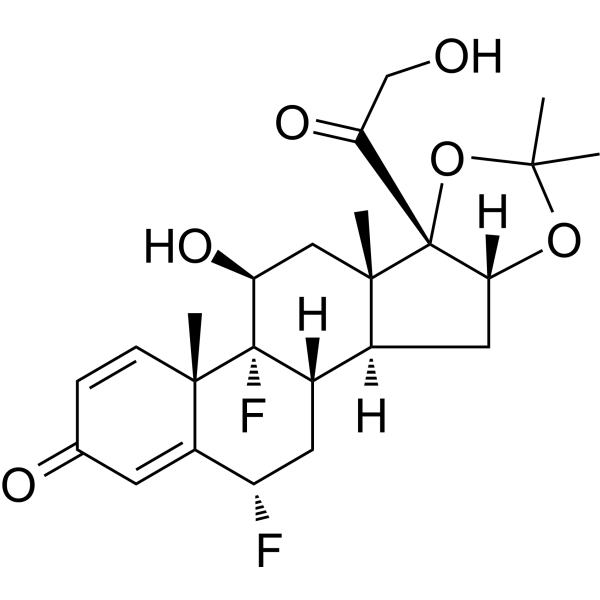
HY-B0415
Fluocinolone (Acetonide)Glucocorticoid Receptor Agonist -
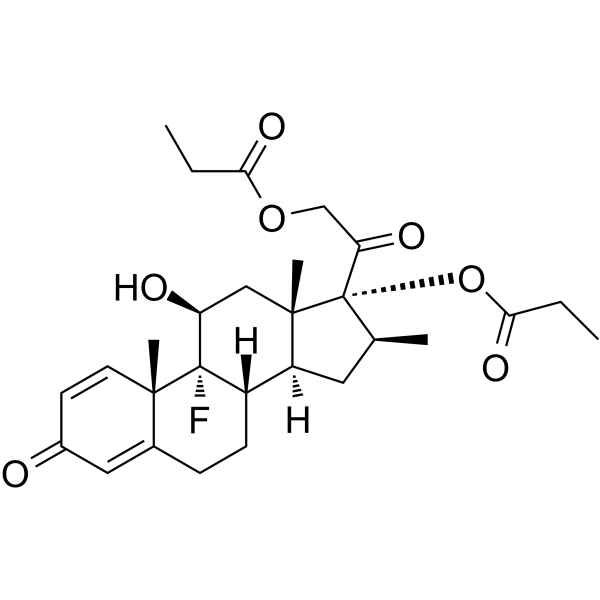
HY-13571
Betamethasone dipropionateGlucocorticoid Receptor Modulator -
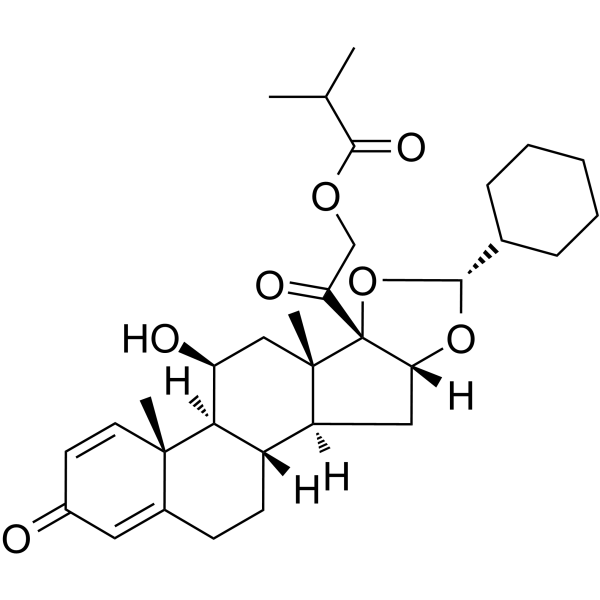
HY-B0625
CiclesonideGlucocorticoid -
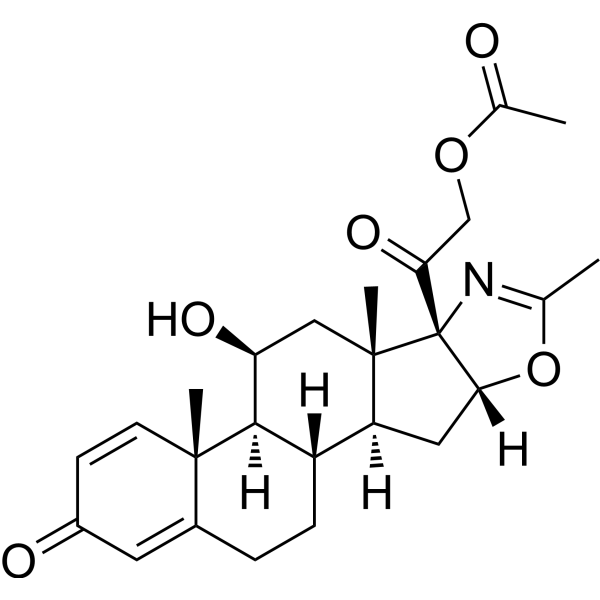
HY-13609
DeflazacortGlucocorticoid -
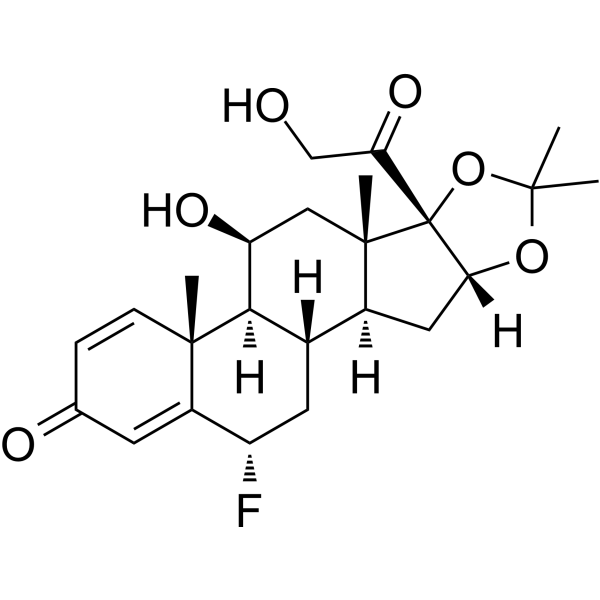
HY-B1121
FlunisolideGlucocorticoid Receptor Activator


Biological Activity
Description


Chemical Information
-
CAS No. 728039-52-9
-
Appearance Solid
-
Molecular Weight 421.54
-
Formula C22H19N3O2S2
-
Color White to off-white
-
SMILES
O=C(C1=CC=C(CN2C(C3=C(NC2=S)C=CS3)=O)C=C1)NC(C)C4=CC=CC=C4
-
Shipping
Room temperature in continental US; may vary elsewhere.
-
Storage
Powder -20°C 3 years In solvent -80°C 6 months -20°C 1 month


Solvent & Solubility
In Vitro:
DMSO : 125 mg/mL (296.53 mM; Need ultrasonic; Hygroscopic DMSO has a significant impact on the solubility of product, please use newly opened DMSO)
Please refer to the solubility information to select the appropriate solvent. Once prepared, please aliquot and store the solution to prevent product inactivation from repeated freeze-thaw cycles.
Storage method and period of stock solution: -80°C, 6 months; -20°C, 1 month. When stored at -80°C, please use it within 6 months. When stored at -20°C, please use it within 1 month.
Please refer to the solubility information to select the appropriate solvent. Once prepared, please aliquot and store the solution to prevent product inactivation from repeated freeze-thaw cycles.
Storage method and period of stock solution: -80°C, 6 months; -20°C, 1 month. When stored at -80°C, please use it within 6 months. When stored at -20°C, please use it within 1 month.
Concentration (start) × Volume (start) = Concentration (final) × Volume (final)


Purity & Documentation
-
Data Sheet (268 KB)
-
SDS (251 KB)
- English - EN (251 KB)
- Français - FR (251 KB)
- Deutsch - DE (251 KB)
- Norwegian - NO (251 KB)
- Español - ES (251 KB)
- Swedish - SV (251 KB)
- Italian - IT (251 KB)
- Korean - KR (251 KB)
- Portuguese - PT (251 KB)
-
Handling Instructions (2659 KB)
References


Complete Stock Solution Preparation Table
Please refer to the solubility information to select the appropriate solvent. Once prepared, please aliquot and store the solution to prevent product inactivation from repeated freeze-thaw cycles.
Storage method and period of stock solution: -80°C, 6 months; -20°C, 1 month. When stored at -80°C, please use it within 6 months. When stored at -20°C, please use it within 1 month.
| Optional Solvent | Concentration Solvent Mass | 1 mg | 5 mg | 10 mg | 25 mg |
|---|---|---|---|---|---|
| DMSO | 1 mM | 2.3723 mL | 11.8613 mL | 23.7225 mL | 59.3064 mL |
| 5 mM | 0.4745 mL | 2.3723 mL | 4.7445 mL | 11.8613 mL | |
| 10 mM | 0.2372 mL | 1.1861 mL | 2.3723 mL | 5.9306 mL | |
| 15 mM | 0.1582 mL | 0.7908 mL | 1.5815 mL | 3.9538 mL | |
| 20 mM | 0.1186 mL | 0.5931 mL | 1.1861 mL | 2.9653 mL | |
| 25 mM | 0.0949 mL | 0.4745 mL | 0.9489 mL | 2.3723 mL | |
| 30 mM | 0.0791 mL | 0.3954 mL | 0.7908 mL | 1.9769 mL | |
| 40 mM | 0.0593 mL | 0.2965 mL | 0.5931 mL | 1.4827 mL | |
| 50 mM | 0.0474 mL | 0.2372 mL | 0.4745 mL | 1.1861 mL | |
| 60 mM | 0.0395 mL | 0.1977 mL | 0.3954 mL | 0.9884 mL | |
| 80 mM | 0.0297 mL | 0.1483 mL | 0.2965 mL | 0.7413 mL | |
| 100 mM | 0.0237 mL | 0.1186 mL | 0.2372 mL | 0.5931 mL |


HP210 Related Classifications
HY-146564A Related Classifications
 Powered by Bioz