



DL-Glutamic acid

Based on 1 Customer Validation
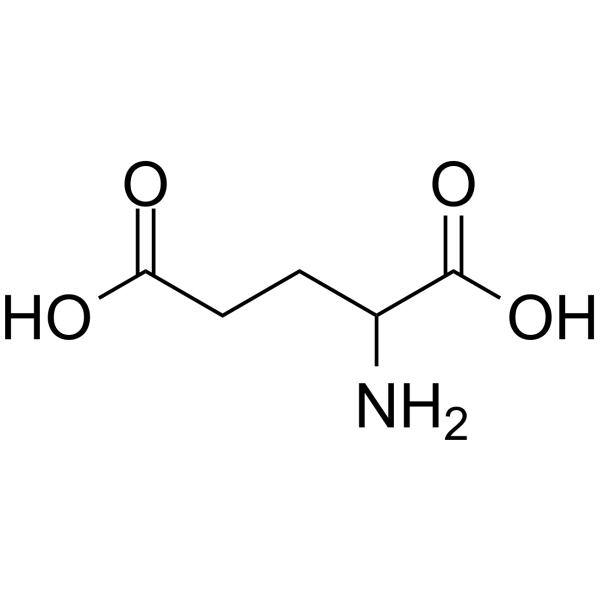
DL-Glutamic acid is a racemic amino acid mixture and an antibacterial agent. DL-Glutamic acid reduces RNA and DNA levels, with a more significant effect on RNA. DL-Glutamic acid inhibits cell division of Rhodospirillum rubrum.
For research use only. We do not sell to patients.
- Purity : 97.0%
- CAS No.: 617-65-2
- Formula: C5H9NO4
- Molecular Weight:147.13
-
Storage:Powder -20°C, 3 years , 4°C, 2 years ; In solvent -80°C, 6 months , -20°C, 1 month

To place orders, for customer services and technical support, please contact: MedChemExpress USA
Tel: 609-228-6898 E-mail: [email protected] [email protected]


-
 Biological Activity
-
Chemical Information
-
Solvent & Solubility
- Protocols
- Purity & Documentation
- References
-
 Help & FAQs


-
HY-N1428
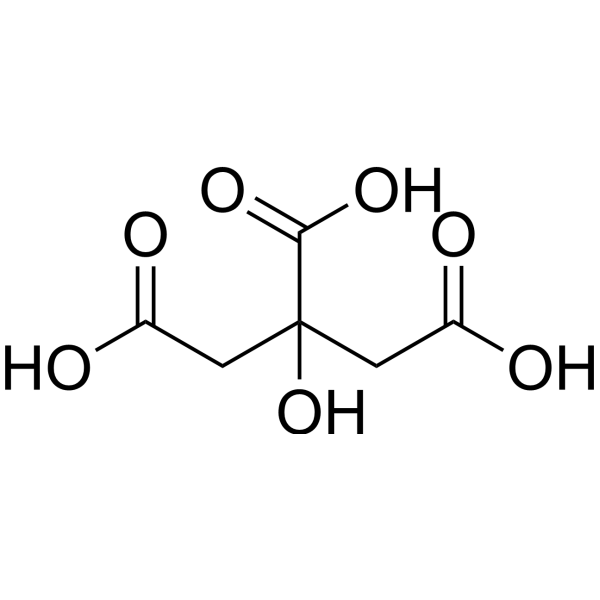
Citric acidOrganic Acid -
HY-N0486
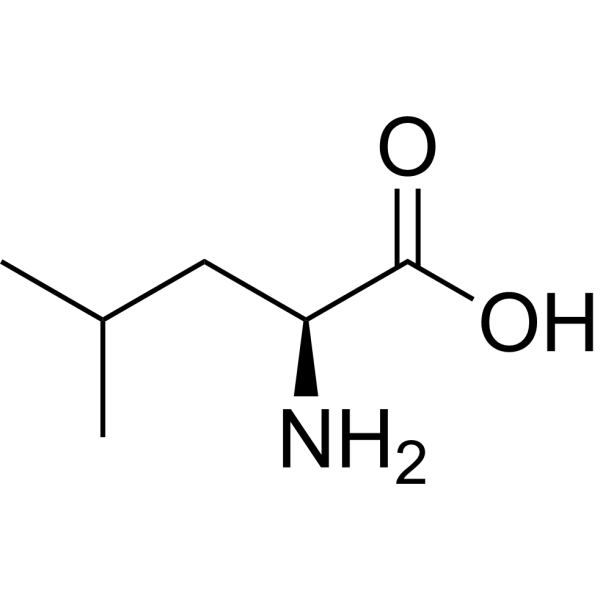
L-LeucinemTOR activator -
HY-N0771
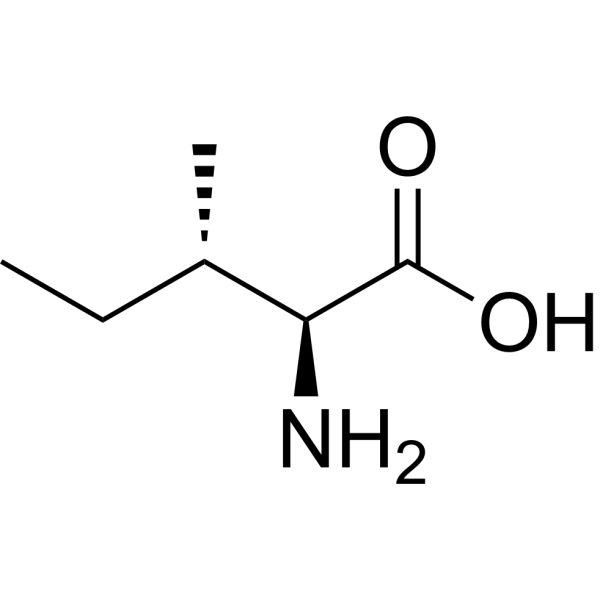
L-IsoleucineEndogenous Metabolite, L-enantiomer of Isoleucine -
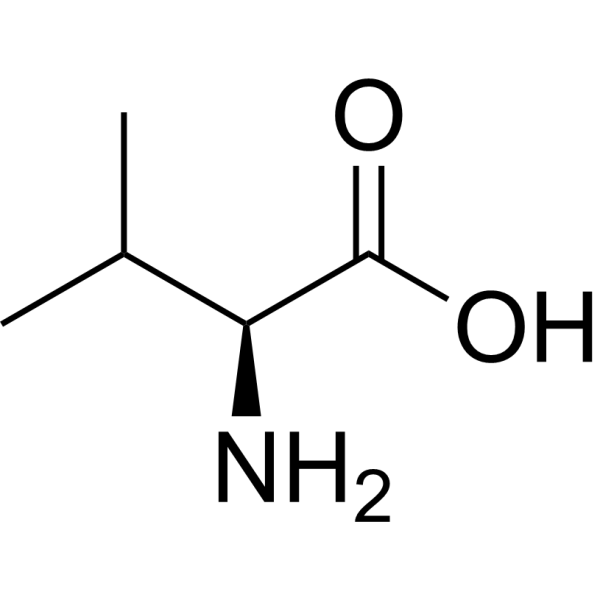
HY-N0717
L-ValineNonlinear Semiorganic Material -
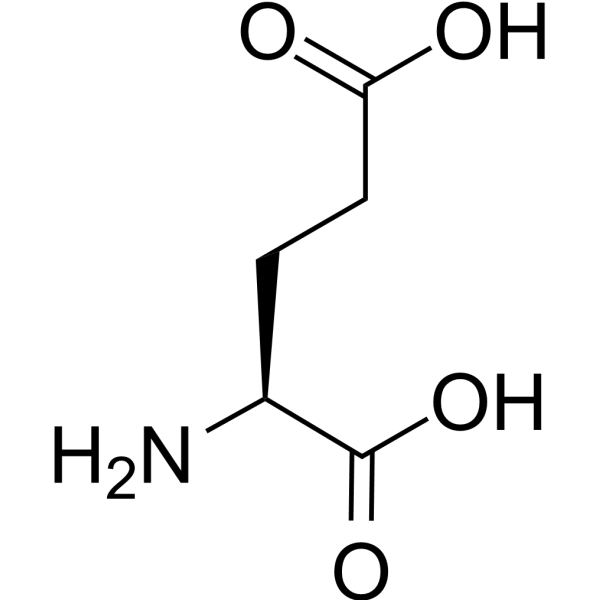
HY-14608
L-Glutamic acidGlutamate Receptors Agonist -
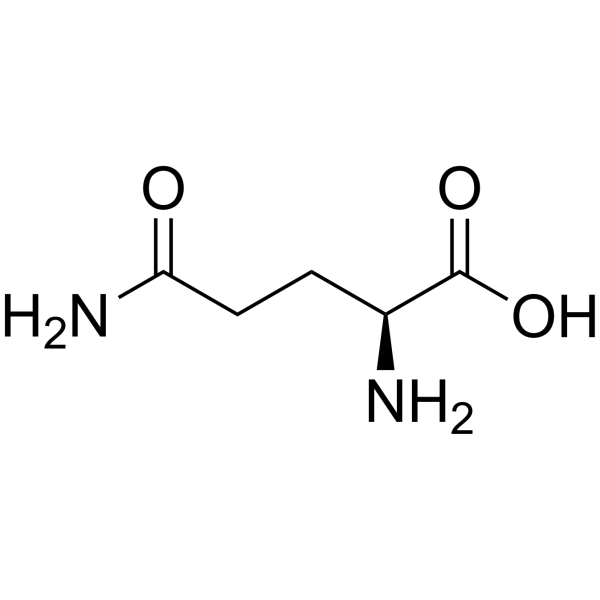
HY-N0390
L-GlutamineEndogenous Metabolite -
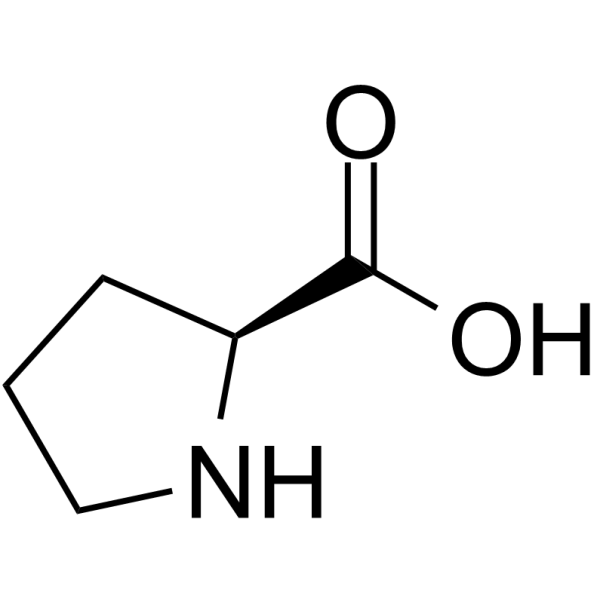
HY-Y0252
L-Proline -
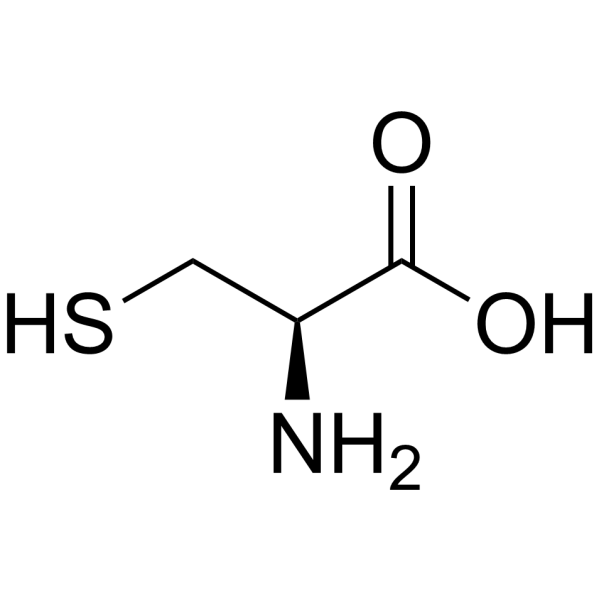
HY-Y0337
L-CysteineAnorectic Agent -
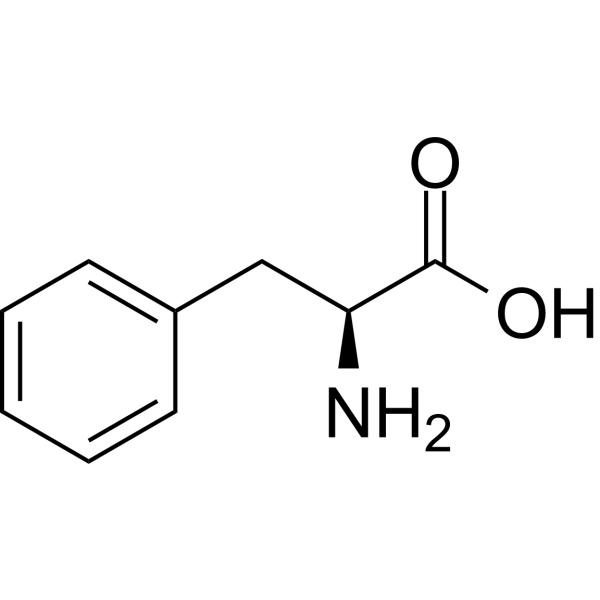
HY-N0215
L-PhenylalanineCalcium Channels Antagonist -
HY-N0469
L-LysineEssential Amino Acids -
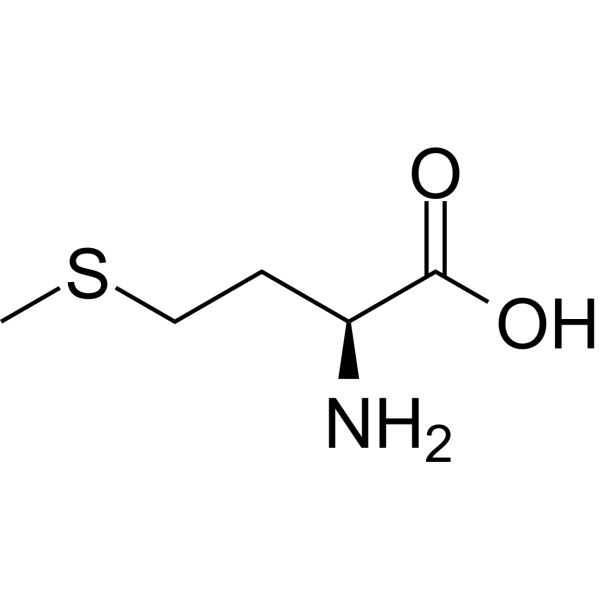
HY-N0326
L-MethionineEndogenous Metabolite -
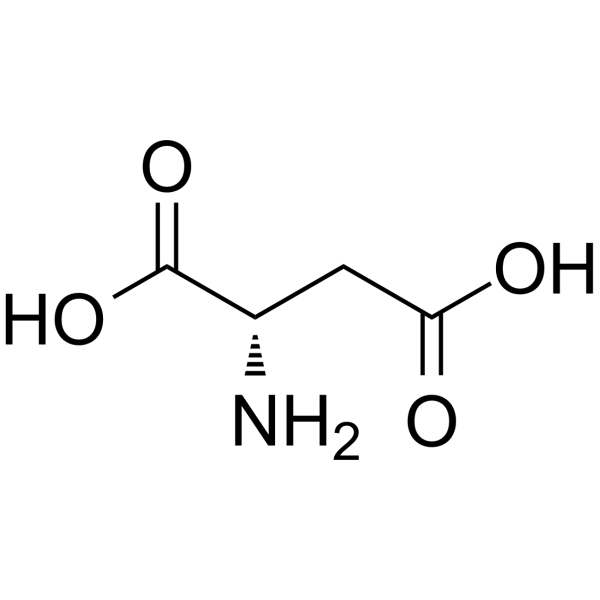
HY-N0666
L-Aspartic acidNMDA Receptor Agonist


Biological Activity
Description
In Vitro
DL-Glutamic acid (0.01 M; until middle lag phase) inhibits cell division but not elongation of Rhodospirillum rubrum during initial growth, while concentrations below 0.0025 M do not induce this effect, and cells regain normal morphology after a lag phase[1].
DL-Glutamic acid (0.012 M; up to 300 h) reduces cellular ribonucleic acid (RNA) and deoxyribonucleic acid (DNA) levels in growing Rhodospirillum rubrum, with RNA affected more severely than DNA, and nucleic acid synthesis ceases before dry weight growth stops[1].
MedChemExpress (MCE) has not independently confirmed the accuracy of these methods. They are for reference only. Further protocols information, click here.


Chemical Information
-
CAS No. 617-65-2
-
Appearance Solid
-
Molecular Weight 147.13
-
Formula C5H9NO4
-
Color White to off-white
-
SMILES
NC(CCC(O)=O)C(O)=O
-
Structure Classification
-
Initial Source
-
Shipping
Room temperature in continental US; may vary elsewhere.
-
Storage
Powder -20°C 3 years 4°C 2 years In solvent -80°C 6 months -20°C 1 month


Solvent & Solubility
In Vitro:
DMSO : 1 mg/mL (6.80 mM; ultrasonic and warming and heat to 60°C; Hygroscopic DMSO has a significant impact on the solubility of product, please use newly opened DMSO)
Please refer to the solubility information to select the appropriate solvent. Once prepared, please aliquot and store the solution to prevent product inactivation from repeated freeze-thaw cycles.
Storage method and period of stock solution: -80°C, 6 months; -20°C, 1 month. When stored at -80°C, please use it within 6 months. When stored at -20°C, please use it within 1 month.
Please refer to the solubility information to select the appropriate solvent. Once prepared, please aliquot and store the solution to prevent product inactivation from repeated freeze-thaw cycles.
Storage method and period of stock solution: -80°C, 6 months; -20°C, 1 month. When stored at -80°C, please use it within 6 months. When stored at -20°C, please use it within 1 month.
Concentration (start) × Volume (start) = Concentration (final) × Volume (final)

Protocols
-
Research Protocol for Infectious Diseases
Infectious-disease experiments test how pathogens interact with host barriers, innate immune receptors, inflammatory signaling, pathogen replication, and tissue injury; pattern-recognition receptors such as TLRs, RIG-I-like receptors, NOD-like receptors, and inflammasomes detect microbial molecules and activate NF-κB, interferon, and cytokine responses. The central hypothesis is that infection severity reflects the balance between pathogen burden and host response: protective inflammation restricts pathogen growth, whereas excessive or mislocalized inflammation contributes to tissue damage and disease phenotype. Unresolved questions include which host pathways are protective versus pathogenic, why some infection models fail to translate to human disease, and which combined readouts best predict clinically relevant infection outcomes.
-
CFSE Dye Dilution Proliferation Assay
The CFSE (carboxyfluorescein diacetate succinimidyl ester) dye dilution proliferation assay is based on the covalent labeling of intracellular proteins by a cell-permeant fluorescent dye that becomes fluorescent upon intracellular ester cleavage and then is stably retained within cells. As labeled cells divide, the dye is partitioned equally between daughter cells, resulting in a stepwise halving of fluorescence intensity that can be quantified by flow cytometry to determine the number of cell divisions undergone by each cell population. This fluorescence dilution approach enables quantitative tracking of lymphocyte proliferation at the single-cell level over multiple rounds of division. CFSE-based proliferation analysis has been widely applied to measure antigen-driven lymphocyte expansion in vitro, where discrete fluorescence peaks correspond to successive cell divisions and allow reconstruction of proliferative history within heterogeneous populations.
-
Dye-dilution cell tracking and proliferation staining
Dye-dilution cell tracking assays quantify cell proliferation by covalently labeling intracellular proteins with a stable fluorescent dye that is equally partitioned between daughter cells during mitosis, resulting in stepwise halving of fluorescence intensity with each cell division as measured by flow cytometry histograms. Carboxyfluorescein diacetate succinimidyl ester (CFSE) is a prototypical dye that diffuses into cells, is enzymatically converted into a fluorescent compound, and then covalently binds intracellular amine groups, producing long-lived fluorescence suitable for tracking multiple rounds of division in vitro and in vivo. Successive generations of dividing cells form discrete peaks of decreasing fluorescence intensity, enabling estimation of proliferation history, precursor frequency, and division index within heterogeneous populations. Alternative dyes such as CellTrace Violet (CTV) and far-red membrane dyes (e. g. , PKH26) follow the same dilution principle but differ


Purity & Documentation
-
Data Sheet (269 KB)
-
SDS (396 KB)
- English - EN (396 KB)
- Français - FR (396 KB)
- Deutsch - DE (396 KB)
- Norwegian - NO (396 KB)
- Español - ES (396 KB)
- Swedish - SV (396 KB)
- Italian - IT (396 KB)
- Korean - KR (396 KB)
- Portuguese - PT (396 KB)
-
Handling Instructions (2659 KB)
References


Complete Stock Solution Preparation Table
Please refer to the solubility information to select the appropriate solvent. Once prepared, please aliquot and store the solution to prevent product inactivation from repeated freeze-thaw cycles.
Storage method and period of stock solution: -80°C, 6 months; -20°C, 1 month. When stored at -80°C, please use it within 6 months. When stored at -20°C, please use it within 1 month.
| Optional Solvent | Concentration Solvent Mass | 1 mg | 5 mg | 10 mg | 25 mg |
|---|---|---|---|---|---|
| DMSO | 1 mM | 6.7967 mL | 33.9836 mL | 67.9671 mL | 169.9178 mL |
| 5 mM | 1.3593 mL | 6.7967 mL | 13.5934 mL | 33.9836 mL |


DL-Glutamic acid Related Classifications
HY-W041895 Related Classifications
 Powered by Bioz