



Dorzagliatin
Based on 4 publication(s) in Google Scholar
Dorzagliatin (HMS5552), a dual-acting glucokinase (GK) activator, improves glycaemic control and pancreatic β-cell function in type 2 diabetes.
For research use only. We do not sell to patients.
- Purity : 99.89%
- CAS No.: 1191995-00-2
- Formula: C22H27ClN4O5
- Molecular Weight:462.93
-
Storage:Powder -20°C, 3 years , 4°C, 2 years ; In solvent -80°C, 2 years , -20°C, 1 year

To place orders, for customer services and technical support, please contact: MedChemExpress USA
Tel: 609-228-6898 E-mail: [email protected] [email protected]


-
 Biological Activity
-
Chemical Information
-
Solvent & Solubility
- Protocols
- Purity & Documentation
- References
-
 Help & FAQs


-
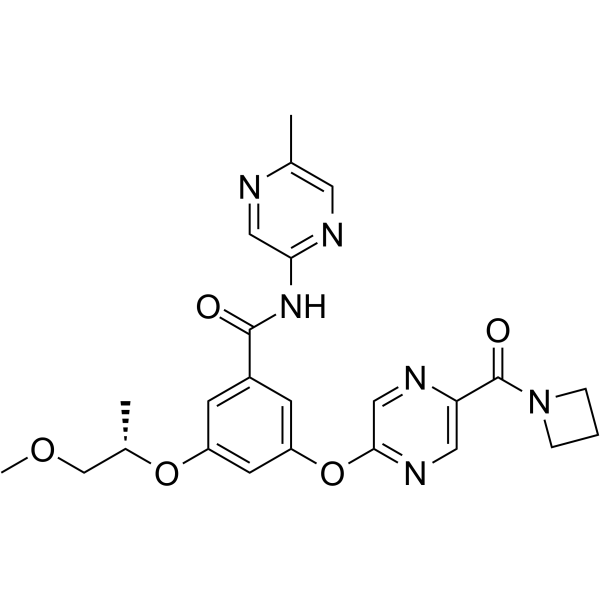
HY-15675
AZD1656Glucokinase Activator -
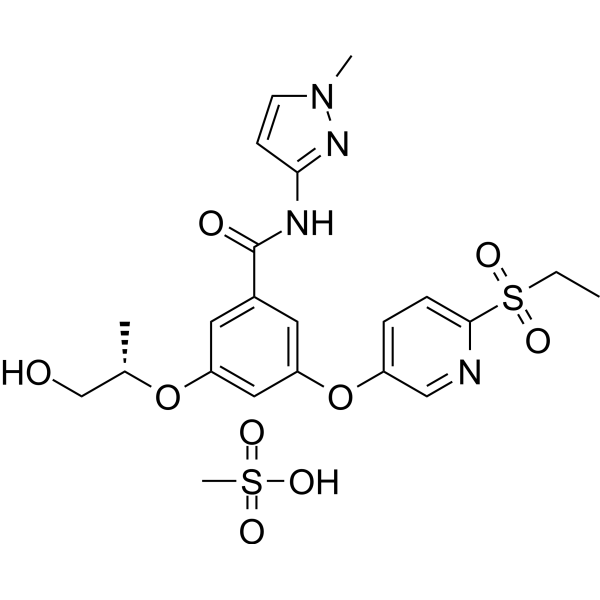
HY-19843
MK-0941Glucokinase Activator -
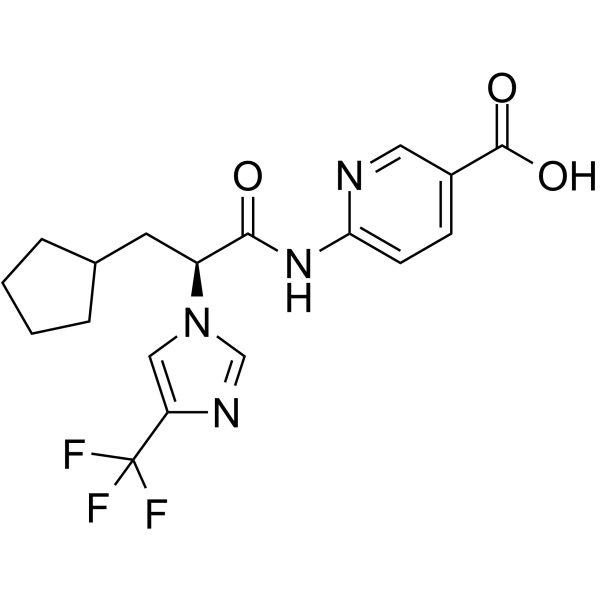
HY-100181
PF-04991532Glucokinase Activator -
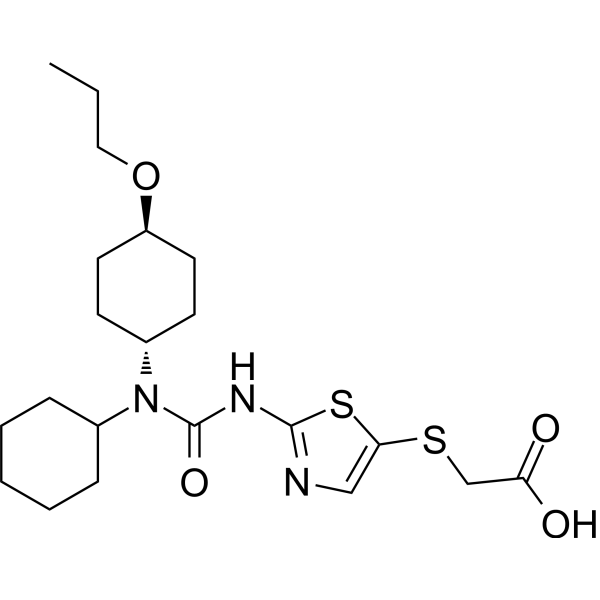
HY-147254
CadisegliatinGK Agent -
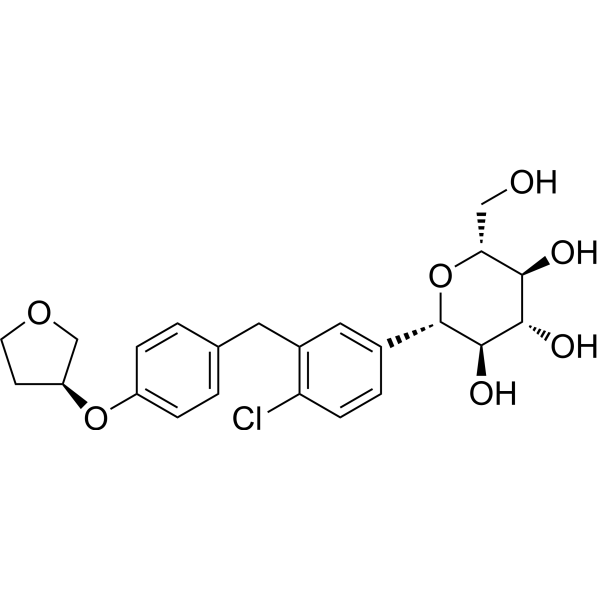
HY-15409
EmpagliflozinSGLT2 Inhibitor -

HY-109030R
Dorzagliatin (Standard)Glucokinase Activator -
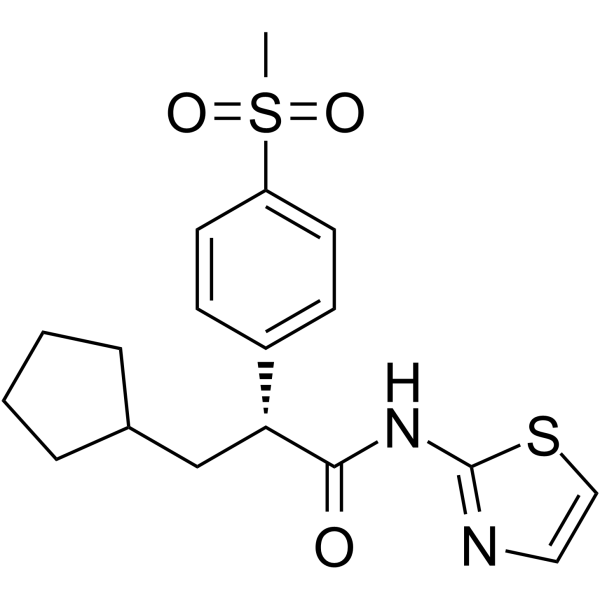
HY-10595
RO-28-1675Glucokinase Activator -
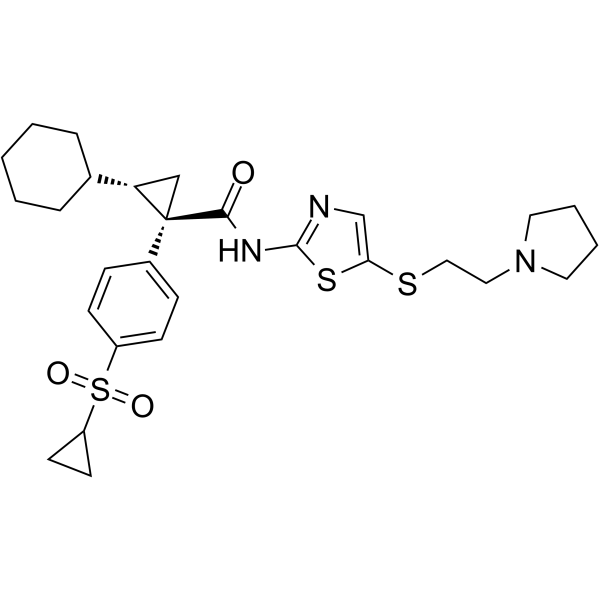
HY-13529
GlobalagliatinGlucokinase Activator -
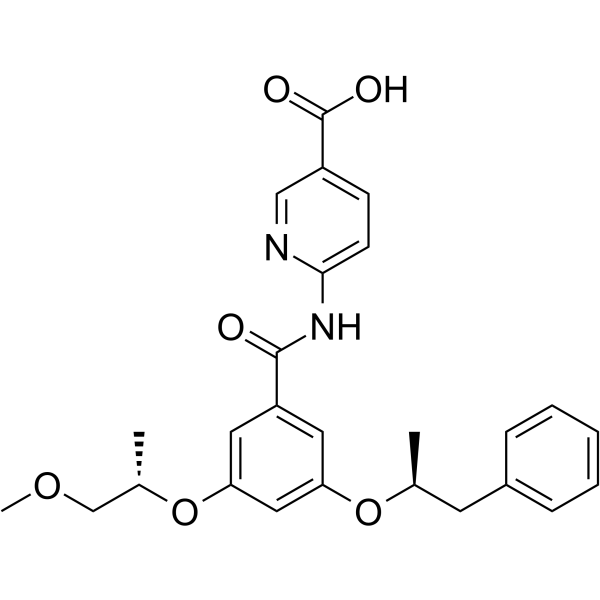
HY-15671
GKA50Glucokinase Activator -
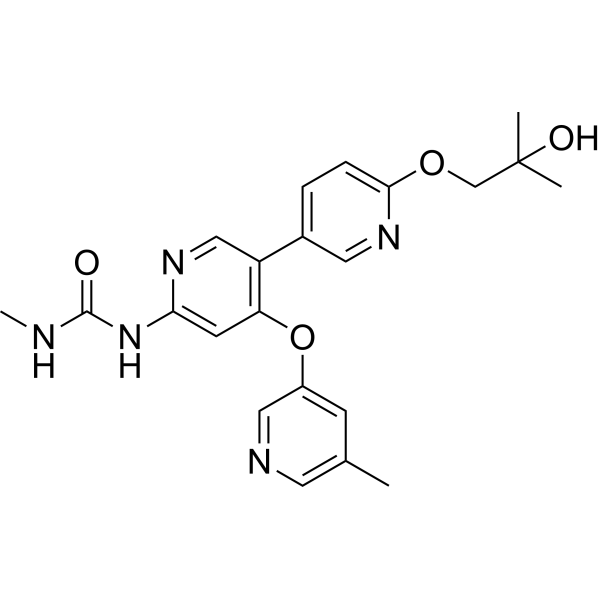
HY-100221
AM-2394Glucokinase Activator -

HY-10595R
RO-28-1675 (Standard)Reference Standard -
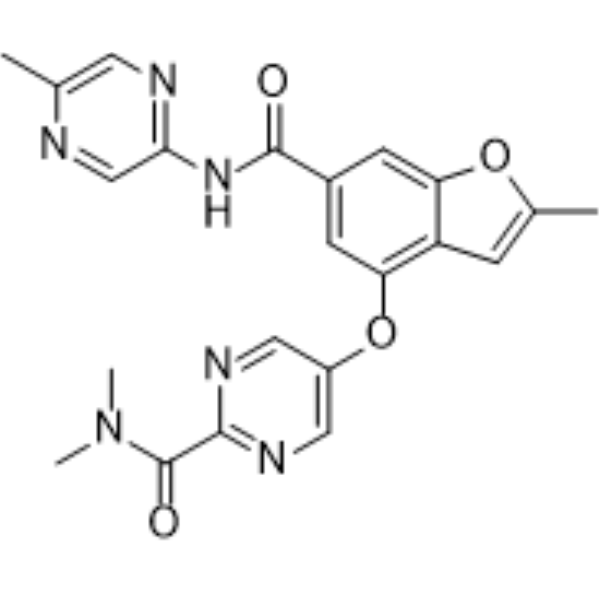
HY-108328
NerigliatinGlucokinase Activator
Publications Citing Use of MedChemExpress (MCE) Dorzagliatin
More

Biological Activity
Description
IC50 & Target
Glucokinase[1]
In Vivo
MedChemExpress (MCE) has not independently confirmed the accuracy of these methods. They are for reference only.
-
Animal Model:Male Sprague-Dawley (SD) rats (aged approximately 6–8 weeks and weighing 200-230 g)[2
-
Dosage:Low-dose (10 mg/kg), and high-dose (30 mg/kg)
-
Administration:Administered intragastrically (i.g.); daily (8:00 AM) for one month
-
Result:Exerted a glucose-lowering effect on the glucose levels.
Clinical Trial
| NCT Number | Sponsor | Condition | Start Date |
Phase

|
|---|---|---|---|---|
| NCT01329991 | 2011-05 | PHASE1 |


Chemical Information
-
CAS No. 1191995-00-2
-
Appearance Solid
-
Molecular Weight 462.93
-
Formula C22H27ClN4O5
-
Color White to off-white
-
SMILES
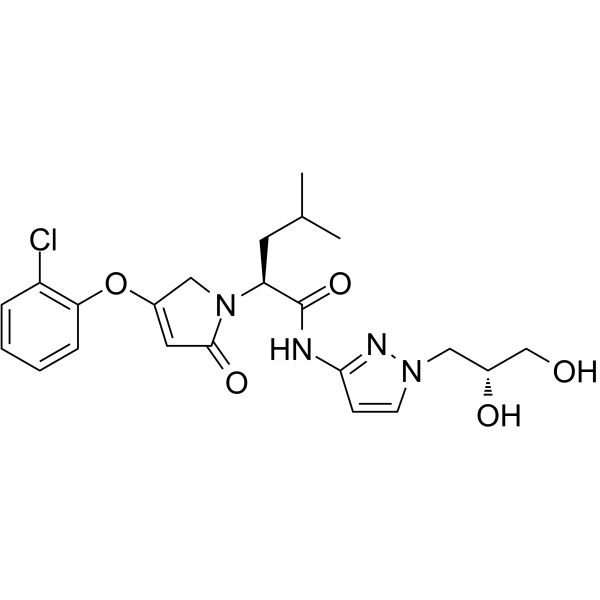
O=C(NC1=NN(C[C@@H](O)CO)C=C1)[C@@H](N2CC(OC(C=CC=C3)=C3Cl)=CC2=O)CC(C)C
-
Synonyms
HMS5552
-
Shipping
Room temperature in continental US; may vary elsewhere.
-
Storage
Powder -20°C 3 years 4°C 2 years In solvent -80°C 2 years -20°C 1 year


Publications (4)
-
Journal Impact Factor
-
Most Recent
-
-
Diabetologia
Modelling the effects of human SUR1 R1420H variation on insulin secretory function using isogenic iPSC-derived pancreatic islets. [Abstract]2025 Nov 25. PMID: 41291239 -
Commun Biol
Conserved glucokinase regulation in zebrafish confirms therapeutic utility for pharmacologic modulation in diabetes. [Abstract]2024 Nov 23;7(1):1557. PMID: 39580550 -


Solvent & Solubility
In Vitro:
DMSO : 125 mg/mL (270.02 mM; Need ultrasonic; Hygroscopic DMSO has a significant impact on the solubility of product, please use newly opened DMSO)
Please refer to the solubility information to select the appropriate solvent. Once prepared, please aliquot and store the solution to prevent product inactivation from repeated freeze-thaw cycles.
Storage method and period of stock solution: -80°C, 2 years; -20°C, 1 year. When stored at -80°C, please use it within 2 years. When stored at -20°C, please use it within 1 year.
Please refer to the solubility information to select the appropriate solvent. Once prepared, please aliquot and store the solution to prevent product inactivation from repeated freeze-thaw cycles.
Storage method and period of stock solution: -80°C, 2 years; -20°C, 1 year. When stored at -80°C, please use it within 2 years. When stored at -20°C, please use it within 1 year.
Concentration (start) × Volume (start) = Concentration (final) × Volume (final)
In Vivo:
Select the appropriate dissolution method based on your experimental animal and administration route.
- For the following dissolution methods, please ensure to first prepare a clear stock solution using an In Vitro approach and then sequentially add co-solvents:
- To ensure reliable experimental results, the clarified stock solution can be appropriately stored based on storage conditions. As for the working solution for In Vivo experiments, it is recommended to prepare freshly and use it on the same day.
- The percentages shown for the solvents indicate their volumetric ratio in the final prepared solution. If precipitation or phase separation occurs during preparation, heat and/or sonication can be used to aid dissolution.
Add each solvent one by one: 10% DMSO 40% PEG300 5% Tween-80 45% Saline
Solubility: ≥ 2.08 mg/mL (4.49 mM); Clear solution
This protocol yields a clear solution of ≥ 2.08 mg/mL (saturation unknown).
Taking 1 mL working solution as an example, add 100 μL DMSO stock solution (20.8 mg/mL) to 400 μL PEG300, and mix evenly; then add 50 μL Tween-80 and mix evenly; then add 450 μL Saline to adjust the volume to 1 mL.
Preparation of Saline: Dissolve 0.9 g sodium chloride in ddH₂O and dilute to 100 mL to obtain a clear Saline solution.
Add each solvent one by one: 10% DMSO 90% (20% SBE-β-CD in Saline)
Solubility: ≥ 2.08 mg/mL (4.49 mM); Clear solution
This protocol yields a clear solution of ≥ 2.08 mg/mL (saturation unknown).
Taking 1 mL working solution as an example, add 100 μL DMSO stock solution (20.8 mg/mL) to 900 μL 20% SBE-β-CD in Saline, and mix evenly.
Preparation of 20% SBE-β-CD in Saline (4°C, storage for one week): 2 g SBE-β-CD powder is dissolved in 10 mL Saline, completely dissolve until clear.
For the following dissolution methods, please prepare the working solution directly:
It is recommended to prepare fresh solutions and use them promptly within a short period of time.
The percentages shown for the solvents indicate their volumetric ratio in the final prepared solution. If precipitation or phase separation occurs during preparation, heat and/or sonication can be used to aid dissolution.
Add each solvent one by one: 50% PEG300 50% Saline
Solubility: 5 mg/mL (10.80 mM); Clear solution; Need ultrasonic
In Vivo Dissolution Calculator
Please enter the basic information of animal experiments:
-
-
-
-
Recommended: Prepare an additional quantity of animals to account for potential losses during experiments.
Please enter your animal formula composition:
-
%DMSO +
Recommended: Keep the proportion of DMSO in working solution below 2% if your animal is weak.
-
%+
-
+%Tween-80 + +
-
%Saline +
The co-solvents required include: DMSO, . All of co-solvents are available by MedChemExpress (MCE). , Tween 80. All of co-solvents are available by MedChemExpress (MCE).
Working solution concentration: 0.22 mg/mL
Method for preparing stock solution: mg drug dissolved in μL DMSO. Stock solution concentration: mg/mL.
1. Take μL DMSO stock solution;
2. Add μL .
μL , mix evenly;
3. Then add μL Tween 80, mix evenly;
4. Then add μL
Please ensure that the stock solution in the first step is dissolved to a clear state, and add co-solvents in sequence. You can use ultrasonic heating (ultrasonic cleaner, recommended frequency 20-40 kHz), vortexing, etc. to assist dissolution.


Purity & Documentation
-
Data Sheet (274 KB)
-
SDS (396 KB)
- English - EN (396 KB)
- Français - FR (396 KB)
- Deutsch - DE (396 KB)
- Norwegian - NO (396 KB)
- Español - ES (396 KB)
- Swedish - SV (396 KB)
- Italian - IT (396 KB)
- Korean - KR (396 KB)
- Portuguese - PT (396 KB)
-
Handling Instructions (2659 KB)
References
[1]. Zhu XX, et al. Dorzagliatin (HMS5552), a novel dual-acting glucokinase activator, improves glycaemic control and pancreatic β-cell function in patients with type 2 diabetes: A 28-day treatment study using biomarker-guided patient selection. Diabetes Obes Metab. 2018 Sep;20(9):2113-2120. [Content Brief]
[2]. Wang P, et al. Effects of a Novel Glucokinase Activator, HMS5552, on Glucose Metabolism in a Rat Model of Type 2 Diabetes Mellitus. J Diabetes Res. 2017;2017:5812607. [Content Brief]


Complete Stock Solution Preparation Table
Please refer to the solubility information to select the appropriate solvent. Once prepared, please aliquot and store the solution to prevent product inactivation from repeated freeze-thaw cycles.
Storage method and period of stock solution: -80°C, 2 years; -20°C, 1 year. When stored at -80°C, please use it within 2 years. When stored at -20°C, please use it within 1 year.
| Optional Solvent | Concentration Solvent Mass | 1 mg | 5 mg | 10 mg | 25 mg |
|---|---|---|---|---|---|
| DMSO | 1 mM | 2.1602 mL | 10.8008 mL | 21.6015 mL | 54.0038 mL |
| 5 mM | 0.4320 mL | 2.1602 mL | 4.3203 mL | 10.8008 mL | |
| 10 mM | 0.2160 mL | 1.0801 mL | 2.1602 mL | 5.4004 mL | |
| 15 mM | 0.1440 mL | 0.7201 mL | 1.4401 mL | 3.6003 mL | |
| 20 mM | 0.1080 mL | 0.5400 mL | 1.0801 mL | 2.7002 mL | |
| 25 mM | 0.0864 mL | 0.4320 mL | 0.8641 mL | 2.1602 mL | |
| 30 mM | 0.0720 mL | 0.3600 mL | 0.7201 mL | 1.8001 mL | |
| 40 mM | 0.0540 mL | 0.2700 mL | 0.5400 mL | 1.3501 mL | |
| 50 mM | 0.0432 mL | 0.2160 mL | 0.4320 mL | 1.0801 mL | |
| 60 mM | 0.0360 mL | 0.1800 mL | 0.3600 mL | 0.9001 mL | |
| 80 mM | 0.0270 mL | 0.1350 mL | 0.2700 mL | 0.6750 mL | |
| 100 mM | 0.0216 mL | 0.1080 mL | 0.2160 mL | 0.5400 mL |


Dorzagliatin Related Classifications
HY-109030 Related Classifications
 Powered by Bioz