



Fluorene
Based on 1 publication(s) in Google Scholar
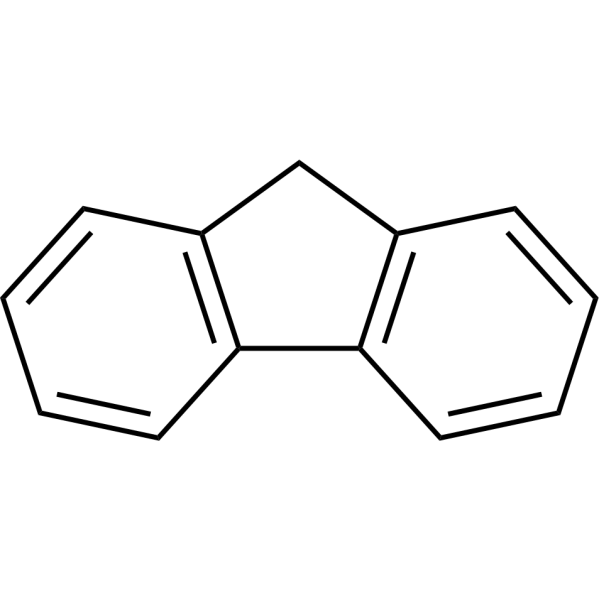
Fluorene is an orally active polycyclic aromatic hydrocarbon (PAH) and a precursor to other fluorene-based compounds. Fluorene and its derivatives serve as dye precursors for fluorene synthesis. In A549 cells, Fluorene induces oxidative stress and inflammatory responses by increasing ROS and SOD generation, exacerbating lipid peroxidation, modulating antioxidant enzyme activity, and upregulating the expression of pro-inflammatory factors TNF-α and IL-6. In vivo, Fluorene exhibits anxiolytic activity. Fluorene holds potential for research in inflammation and neurological disorders.
For research use only. We do not sell to patients.
- Purity : 98.07%
- CAS No.: 86-73-7
- Formula: C13H10
- Molecular Weight:166.22
-
Storage:
RT, protect from light.
In solvent -80°C, 1 year , -20°C, 6 months

To place orders, for customer services and technical support, please contact: MedChemExpress USA
Tel: 609-228-6898 E-mail: [email protected] [email protected]


-
 Biological Activity
-
Chemical Information
-
Solvent & Solubility
- Protocols
- Purity & Documentation
- References
-
 Help & FAQs


-
HY-W013570
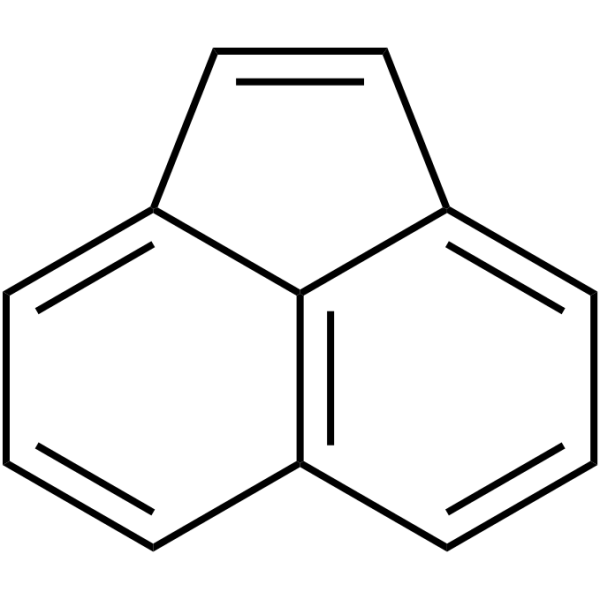
AcenaphthylenePAH -
HY-B1727
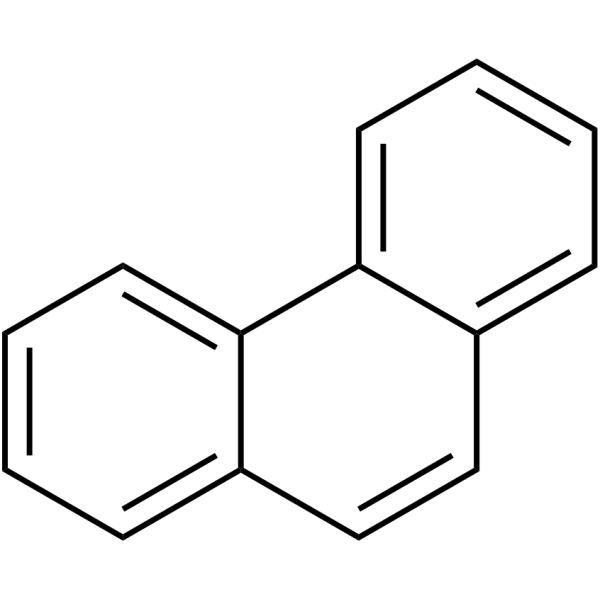
PhenanthrenePolycyclic Aromatic Hydrocarbon -
HY-103609
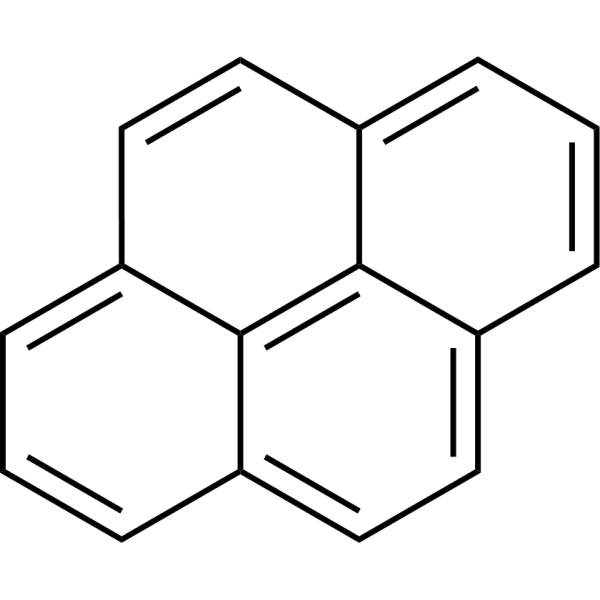
PyreneBiochemical Assay Reagent -
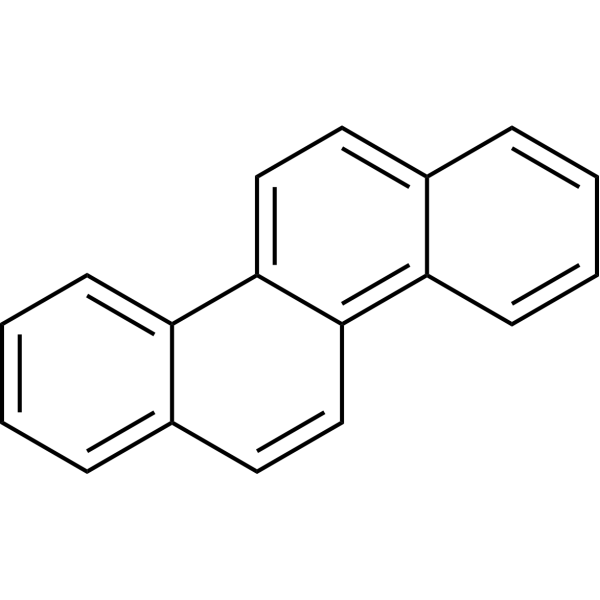
HY-121107
ChryseneCarcinogenic Inducer -
![Dibenz[a,h]anthracene](https://file.medchemexpress.com/product_pic/hy-w013053.gif)
HY-W013053
Dibenz[a,h]anthraceneAhR Agonist -

HY-W026772R
Fluorene (Standard)Polycyclic Aromatic Hydrocarbon -

HY-B1727R
Phenanthrene (Standard)Polycyclic Aromatic Hydrocarbon -

HY-Y0284
Diethyl phthalatePlasticizer -

HY-W094755
1-Nitropyrene -
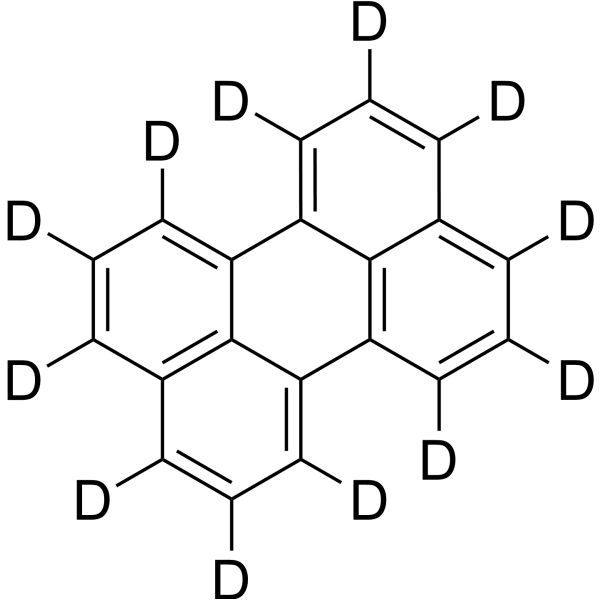
HY-W090294S
Perylene-d12Stable Isotope -
![Benzo[k]fluoranthene](https://file.medchemexpress.com/product_pic/hy-23498.gif)
HY-23498
Benzo[k]fluoranthenePAH
Publications Citing Use of MedChemExpress (MCE) Fluorene
More

Biological Activity
Description
Cellular Effect
|
Cell Line

|
Type | Value | Description | References |
|---|---|---|---|---|
| MDA-MB-231 | IC50 |
>50 μM
Compound: Fluorene
|
Cytotoxicity against triple-negative human MDA-MB-231 cells assessed as reduction in cell viability measured after 48 hrs by CCK8 assay
Cytotoxicity against triple-negative human MDA-MB-231 cells assessed as reduction in cell viability measured after 48 hrs by CCK8 assay
|
[PMID: 32726747] |
In Vitro
Fluorene (200-800 μM, 24-48 hours) induces oxidative stress and inflammation in A549 cells, characterized by increased ROS generation, enhanced lipid peroxidation, altered antioxidant enzyme activity, and upregulated TNF-α and IL-6 expression[2].
MedChemExpress (MCE) has not independently confirmed the accuracy of these methods. They are for reference only. Further protocols information, click here.
-
Cell Line:A549 human lung epithelial cells (lung injury)
-
Concentration:200, 400, 600, 800 μM
-
Incubation Time:24 hours, 48 hours
-
Result:Upregulated TNF-α and IL-6 mRNA and protein expression levels. Additionally, SP-A expression increased in Fluorene-treated groups (400 and 600 μM) but decreased in the PAH mixture-treated group (600 μM).
-
Cell Line:A549 human lung epithelial cells (lung injury)
-
Concentration:200, 400, 600, 800 μM
-
Incubation Time:24 hours, 48 hours
-
Result:Induced ROS generation in A549 cells, increased MDA content, and enhanced SOD and CAT activity.
In Vivo
MedChemExpress (MCE) has not independently confirmed the accuracy of these methods. They are for reference only.
-
Animal Model:Fluorene oral or intraperitoneal (i.p.) administration-induced body weight and organ changes in Wistar rats[1]
-
Dosage:1, 10, 100 mg/kg
-
Administration:Oral gavage (p.o.) or intraperitoneal injection (i.p.), once daily for 60 days
-
Result:Exhibited significantly reduced weight gain after 28 days and increased relative liver weight (The 100 mg/kg group). Additionally, higher concentrations of Fluorene and its hydroxylated metabolites were detected in the blood and brain of i.p.-treated rats compared to p.o.-treated ones. Reduced anxiety levels in rats (1, 10 mg/kg), while the high dose (100 mg/kg) showed no significant changes. No effects on locomotor activity or learning ability were observed.


Chemical Information
-
CAS No. 86-73-7
-
Appearance Solid
-
Molecular Weight 166.22
-
Formula C13H10
-
Color White to light brown
-
SMILES
C1(C=CC=C2)=C2CC3=C1C=CC=C3
-
Shipping
Room temperature in continental US; may vary elsewhere.
-
Storage
RT, protect from light
In solvent -80°C 1 year -20°C 6 months


Publications (1)
-
Journal Impact Factor
-
Most Recent


Solvent & Solubility
In Vitro:
DMSO : 62.5 mg/mL (376.01 mM; Need ultrasonic; Hygroscopic DMSO has a significant impact on the solubility of product, please use newly opened DMSO)
Please refer to the solubility information to select the appropriate solvent. Once prepared, please aliquot and store the solution to prevent product inactivation from repeated freeze-thaw cycles.
Storage method and period of stock solution: -80°C, 1 year; -20°C, 6 months. When stored at -80°C, please use it within 1 year. When stored at -20°C, please use it within 6 months.
Please refer to the solubility information to select the appropriate solvent. Once prepared, please aliquot and store the solution to prevent product inactivation from repeated freeze-thaw cycles.
Storage method and period of stock solution: -80°C, 1 year; -20°C, 6 months. When stored at -80°C, please use it within 1 year. When stored at -20°C, please use it within 6 months.
Concentration (start) × Volume (start) = Concentration (final) × Volume (final)

Protocols
-
RNA extraction experimental
By lysing cells, releasing RNA, and removing impurities such as proteins and DNA, high-purity RNA products are finally obtained. The commonly used traditional method is the guanidine isothiocyanate/phenol/chloroform method (Trizol), which is suitable for a variety of animal materials including animal tissues, microorganisms, cultured cells, etc., and most plant materials.
-
Protocol for Elevated Plus Maze Test
The Elevated Plus Maze is a rodent anxiety-like behavior assay based on the conflict between spontaneous exploration and avoidance of open, elevated, exposed spaces. The apparatus contains two open arms and two closed arms arranged in a plus shape, and rodents normally spend more time in closed arms than open arms. The assay readout is generated by recording arm entries, time spent in open and closed arms, and related exploratory behaviors. Increased open-arm time or open-arm entries is commonly interpreted as reduced anxiety-like behavior, whereas reduced open-arm exploration is interpreted as increased anxiety-like behavior.
-
ROS/oxidative-stress fluorescent staining
ROS/oxidative-stress fluorescent staining uses cell-permeant fluorogenic probes that become fluorescent after oxidation inside cells or tissues; commonly used examples include DCFH-DA/DCFDA for broad cellular oxidant detection, DHE for superoxide-related signal detection, MitoSOX for mitochondrial superoxide-related signal detection, and CellROX probes for oxidative-stress-associated fluorescence readouts. The assay detects probe oxidation rather than a single ROS species unless the probe and analysis method have been chemically validated for that species. DCFH-DA enters cells, is deacetylated by intracellular esterases to DCFH, and produces fluorescent DCF after oxidation, so the readout is used as an operational measure of total cellular oxidative stress rather than a species-specific ROS measurement. DHE and MitoSOX can report superoxide-related oxidation, but red fluorescence alone can include non-specific ethidium-like oxidation products; HPLC or optimized spectral approaches are
-
Ferroptosis Solutions
Ferroptosis is an iron-dependent, non-apoptotic form of regulated cell death characterized by lethal lipid peroxidation and sensitivity to suppression by iron chelators or lipophilic radical-trapping antioxidants. The core pathway links cystine uptake through system Xc−, glutathione availability, GPX4-dependent detoxification of phospholipid hydroperoxides, iron-dependent oxidative reactions, and polyunsaturated-phospholipid metabolism into a cell-death program that is biochemically and morphologically distinct from apoptosis, necrosis, and autophagy. The ferroptosis pathway is experimentally linked to phenotype through chemical and genetic perturbation. Erastin induces ferroptosis by inhibiting cystine uptake through system Xc− and weakening antioxidant defenses, while GPX4 inhibition or depletion causes lipid peroxide accumulation and ferroptotic cancer-cell death. ACSL4 and oxidizable arachidonoyl- or adrenoyl-containing phosphatidylethanolamines shape ferroptosis sensitivity by con
-
Research Protocol for Inflammation-related Diseases
The NLRP3 inflammasome is a cytosolic innate immune signaling platform that integrates priming signals and danger-signal activation to promote caspase-1 activation, maturation of IL-1β and IL-18, and gasdermin D-mediated pyroptotic cell death. The core experimental logic is to determine whether inflammatory disease phenotypes are driven by increased NLRP3 expression, ASC-containing inflammasome assembly, caspase-1 cleavage, GSDMD cleavage, and extracellular release of IL-1β/IL-18 rather than by nonspecific cell injury alone. The pathway is strongly linked to inflammation-related disease phenotypes because monosodium urate crystals activate NALP3/NLRP3 inflammasome signaling in gout-like crystal inflammation, cholesterol crystals activate NLRP3 inflammasomes in atherogenesis models, and DSS-induced intestinal inflammation has been reported to involve NLRP3 inflammasome activity. However, experimental colitis studies also show context-dependent protective effects of NLRP3 inflammasome co


Purity & Documentation
-
Data Sheet (283 KB)
-
SDS (623 KB)
- English - EN (623 KB)
- Français - FR (623 KB)
- Deutsch - DE (623 KB)
- Norwegian - NO (623 KB)
- Español - ES (623 KB)
- Swedish - SV (623 KB)
- Italian - IT (623 KB)
- Korean - KR (623 KB)
- Portuguese - PT (623 KB)
-
Handling Instructions (2659 KB)
References
[1]. Paul Olusegun Bankole, et al. Biodegradation of fluorene by the newly isolated marine-derived fungus, Mucor irregularis strain bpo1 using response surface methodology. Ecotoxicol Environ Saf. 2021 Jan 15;208:111619. [Content Brief]
[2]. Guo H, et al. Oxidative stress and inflammatory effects in human lung epithelial A549 cells induced by phenanthrene, fluorene, and their binary mixture. Environ Toxicol. 2021 Jan;36(1):95-104. [Content Brief]
[3]. Peiffer J, et al. Behavioral toxicity and physiological changes from repeated exposure to fluorene administered orally or intraperitoneally to adult male Wistar rats: A dose–response study[J]. Neurotoxicology, 2016, 53: 321-333. [Content Brief]


Complete Stock Solution Preparation Table
Please refer to the solubility information to select the appropriate solvent. Once prepared, please aliquot and store the solution to prevent product inactivation from repeated freeze-thaw cycles.
Storage method and period of stock solution: -80°C, 1 year; -20°C, 6 months. When stored at -80°C, please use it within 1 year. When stored at -20°C, please use it within 6 months.
| Optional Solvent | Concentration Solvent Mass | 1 mg | 5 mg | 10 mg | 25 mg |
|---|---|---|---|---|---|
| DMSO | 1 mM | 6.0161 mL | 30.0806 mL | 60.1612 mL | 150.4031 mL |
| 5 mM | 1.2032 mL | 6.0161 mL | 12.0322 mL | 30.0806 mL | |
| 10 mM | 0.6016 mL | 3.0081 mL | 6.0161 mL | 15.0403 mL | |
| 15 mM | 0.4011 mL | 2.0054 mL | 4.0107 mL | 10.0269 mL | |
| 20 mM | 0.3008 mL | 1.5040 mL | 3.0081 mL | 7.5202 mL | |
| 25 mM | 0.2406 mL | 1.2032 mL | 2.4064 mL | 6.0161 mL | |
| 30 mM | 0.2005 mL | 1.0027 mL | 2.0054 mL | 5.0134 mL | |
| 40 mM | 0.1504 mL | 0.7520 mL | 1.5040 mL | 3.7601 mL | |
| 50 mM | 0.1203 mL | 0.6016 mL | 1.2032 mL | 3.0081 mL | |
| 60 mM | 0.1003 mL | 0.5013 mL | 1.0027 mL | 2.5067 mL | |
| 80 mM | 0.0752 mL | 0.3760 mL | 0.7520 mL | 1.8800 mL | |
| 100 mM | 0.0602 mL | 0.3008 mL | 0.6016 mL | 1.5040 mL |


Fluorene Related Classifications
HY-W026772 Related Classifications
 Powered by Bioz