



Acyclovir-d4

Based on 1 Customer Validation
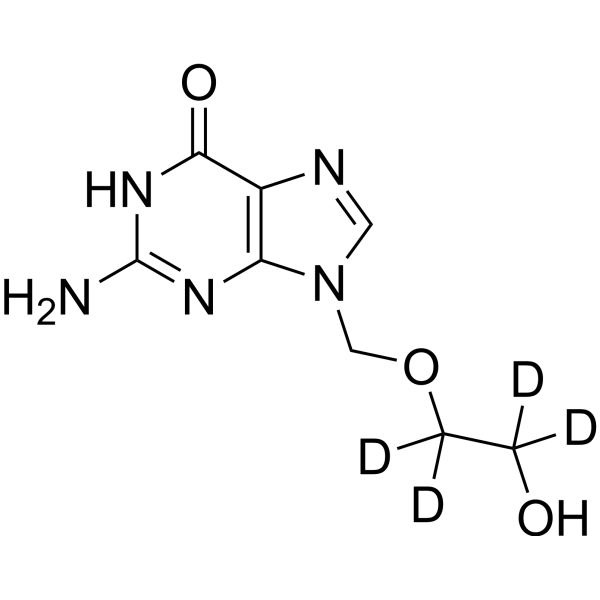
Acyclovir-d4 is the deuterium labeled Acyclovir. Acyclovir (Aciclovir) is a guanosine analogue and an orally active antiviral agent. Acyclovir inhibits HSV-1 (IC50 of 0.85 μM), HSV-2 (IC50 of 0.86 μM) and varicella-zoster virus. Acyclovir can be phosphorylated by viral thymidine kinase (TK), and Acyclovir triphosphate interferes with viral DNA polymerization through competitive inhibition with guanosine triphosphate and obligatory chain termination. Acyclovir prevents bacterial infections during induction therapy for acute leukaemia.
For research use only. We do not sell to patients.
- Purity : 98.15%
- CAS No.: 1185179-33-2
- Formula: C8H7D4N5O3
- Molecular Weight:229.23
-
Storage:Powder -20°C, 3 years ; In solvent -80°C, 6 months , -20°C, 1 month

To place orders, for customer services and technical support, please contact: MedChemExpress USA
Tel: 609-228-6898 E-mail: [email protected] [email protected]


-
 Biological Activity
-
Chemical Information
- Protocols
- Purity & Documentation
- References
-
 Help & FAQs


-
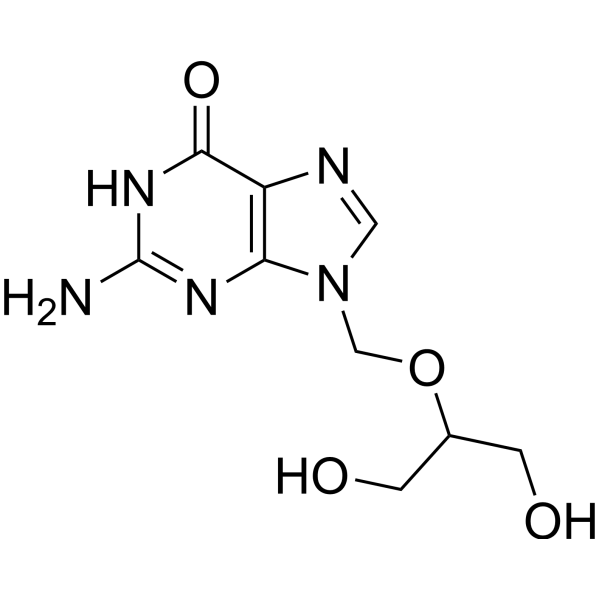
HY-13637
GanciclovirAntiviral Agent -
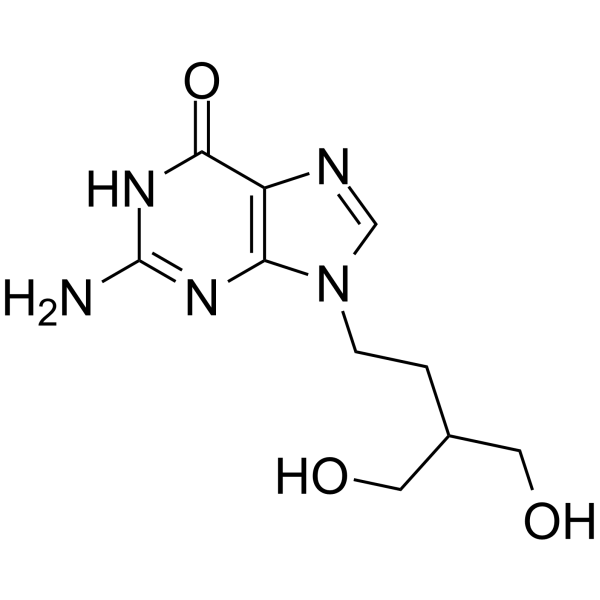
HY-17424
PenciclovirAnti-herpesvirus Agent -
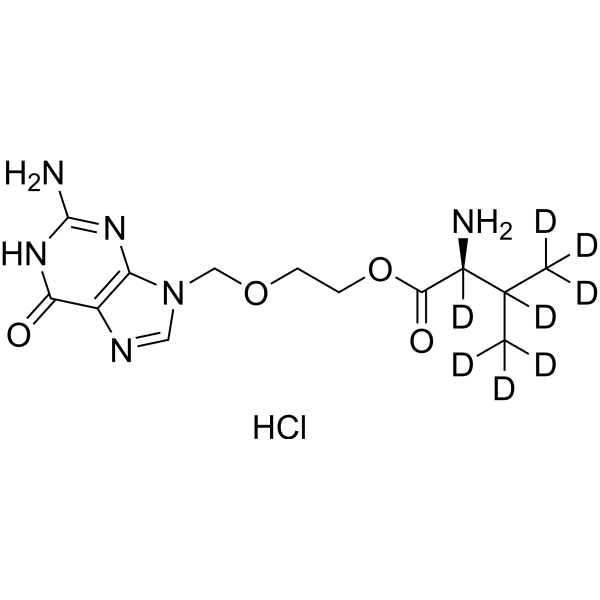
HY-17425AS
Valacyclovir-d8 hydrochlorideStable Isotope -
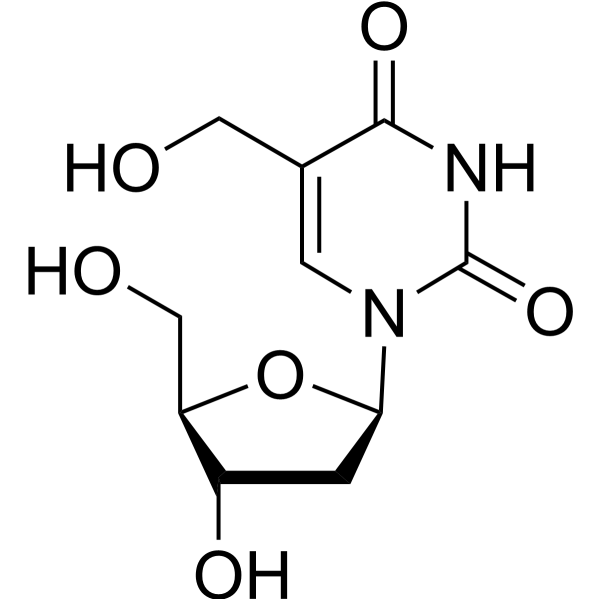
HY-129983
5-Hydroxymethyl-2'-deoxyuridineNucleoside Analog -
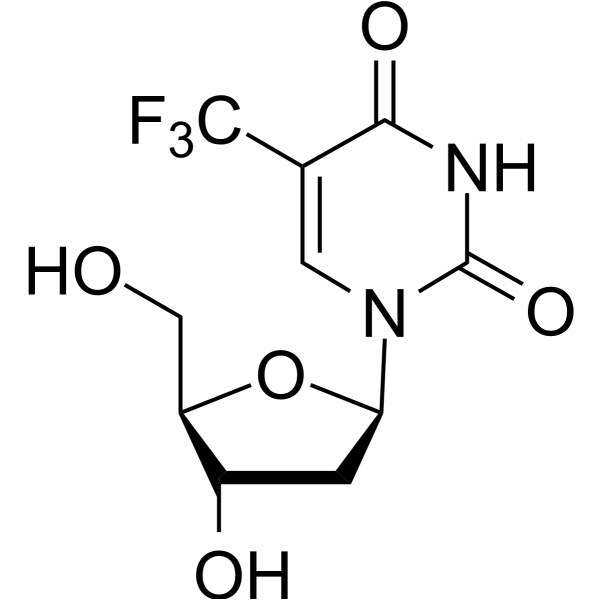
HY-A0061
TrifluridineAnti-Cancer Agent/Anti-Viral Agent -
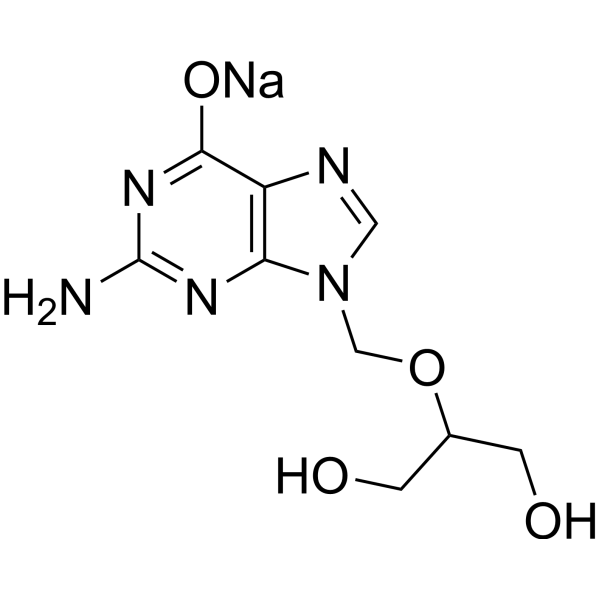
HY-13637A
Ganciclovir sodiumAntiviral Agent -

HY-W344074
Cytarabine 5’-monophosphateDNA Synthesis Inhibitor -
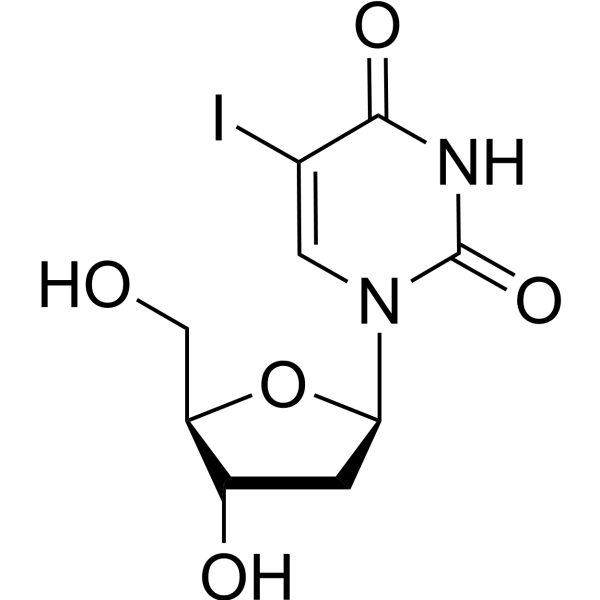
HY-B0307
IdoxuridineAntiviral Agent -
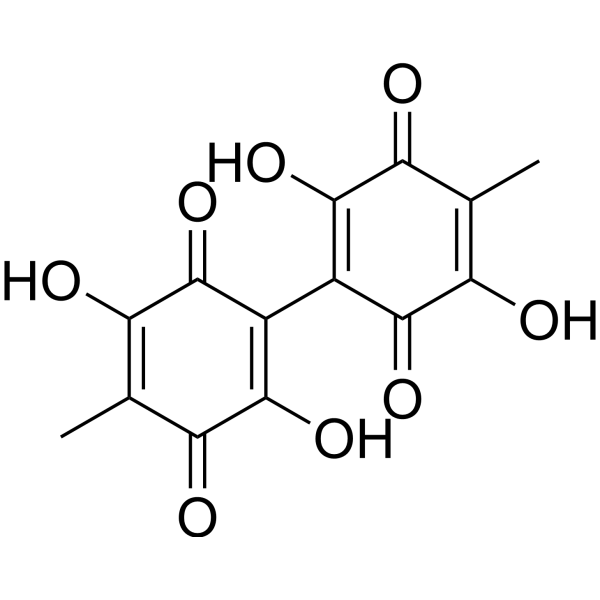
HY-N7719
OosporeinMicrobial Metabolite -

HY-137985
Mer-NF5003FSesquiterpene -
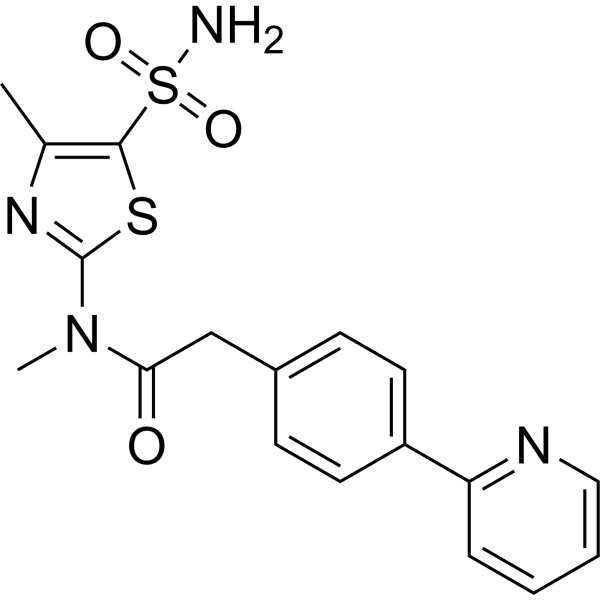
HY-15303
PritelivirHSV Inhibitor -
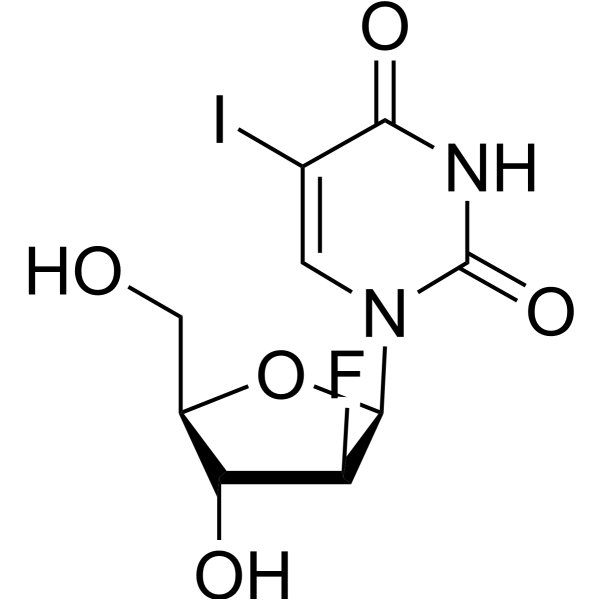
HY-118122
FialuridineAntiviral Agent
All Antibiotic Isoforms
More

Biological Activity
Description
In Vitro
Stable heavy isotopes of hydrogen, carbon, and other elements have been incorporated into drug molecules, largely as tracers for quantitation during the drug development process. Deuteration has gained attention because of its potential to affect the pharmacokinetic and metabolic profiles of drugs[1].
MedChemExpress (MCE) has not independently confirmed the accuracy of these methods. They are for reference only.
Application
1. This compound can be used as a tracer
2. This compound can be used as an internal standard for quantitative analysis by NMR, GC-MS, or LC-MS.


Chemical Information
-
CAS No. 1185179-33-2
-
Unlabeled CAS 59277-89-3
-
Appearance Solid
-
Molecular Weight 229.23
-
Formula C8H7D4N5O3
-
Color Off-white to yellow
-
SMILES
O=C1NC(N)=NC2=C1N=CN2COC([2H])([2H])C([2H])([2H])O
-
Synonyms
Aciclovir-d4; Acycloguanosine-d4
-
Shipping
Room temperature in continental US; may vary elsewhere.
-
Storage
Powder -20°C 3 years In solvent -80°C 6 months -20°C 1 month


Purity & Documentation
-
Data Sheet (273 KB)
-
SDS (394 KB)
- English - EN (394 KB)
- Français - FR (394 KB)
- Deutsch - DE (394 KB)
- Norwegian - NO (394 KB)
- Español - ES (394 KB)
- Swedish - SV (394 KB)
- Italian - IT (394 KB)
- Korean - KR (394 KB)
- Portuguese - PT (394 KB)
-
Handling Instructions (2659 KB)
References
[1]. Russak EM, et al. Impact of Deuterium Substitution on the Pharmacokinetics of Pharmaceuticals. Ann Pharmacother. 2019;53(2):211-216. [Content Brief]
[2]. Li Z, et al. Acyclovir treatment of skin lesions results in immune deviation in mice infected cutaneously with herpes simplex virus. Antivir Chem Chemother. 1999 Sep;10(5):251-7. [Content Brief]
[3]. Suzuki M, et al. Synergistic antiviral activity of acyclovir and vidarabine against herpes simplex virus types 1 and 2 and varicella-zoster virus. Antiviral Res. 2006 Nov;72(2):157-61. [Content Brief]
[4]. Benedetti S, et al. Acyclovir induces cell cycle perturbation and apoptosis in Jurkat leukemia cells, and enhances chemotherapeutic drug cytotoxicity. Life Sci. 2018 Dec 15;215:80-85. [Content Brief]
[5]. Hayashi K, et al. The role of a HSV thymidine kinase stimulating substance, scopadulciol, in improving the efficacy of cancer gene therapy. J Gene Med. 2006 Aug;8(8):1056-67. [Content Brief]
[6]. Lönnqvist B, et al. Oral acyclovir as prophylaxis for bacterial infections during induction therapy for acute leukaemia in adults. The Leukemia Group of Middle Sweden. Support Care Cancer. 1993 May;1(3):139-44. [Content Brief]

Calculators
Concentration (start) × Volume (start) = Concentration (final) × Volume (final)


Acyclovir-d4 Related Classifications
HY-17422S1 Related Classifications
 Powered by Bioz