



Felbinac

Based on 1 Customer Validation
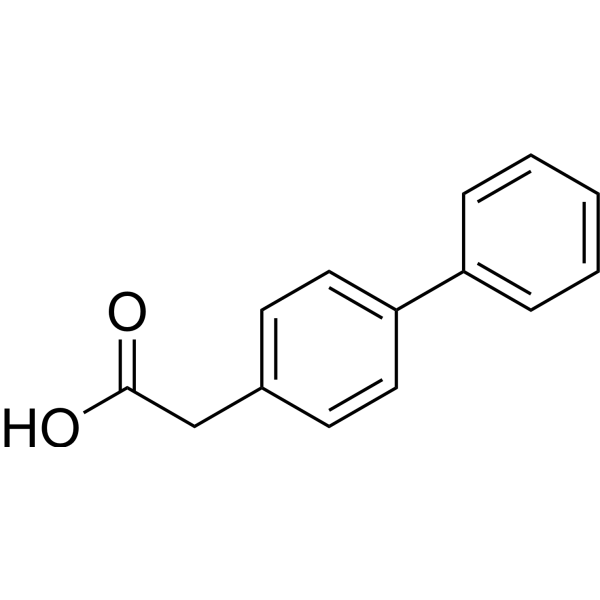
Felbinac is a metabolite of fenbufen, an orally active nonsteroidal anti-inflammatory agent and a cyclooxygenase (COX) inhibitor with an IC50 of 865.68 nM for COX1 and 976 nM for COX2. Felbinac reduces the production of prostaglandins by inhibiting COX to relieve pain, reduce inflammation and reduce fever. Felbinac can inhibit CHIKV viral activity.
Para uso exclusivo en investigación. No vendemos a pacientes.
- Pureza : 99.94%
- No. CAS: 5728-52-9
- Fòrmula: C14H12O2
- Peso molecular:212.25
-
Almacenamiento:Powder -20°C, 3 years , 4°C, 2 years ; In solvent -80°C, 2 years , -20°C, 1 year

To place orders, for customer services and technical support, please contact: MedChemExpress USA
Tel: 609-228-6898 E-mail: [email protected] [email protected]


-
 Actividad biológica
-
Chemical Information
-
Solvente y solubilidad
- Protocolo
- Pureza y Documentación
- Referencias
-
 Help & FAQs


-

HY-B0641R
Felbinac (Standard)Non-steroidal Anti-Inflammatory Agent -
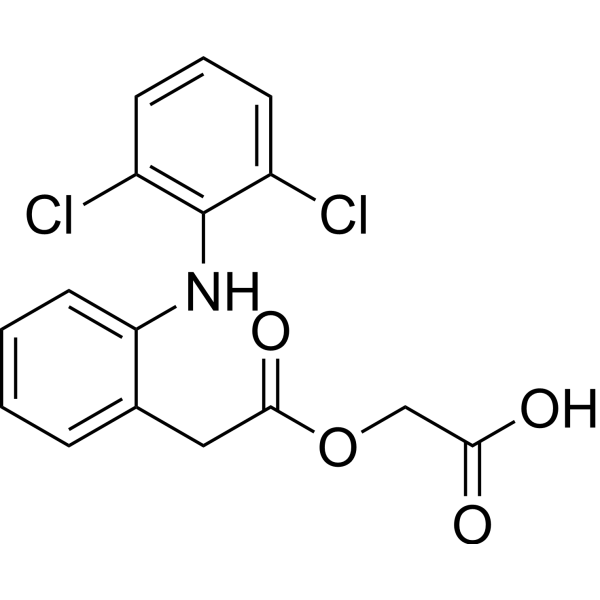
HY-B0634
AceclofenacNSAID -
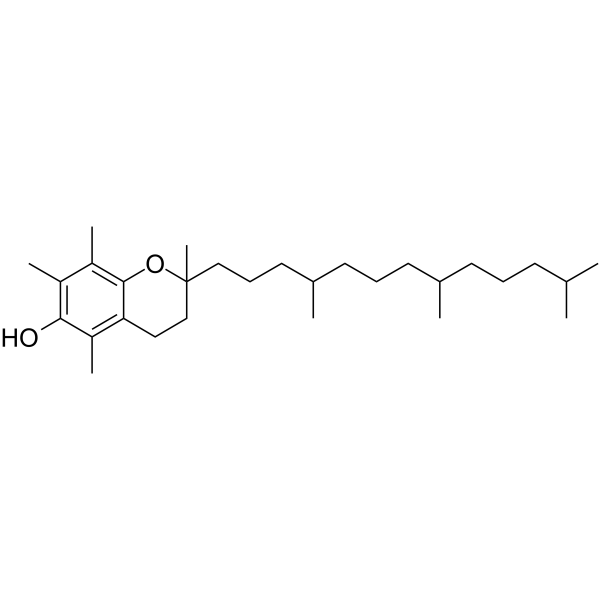
HY-W020044
DL-alpha-TocopherolVitamin E -
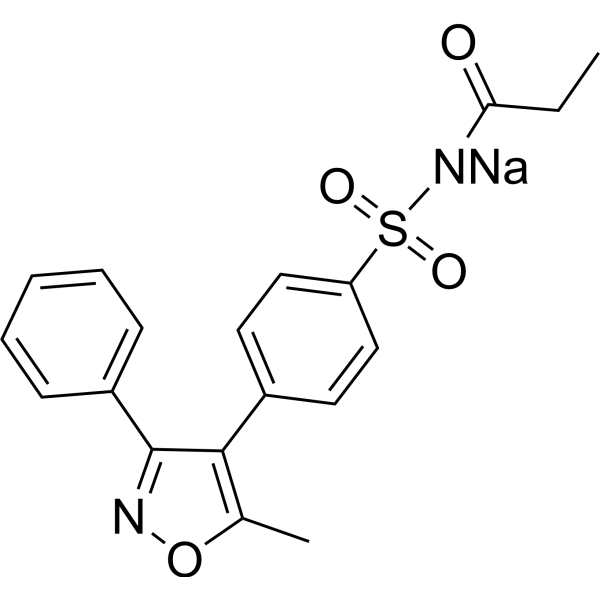
HY-17474A
Parecoxib SodiumCOX-2 Inhibitor -
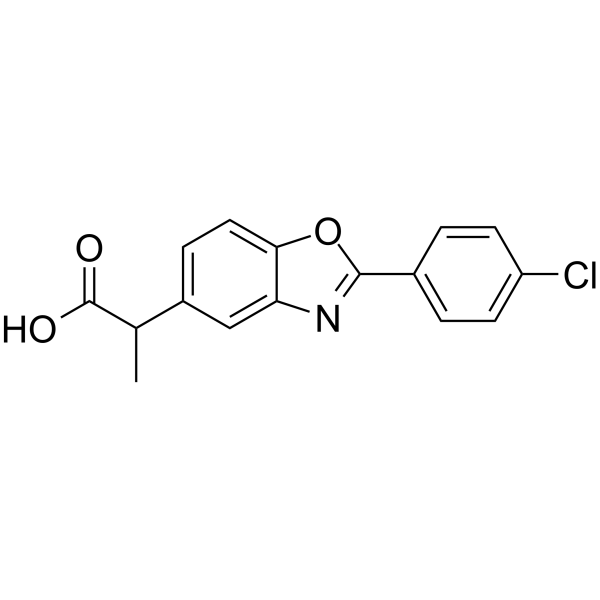
HY-13568
BenoxaprofenNonsteroidal Anti-inflammatory Agent -
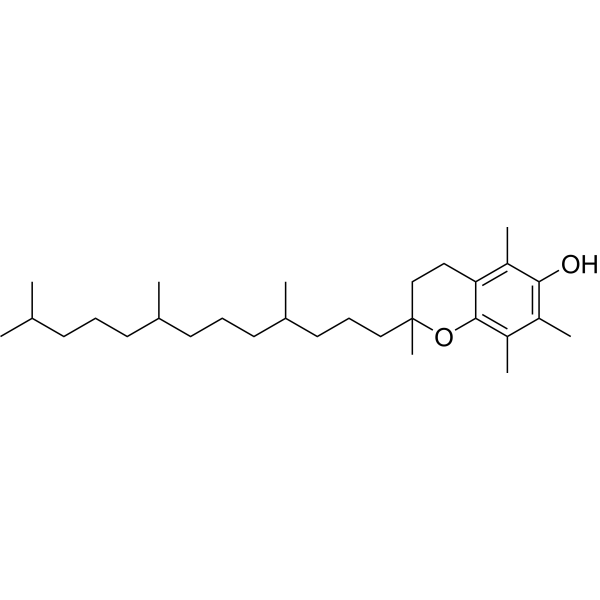
HY-W020044R
DL-alpha-Tocopherol (Standard)Vitamin E -
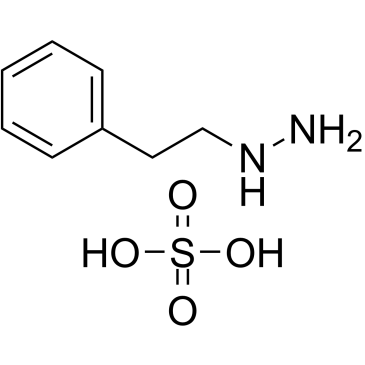
HY-B1018A
Phenelzine sulfateMAO Inhibitor -
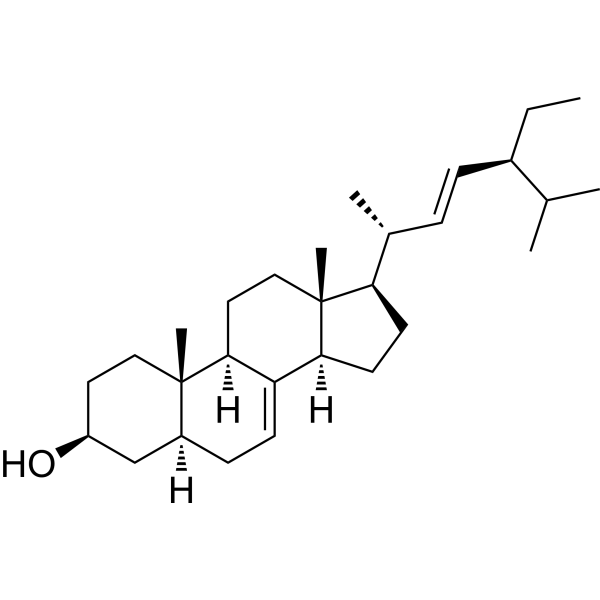
HY-N6962
α-SpinasterolCOX Inhibitor -
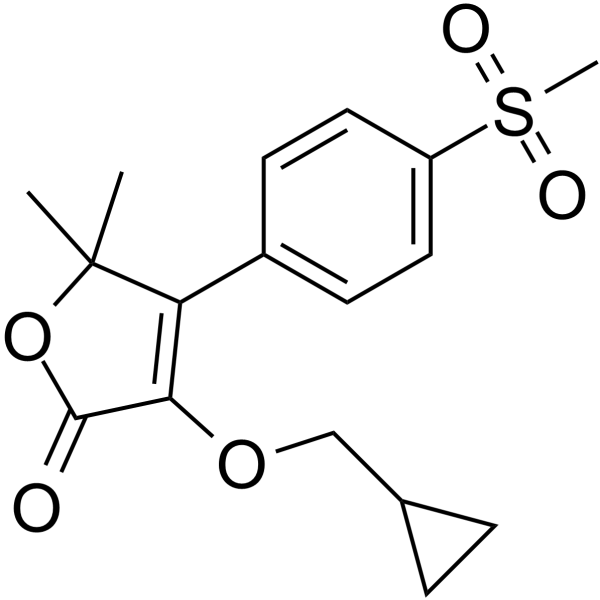
HY-14670
FirocoxibCOX-2 Inhibitor -
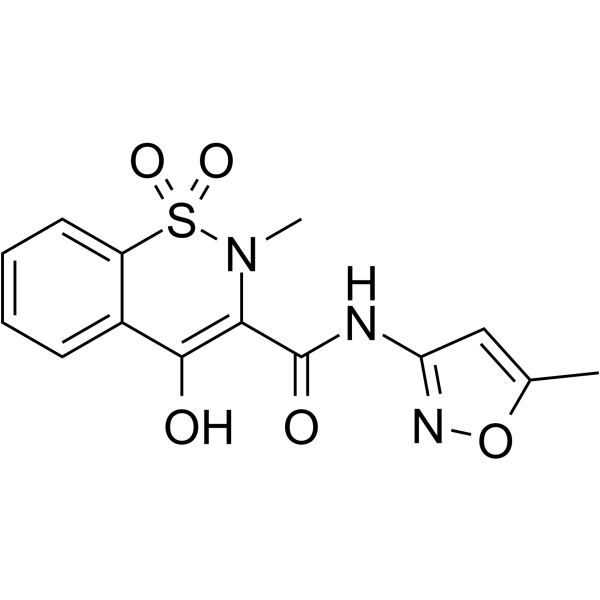
HY-B1130
IsoxicamCOX Inhibitor -

HY-B0634R
Aceclofenac (Standard)NSAID -

HY-B1130R
Isoxicam (Standard)COX Inhibitor


Actividad biológica
Descripciòn
IC50 & Target
|
COX-1 865.68 nM (IC50) |
COX-2 976 nM (IC50) |
In Vitro
In Vivo
Felbinac (20, 60 mg/kg; oral; single dose) has anti-inflammatory, analgesic and ulcerogenic activities in rats and mice[4].
MedChemExpress (MCE) has not independently confirmed the accuracy of these methods. They are for reference only.
-
Animal Model:Carrageenan-induced edema in the paws of Wistar albino rats (130-180 g) [4]
-
Dosage:Suspension prepared with 0.5% w/v carboxymethylcellulose (CMC) solution; 20 mg/kg
-
Administration:Oral gavage (p.o.)
-
Result:Made the anti-inflammatory activity 50.41% at 2h after administration and 62.44% at 3h.
-
Animal Model:Gastric ulcer rats[3]
-
Dosage:50 mg/kg; Single dose
-
Administration:Intraperitoneal injection (i.p.)
-
Result:Caused no convulsions in rats, no significant reduction in C6, C18:1 and C20:4 acyl-CoA in the liver and brain and no significant effect on glucose levels in the liver, brain and blood.
-
Animal Model:Acetic acid-induced Wistar albino mouse writting method (25-35 g) [4]
-
Dosage:Suspension prepared with 0.5% w/v carboxymethylcellulose (CMC) solution; 20 mg/kg
-
Administration:Oral gavage (p.o.)
-
Result:Made the pain activity 68.7%.
-
Animal Model:Wistar albino rats (130-180 g) [4]
-
Dosage:Suspension prepared with 0.5% w/v carboxymethylcellulose (CMC) solution; 60 mg/kg
-
Administration:Oral gavage (p.o.)
-
Result:Caused acute ulcers in rats with a severity level of 1.5.


Chemical Information
-
No. CAS 5728-52-9
-
Appearance Solid
-
Peso molecular 212.25
-
Fòrmula C14H12O2
-
Color White to off-white
-
SMILES
O=C(O)CC1=CC=C(C2=CC=CC=C2)C=C1
-
Synonyms
4-Biphenylacetic acid
-
Envío
Room temperature in continental US; may vary elsewhere.
-
Almacenamiento
Powder -20°C 3 years 4°C 2 years In solvent -80°C 2 years -20°C 1 year


Solvente y solubilidad
In Vitro:
DMSO : 100 mg/mL (471.14 mM; Need ultrasonic and warming; Hygroscopic DMSO has a significant impact on the solubility of product, please use newly opened DMSO)
Please refer to the solubility information to select the appropriate solvent. Once prepared, please aliquot and store the solution to prevent product inactivation from repeated freeze-thaw cycles.
Storage method and period of stock solution: -80°C, 2 years; -20°C, 1 year. When stored at -80°C, please use it within 2 years. When stored at -20°C, please use it within 1 year.
Please refer to the solubility information to select the appropriate solvent. Once prepared, please aliquot and store the solution to prevent product inactivation from repeated freeze-thaw cycles.
Storage method and period of stock solution: -80°C, 2 years; -20°C, 1 year. When stored at -80°C, please use it within 2 years. When stored at -20°C, please use it within 1 year.
Concentration (start) × Volume (start) = Concentration (final) × Volume (final)
In Vivo:
Select the appropriate dissolution method based on your experimental animal and administration route.
- For the following dissolution methods, please ensure to first prepare a clear stock solution using an In Vitro approach and then sequentially add co-solvents:
- To ensure reliable experimental results, the clarified stock solution can be appropriately stored based on storage conditions. As for the working solution for In Vivo experiments, it is recommended to prepare freshly and use it on the same day.
- The percentages shown for the solvents indicate their volumetric ratio in the final prepared solution. If precipitation or phase separation occurs during preparation, heat and/or sonication can be used to aid dissolution.
Add each solvent one by one: 10% DMSO 40% PEG300 5% Tween-80 45% Saline
Solubility: 2.5 mg/mL (11.78 mM); Clear solution; Need ultrasonic
This protocol yields a clear solution of 2.5 mg/mL.
Taking 1 mL working solution as an example, add 100 μL DMSO stock solution (25.0 mg/mL) to 400 μL PEG300, and mix evenly; then add 50 μL Tween-80 and mix evenly; then add 450 μL Saline to adjust the volume to 1 mL.
Preparation of Saline: Dissolve 0.9 g sodium chloride in ddH₂O and dilute to 100 mL to obtain a clear Saline solution.
Add each solvent one by one: 10% DMSO 90% (20% SBE-β-CD in Saline)
Solubility: 2.5 mg/mL (11.78 mM); Clear solution; Need ultrasonic
This protocol yields a clear solution of 2.5 mg/mL.
Taking 1 mL working solution as an example, add 100 μL DMSO stock solution (25.0 mg/mL) to 900 μL 20% SBE-β-CD in Saline, and mix evenly.
Preparation of 20% SBE-β-CD in Saline (4°C, storage for one week): 2 g SBE-β-CD powder is dissolved in 10 mL Saline, completely dissolve until clear.
In Vivo Dissolution Calculator
Please enter the basic information of animal experiments:
-
-
-
-
Recommended: Prepare an additional quantity of animals to account for potential losses during experiments.
Please enter your animal formula composition:
-
%DMSO +
Recommended: Keep the proportion of DMSO in working solution below 2% if your animal is weak.
-
%+
-
+%Tween-80 + +
-
%Saline +
The co-solvents required include: DMSO, . All of co-solvents are available by MedChemExpress (MCE). , Tween 80. All of co-solvents are available by MedChemExpress (MCE).
Working solution concentration: 0.22 mg/mL
Method for preparing stock solution: mg drug dissolved in μL DMSO. Stock solution concentration: mg/mL.
1. Take μL DMSO stock solution;
2. Add μL .
μL , mix evenly;
3. Then add μL Tween 80, mix evenly;
4. Then add μL
Please ensure that the stock solution in the first step is dissolved to a clear state, and add co-solvents in sequence. You can use ultrasonic heating (ultrasonic cleaner, recommended frequency 20-40 kHz), vortexing, etc. to assist dissolution.


Pureza y Documentación
-
Ficha de datos (284 KB)
-
SDS (480 KB)
- English - EN (480 KB)
- Français - FR (480 KB)
- Deutsch - DE (480 KB)
- Norwegian - NO (480 KB)
- Español - ES (480 KB)
- Swedish - SV (480 KB)
- Italian - IT (480 KB)
- Korean - KR (480 KB)
- Portuguese - PT (480 KB)
-
Instrucciones de manejo (2659 KB)
Referencias
[1]. Van Eerdenbrugh B, et al. 2-(Biphenyl-4-yl)acetic acid (felbinac). Acta Crystallogr Sect E Struct Rep Online. [Content Brief]
[2]. Bhagyashri Kasabe, et al. Drug repurposing approach against chikungunya virus: an in vitro and in silico study. Front Cell Infect Microbiol. 2023 Apr 27:13:1132538. [Content Brief]
[3]. Fumiyo Kasuya, et al. Effect of enoxacin, felbinac, and sparfloxacin on fatty acid metabolism and glucose concentrations in rat tissues. Int J Toxicol. 2011 May;30(3):367-76. [Content Brief]


Complete Stock Solution Preparation Table
Please refer to the solubility information to select the appropriate solvent. Once prepared, please aliquot and store the solution to prevent product inactivation from repeated freeze-thaw cycles.
Storage method and period of stock solution: -80°C, 2 years; -20°C, 1 year. When stored at -80°C, please use it within 2 years. When stored at -20°C, please use it within 1 year.
| Optional Solvent | Concentration Solvent Mass | 1 mg | 5 mg | 10 mg | 25 mg |
|---|---|---|---|---|---|
| DMSO | 1 mM | 4.7114 mL | 23.5571 mL | 47.1143 mL | 117.7856 mL |
| 5 mM | 0.9423 mL | 4.7114 mL | 9.4229 mL | 23.5571 mL | |
| 10 mM | 0.4711 mL | 2.3557 mL | 4.7114 mL | 11.7786 mL | |
| 15 mM | 0.3141 mL | 1.5705 mL | 3.1410 mL | 7.8524 mL | |
| 20 mM | 0.2356 mL | 1.1779 mL | 2.3557 mL | 5.8893 mL | |
| 25 mM | 0.1885 mL | 0.9423 mL | 1.8846 mL | 4.7114 mL | |
| 30 mM | 0.1570 mL | 0.7852 mL | 1.5705 mL | 3.9262 mL | |
| 40 mM | 0.1178 mL | 0.5889 mL | 1.1779 mL | 2.9446 mL | |
| 50 mM | 0.0942 mL | 0.4711 mL | 0.9423 mL | 2.3557 mL | |
| 60 mM | 0.0785 mL | 0.3926 mL | 0.7852 mL | 1.9631 mL | |
| 80 mM | 0.0589 mL | 0.2945 mL | 0.5889 mL | 1.4723 mL | |
| 100 mM | 0.0471 mL | 0.2356 mL | 0.4711 mL | 1.1779 mL |


Felbinac Related Classifications
HY-B0641 Related Classifications
 Powered by Bioz