



Warangalone
Based on 1 publication(s) in Google Scholar
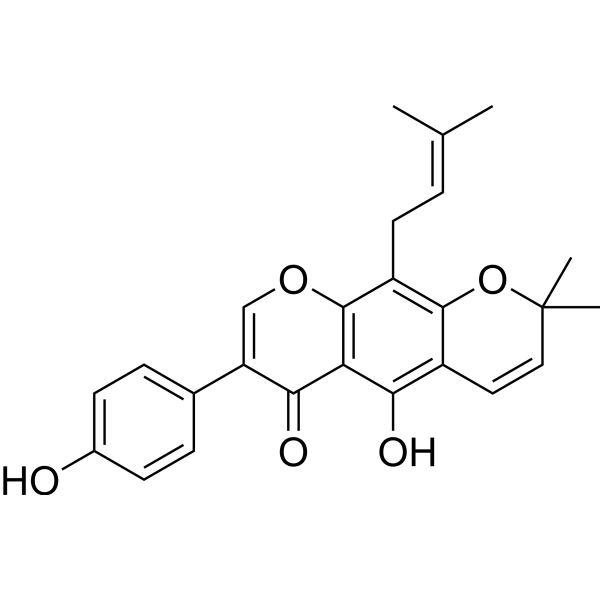
Warangalone is an anti-malarial compound which can inhibit the growth of both strains of parasite 3D7 (chloroquine sensitive) and K1 (chloroquine resistant) with IC50s of 4.8 μg/mL and 3.7 μg/mL, respectively. Warangalone can also inhibit cyclic AMP-dependent protein kinase catalytic subunit (cAK) with an IC50 of 3.5 μM.
Para uso exclusivo en investigación. No vendemos a pacientes.
- No. CAS: 4449-55-2
- Fòrmula: C25H24O5
- Peso molecular:404.46
-
Almacenamiento:Powder -20°C, 3 years , 4°C, 2 years ; In solvent -80°C, 2 years , -20°C, 1 year

To place orders, for customer services and technical support, please contact: MedChemExpress USA
Tel: 609-228-6898 E-mail: [email protected] [email protected]


-
 Actividad biológica
-
Chemical Information
- Protocolo
- Pureza y Documentación
- Referencias
-
 Help & FAQs


-
HY-N6789
KT5720 -
HY-12306A
8-Bromo-cAMP -
HY-12306
8-Bromo-cAMP sodium salt -
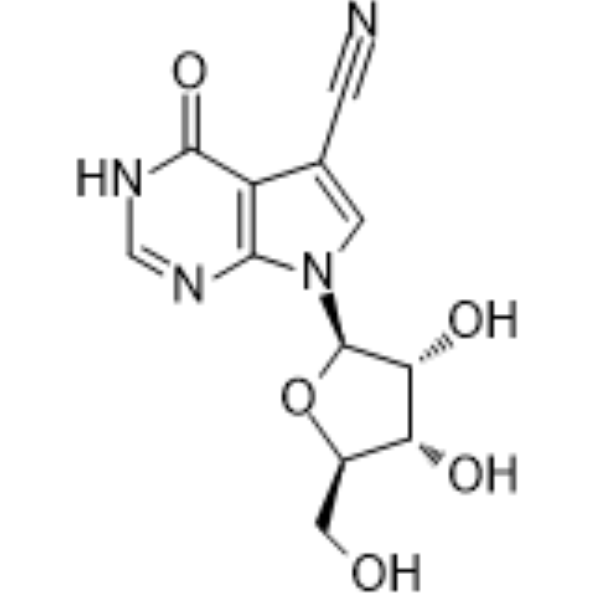
HY-111759
Jaspamycin -
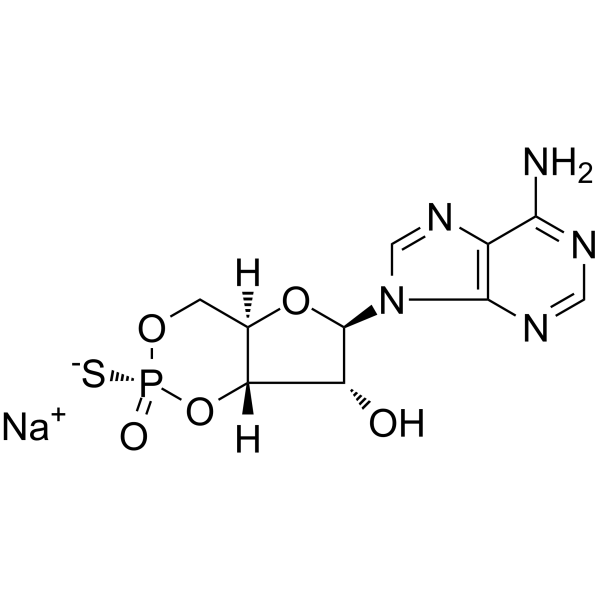
HY-100530D
Rp-cAMPS sodium salt -
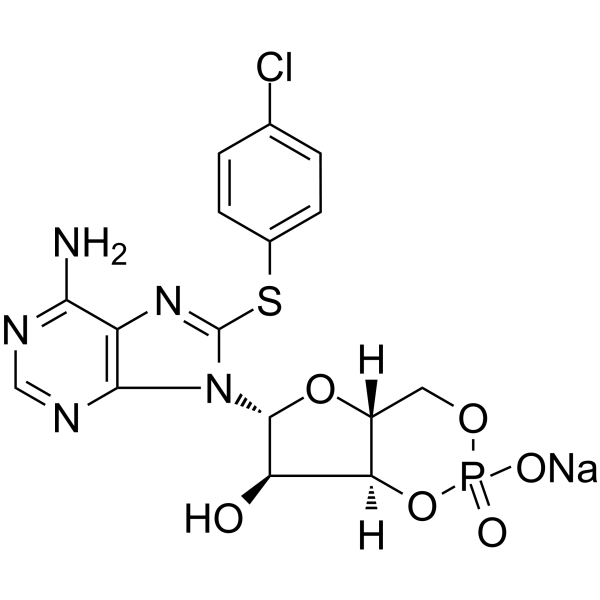
HY-111673
8-CPT-Cyclic AMP sodium -
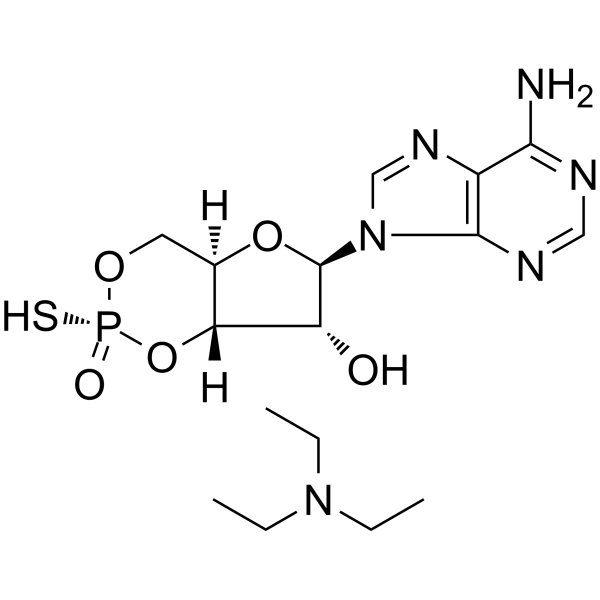
HY-100530
Rp-cAMPS triethylammonium salt -
HY-B1898
Metadoxine -
HY-103322
6-Bnz-cAMP sodium salt -
HY-18991
CCG215022 -
HY-P1292
PKG inhibitor peptide -
HY-110218
CW 008
Publications Citing Use of MedChemExpress (MCE) Warangalone
MoreVer todos los productos específicos de isoformas Parasite
More

Actividad biológica
Descripciòn
IC50 & Target
|
Plasmodium |
Cellular Effect
|
Cell Line

|
Type | Value | Description | References |
|---|---|---|---|---|
| RAW264.7 | IC50 |
8.5 μM
Compound: 18
|
Inhibition of LPS-induced nitric oxide production in mouse RAW264.7 cells incubated for 24 hrs by Griess reagent based assay
Inhibition of LPS-induced nitric oxide production in mouse RAW264.7 cells incubated for 24 hrs by Griess reagent based assay
|
[PMID: 31403786] |
In Vitro
Warangalone is an anti-malarial compound which can inhibit the growth of both strains of parasite 3D7 (chloroquine sensitive) and K1 (chloroquine resistant) with IC50s of 4.8 μg/mL and 3.7 μg/mL, respectively[1]. Warangalone can also inhibit cyclic AMP-dependent protein kinase catalytic subunit (cAK) with an IC50 of 3.5 μM[2]. When HL-60 cells are exposed to Warangalone (30 μM) for 24 h, Warangalone induces a significant decrease (8%) in cell viability compare to controls. Warangalone also inhibits HL-60 cell growth within 24 h in a time-dependent fashion. A time-dependent increase in caspase-9 activity is observed in Warangalone-treated cells[3].
MedChemExpress (MCE) has not independently confirmed the accuracy of these methods. They are for reference only.


Chemical Information
-
No. CAS 4449-55-2
-
Appearance Solid
-
Peso molecular 404.46
-
Fòrmula C25H24O5
-
Color Light yellow to yellow
-
SMILES
O=C1C(C(O)=C(C=CC(C)(C)O2)C2=C3C/C=C(C)\C)=C3OC=C1C4=CC=C(O)C=C4
-
Synonyms
Scandenolone
-
Structure Classification
-
Initial Source
-
Envío
Room temperature in continental US; may vary elsewhere.
-
Almacenamiento
Powder -20°C 3 years 4°C 2 years In solvent -80°C 2 years -20°C 1 year


Publications (1)
-
Journal Impact Factor
-
Most Recent

Protocolo
Kinase Assay[3]
The enzyme activities of caspase-3 and caspase-9 are measured using a caspase fluorometric assay kit. Cells are seeded in 24-well plates at a density of 3×10⁶ cells per well. After exposure of the cells to Warangalone for the allotted time periods, the cells are washed three times with PBS, and then lysed in a lysis buffer for 10 min on ice. The protein content of the cell lysates is assayed with a Micro BCA reagent. Cell lysates containing 50 μg of protein are incubated with a caspase-3 fluorogenic substrate (DEVD-AFC) or a caspase-9 fluorogenic substrate (LEHD-AFC) for 1 h at 37°C. Caspase activity is measured by fluorometric detection[3].
MedChemExpress (MCE) has not independently confirmed the accuracy of these methods. They are for reference only.
Cell Assay[3]
Cell viability is determined using the Cell Titer 96 Aqueous assay kit. Cells are seeded in 96-well plates at a density of 1×10⁵ cells per well. The cells are maintained for 24 h at 37°C and then Warangalone (30 μM) is added to the culture medium. MTS solution is added to the 96-well plates at the indicated time points, and the cells are incubated for 1 h at 37°C. The absorbance is measured at a wavelength of 490 nm with a microplate counter[3].
MedChemExpress (MCE) has not independently confirmed the accuracy of these methods. They are for reference only.


Pureza y Documentación
-
Ficha de datos (274 KB)
-
SDS (252 KB)
- English - EN (252 KB)
- Français - FR (252 KB)
- Deutsch - DE (252 KB)
- Norwegian - NO (252 KB)
- Español - ES (252 KB)
- Swedish - SV (252 KB)
- Italian - IT (252 KB)
- Korean - KR (252 KB)
- Portuguese - PT (252 KB)
-
Instrucciones de manejo (2659 KB)
Referencias
[2]. Wang BH, et al. Specific inhibition of cyclic AMP-dependent protein kinase by warangalone and robustic acid. Phytochemistry. 1997 Mar;44(5):787-96. [Content Brief]
[3]. Induction of apoptosis by isoflavonoids from the leaves of Millettia taiwaniana in human leukemia HL-60 cells. Planta Med. 2006 Apr;72(5):424-9. [Content Brief]

Calculators
Concentration (start) × Volume (start) = Concentration (final) × Volume (final)


Warangalone Related Classifications
HY-N1074 Related Classifications
 Powered by Bioz