



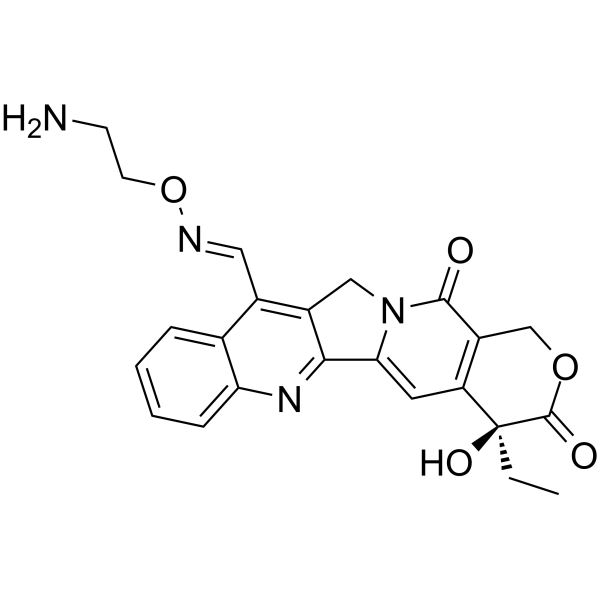
Namitecan

Based on 1 Customer Validation
Namitecan is a potent topoisomerase I inhibitor, with antitumor property.
Para uso exclusivo en investigación. No vendemos a pacientes.
- Pureza : 98.03%
- No. CAS: 372105-27-6
- Fòrmula: C23H22N4O5
- Peso molecular:434.44
-
Almacenamiento:Powder -20°C, 3 years , 4°C, 2 years ; In solvent -80°C, 2 years , -20°C, 1 year

To place orders, for customer services and technical support, please contact: MedChemExpress USA
Tel: 609-228-6898 E-mail: [email protected] [email protected]


-
 Actividad biológica
-
Chemical Information
-
Solvente y solubilidad
- Pureza y Documentación
- Referencias
-
 Help & FAQs


-
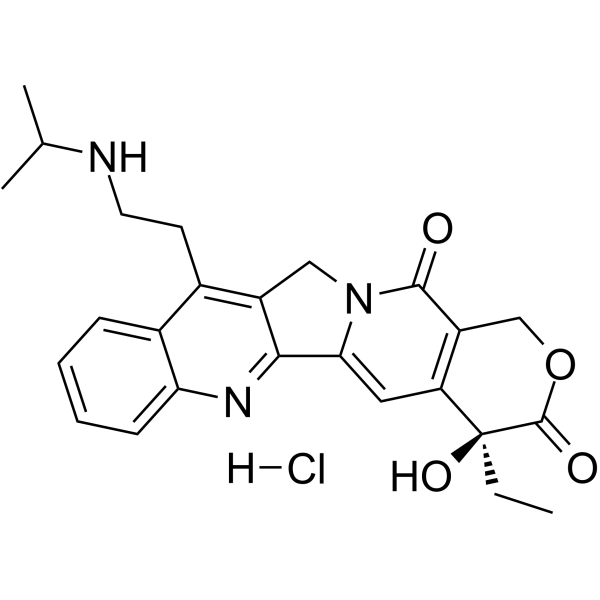
HY-13566A
Belotecan hydrochlorideTopoisomerase Inhibitor -
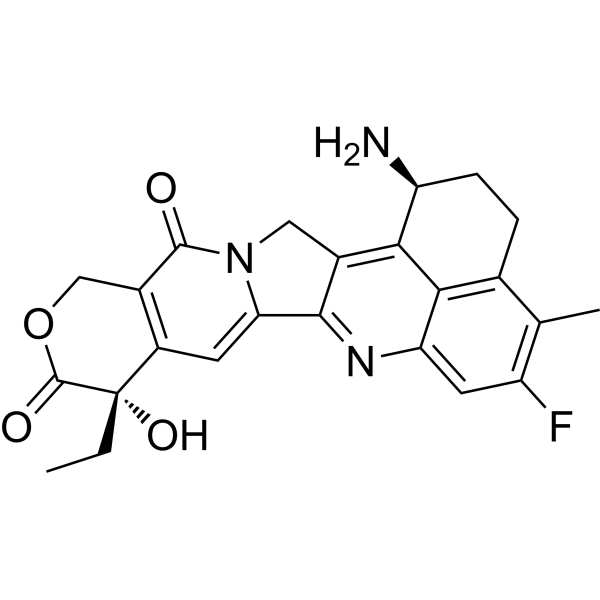
HY-13631
ExatecanTopoisomerase I Inhibitor -
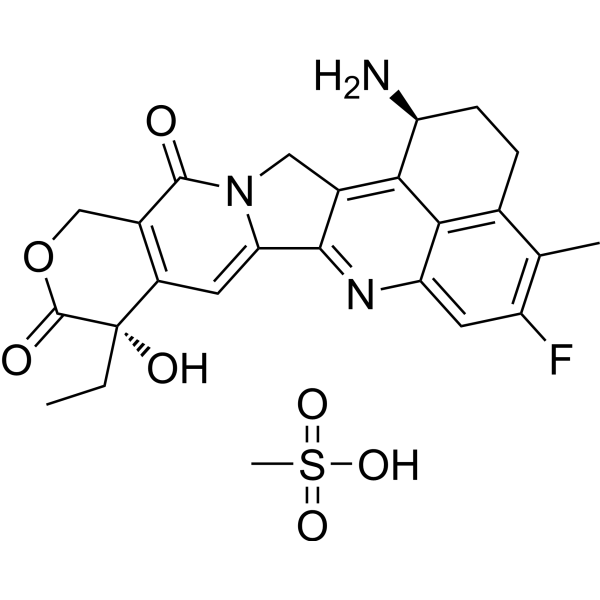
HY-13631A
Exatecan mesylateTopoisomerase I Inhibitor -

HY-13631R
Exatecan (Standard)Topoisomerase I Inhibitor -
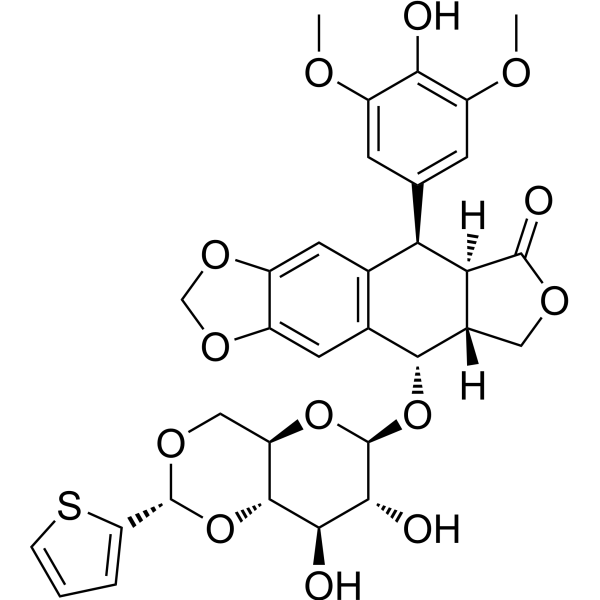
HY-13761
TeniposideTopoisomerase Inhibitor -
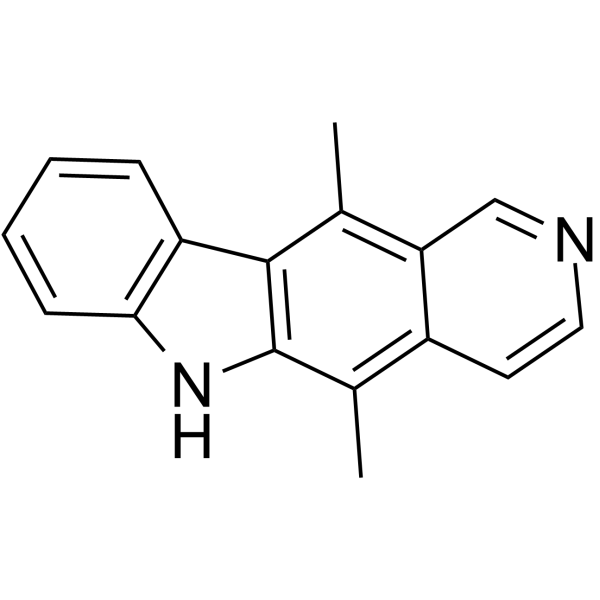
HY-15753
EllipticineTopoisomerase Inhibitor -
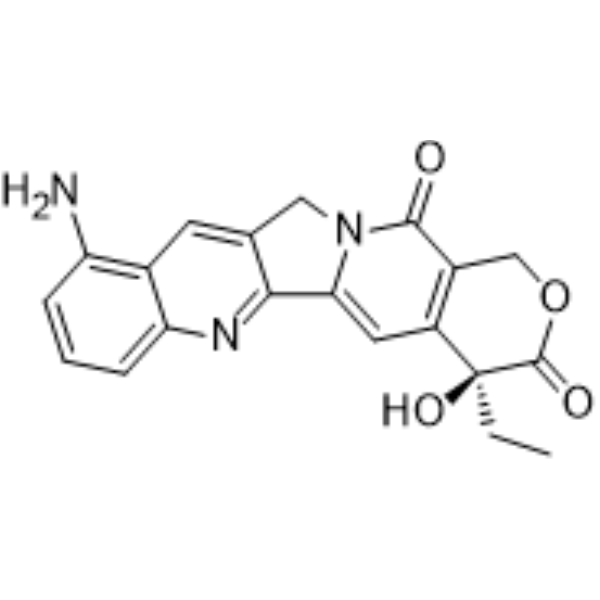
HY-100309
9-AminocamptothecinTopoisomerase I Inhibitor -
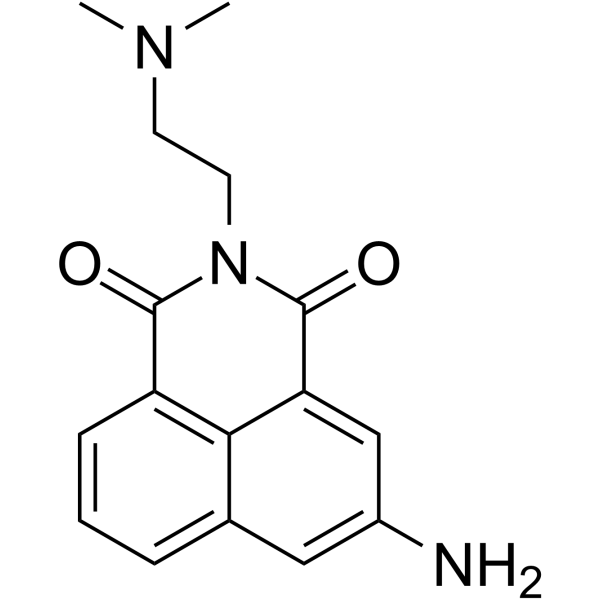
HY-10982
AmonafideTopoisomerase Inhibitor -
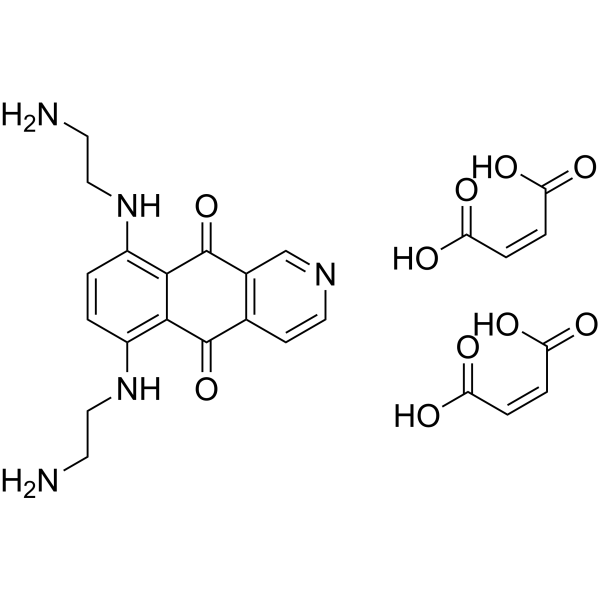
HY-13727A
PixantroneTopoisomerase II Inhibitor -
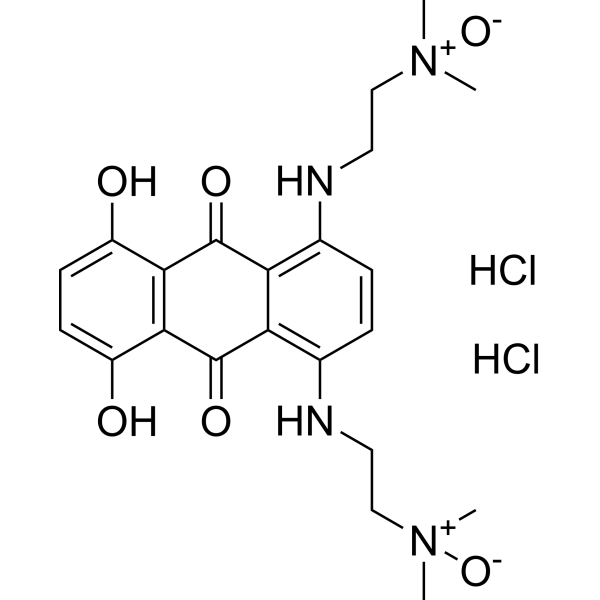
HY-13562A
Banoxantrone dihydrochlorideTopoisomerase II Inhibitor -
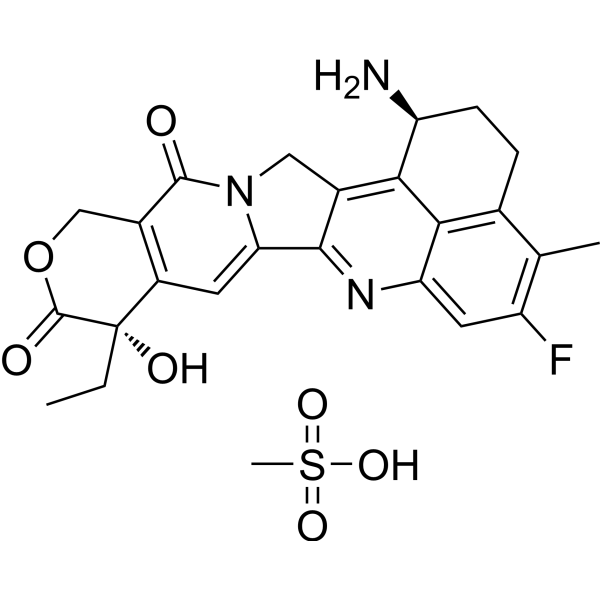
HY-13631AG
Exatecan mesylate (GMP)Topoisomerase I Inhibitor -
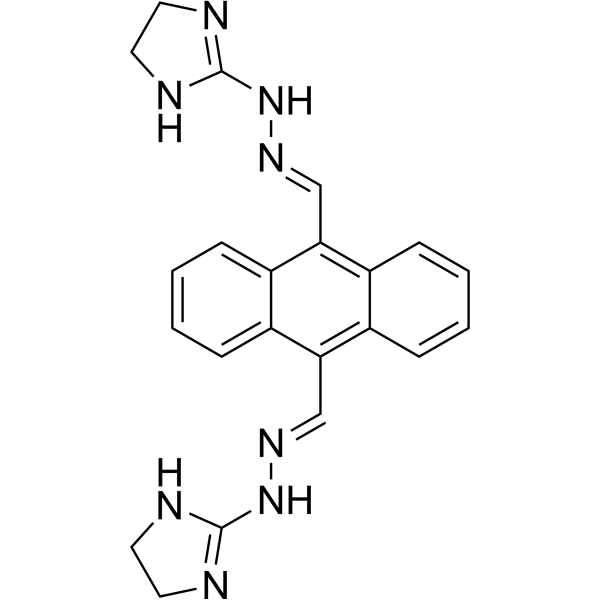
HY-100875
BisantreneAntitumor Agent
Ver todos los productos específicos de isoformas Topoisomerase
More

Actividad biológica
Descripciòn
IC50 & Target
[1]|
Topoisomerase I |
Cellular Effect
|
Cell Line

|
Type | Value | Description | References |
|---|---|---|---|---|
| carcinoma cell line | IC50 |
0.49 μM
Compound: 21
|
Cytotoxicity against human non-small-cell lung carcinoma cell line H460 (NSCLC-H460)
Cytotoxicity against human non-small-cell lung carcinoma cell line H460 (NSCLC-H460)
|
[PMID: 11563925] |
| NCI-H460 | IC50 |
0.51 μM
Compound: 1m
|
Cytotoxicity against human H460 cells
Cytotoxicity against human H460 cells
|
[PMID: 18434153] |
In Vitro
Namitecan and cetuximab cooperate in inhibiting EGFR expression. Namitecan induces a dose-dependent decrease in EGFR expression in the different cell lines[1]. ST1968 induces a comparable level of apoptosis in A431 and A431/TPT cells with IC50 of 0.21 and 0.29 μM[2].
MedChemExpress (MCE) has not independently confirmed the accuracy of these methods. They are for reference only.
In Vivo
MedChemExpress (MCE) has not independently confirmed the accuracy of these methods. They are for reference only.
Ensayo clínico
| NCT Number | Sponsor | Condition | Start Date |
Phase
|
|---|---|---|---|---|
| NCT01329991 | Plexxikon| | 2011-05 | PHASE1 |


Chemical Information
-
No. CAS 372105-27-6
-
Appearance Solid
-
Peso molecular 434.44
-
Fòrmula C23H22N4O5
-
Color Light yellow to yellow
-
SMILES
O=C1[C@](O)(CC)C2=C(CO1)C(N3CC4=C(/C=N/OCCN)C5=CC=CC=C5N=C4C3=C2)=O
-
Synonyms
ST-1968
-
Envío
Room temperature in continental US; may vary elsewhere.
-
Almacenamiento
Powder -20°C 3 years 4°C 2 years In solvent -80°C 2 years -20°C 1 year


Solvente y solubilidad
In Vitro:
DMSO : 250 mg/mL (575.45 mM; Need ultrasonic; Hygroscopic DMSO has a significant impact on the solubility of product, please use newly opened DMSO)
Please refer to the solubility information to select the appropriate solvent. Once prepared, please aliquot and store the solution to prevent product inactivation from repeated freeze-thaw cycles.
Storage method and period of stock solution: -80°C, 2 years; -20°C, 1 year. When stored at -80°C, please use it within 2 years. When stored at -20°C, please use it within 1 year.
Please refer to the solubility information to select the appropriate solvent. Once prepared, please aliquot and store the solution to prevent product inactivation from repeated freeze-thaw cycles.
Storage method and period of stock solution: -80°C, 2 years; -20°C, 1 year. When stored at -80°C, please use it within 2 years. When stored at -20°C, please use it within 1 year.
Concentration (start) × Volume (start) = Concentration (final) × Volume (final)
In Vivo:
Select the appropriate dissolution method based on your experimental animal and administration route.
- For the following dissolution methods, please ensure to first prepare a clear stock solution using an In Vitro approach and then sequentially add co-solvents:
- To ensure reliable experimental results, the clarified stock solution can be appropriately stored based on storage conditions. As for the working solution for In Vivo experiments, it is recommended to prepare freshly and use it on the same day.
- The percentages shown for the solvents indicate their volumetric ratio in the final prepared solution. If precipitation or phase separation occurs during preparation, heat and/or sonication can be used to aid dissolution.
Add each solvent one by one: 10% DMSO 40% PEG300 5% Tween-80 45% Saline
Solubility: ≥ 2.08 mg/mL (4.79 mM); Clear solution
This protocol yields a clear solution of ≥ 2.08 mg/mL (saturation unknown).
Taking 1 mL working solution as an example, add 100 μL DMSO stock solution (20.8 mg/mL) to 400 μL PEG300, and mix evenly; then add 50 μL Tween-80 and mix evenly; then add 450 μL Saline to adjust the volume to 1 mL.
Preparation of Saline: Dissolve 0.9 g sodium chloride in ddH₂O and dilute to 100 mL to obtain a clear Saline solution.
Add each solvent one by one: 10% DMSO 90% (20% SBE-β-CD in Saline)
Solubility: ≥ 2.08 mg/mL (4.79 mM); Clear solution
This protocol yields a clear solution of ≥ 2.08 mg/mL (saturation unknown).
Taking 1 mL working solution as an example, add 100 μL DMSO stock solution (20.8 mg/mL) to 900 μL 20% SBE-β-CD in Saline, and mix evenly.
Preparation of 20% SBE-β-CD in Saline (4°C, storage for one week): 2 g SBE-β-CD powder is dissolved in 10 mL Saline, completely dissolve until clear.
In Vivo Dissolution Calculator
Please enter the basic information of animal experiments:
-
-
-
-
Recommended: Prepare an additional quantity of animals to account for potential losses during experiments.
Please enter your animal formula composition:
-
%DMSO +
Recommended: Keep the proportion of DMSO in working solution below 2% if your animal is weak.
-
%+
-
+%Tween-80 + +
-
%Saline +
The co-solvents required include: DMSO, . All of co-solvents are available by MedChemExpress (MCE). , Tween 80. All of co-solvents are available by MedChemExpress (MCE).
Working solution concentration: 0.22 mg/mL
Method for preparing stock solution: mg drug dissolved in μL DMSO. Stock solution concentration: mg/mL.
1. Take μL DMSO stock solution;
2. Add μL .
μL , mix evenly;
3. Then add μL Tween 80, mix evenly;
4. Then add μL
Please ensure that the stock solution in the first step is dissolved to a clear state, and add co-solvents in sequence. You can use ultrasonic heating (ultrasonic cleaner, recommended frequency 20-40 kHz), vortexing, etc. to assist dissolution.


Pureza y Documentación
-
Ficha de datos (278 KB)
-
SDS (479 KB)
- English - EN (479 KB)
- Français - FR (479 KB)
- Deutsch - DE (479 KB)
- Norwegian - NO (479 KB)
- Español - ES (479 KB)
- Swedish - SV (479 KB)
- Italian - IT (479 KB)
- Korean - KR (479 KB)
- Portuguese - PT (479 KB)
-
Instrucciones de manejo (2659 KB)
Referencias
[1]. De Cesare M, et al. Synergistic antitumor activity of cetuximab and namitecan in human squamous cell carcinoma models relies on cooperative inhibition of EGFR expression and depends on high EGFR gene copy number. Clin Cancer Res. 2014 Feb 15;20(4):995-1006. [Content Brief]
[2]. Zuco V, et al. Efficacy of ST1968 (namitecan) on a topotecan-resistant squamous cell carcinoma. Biochem Pharmacol. 2010 Feb 15;79(4):535-41. [Content Brief]


Complete Stock Solution Preparation Table
Please refer to the solubility information to select the appropriate solvent. Once prepared, please aliquot and store the solution to prevent product inactivation from repeated freeze-thaw cycles.
Storage method and period of stock solution: -80°C, 2 years; -20°C, 1 year. When stored at -80°C, please use it within 2 years. When stored at -20°C, please use it within 1 year.
| Optional Solvent | Concentration Solvent Mass | 1 mg | 5 mg | 10 mg | 25 mg |
|---|---|---|---|---|---|
| DMSO | 1 mM | 2.3018 mL | 11.5091 mL | 23.0181 mL | 57.5453 mL |
| 5 mM | 0.4604 mL | 2.3018 mL | 4.6036 mL | 11.5091 mL | |
| 10 mM | 0.2302 mL | 1.1509 mL | 2.3018 mL | 5.7545 mL | |
| 15 mM | 0.1535 mL | 0.7673 mL | 1.5345 mL | 3.8364 mL | |
| 20 mM | 0.1151 mL | 0.5755 mL | 1.1509 mL | 2.8773 mL | |
| 25 mM | 0.0921 mL | 0.4604 mL | 0.9207 mL | 2.3018 mL | |
| 30 mM | 0.0767 mL | 0.3836 mL | 0.7673 mL | 1.9182 mL | |
| 40 mM | 0.0575 mL | 0.2877 mL | 0.5755 mL | 1.4386 mL | |
| 50 mM | 0.0460 mL | 0.2302 mL | 0.4604 mL | 1.1509 mL | |
| 60 mM | 0.0384 mL | 0.1918 mL | 0.3836 mL | 0.9591 mL | |
| 80 mM | 0.0288 mL | 0.1439 mL | 0.2877 mL | 0.7193 mL | |
| 100 mM | 0.0230 mL | 0.1151 mL | 0.2302 mL | 0.5755 mL |


Namitecan Related Classifications
HY-14821 Related Classifications
 Powered by Bioz